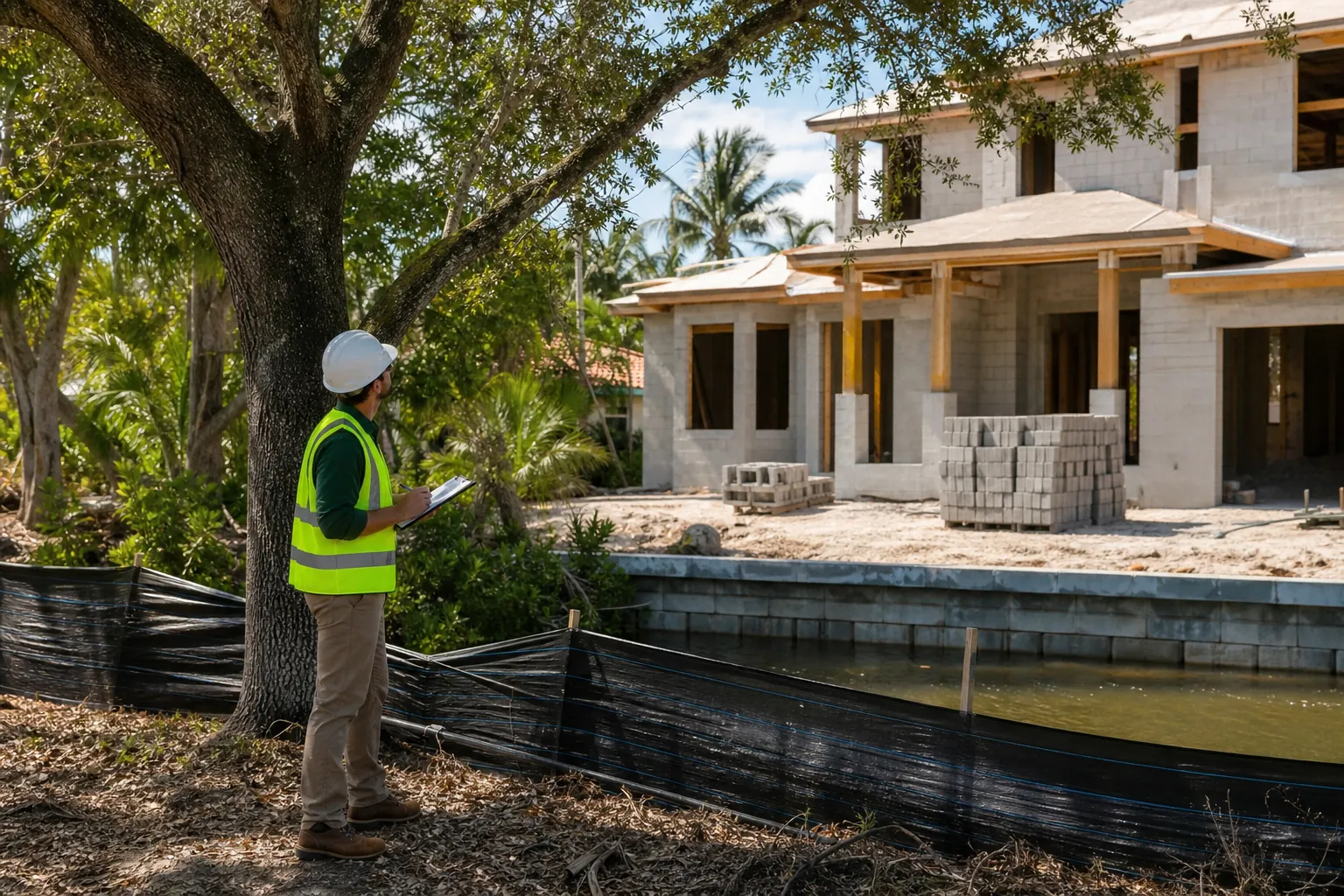
Construction and renovation projects often begin with plans for structures, utilities, access, and drainage. When trees are located on or near the work area, the permitting authority may also request professional documentation about their condition and how the proposed work could affect them.
An arborist report for building permit review gives planners, property owners, and contractors organized information about relevant trees. It may document tree locations, species, condition, visible defects, potential construction impacts, and practical recommendations. Because requirements vary across Florida, always confirm the necessary report format and supporting documents with your city or county before scheduling an inspection.
Why Building Departments Request Arborist Information
Trees can influence grading, foundation work, driveways, utility installation, equipment access, and stormwater planning. Their trunks, canopies, and root systems may extend into areas shown for construction. A report helps the reviewing agency understand existing conditions and evaluate how the plan addresses affected trees.
The document can also help the project team identify conflicts early. For example, excavation near a mature tree may affect structural roots, while planned access routes could compact soil around the root zone. Recognizing these concerns before work starts allows the owner, designer, and contractor to discuss possible adjustments.
An arborist report does not replace architectural, engineering, surveying, or permitting documents. It provides tree-specific observations that can complement those materials. The local authority determines whether a report is required, which trees must be included, and whether additional documentation is necessary.
What An Arborist Report May Include
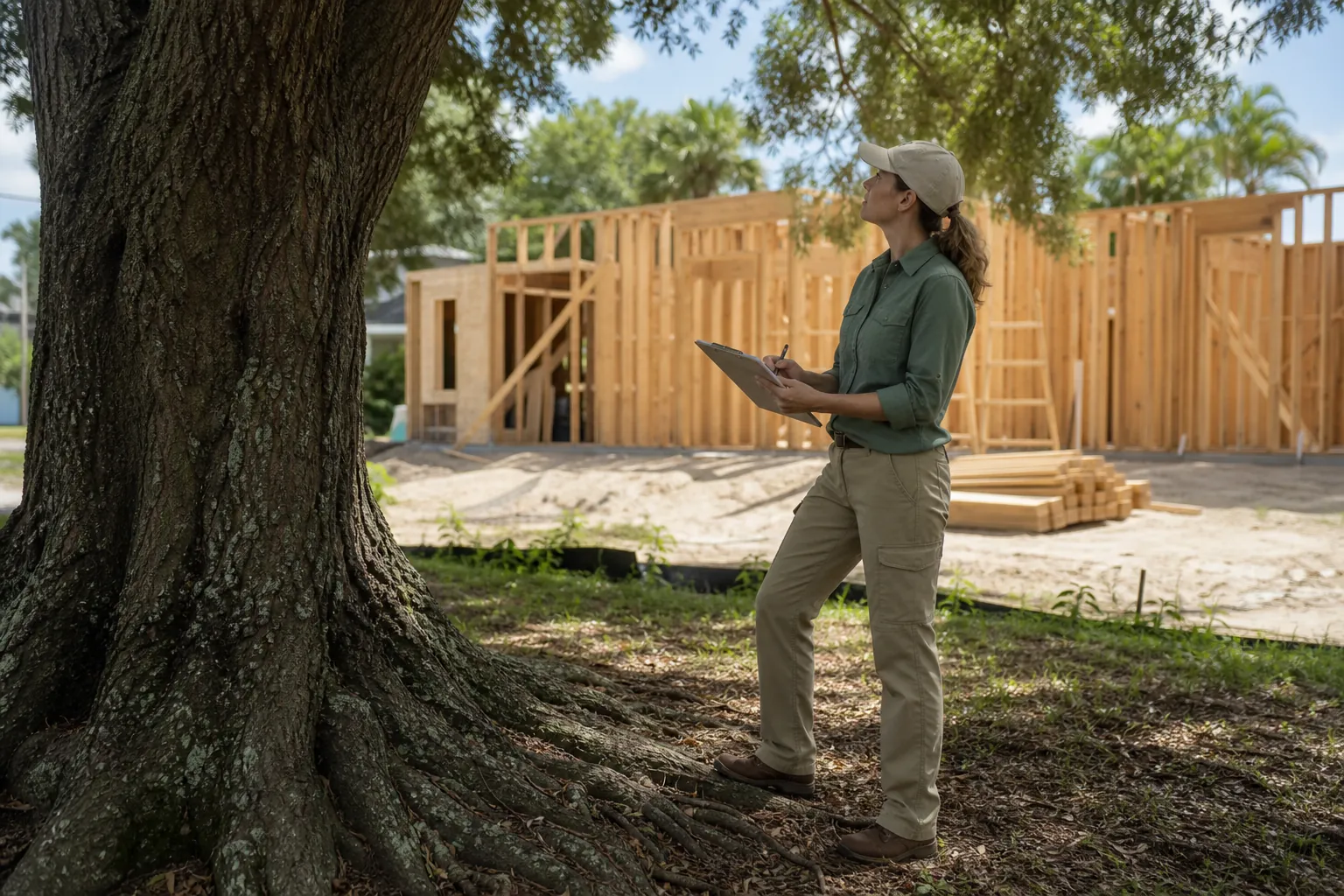
The scope depends on the property, proposed work, and local submission requirements. A useful report should be clear, site-specific, and based on an inspection of the trees relevant to the project.
Common report elements may include:
- Property and project context: A basic description of the site and the proposed activity that prompted the assessment.
- Tree identification: Available information about species, location, size, and identifying labels that correspond with a plan or tree inventory.
- Condition observations: Visible characteristics involving trunk structure, canopy condition, roots, decay indicators, dead branches, lean, or previous damage.
- Construction conflicts: Potential effects from excavation, fill, paving, grading, equipment movement, utility work, or changes in drainage.
- Recommendations: Practical guidance that may involve preservation measures, tree trimming, canopy thinning, crown reduction, monitoring, or tree removal when appropriate.
- Limitations: An explanation of the inspection scope, site access, and conditions that could restrict observations.
- Supporting photographs: Images that show individual trees, defects, surrounding features, or areas of concern.
Not every report requires every item. Some jurisdictions provide forms, plan-marking standards, or minimum data requirements. Ask the city or county which materials must accompany the permit application and whether the report must reference a survey, site plan, or tree disposition plan.
How To Prepare For A Tree Inspection
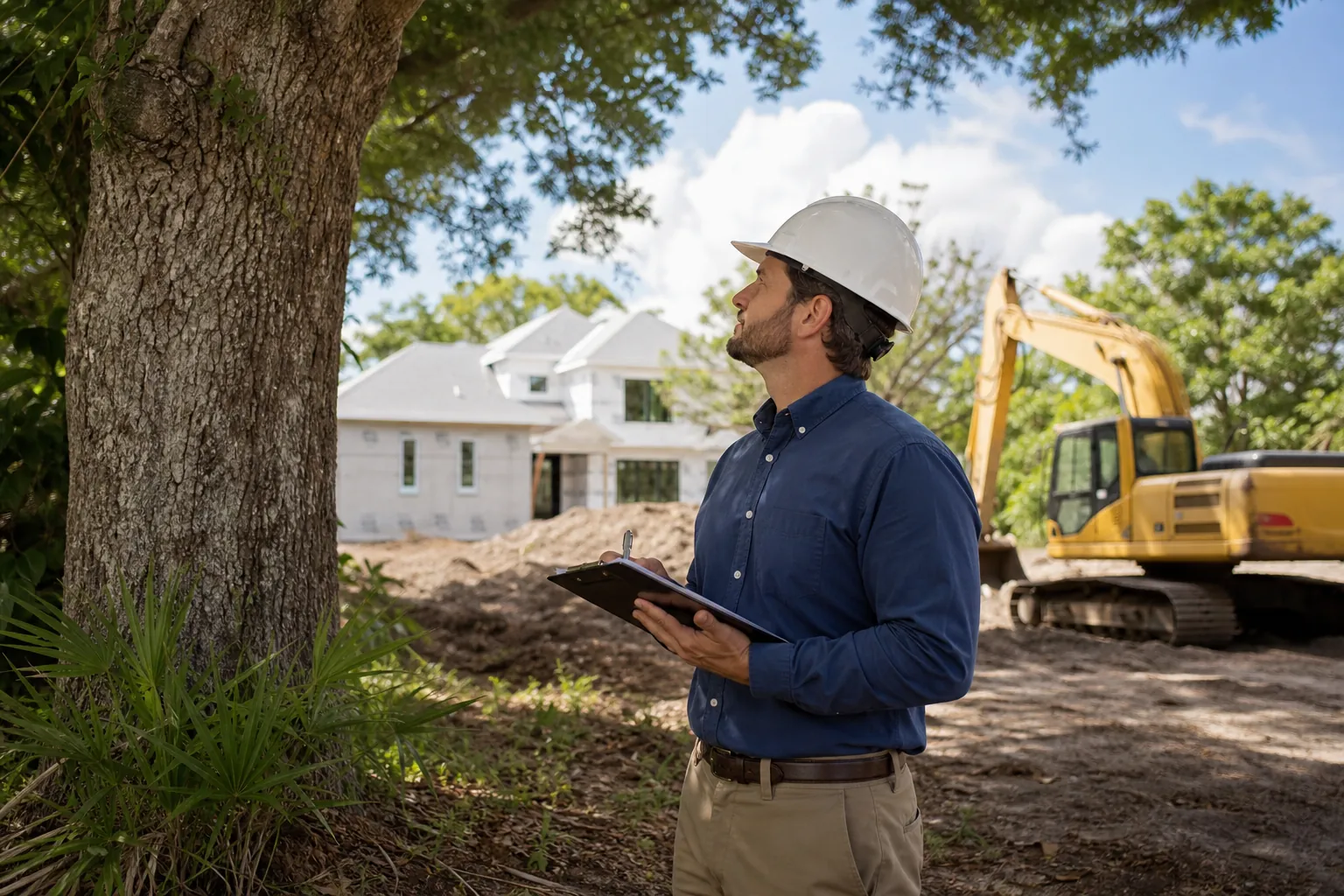
Good preparation helps the arborist understand the proposed work and focus on the correct trees. Before the appointment, gather the most current plans available. Preliminary drawings can be helpful, but changes to building footprints, driveways, utilities, or grading may alter the assessment.
If trees are numbered on a survey or plan, make sure those numbers are visible or can be matched in the field. Clear reasonable access to the inspection area without disturbing roots or removing vegetation unnecessarily. Inform the arborist about locked gates, animals, active construction, unstable ground, or other access concerns.
It is also helpful to share notices or written requests from the permitting department. These documents may clarify why the report was requested and which questions must be answered. Avoid assuming that a report prepared for one agency will automatically meet another agency's standards.
Property owners should not prune, remove, or grind a stump simply to make the site match a proposed plan before confirming applicable requirements. Tree work completed too early may complicate documentation or review. Verify local rules and obtain any required approvals before work begins.
Planning Around Trees During Construction
A tree's roots often extend beyond the visible canopy, and important roots may be close to the soil surface. Construction impacts can occur even when the trunk is outside the building footprint. Trenching, parking, material storage, soil compaction, grade changes, and repeated equipment traffic can all affect the growing environment.
When retention is feasible, recommendations may include defining protection areas, limiting access, adjusting excavation methods, or sequencing work to reduce disturbance. Tree trimming, canopy thinning, or crown reduction may be considered when branches conflict with access or structures, but pruning should have a clear objective and suit the tree's condition.
In some situations, removal may be recommended because a tree directly conflicts with approved construction or has significant defects. Available services may include tree removal, crane tree removal, stump grinding, and land and lot clearing. Emergency and hurricane tree removal addresses urgent storm-related conditions rather than routine permit preparation.
Recommendations should be coordinated with the project team. An arborist can explain tree-related concerns, while designers and contractors determine how those considerations fit with structural plans, site logistics, and agency comments.
Common Delays And How To Avoid Them
Permit review can slow down when documents describe outdated plans, omit trees near the work zone, or use labels that do not match the site plan. Another frequent problem is requesting the inspection after clearing or excavation has already changed the site.
To reduce avoidable revisions, confirm the jurisdiction, obtain its current checklist, provide legible plans, and explain the complete project scope. If the plan changes after the inspection, ask whether the report needs an update. A shifted driveway or utility route can create a new conflict even when the building footprint remains unchanged.
Larger properties may require coordination beyond individual residential tree care. Florida Foliage also provides commercial tree services and HOA and condo tree services, along with arborist reports and tree inspections. Brush hogging and clearing activities should be planned carefully when retained trees are nearby.
Schedule A Site-Specific Arborist Assessment
A well-prepared report can help reviewers understand tree conditions and help owners make informed decisions before construction begins. The first step is confirming exactly what your Florida city or county expects, including required forms, plan details, and submission procedures.
Florida Foliage provides arborist reports and tree inspections for properties where construction, renovation, access, or clearing may affect trees. To discuss your site and the documents available, call (386) 481-7913. The team can help define an appropriate inspection scope while you verify permit requirements with the applicable local authority.
Call (386) 481-7913 to talk through next steps.