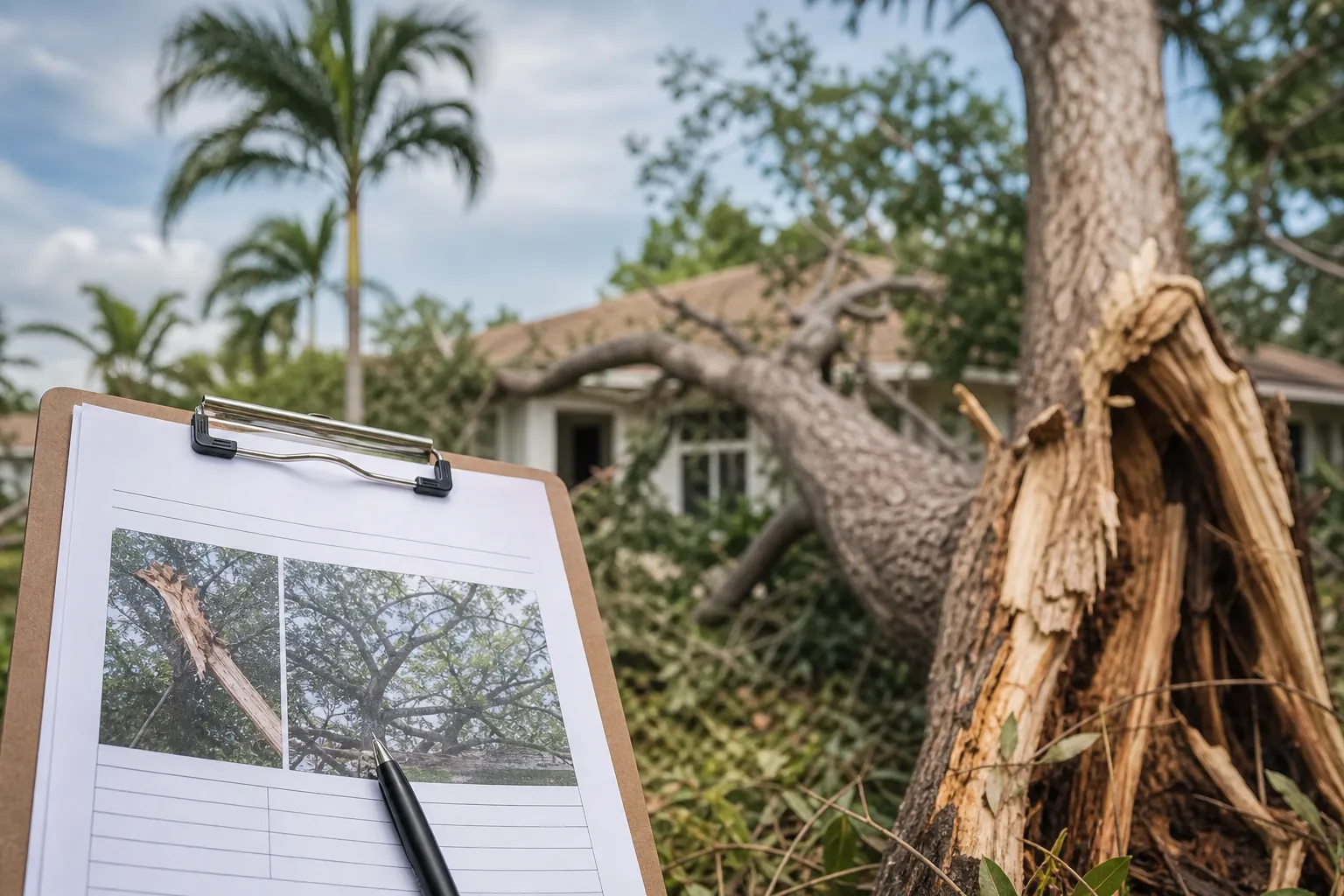
Florida property owners may be asked by an insurance company, agent, underwriter, lender, HOA, or condo association to provide information about trees near a home or commercial building. In some situations, photographs are enough. In others, the requesting party may want a professional tree inspection and a written report describing visible conditions, potential concerns, and recommended next steps.
An arborist report for insurance in Florida can help organize that information in a clear, practical format. It does not determine whether a claim will be approved or whether coverage will be offered. Those decisions belong to the insurer. A report instead provides documented observations that may help an insurer evaluate tree-related conditions on the property.
Why an insurance company may request a tree report
Insurers consider many property features when reviewing risk. Trees may receive attention when large limbs extend over a roof, trunks stand close to structures, roots affect visible surfaces, or a tree shows signs of decline. Concerns may also arise after strong winds, construction activity, lightning, or changes to the surrounding site.
A request does not automatically mean that a tree needs to be removed. Appropriate recommendations depend on the tree's condition, species characteristics, location, structure, and nearby targets. In some cases, tree trimming, canopy thinning, or crown reduction may address a specific concern. In other cases, continued monitoring or tree removal may be considered.
Ask the insurance representative exactly what documentation is required before scheduling an inspection. A written request, form, or list of questions can help the arborist focus on the information the insurer needs.
What an arborist inspection typically examines
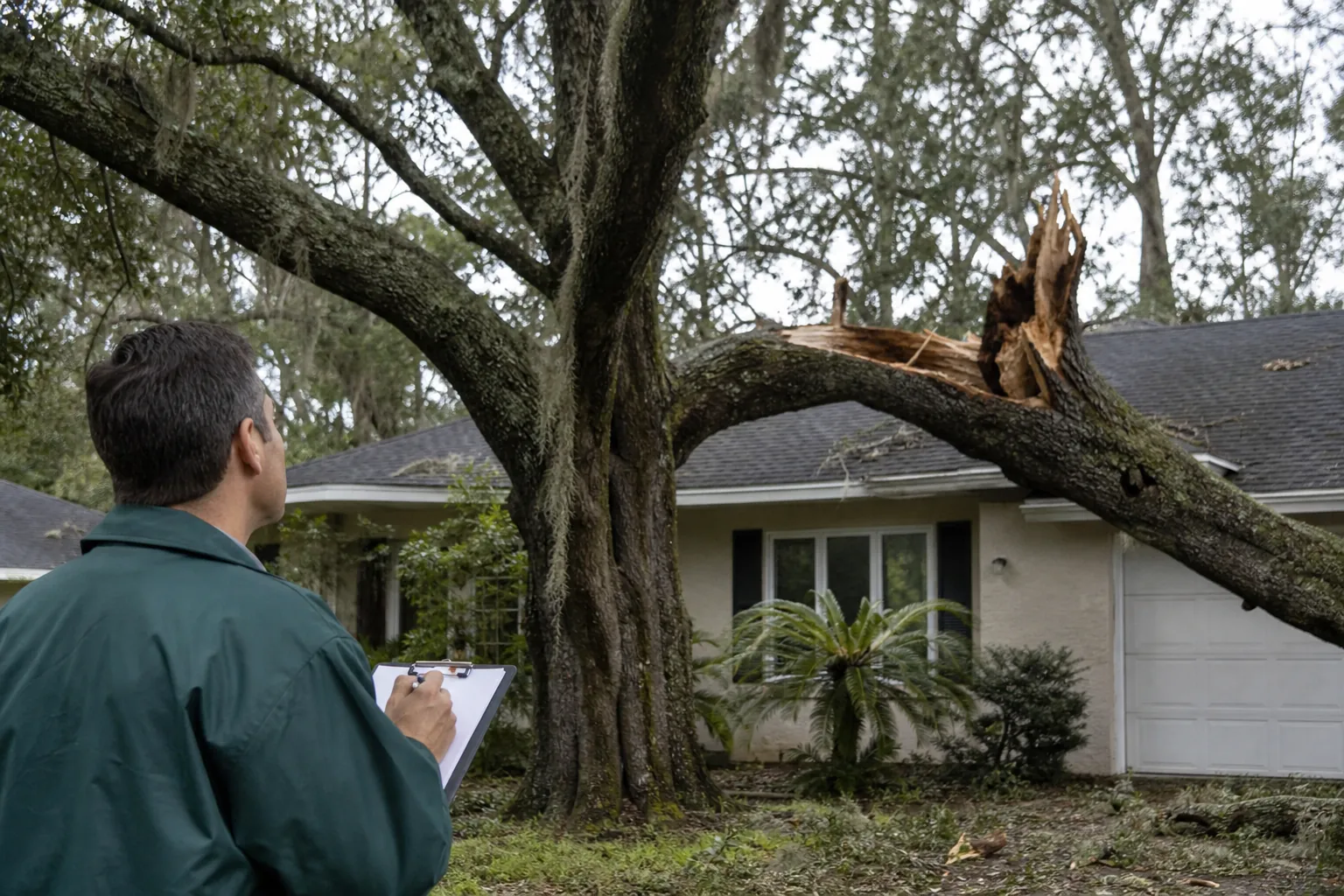
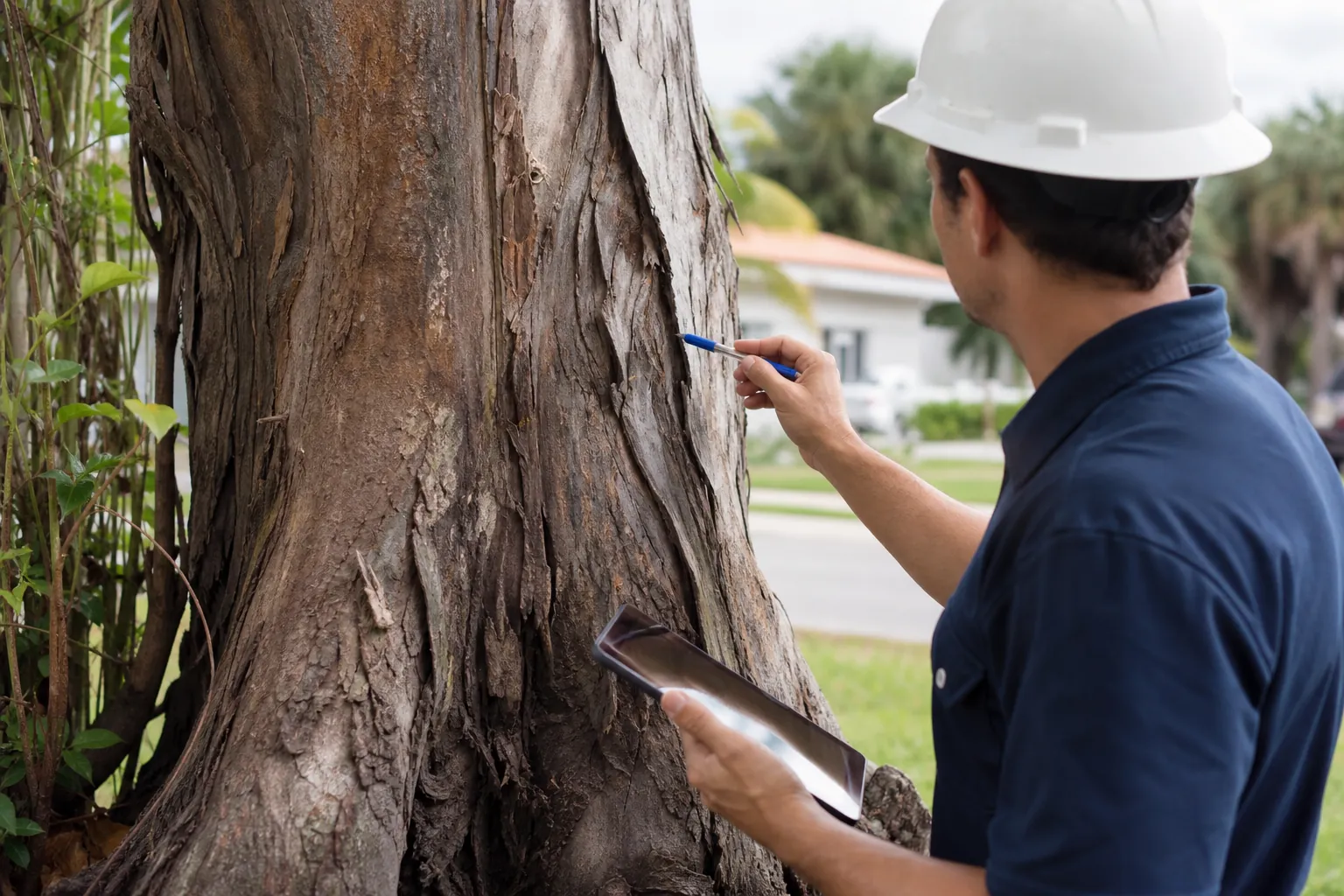
A tree inspection is generally visual and site-specific. The arborist evaluates accessible portions of the tree and its surroundings, looking for conditions that may affect tree health or structural stability. Dense vegetation, limited property access, buried roots, or hidden decay can restrict what is visible.
Depending on the property and the scope requested, an inspection may consider:
- Tree identification: The type of tree, approximate location, and distinguishing features relevant to the assessment.
- Trunk condition: Visible cavities, cracks, decay, wounds, seams, included bark, or unusual movement.
- Root-zone conditions: Exposed or damaged roots, soil disturbance, grade changes, restricted rooting space, or construction effects.
- Canopy structure: Dead, broken, hanging, crossing, or overextended branches, along with uneven weight distribution.
- Tree vitality: Foliage density, dieback, discoloration, growth patterns, and visible signs of pests or disease.
- Nearby targets: Buildings, roofs, driveways, parking areas, walkways, utility zones, and frequently occupied spaces.
- Site exposure: Recent storm effects, changes in surrounding tree cover, drainage conditions, and prevailing wind exposure.
- Management options: Monitoring, tree trimming, canopy thinning, crown reduction, or removal when supported by observed conditions.
The report should distinguish observations from recommendations. Trees are living organisms, and their condition can change after an inspection, particularly following storms, site work, or new damage.
What to clarify before scheduling the inspection
Insurance documentation requests vary. One carrier may ask about a single tree near the roof, while another may want several trees identified and photographed. Commercial properties, HOAs, and condo communities may need a broader review because shared grounds contain multiple structures and use areas.
Before the visit, obtain the insurer's deadline and submission instructions. Confirm whether it requires particular wording, photographs, measurements, tree identification, or documentation that recommended work was completed. Also ask whether the insurer expects the arborist to inspect one named tree or the entire property.
Gather any relevant letters, emails, inspection notices, claim documents, and recent photographs. If previous tree work was performed, make that information available. Clear access to gates, trunks, and root zones can make the site review more efficient. Property owners should not climb trees, remove large limbs, or enter storm-damaged areas to prepare for an inspection.
How recommendations may address tree concerns
A sound recommendation should respond to observed conditions rather than apply the same solution to every tree. Tree trimming may remove dead or damaged limbs and improve clearance. Canopy thinning can selectively reduce density when appropriate, while crown reduction may shorten specific limbs without topping the tree.
When a tree has serious structural defects, extensive decline, or an unsuitable location, tree removal may be recommended. Crane tree removal can be useful where controlled handling is necessary because of nearby structures or restricted space. Stump grinding may follow removal when the remaining stump interferes with the intended use of the area.
After hurricanes or severe weather, emergency and hurricane tree removal may be needed for fallen, split, or unstable trees. Storm-damaged trees can shift without warning. Keep people away from affected areas and avoid trees or branches near utility lines.
For larger sites, recommendations may coordinate with commercial tree services or HOA and condo tree services. Land and lot clearing or brush hogging may improve general access on certain properties, but those services are not substitutes for an individual tree assessment.
Reports, maintenance records, and completed work
An initial report documents conditions observed on the inspection date. If the arborist recommends work, the insurer may separately request proof that it was completed. Ask what form of follow-up documentation it will accept. Do not assume that an estimate, inspection report, work record, or photograph serves the same purpose.
Keep copies of the report, related communications, photographs, and records of completed tree care. Organized records can make future conversations with an insurer or property manager easier. They can also provide useful context if tree conditions are reviewed again.
Local requirements may apply to pruning, removing, or clearing trees, especially for protected trees or properties in regulated areas. Requirements differ across Florida, so confirm current rules with the appropriate city or county before authorizing work.
Choosing the right next step
Start by reading the insurer's request carefully and identifying the deadline. Then arrange arborist reports and tree inspections that match the stated scope. Avoid removing a tree solely because it appears close to a building. A professional evaluation can help clarify whether targeted care, monitoring, or removal is a reasonable response.
Florida Foliage provides tree inspections and arborist reports along with practical tree-care services when work is recommended. To discuss an insurance documentation request or schedule an inspection, call (386) 481-7913. Have the insurer's written request available so the scope can be reviewed before the visit.
Call (386) 481-7913 to talk through next steps.