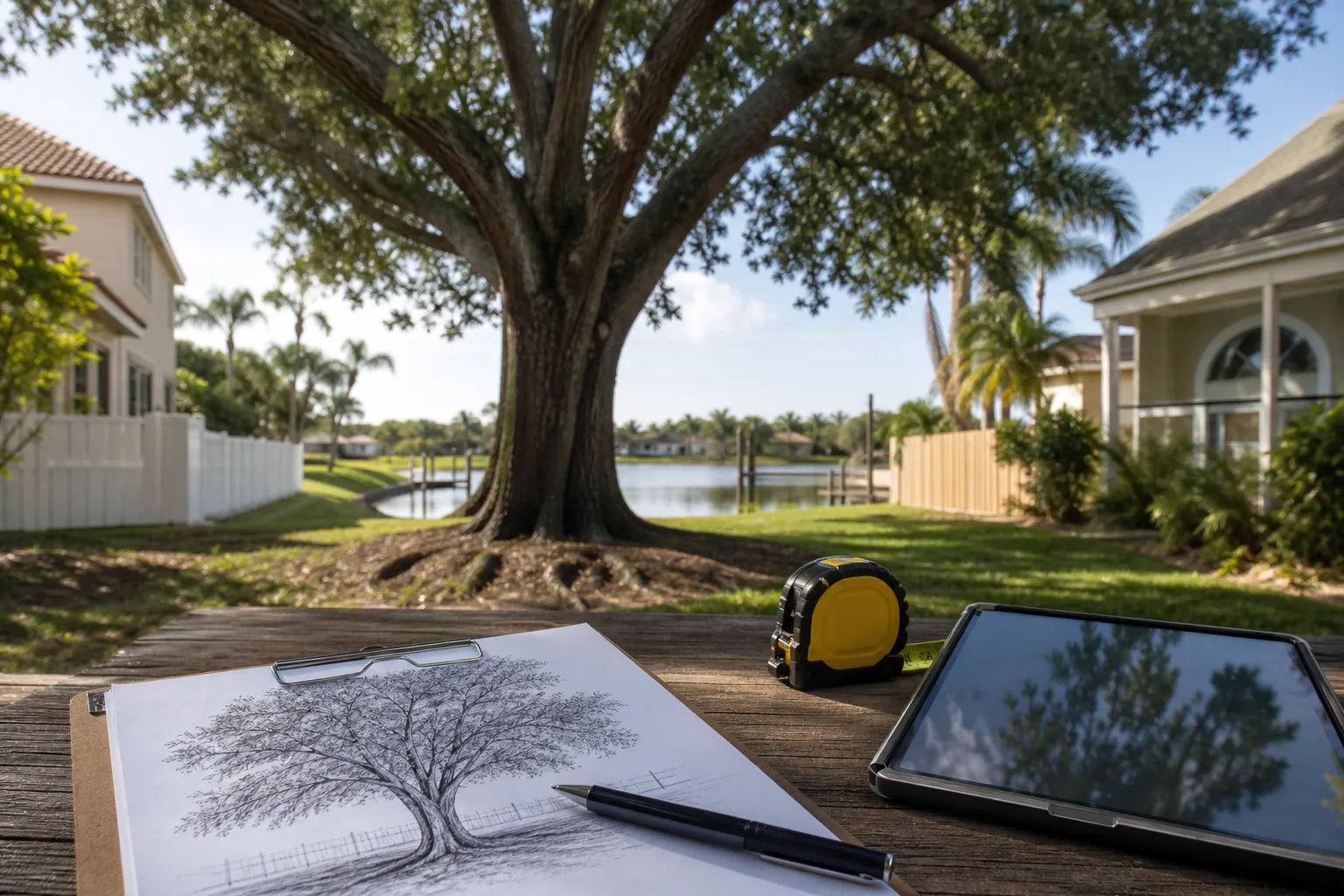
Disagreements involving trees can quickly become stressful. A leaning trunk near a property line, branches over a roof, visible decay, or roots affecting a shared area may lead neighbors, HOAs, condo associations, property managers, and businesses to different conclusions. An objective inspection can replace assumptions with documented observations.
An arborist report for tree dispute situations provides a written assessment of relevant tree conditions at the time of inspection. It can identify defects, explain likely concerns, and outline reasonable tree care options. The report does not decide ownership, liability, or legal rights. Instead, it gives the parties clear technical information they can use when discussing a resolution with insurers, attorneys, association representatives, or local officials.
What an arborist report can document
A useful report begins with a defined scope. The arborist needs to know which trees are involved, what concerns prompted the inspection, and which areas can be accessed. A visual tree inspection may consider the trunk, visible roots, branch structure, canopy, surrounding targets, and signs of decline or damage.
Depending on the assignment and site conditions, documentation may include:
- The tree's location and identifying characteristics
- Approximate size and observable structural form
- Dead, broken, hanging, or weakly attached branches
- Cavities, cracks, decay indicators, or trunk wounds
- Root-zone disturbance, soil changes, or visible root damage
- Canopy density, imbalance, dieback, or storm damage
- Nearby homes, vehicles, walkways, utilities, fences, or shared spaces
- Photographs showing relevant conditions on the inspection date
- Practical recommendations such as monitoring, tree trimming, canopy thinning, crown reduction, or tree removal
- Limits of the inspection, including blocked views or inaccessible areas
Conditions can change after storms, construction, landscaping work, or continued decline. For that reason, the inspection date and the report's stated limitations matter. A report should communicate what was observed without presenting uncertain conclusions as facts.
Why neutral documentation matters in a dispute
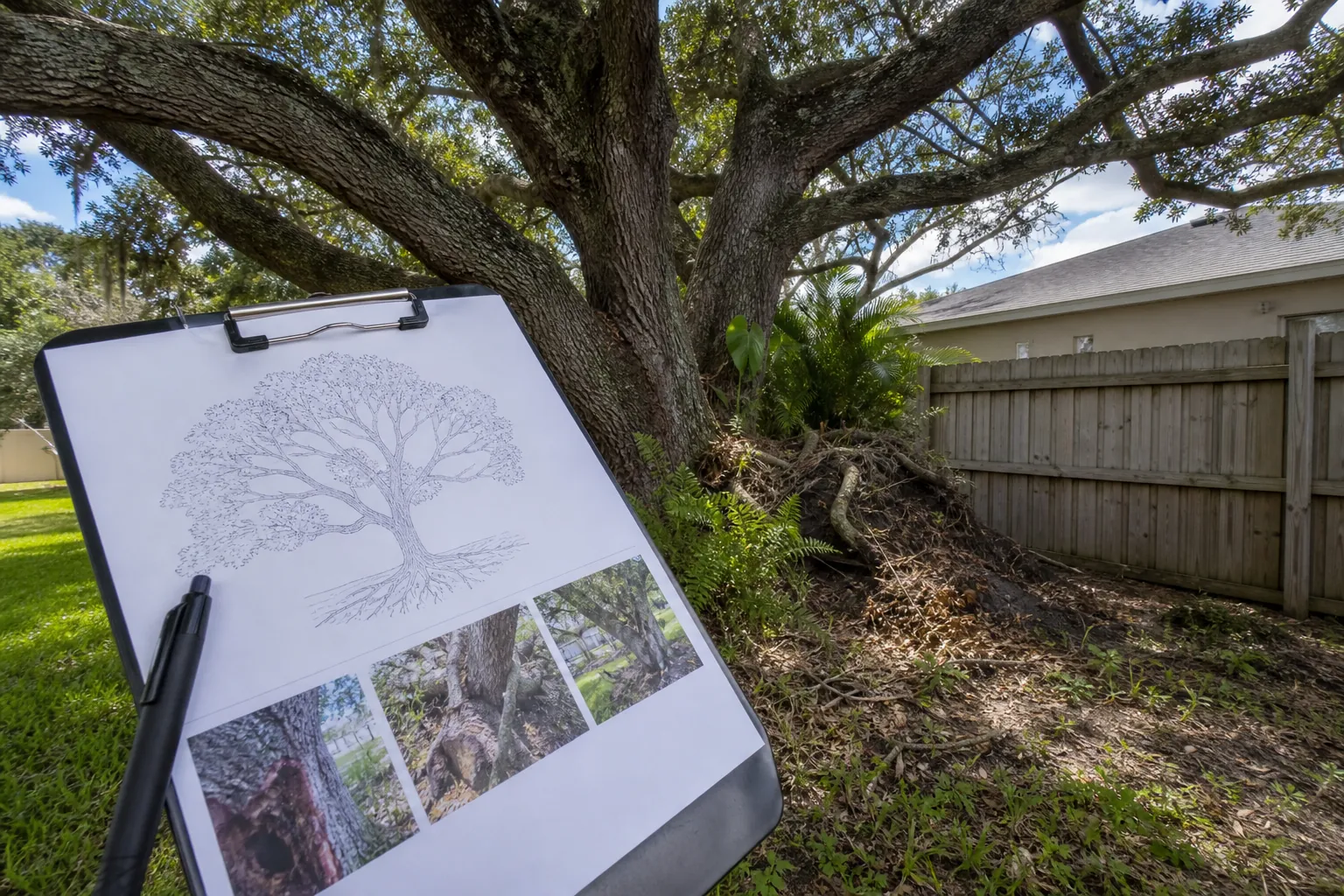
Tree disputes often involve observations made from different sides of a property line. One person may see a dangerous lean, while another sees a healthy tree responding naturally to light. A branch that looks alarming from the ground may be dead, overextended, or structurally normal. A visible root may be blamed for damage even when the relationship has not been established.
Neutral documentation helps separate the condition of the tree from questions that require legal interpretation. An arborist can explain visible defects and suitable care practices, but boundary ownership and responsibility may depend on surveys, deeds, association documents, insurance policies, and legal advice.
The report can also create a shared reference point. Rather than debating recollections, everyone can review the same photographs, observations, and recommendations. This can help guide conversations about access, scheduling, follow-up inspections, or an appropriate scope of tree work.
How to prepare for the inspection
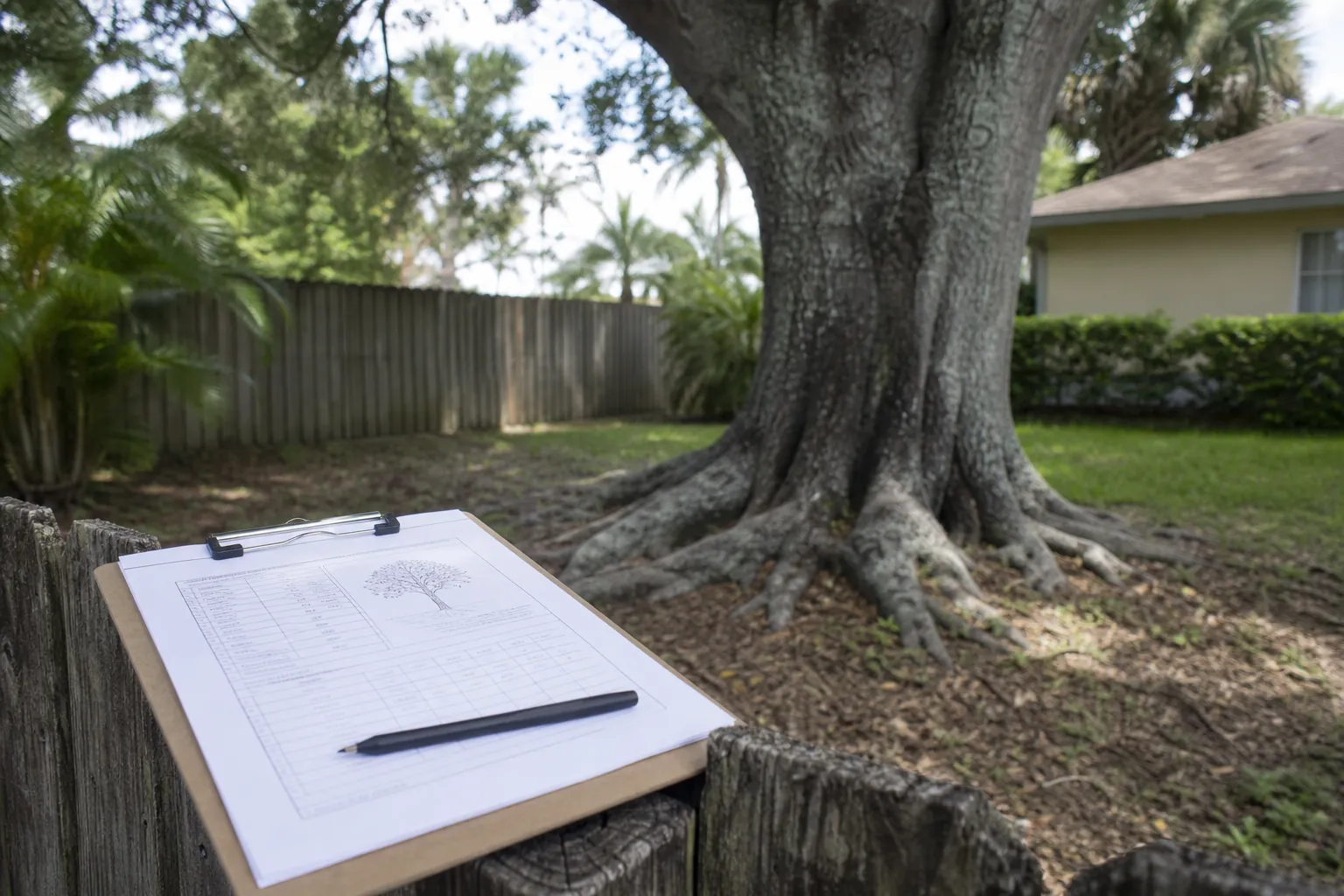
Good preparation helps the arborist focus on the actual issue. Before the visit, collect materials that clarify the concern without attempting to direct the professional conclusion. If the tree is near a boundary, a current survey may be more useful than an informal fence line or assumption about where the property ends.
Provide relevant photographs, written communications, storm dates, and records of previous tree trimming if available. Explain whether branches have fallen, the trunk has shifted, or recent construction occurred near the root zone. Mention access restrictions, gates, pets, tenants, and any need to coordinate with a neighboring owner, HOA, or condo association.
Avoid cutting roots, removing major limbs, filling cavities, or changing the surrounding grade solely to prepare for the inspection. Altering the site may remove evidence and can affect tree stability. Keep people away from a tree if active failure appears possible, particularly after severe weather, and seek emergency assistance when conditions are urgent.
Understanding recommendations and next steps
Recommendations should connect directly to observed conditions. Tree trimming may address dead or damaged branches. Canopy thinning may selectively reduce branch density where appropriate, while crown reduction may reduce the length and leverage of selected limbs. These practices are not interchangeable, and excessive cutting can create new stress or structural problems.
Tree removal may be recommended when defects, site conditions, or foreseeable targets make retention unsuitable. In difficult access areas, crane tree removal may be considered as an operational method. Stump grinding can be discussed after removal when the remaining stump conflicts with site use. The report should make clear which work is being recommended and why.
For properties affected by severe weather, emergency and hurricane tree removal may be needed before a complete dispute process can unfold. Immediate safety concerns should be documented when it is safe to do so, but people should not enter a hazardous area simply to take photographs.
Local requirements vary across Florida. Before authorizing pruning or removal, confirm applicable permits, protected-tree rules, notice requirements, and association approvals with the relevant city or county. An HOA or condo may also have governing documents that affect contractor access or work in shared areas.
Situations involving associations and commercial sites
Disputes on shared or managed properties may involve more stakeholders than a typical neighbor concern. HOA and condo tree services often require communication with boards, managers, residents, and maintenance vendors. Commercial tree services may need to account for customer areas, parking, deliveries, tenants, and pedestrian access.
In these settings, the report's scope should identify the inspected trees and the concern being evaluated. Decision-makers can then distinguish immediate issues from routine maintenance. Separate services such as land and lot clearing or brush hogging may improve an overgrown property, but they do not replace a focused inspection of disputed trees.
Choosing a clear, practical path forward
A sound report should be understandable to a reader who is not a tree professional. Look for direct descriptions, labeled photographs, a clear explanation of limitations, and recommendations tied to specific observations. Be cautious about treating a report as a property survey, legal opinion, engineering analysis, or promise about how a living tree will behave.
Florida Foliage provides arborist reports and tree inspections for property owners, associations, and commercial sites. When follow-up care is appropriate, available services include tree trimming, canopy thinning, crown reduction, tree removal, stump grinding, and other listed tree care options.
If a tree disagreement would benefit from calm, site-specific documentation, call Florida Foliage at (386) 481-7913 to discuss the concern and whether an inspection fits your next step.
Call (386) 481-7913 to talk through next steps.