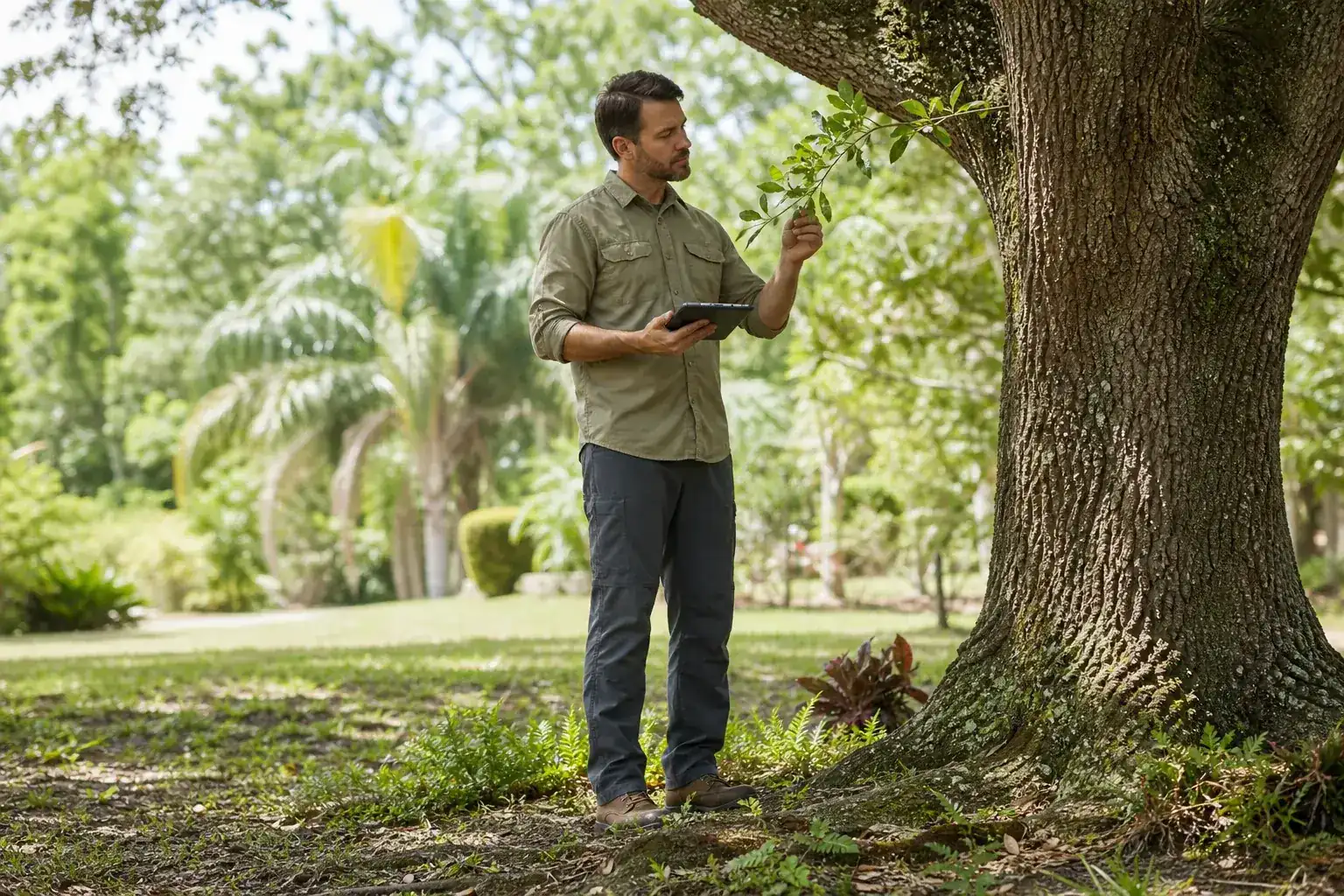
A tree near a property line can become a source of tension when branches overhang a roof, roots affect landscaping, or the tree appears unstable. In these situations, assumptions and emotional conversations rarely help. An arborist report can provide an objective record of visible conditions and practical recommendations.
For Florida property owners, documentation is particularly useful after storms, during property improvements, or when a mature tree affects neighboring homes. An arborist report neighbor tree dispute assessment does not decide ownership or settle a legal disagreement. It can, however, give homeowners, associations, property managers, and other professionals reliable tree-specific information to consider.
What an arborist report can document
An arborist report is a written evaluation based on an inspection of the tree and accessible surrounding area. The scope may focus on one tree, several boundary trees, or a broader group on an HOA, condo, residential, or commercial property.
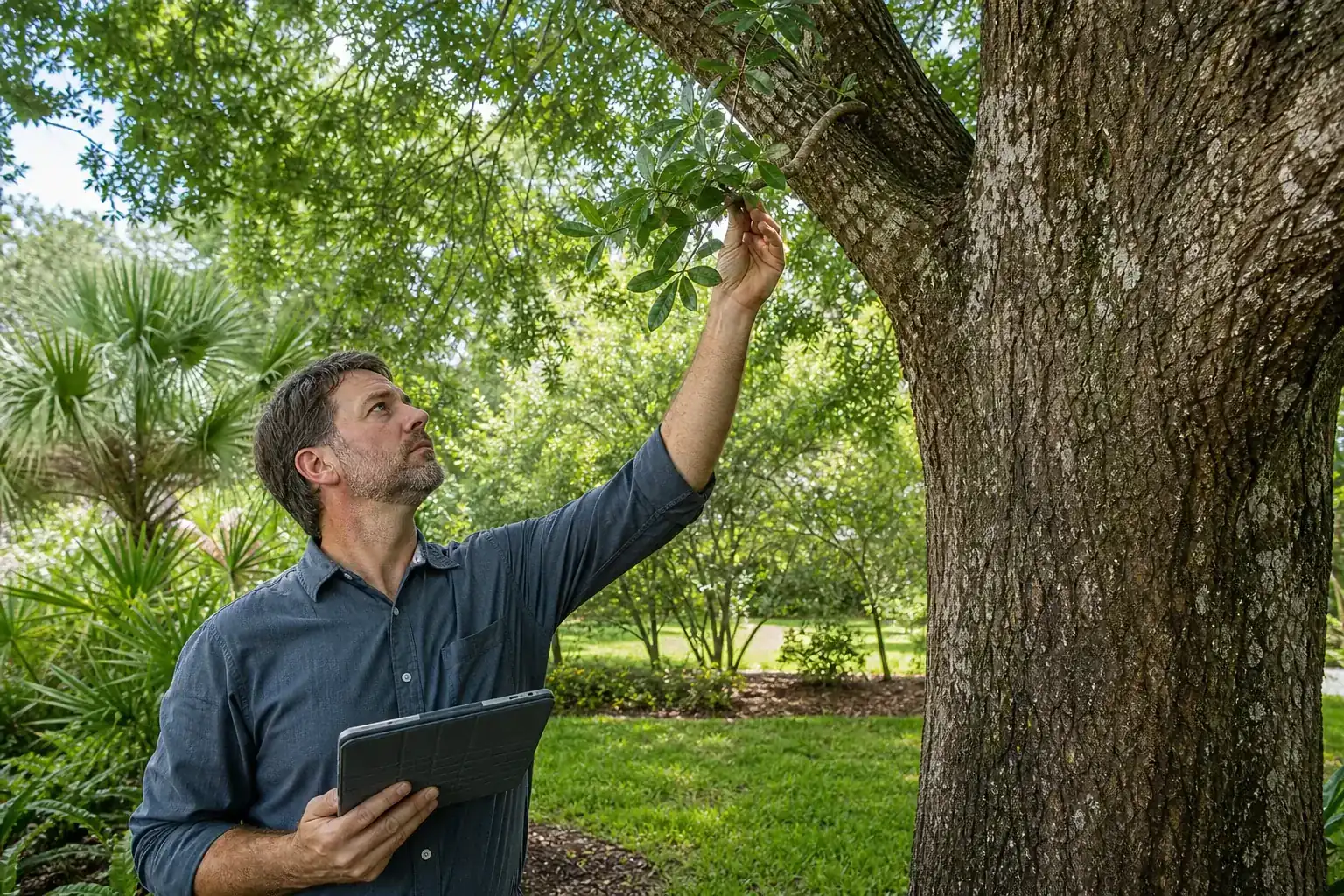
The report may identify the tree species, approximate size, general condition, visible defects, and notable site factors. It can also document canopy imbalance, dead or damaged limbs, cavities, cracks, root-zone changes, soil disturbance, and evidence of previous trimming. Photographs may be included to create a clear record of conditions observed on the inspection date.
Recommendations depend on the findings. They may include monitoring, tree trimming, canopy thinning, crown reduction, or tree removal when appropriate. Stump grinding may be considered after an approved removal. Large, difficult, or restricted-access trees may require crane tree removal. The recommendation should match the condition of the tree rather than the preferences of either neighbor.
When a tree inspection may help a neighbor dispute
Not every overhanging branch requires a formal report. A routine trimming conversation may be enough when both owners agree and the tree is healthy. A professional inspection becomes more useful when the condition is uncertain, damage has occurred, or the parties disagree about what action is reasonable.
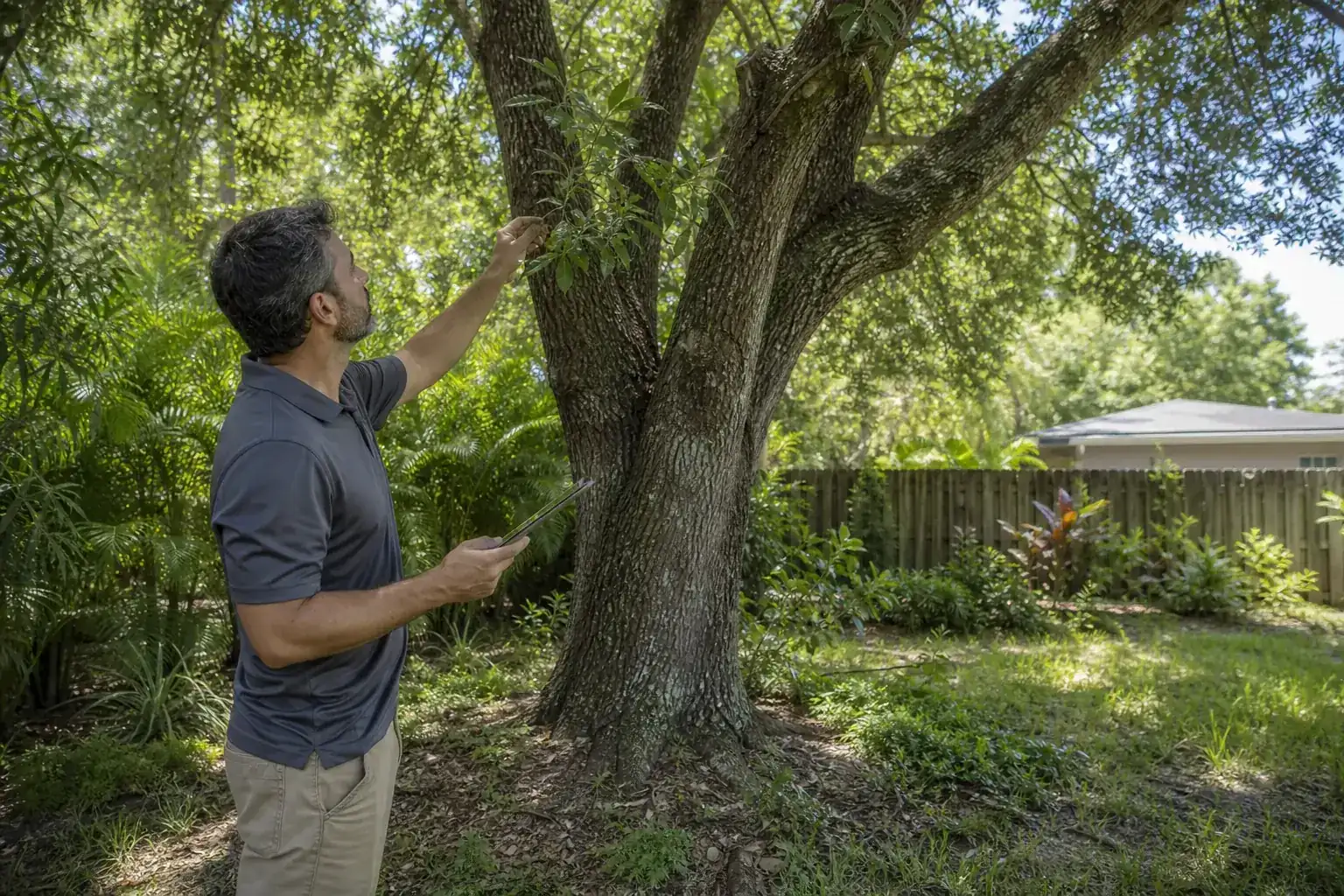
Consider requesting arborist reports and tree inspections when:
- A tree leans toward a neighboring house, driveway, fence, or occupied area.
- Large limbs are dead, cracked, hanging, or repeatedly dropping.
- Roots, excavation, construction, or grade changes may have affected stability.
- A recent storm caused canopy loss, splitting, or movement around the root area.
- One party requests removal while the other believes trimming is sufficient.
- The tree stands close to a surveyed boundary, shared access area, or common property.
- An HOA, condo board, insurer, attorney, or property manager needs written documentation.
- Work on one side of the property line could affect the tree's health or structure.
A report can separate visible facts from speculation. It may also establish a dated record if the tree changes after a hurricane, construction project, or pruning event.
How to prepare for the inspection
Good preparation helps the arborist understand the concern without turning the inspection into an argument. Write down what you have observed, when it occurred, and whether the condition appears to be changing. Gather dated photos, storm-related images, prior tree records, and relevant correspondence if available.
Mark the area of concern, but do not represent a boundary as certain unless it has been professionally established. An arborist evaluates trees, not property ownership. If the exact boundary matters, separate guidance from an appropriately qualified property professional may be needed.
Provide safe access to your property and explain any restrictions. The arborist generally cannot enter a neighbor's property without permission. Limited access, dense vegetation, fences, buildings, or concealed roots may affect what can be observed. Those limitations should be acknowledged so readers understand the report's scope.
Avoid cutting roots, removing major limbs, or changing the site before the inspection unless an immediate safety response is necessary. Altering the tree can remove evidence and may worsen its condition. Following severe weather, keep people away from hanging limbs, split trunks, and fallen trees. Emergency and hurricane tree removal may be appropriate when access or safety is affected.
Understanding recommendations and next steps
Tree risk is rarely reduced by one universal solution. Tree trimming may remove dead or damaged branches while preserving the tree. Canopy thinning can selectively address density when suitable, while crown reduction may decrease the length and leverage of particular limbs. These practices are different from indiscriminate topping, which can create poor structure and future maintenance concerns.
Removal may be recommended when defects, decline, site limitations, or consequences of failure make retention unsuitable. Access conditions can influence the work plan. Crane tree removal may be used where conventional lowering is impractical. Stump grinding can address the remaining stump, but root systems may extend beyond the visible trunk area.
Some disputes involve more than one tree or a larger unmanaged area. Land and lot clearing or brush hogging may improve access, but they should not be treated as substitutes for evaluating significant trees near structures or boundaries. Commercial tree services and HOA and condo tree services may also require coordination with managers, boards, residents, and vendors.
Communicating with your neighbor calmly
Share concerns in neutral language. Describe the branch, crack, lean, or storm damage you observed rather than declaring that the tree is dangerous. If an inspection is completed, provide the relevant findings and recommendations instead of using the report as a threat.
Discuss who will arrange access, whether both parties want to attend, and how recommended work will be coordinated. Keep written records of communications and completed tree care. If the dispute involves ownership, liability, easements, or rights to trim across a boundary, seek appropriate legal guidance. An arborist report supplies tree-related information, not legal advice.
Local requirements can vary across Florida. Before tree removal, significant trimming, land clearing, or work affecting protected areas, confirm current rules with your city or county. HOA and condo requirements may also apply in addition to local government procedures.
Request an objective tree assessment
A clear inspection can help everyone focus on observable conditions and appropriate tree care. Florida Foliage provides arborist reports and tree inspections for residential, commercial, HOA, and condo properties, along with tree trimming, tree removal, canopy thinning, crown reduction, and related approved services.
For calm, practical assistance with a tree near a property line, call Florida Foliage at (386) 481-7913 to discuss the site and the type of documentation you may need.
Call (386) 481-7913 to talk through next steps.