Reviewed by Clinton Funk
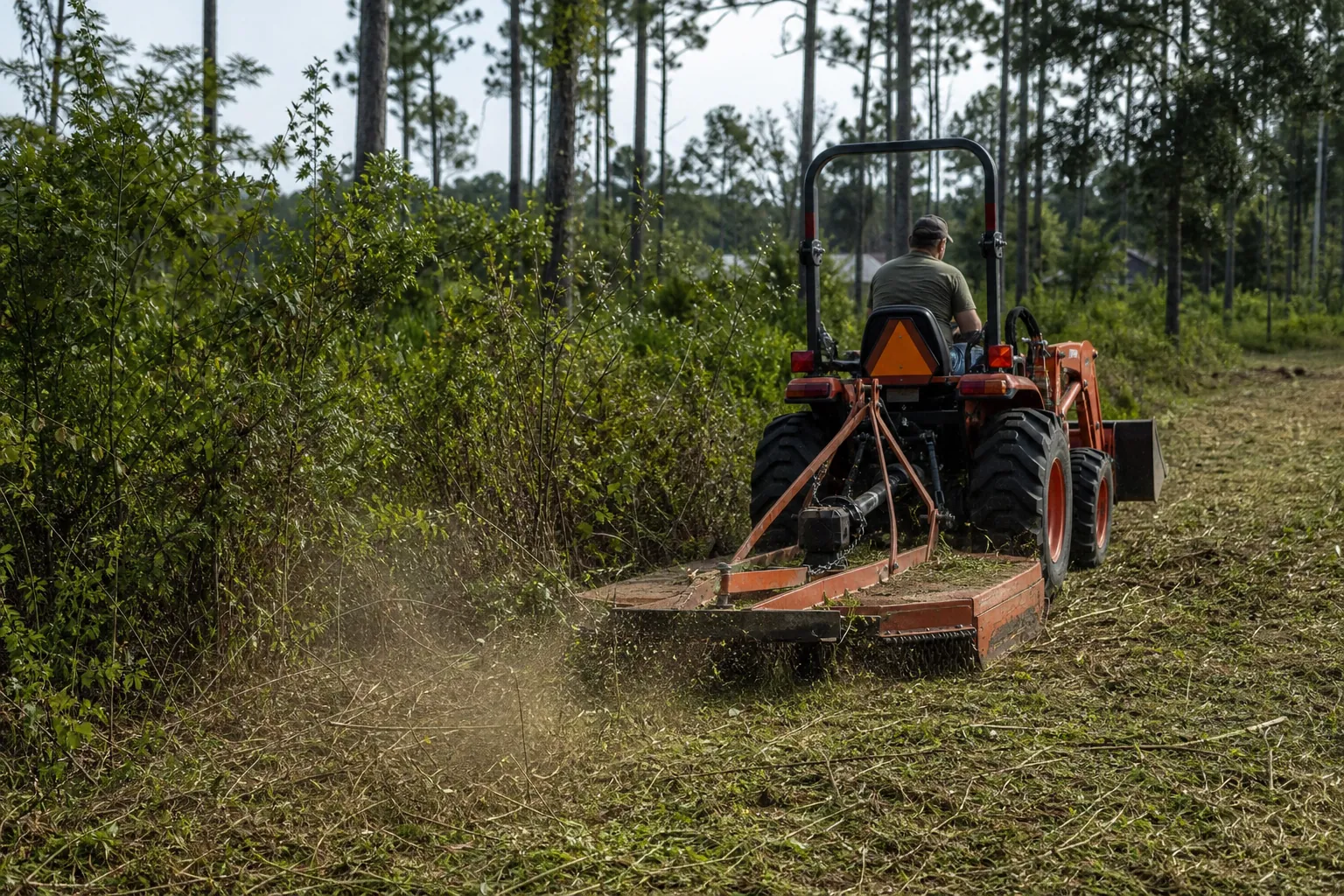
Brush hogging before hurricane season helps homeowners manage thick grass and small woody growth. It can make a yard easier to inspect and maintain. It doesn't replace tree care or make a property stormproof. Start with a walk-through, mark what should stay, and separate brush work from tree work.
For Gulf Breeze homeowners near Pensacola, hurricane prep should have a clear scope. One area may need mowing, while another needs a tree inspection. This guide explains how to sort those needs without clearing more than necessary.
Florida Foliage is headquartered in Daytona Beach. This guide offers homeowner education for Gulf Breeze and makes no claim about local crews or scheduling.
What does brush hogging before hurricane season accomplish?
Brush hogging cuts tall grass, weeds, and some small woody growth. Before hurricane season, its main value is better access and sightlines. Clearing selected areas can reveal hidden debris and make tree bases easier to see. It doesn't assess tree strength, remove stumps, or address dangerous limbs.
Think of the work as one part of a wider plan. A mower handles suitable ground growth. Tree trimming addresses selected branches. A tree inspection helps identify concerns that mowing can't resolve. Keeping these tasks separate makes the scope easier to explain.
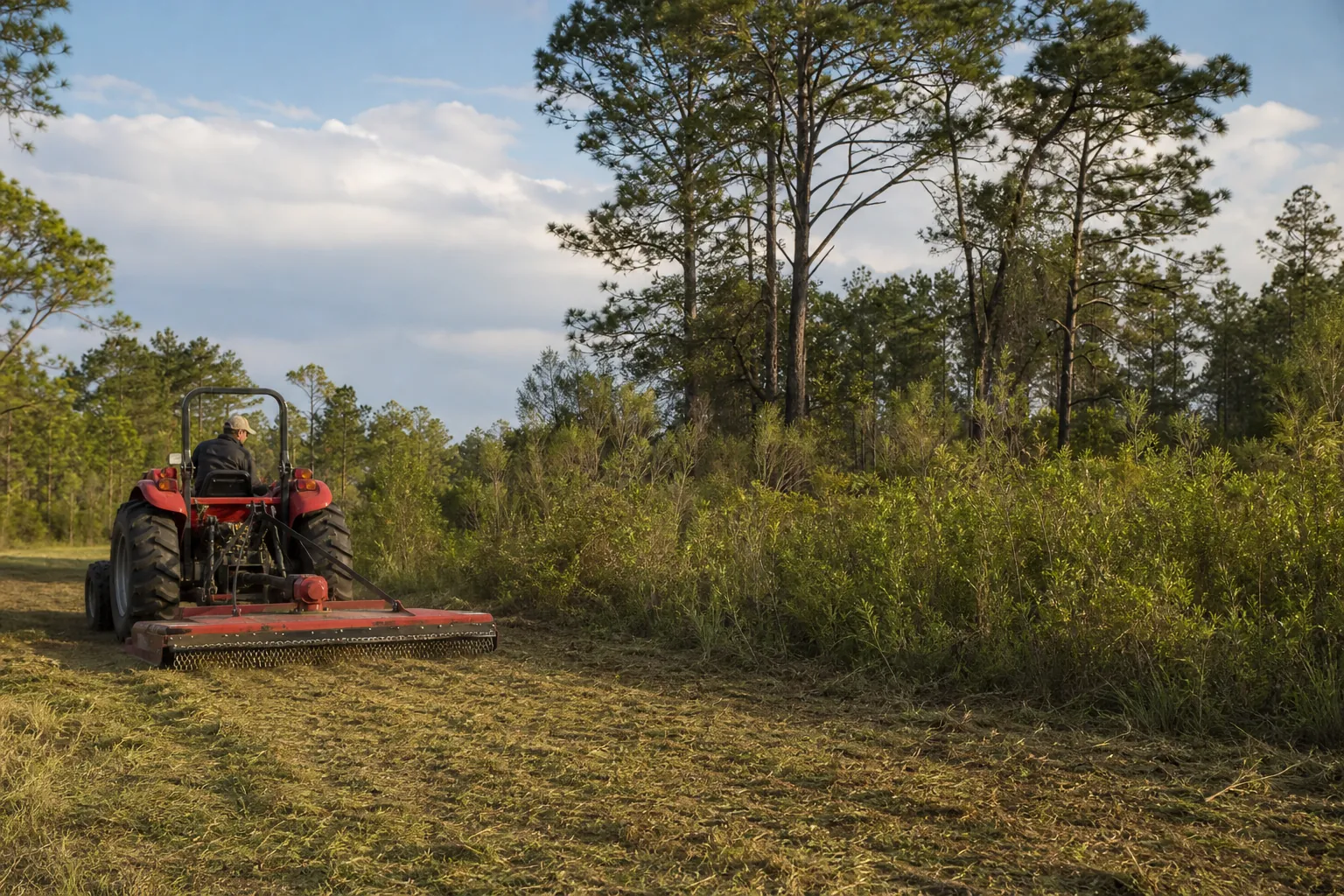
A brush hog doesn't leave the same finish as a lawn mower. Cut stems, coarse clippings, and uneven patches may remain. Ask what the finished area should look like before work starts. A rough access strip and a regularly mowed yard need different plans.
Growth can hide old wire, fallen limbs, stones, and discarded objects. Don't assume a green patch is clear ground. Tell the person assessing the site about any known obstacles. Mark their locations from a safe, visible spot rather than searching through dense brush.
Keep expectations tied to the task. Cutting brush doesn't show how roots are holding underground. It doesn't fix a split trunk or change a tree's lean. If clearing reveals a tree concern, add a separate assessment rather than expanding the mowing task.
When should Gulf Breeze homeowners plan the work?
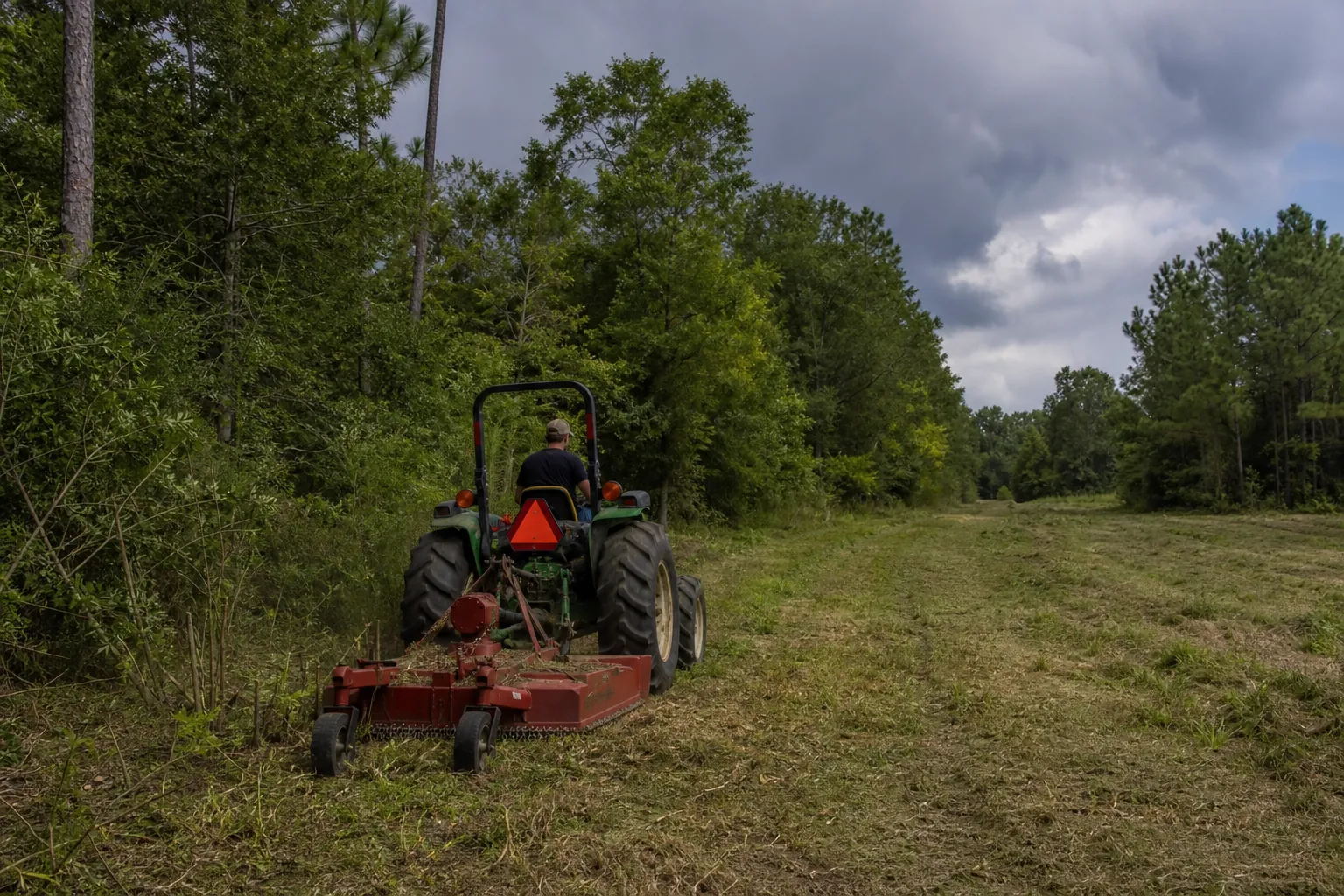
Plan brush work well before a storm threatens the area. Early planning leaves time to inspect the site, choose boundaries, and address separate tree concerns. Once storm conditions approach, follow official weather guidance instead of starting outdoor projects. The National Weather Service hurricane action guide explains how actions change as a storm nears.
Use an early-season walk-through to decide which areas need attention. Then check those areas again as growth returns. The right mowing interval depends on the site and its use. A shaded tree edge may need a different plan than an open strip.
Start with areas you need to reach for routine storm prep. These might include a gate, a shed approach, or a tree inspection path. Avoid clearing a whole lot simply because one route is overgrown. A smaller, defined scope may meet the need.
- Mark the paths you need for routine yard checks before hurricane season begins.
- List tree concerns separately so mowing doesn't become a substitute for an inspection.
- Choose a finish that supports later checks without stripping the whole yard.
- Review the cut area afterward and note any debris that still needs removal.
Don't let a mowing appointment become your weather plan. Have a separate household plan for storm alerts and shelter decisions. Ready.gov's hurricane guidance explains alerts, evacuation instructions, and steps to take before a hurricane arrives.
After the first cut, note how quickly the useful paths narrow again. This gives you a practical basis for future upkeep. Keep the plan flexible rather than tying every yard to one fixed mowing date.
What should stay untouched during hurricane brush clearing?
Set clear boundaries around trees, planted beds, and features you want to keep. Show the operator those areas before work begins. Dense growth can blur the line between brush and valued plants. A marked no-cut zone helps keep the job focused on hurricane access and yard inspection.
Walk the boundary from a clear path where possible. Point out young trees, low branches, visible roots, and irrigation parts. Include garden edges and any stakes that may be hard to see. Photos can help explain the plan, but they don't replace a site check.
Don't treat every plant beneath a tree as unwanted brush. Some areas may need careful trimming by hand or a narrower clearing method. Ask how work near trunks and exposed roots will be handled. The answer should reflect the actual space, not a standard mowing pattern.
Keep material piles out of the agreed inspection route. A clear path loses value if clippings and branches block the same space. State where cut material may remain and which areas should be left open. Discuss both the cutting and the final condition.
Wet spots and uneven ground need attention during planning. Tell the site assessor where water tends to collect after rain. Also identify ditches, hidden slopes, and old stumps you know about. Let the equipment operator assess access rather than assuming every patch is suitable.
If a boundary is unclear, pause that part of the plan. A narrow strip can wait for a better look. The goal is a useful storm-prep area, with fewer surprises during future checks. It isn't a race to remove all green growth.
Which tree concerns need more than brush hogging?
Brush hogging and tree care solve different problems. Mowing may reveal a fallen limb, trunk damage, or a crowded tree edge. Those findings need their own review. Tree inspections, trimming, canopy thinning, crown reduction, or removal may be discussed after assessment, rather than added as automatic steps.
A homeowner's walk-through is a way to collect observations. It isn't a way to confirm that a tree will withstand a hurricane. Record what you can see from the ground. Note changes, take photos from a clear location, and describe the tree's position.
For example, write that a branch hangs over the shed. Avoid deciding which cut should be made before the tree is assessed. The same approach applies to a new lean or a damaged trunk. Describe the concern first, then ask what review is needed.
Don't assume every tree needs canopy thinning or crown reduction before a storm. Each task has a specific purpose and should follow an assessment. Tree removal is a separate decision as well. Brush clearing alone doesn't establish the need for any of these services.
Tree work around power lines requires special care and qualified workers. Homeowners shouldn't use a pole tool or climb to inspect nearby limbs. OSHA's tree care guidance describes electrical hazards and other risks involved in tree work.
If a tree issue is found, keep it on a separate task list. Ask what can be assessed from the ground and what needs further review. An arborist report or tree inspection may help document findings. Don't treat a mowing visit as a completed tree assessment.
How should you define the hurricane clearing scope?
A useful scope states where work starts, where it stops, and what remains afterward. Include access paths, no-cut zones, hidden obstacles, and cut-material handling. Separate brush hogging from land and lot clearing or tree removal. Clear task boundaries make the finished work easier to review before hurricane season.
Use simple landmarks when describing each area. A fence corner, marked gate, or shed edge is easier to follow than a vague direction. Photos can show the same points from several angles. Label them so the work area is clear during a site discussion.
| Area or finding | Task to discuss | Detail to confirm |
|---|---|---|
| Tall grass along a yard path. | Brush hogging. | Mark the path width and stopping points. |
| Mixed brush and larger woody growth. | Land and lot clearing assessment. | Identify which plants stay and which areas need review. |
| A branch over a storm-prep route. | Tree inspection and possible tree trimming. | Describe the branch location without choosing cuts yourself. |
| A stump within the planned route. | Stump grinding assessment. | Confirm that stump work is a separate task. |
| A damaged tree after a hurricane. | Emergency and hurricane tree removal assessment. | Keep the area out of use pending review. |
Include the expected finish in the same scope. Will coarse clippings remain across the cut area? Are larger pieces to be gathered, or left in an agreed place? These details matter when the goal is a usable inspection path.
- Show the exact entry point and identify gates that need to remain accessible.
- Mark trees and planted areas that should remain outside the cutting zone.
- Describe known wire, stumps, stones, and other objects hidden by dense growth.
- Confirm where cut material will remain before the work area is finalized.
- Keep tree inspections and any later tree work listed as separate tasks.
For shared grounds, use one clear map for the discussion. HOA and condo tree services or commercial tree services may involve several separate areas. Keep the storm-prep purpose clear for each one, such as inspection access or a defined clearing strip.
What changes when a hurricane is approaching?
When a hurricane approaches, shift from yard projects to your household storm plan. Don't rush brush cutting or start tree work to beat worsening weather. Follow local alerts and instructions. The National Weather Service hurricane action guide explains preparation steps for watches, warnings, and changing conditions.
An unfinished brush plan can wait. A half-cut area doesn't mean you should keep working as weather worsens. Decide in advance that official guidance will set the stopping point. This keeps a yard project from competing with urgent household actions.
Secure loose outdoor items while conditions allow and follow official instructions. That task is separate from mowing standing vegetation. Ready.gov recommends bringing in loose outdoor objects and following directions from local officials during hurricane preparation.
Keep your written yard notes for later rather than making a final inspection trip. Photos and marked maps can support a future discussion. They aren't a reason to go outside during dangerous conditions. Use weather updates to guide your next steps.
If tree work remains unfinished, don't try to complete it yourself. Climbing, chainsaw use, and work near lines carry serious hazards. OSHA's tree care resources outline these risks and the controls used for tree work.
How should you review the yard after a hurricane?
Wait until officials say it's safe before going outside after a hurricane. Then keep clear of damaged trees, fallen lines, and unstable debris. Don't begin with a mower. Ready.gov's post-hurricane guidance explains return precautions, electrical hazards, and care around damaged areas.
The old brush-hogging scope may no longer fit the site. A previously clear route may now contain limbs, wire, or storm debris. Start a new list based on what can be observed safely. Keep damaged areas out of use while they await assessment.
Never drive mowing equipment into growth that may hide fallen wires. Stay away from downed power lines and report them to the utility. Ready.gov advises keeping clear of fallen power lines and contacting the power company.
- Use existing photos to compare areas without entering damaged parts of the yard.
- List fallen trees, hanging branches, and blocked routes as separate review items.
- Keep brush mowing on hold where storm debris makes ground conditions unclear.
- Ask for a fresh scope when damage changes access or the planned task.
Storm cleanup may involve emergency and hurricane tree removal before any brush work resumes. Some tree situations may need crane tree removal after assessment. Don't select the method based on appearance alone. Describe the location, nearby structures, and access limits during the initial discussion.
Once tree and debris concerns have been addressed, review the remaining growth. The next task may be a small cut rather than broad clearing. Keep the goal practical: restore useful access and make future checks easier without expanding the work by habit.
Frequently asked questions
Does brush hogging make trees hurricane ready?
No. Brush hogging manages ground growth, not tree structure or root condition. It can help expose areas for inspection. Tree concerns still need separate review. Keep tree trimming, canopy thinning, crown reduction, and removal out of the mowing scope unless assessed and clearly discussed.
Should I clear every overgrown part of my Gulf Breeze yard?
Start with the areas that serve a clear hurricane-prep purpose. These may include inspection paths and access to gates. Mark trees and planted areas you want to retain. A focused clearing plan can be more useful than cutting the entire property without a defined goal.
Can brush hogging remove storm debris?
Don't treat mowing as storm-debris cleanup. Fallen limbs, wire, and hidden objects change the task and need assessment first. Stay clear of fallen power lines, as Ready.gov advises. Resume planning only when damaged areas and ground conditions have been reviewed.
What should I prepare for a brush-clearing discussion?
Gather photos, a simple area map, and notes about known obstacles. Mark what should stay and describe the finish you want. List any tree concerns separately. Explain that the purpose is hurricane readiness, then ask which areas need an on-site review before defining the work.
Does Florida Foliage have a Gulf Breeze crew?
Florida Foliage is headquartered in Daytona Beach. This article doesn't establish a Gulf Breeze crew or local availability. Call to describe your property and ask about your location. Confirm service scope and scheduling directly rather than treating this educational guide as a local service commitment.
For a neutral estimate discussion, call Florida Foliage at (386) 481-7913. Describe your location, brush growth, and any separate tree concerns. Ask about service availability and the assessment needed for your proposed hurricane-prep scope.
Call (386) 481-7913 to talk through next steps.