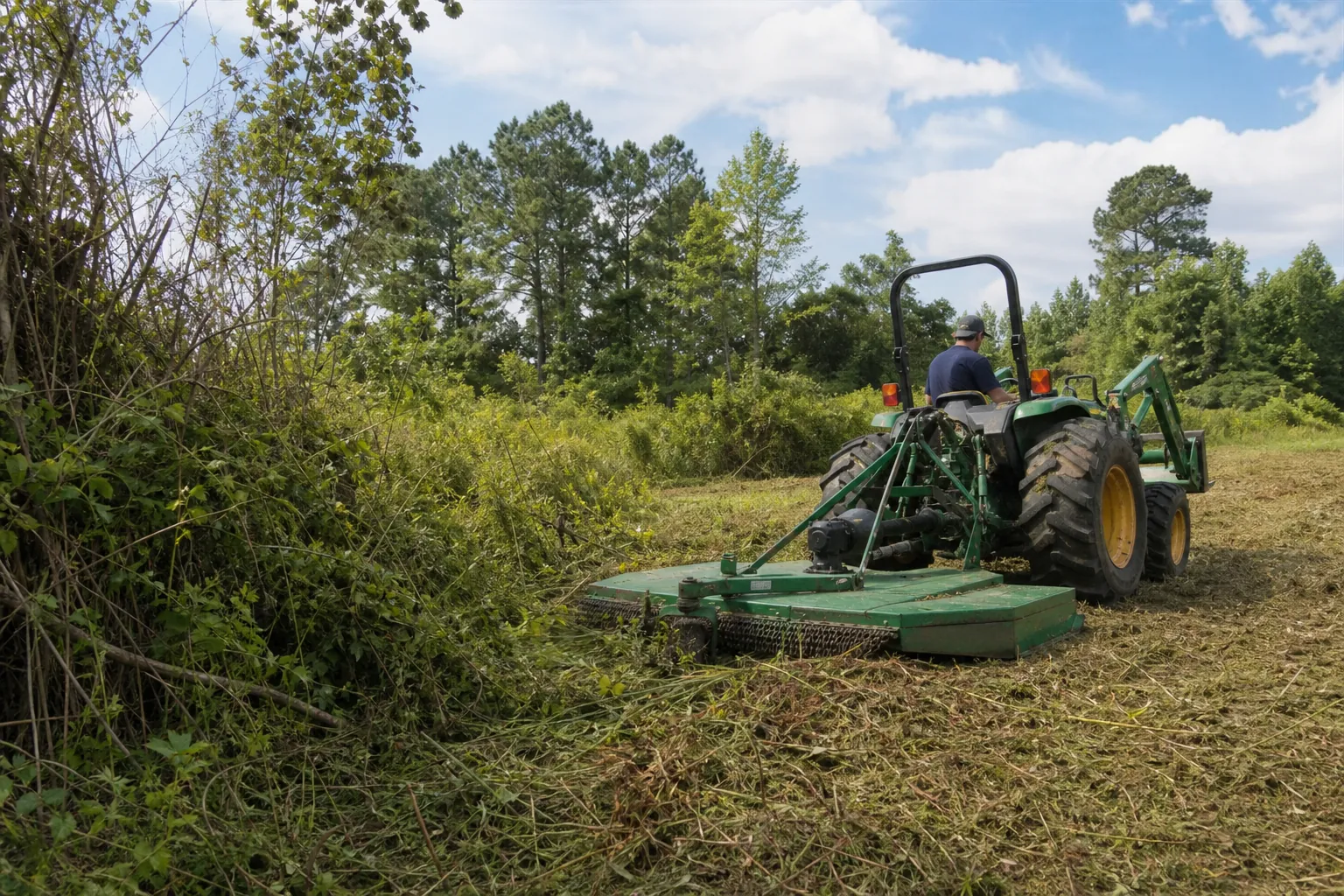
Overgrown acreage can become difficult to walk, inspect, and maintain. Tall grass, dense weeds, vines, and woody brush may hide uneven ground, fallen limbs, stumps, or discarded materials. In Florida's long growing season, vegetation can quickly reclaim open areas that are not managed regularly.
Brush hogging is a practical first step for many neglected properties. It cuts and reduces thick vegetation across broad areas, helping owners regain visibility and access without treating the work like routine lawn mowing. For property owners researching brush hogging overgrown acreage Deltona services, understanding the process makes it easier to plan the work responsibly.
What Brush Hogging Is Designed To Handle
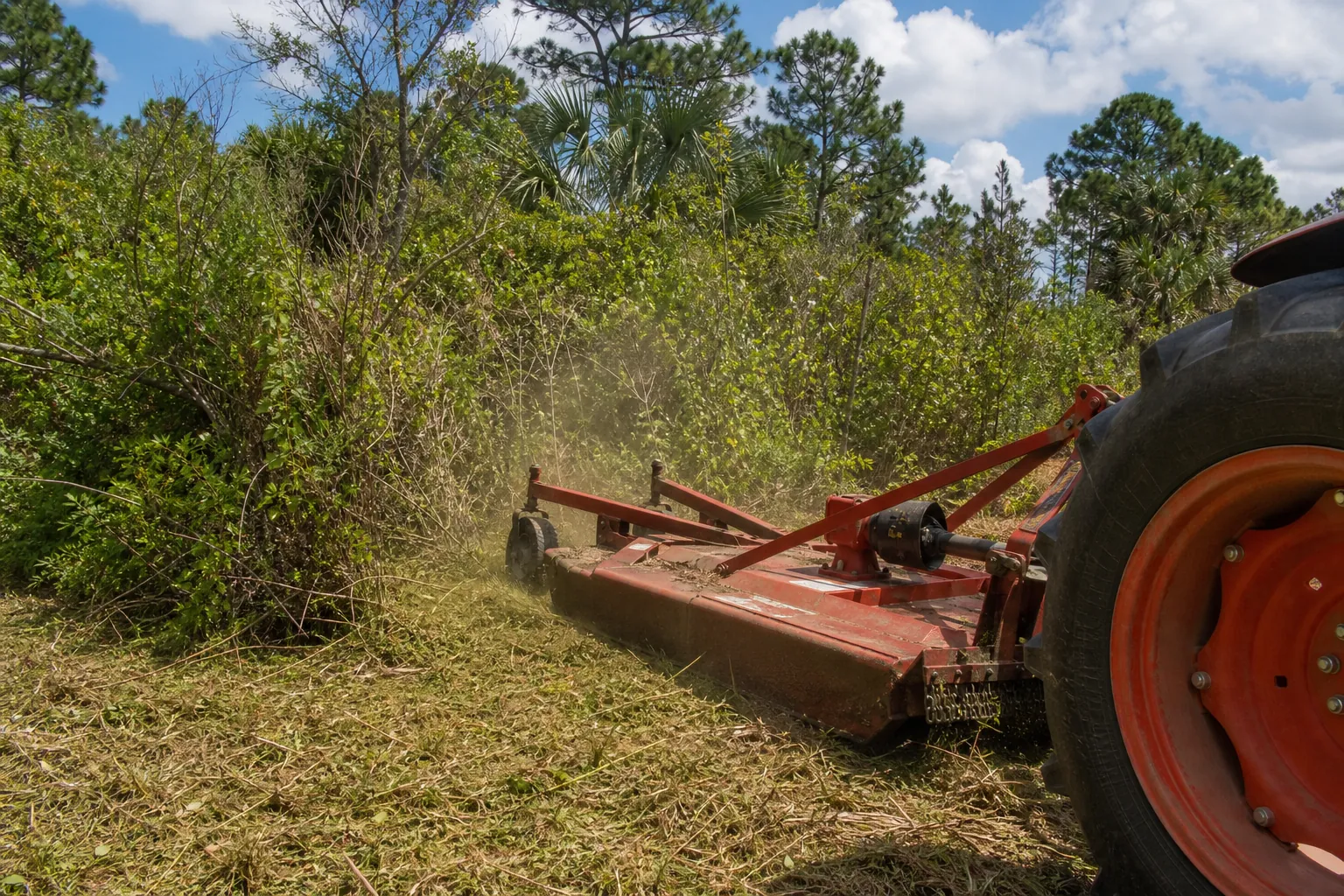
A brush hog is heavy-duty cutting equipment used for tall grass, weeds, and brush. Unlike a finish mower, it is intended for rougher vegetation and less-manicured ground. The result is functional clearing rather than a smooth, lawn-like finish.
Brush hogging can be useful on vacant land, large residential parcels, commercial properties, access lanes, and areas around established trees. It may also support land and lot clearing when dense surface growth prevents workers from seeing the site clearly.
However, brush hogging is not the right method for every obstacle. Large trees, substantial trunks, hazardous limbs, and deeply rooted stumps require different equipment and techniques. Florida Foliage can evaluate whether a project also calls for tree removal, tree trimming, stump grinding, or crane tree removal.
Why A Site Inspection Matters Before Cutting
Overgrown vegetation can conceal hazards that are easy to miss from the property's edge. Walking the area before equipment enters helps identify obstacles, sensitive features, and sections that require a different approach. When growth is too dense for a complete ground-level review, work may need to proceed in controlled stages.
A practical pre-work assessment should consider:
- Hidden debris: Wire, concrete, metal, glass, and abandoned materials can damage equipment or create dangerous projectiles.
- Ground conditions: Holes, washouts, soft soil, steep slopes, and drainage channels may limit safe equipment access.
- Stumps and logs: Old stumps, fallen trees, and buried wood can be difficult to see beneath tall vegetation.
- Utilities and structures: Utility boxes, fences, irrigation components, wells, and outbuildings should be clearly marked.
- Tree condition: Dead limbs, leaning trees, split trunks, and storm damage may require a tree inspection before nearby work begins.
- Property boundaries: Owners should know where the work area ends and avoid disturbing neighboring land.
- Wildlife and sensitive areas: Nests, wet areas, and protected features may affect how and when clearing is performed.
Local requirements can vary by location and project scope. Property owners should confirm applicable rules, approvals, and restrictions with the City of Deltona, Volusia County, or the appropriate local agency before clearing begins.
How Brush Hogging Fits With Tree And Land Care
Brush hogging often reveals conditions that could not be evaluated while the acreage was covered. Once surface vegetation is reduced, owners can see which trees are worth retaining, where access is limited, and whether stumps interfere with future use.
If mature trees remain on the site, tree trimming may address dead, damaged, or poorly positioned branches. Canopy thinning can selectively reduce branch density where appropriate, while crown reduction may help manage the size of a tree without simply removing random limbs. These services should be chosen according to tree structure and site goals rather than used as interchangeable cutting methods.
Some properties contain trees that are dead, unstable, storm-damaged, or located where planned access is needed. Tree removal may then become part of a broader land and lot clearing plan. Crane tree removal can be considered when tree size, condition, or nearby obstacles make conventional access impractical. Stump grinding can reduce remaining stumps that obstruct mowing, pathways, or continued maintenance.
For uncertain tree conditions, arborist reports and tree inspections provide a more focused evaluation. Commercial tree services and HOA and condo tree services can also coordinate vegetation management across shared or high-use properties.
What To Expect During The Brush Hogging Process
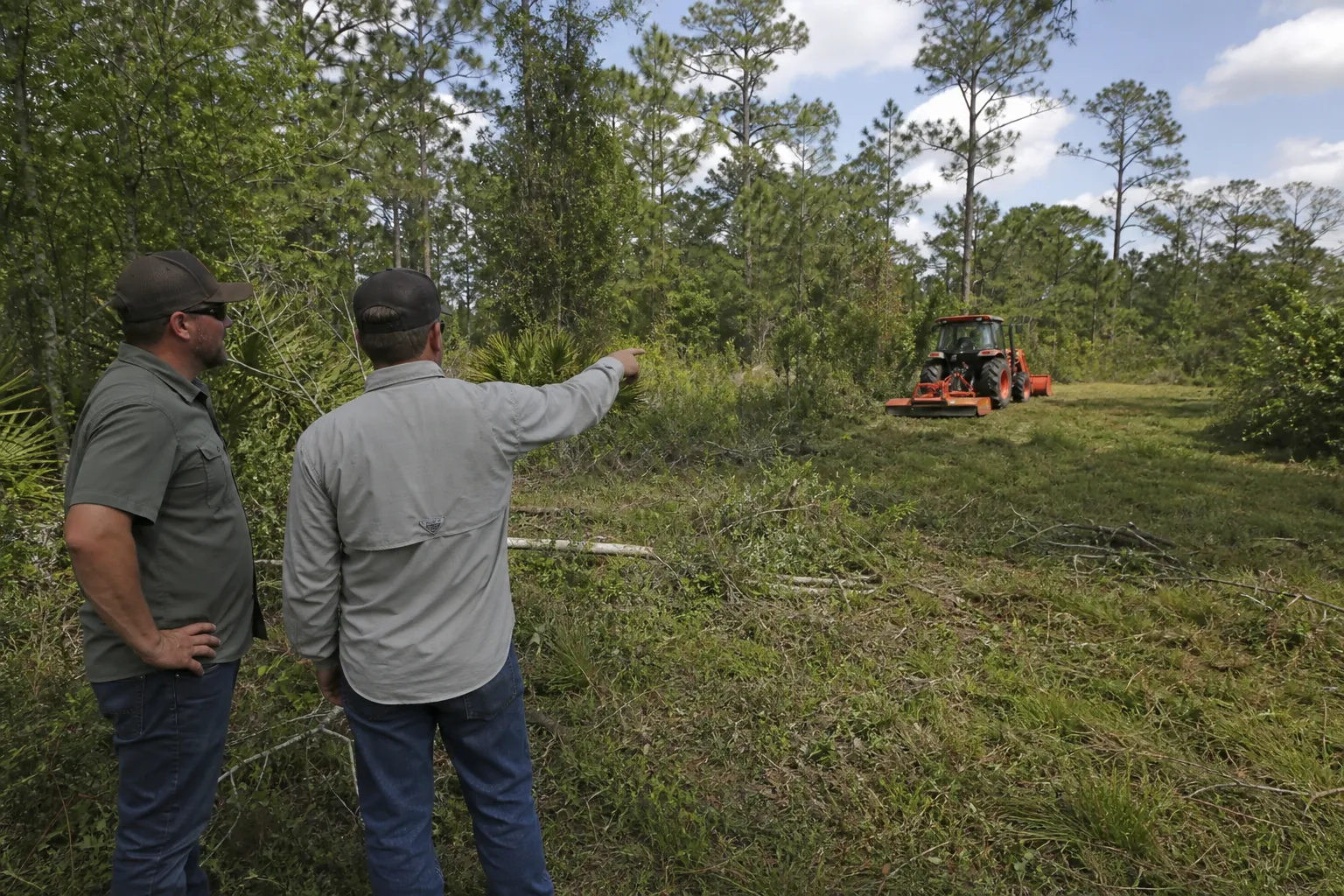
The crew will first review the intended clearing area, access points, visible hazards, and vegetation density. Boundaries and protected areas should be discussed before cutting starts. Cars, movable equipment, pets, and bystanders should remain well away from active machinery.
Brush hogging is often completed in sections. Initial passes reduce tall growth and improve visibility. Additional passes may further break down vegetation where ground conditions and material size allow. Thick or tangled areas can require a slower approach than open fields.
Cut material is generally left across the ground unless the project plan includes separate handling. This layer may look coarse immediately after cutting, especially where weeds and brush were tall. Expectations should be based on rough vegetation control, not finished landscaping.
Weather also affects scheduling and access. Saturated Florida soil can increase rutting and make some areas unsuitable for heavy equipment. A responsible plan considers recent rainfall, drainage, terrain, and the condition of access routes rather than forcing machinery onto unstable ground.
Planning Maintenance After Acreage Is Reclaimed
One brush hogging visit can restore access, but vegetation will continue growing. A follow-up plan helps prevent the land from returning to its former condition. The appropriate timing depends on vegetation type, rainfall, soil, shade, and how the property will be used.
Owners should inspect the acreage after clearing and decide which areas need ongoing access. Trails, fence lines, utility corridors, and building perimeters may need more frequent attention than remote sections. Young woody growth is generally easier to manage before it develops into larger stems.
Trees should also be monitored as visibility improves. Watch for broken branches, cavities, exposed roots, cracks, or sudden leaning. After tropical weather, emergency and hurricane tree removal may be needed when damaged trees create urgent concerns. Avoid attempting to cut storm-damaged trees or branches under tension without appropriate training and equipment.
Prepare Your Deltona Property For Practical Use
A successful acreage-clearing project starts with realistic goals. Decide whether the priority is access, routine vegetation control, preparation for tree work, or broader land and lot clearing. Then identify obstacles and determine which services fit each part of the property.
Florida Foliage provides brush hogging and related tree care for properties in the Deltona area. To discuss site conditions and arrange an evaluation, call (386) 481-7913. A calm, site-specific review can help determine the sensible next step for overgrown acreage.
Call (386) 481-7913 to talk through next steps.