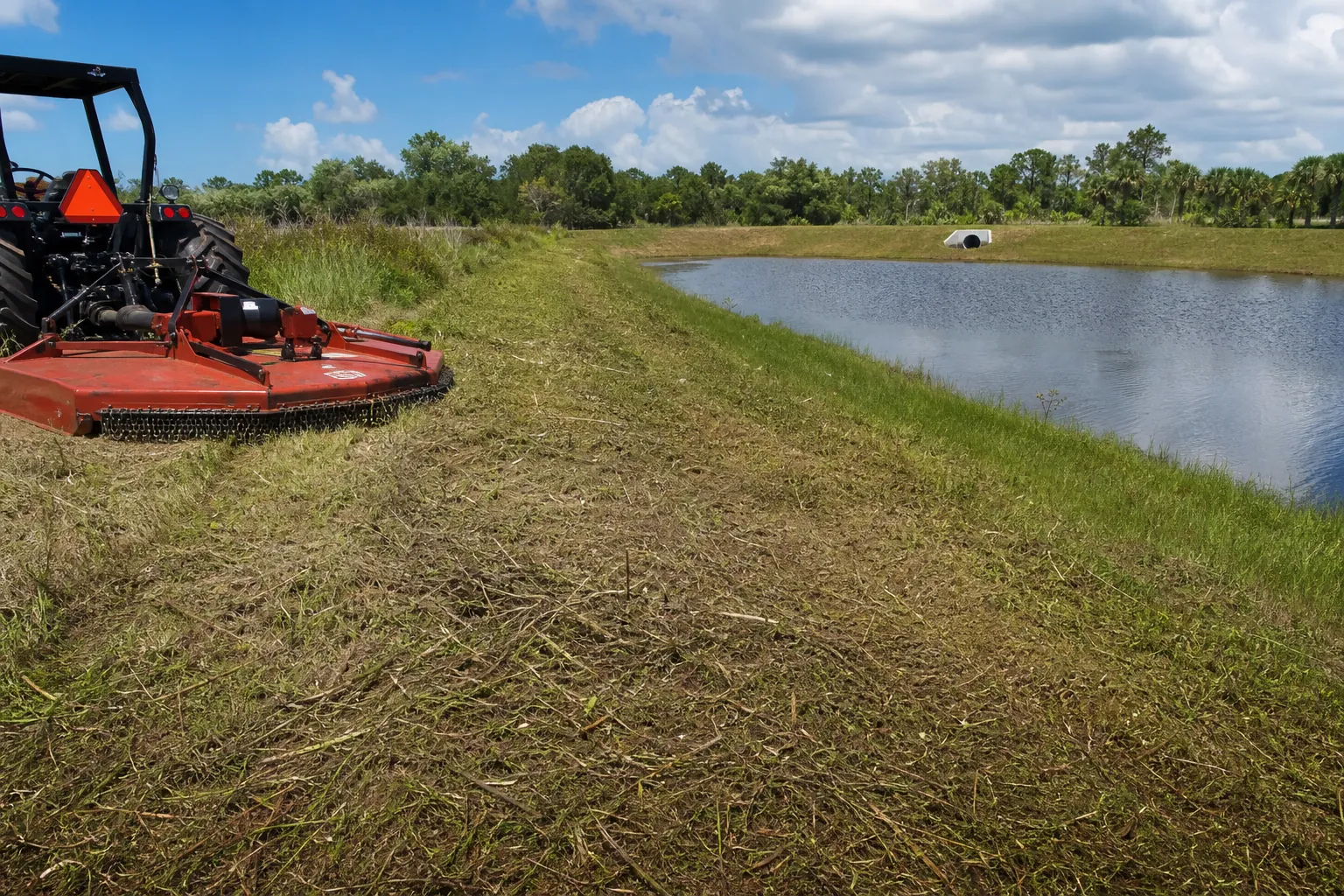
Retention ponds are common across Florida communities, commercial properties, and managed landscapes. They help collect stormwater, but their banks and access routes can quickly become difficult to navigate when tall grass, vines, saplings, and dense brush take over.
Brush hogging retention pond access areas can reopen practical routes for inspections, routine landscape work, and storm preparation. Unlike detailed finish mowing, brush hogging is intended for rough vegetation and larger spaces. The work still requires careful planning because pond edges may be soft, steep, uneven, or hidden beneath heavy growth.
Florida Foliage helps property owners and managers evaluate overgrown areas and determine whether brush hogging, tree trimming, land and lot clearing, or another listed service fits the site.
Why retention pond access matters
A pond does not need to look manicured to remain accessible. It does, however, need a usable approach for people responsible for observing the shoreline, checking visible drainage features, managing trees, or coordinating other maintenance.
Overgrown vegetation can conceal ruts, holes, fallen branches, low stumps, and changes in slope. Thick growth may also narrow access lanes until equipment can no longer pass comfortably. Restoring a defined route makes it easier to see ground conditions and plan future work.
Access is especially important before Florida's storm season. Vegetation management does not replace professional drainage inspections or engineering work, but it can provide clearer visibility around the pond. If trees have broken, failed, or become hazardous after severe weather, emergency and hurricane tree removal may also be appropriate.
What brush hogging can address
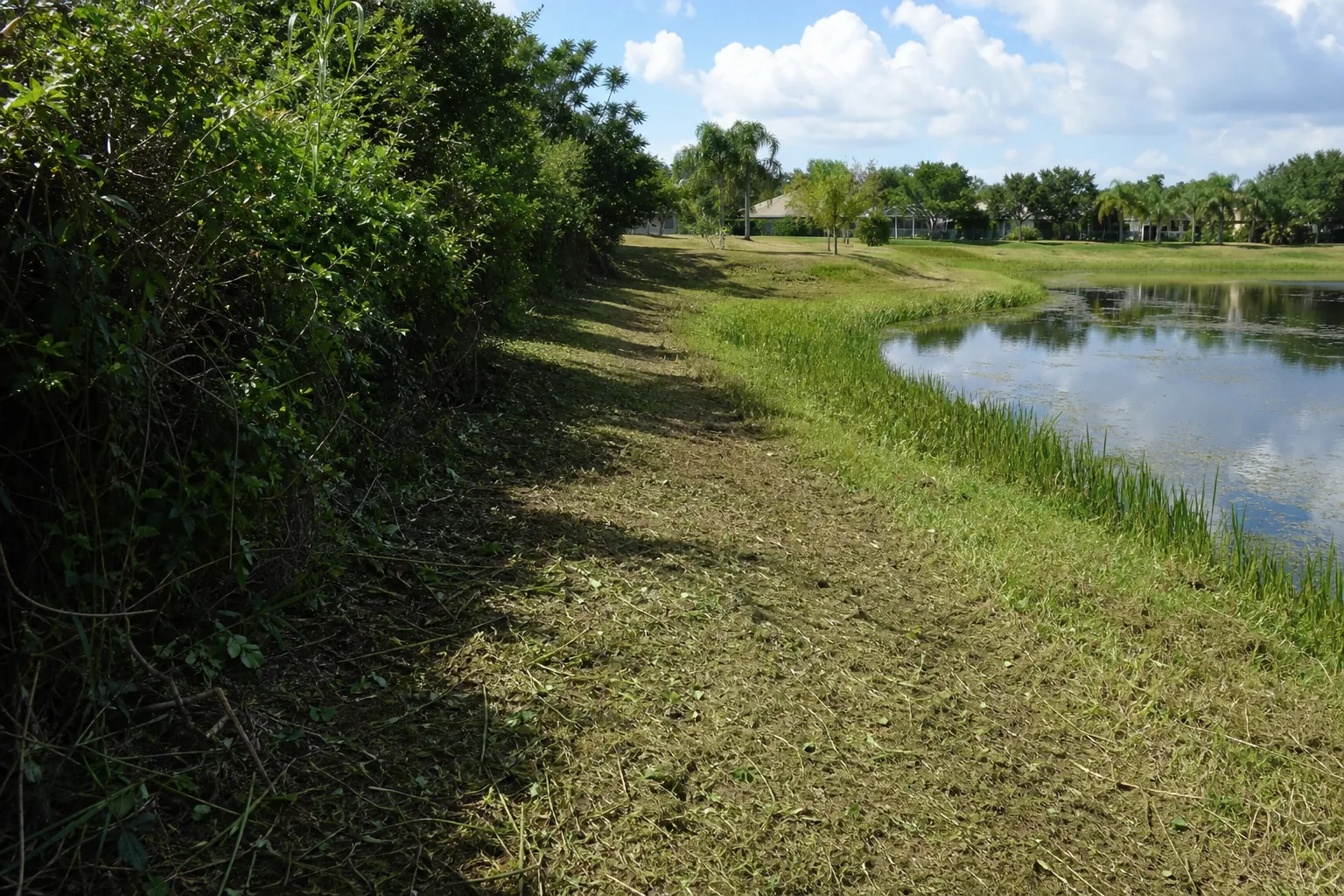
Brush hogging is best suited to broad areas of tall, coarse vegetation and light woody growth. It can help reclaim an established access path, reduce dense cover around a pond perimeter, or prepare an overgrown site for closer evaluation.
A practical brush hogging plan may address:
- Tall grass and weeds blocking an existing access lane
- Vines and brush that make the ground difficult to see
- Light sapling growth spreading into open areas
- Vegetation limiting access for tree inspections or trimming
- Overgrowth around HOA, condo, or commercial retention ponds
- Rough growth that standard mowing equipment cannot handle effectively
- Access routes needed for future land and lot clearing work
Brush hogging is not the right tool for every obstacle. Larger trees may require tree removal, while branches obstructing a route may call for tree trimming, canopy thinning, or crown reduction. Remaining stumps may require stump grinding when they interfere with the intended path. Separating these tasks helps avoid forcing mowing equipment into work it was not designed to perform.
Site conditions to evaluate first
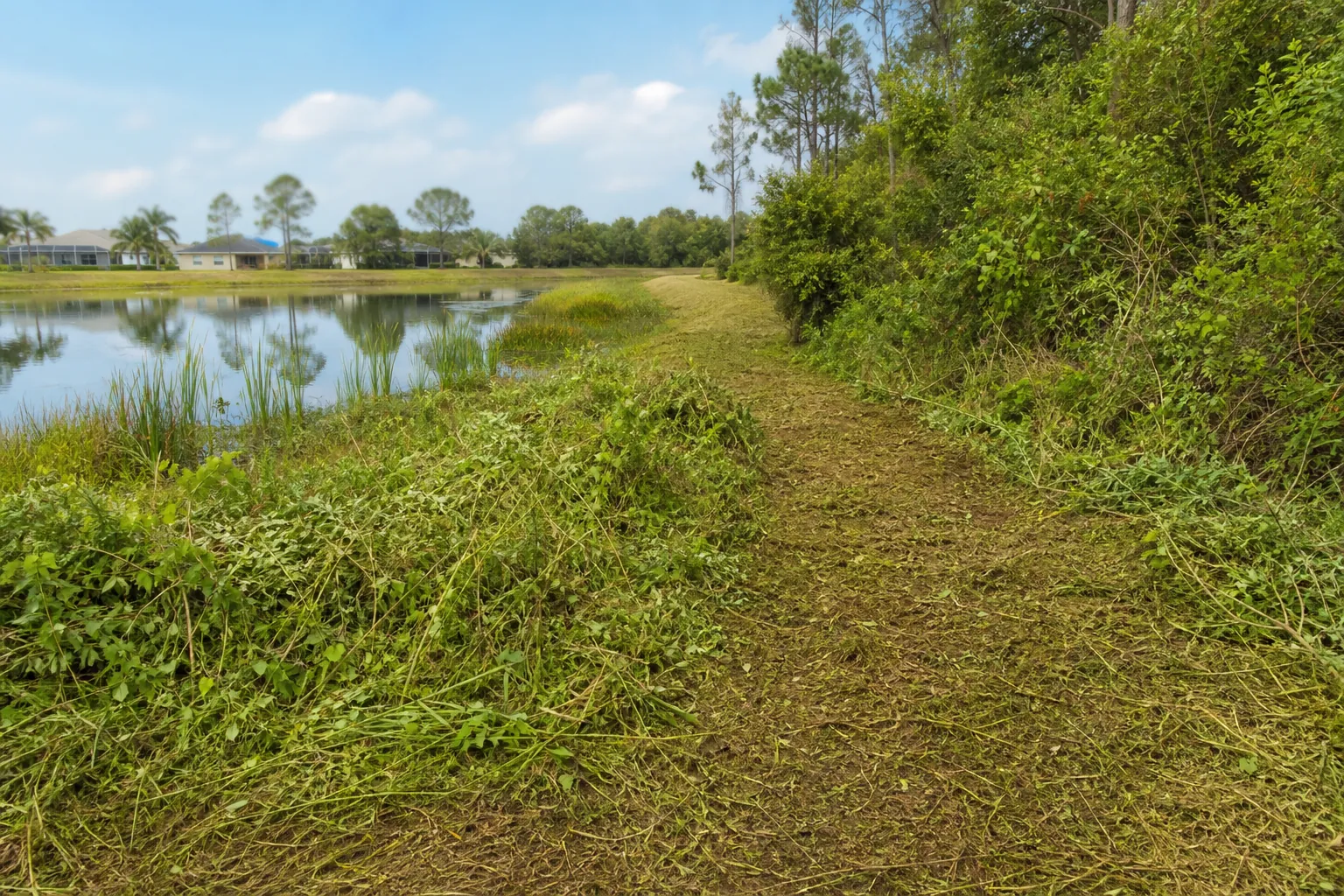
Retention pond terrain can change over a short distance. A stable-looking shoulder may transition into saturated soil or a sharp drop near the water. Before equipment enters the area, the operator should understand the likely pond boundary, slope, ground firmness, and location of visible structures.
Standing water, recent heavy rain, and concealed erosion can affect whether brush hogging should proceed. Dense vegetation should not be treated as proof of stable ground. Initial evaluation from a firm access point can identify obvious hazards and determine whether more information is needed.
Property managers should share known details about drainage structures, utility markers, irrigation components, fencing, easements, and previous access routes. Any local requirements related to stormwater facilities, protected vegetation, wetlands, or debris handling should be confirmed with the applicable city or county before work begins.
Trees near a pond deserve separate attention. Saturated soils, exposed roots, leaning trunks, dead limbs, and storm damage may indicate a need for tree inspections or arborist reports. Brush removal can improve visibility, but it should not substitute for evaluating tree condition.
How to define an effective access route
The goal should be based on how the area will be used. A narrow walking route has different requirements from a lane intended for maintenance equipment. Clarifying the route's purpose helps determine where vegetation should be cut and which obstacles need separate tree service.
Start by identifying a firm entry point and the areas that responsible personnel need to reach. Existing paths are often preferable because they may already follow more manageable terrain. Avoid creating unnecessary disturbance around the entire shoreline when access is only needed in specific locations.
It is also useful to identify vegetation that should remain. Established trees may provide shade, visual screening, and landscape value. Selective tree trimming or canopy thinning may resolve clearance issues without removing the tree. Crown reduction may be considered where professionally appropriate, while crane tree removal can address certain complex removals when site constraints warrant that method.
For commercial properties and shared communities, a written scope can prevent confusion. Note the desired entry point, approximate route, vegetation to preserve, known obstacles, and where cut material should be managed. Commercial tree services and HOA and condo tree services can also coordinate related tree care across larger managed sites.
When combined services make sense
Brush hogging often reveals conditions that could not be seen through heavy growth. Once an access route is open, property owners may discover downed limbs, damaged trees, old stumps, or additional areas requiring attention.
Tree trimming can create overhead clearance along the route. Stump grinding can reduce fixed obstacles where equipment or personnel must pass. Tree removal may be necessary when a tree is dead, failed, or conflicts with essential access. Land and lot clearing may be more suitable when the project extends well beyond a defined pond route.
These services should be selected according to actual site conditions rather than bundled automatically. A focused plan limits unnecessary disturbance and helps preserve healthy trees and useful vegetation.
Maintaining access after clearing
Florida's long growing season means cleared routes can narrow again. Periodic observation helps property managers respond before growth becomes dense and the ground disappears from view. The appropriate timing depends on vegetation type, rainfall, site use, and maintenance goals.
After brush hogging, walk the route only when conditions are safe and note drainage changes, erosion, fallen limbs, or regrowth near critical entry points. Keep records of completed work and tree concerns, particularly for commercial, HOA, and condo properties with multiple decision-makers.
If you need help evaluating brush hogging retention pond access or related tree care in Florida, contact Florida Foliage at (386) 481-7913. A calm review of the terrain, vegetation, and intended use can help define a practical scope for the site.
Call (386) 481-7913 to talk through next steps.