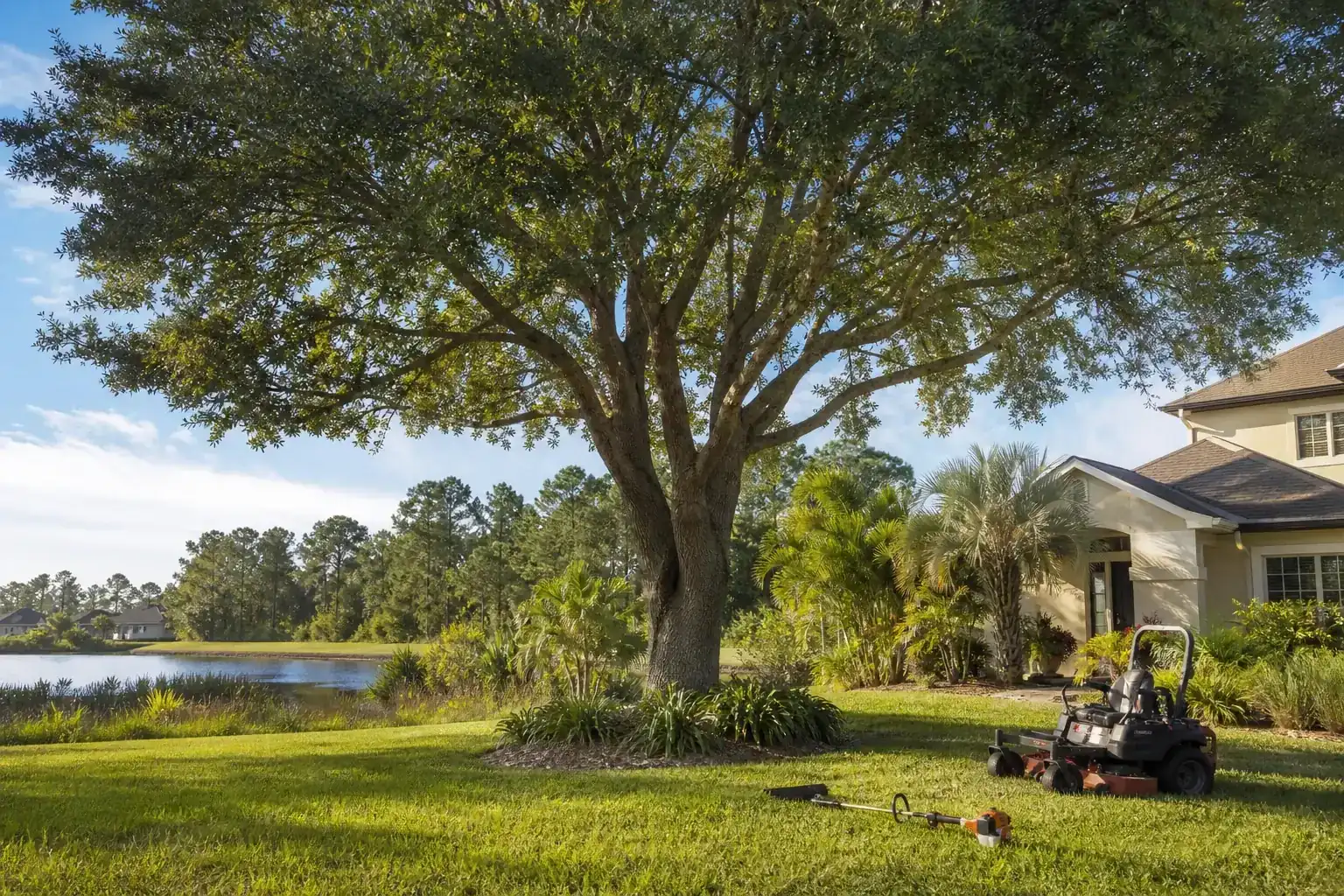
Retention ponds are common throughout Florida communities, commercial properties, and managed landscapes. Their banks can quickly become covered with tall grass, vines, saplings, and dense brush. That growth may restrict inspection access, hide erosion, and make routine property care more difficult.
Brush hogging retention pond banks is a practical way to cut back heavy vegetation across areas that are too rough, steep, or overgrown for ordinary lawn equipment. However, pond banks require thoughtful planning. Wet soil, changing slopes, hidden debris, and nearby trees can affect how the work should be approached.
Florida Foliage provides brush hogging as part of professional land and vegetation management. Understanding the process can help property owners, HOAs, condo associations, and commercial managers prepare for safer, more effective service.
Why Retention Pond Banks Become Overgrown
Florida's long growing season allows vegetation to spread rapidly. Rainfall and moist soil near a pond encourage grasses, weeds, vines, and woody plants. Seeds can also arrive through wind, birds, stormwater, and nearby landscaping.
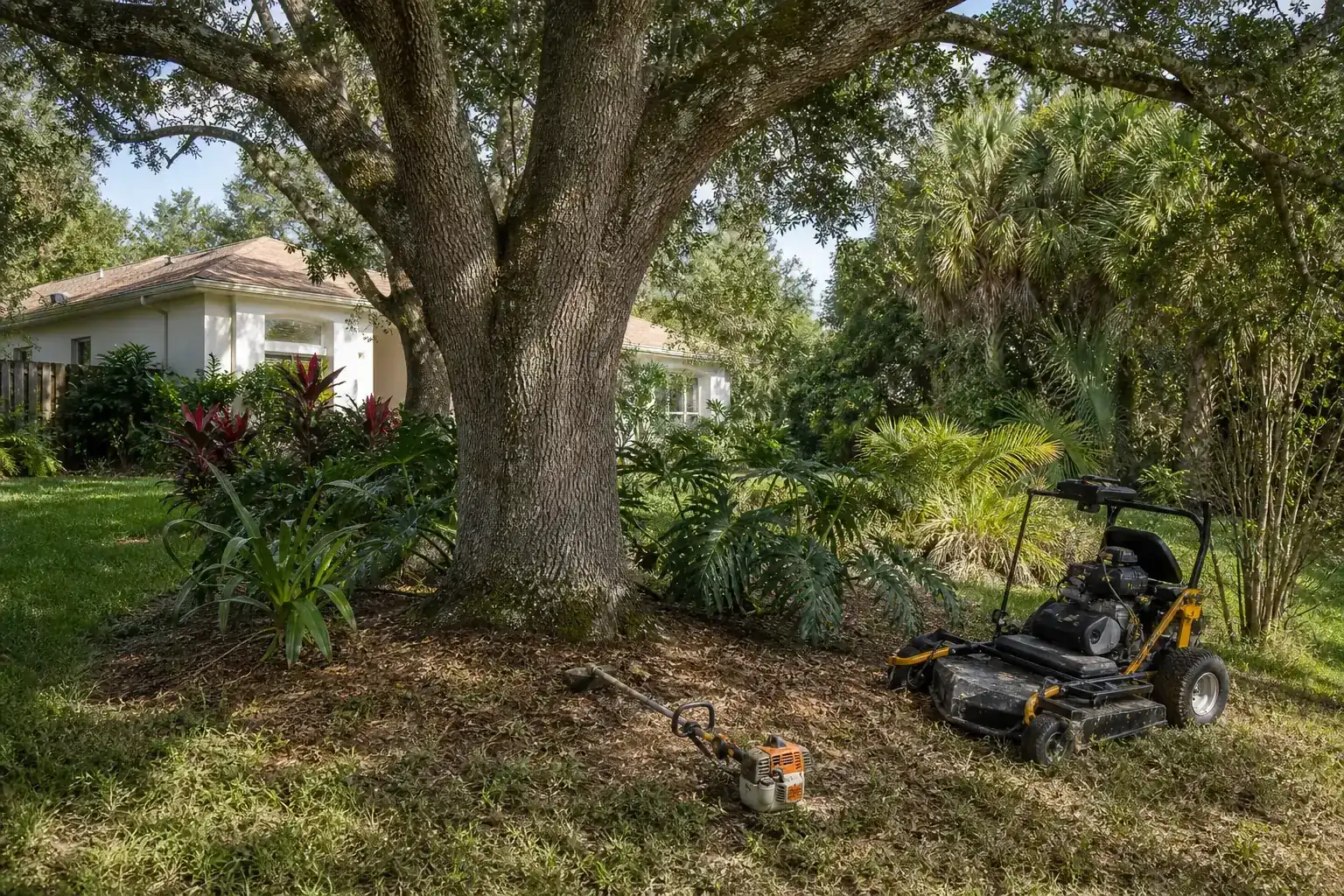
Some growth may help hold soil in place, so removing every plant is not always the right objective. The goal is usually to control unwanted vegetation while preserving appropriate ground cover and avoiding unnecessary disturbance to the bank.
Without periodic management, small saplings can become established. Their trunks and roots may complicate future mowing, while fallen branches and tangled vines can block access. Overgrowth may also conceal washouts, animal burrows, exposed roots, litter, and other conditions that deserve attention.
What Brush Hogging Can Accomplish
A brush hog is designed for vegetation that is heavier than a standard mower can reasonably handle. It can reduce tall grass, broadleaf weeds, light brush, and certain small woody stems. The resulting cut material generally remains distributed across the work area rather than being collected like finished lawn clippings.
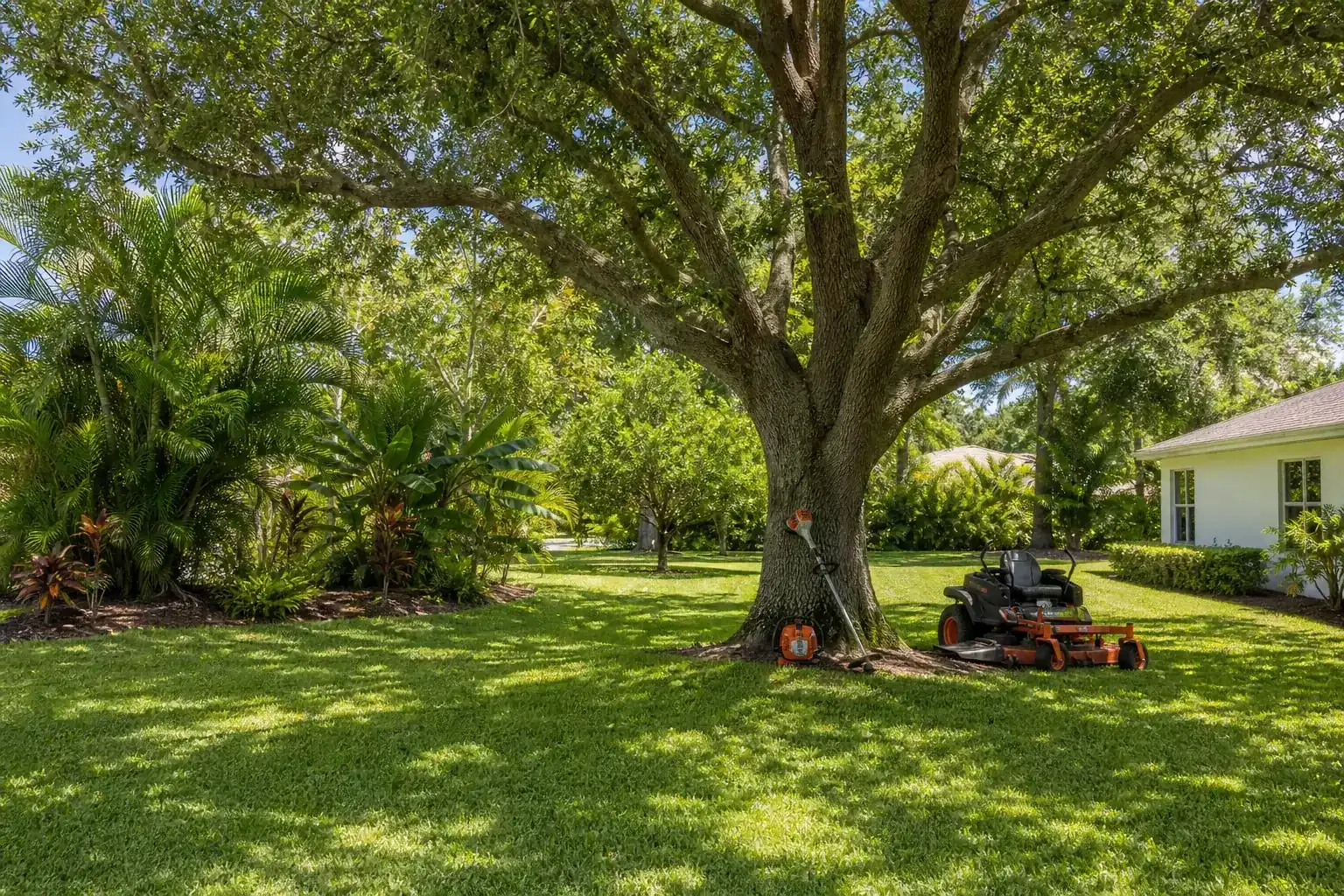
For retention pond banks, brush hogging can reopen access routes and make the slope easier to inspect. It may also keep volunteer saplings from developing into larger trees in locations where they are not wanted.
Brush hogging is not a substitute for every tree service. Established trees, large limbs, hazardous trunks, and substantial woody growth may require tree removal, tree trimming, stump grinding, or crane tree removal. Canopy thinning or crown reduction may be appropriate when nearby tree canopies need selective management rather than removal. An arborist report and tree inspection can help clarify concerns when tree health or structure is uncertain.
How Site Conditions Shape The Work
Every retention pond bank is different. Before equipment enters the area, the operator should evaluate access, slope, soil firmness, vegetation density, and obstacles. A bank that appears dry at the top may be soft near the waterline. Recent rain can also change conditions quickly.
Important factors to review include:
- Slope and stability: Steeper grades require careful equipment positioning and may limit where machinery can operate.
- Soil moisture: Saturated ground can rut, compact, or fail to support equipment safely.
- Water level: The distance between the work zone and the water may vary by season and recent rainfall.
- Hidden objects: Rocks, wire, pipes, irrigation components, drainage structures, and discarded materials may be concealed by vegetation.
- Tree roots and stumps: Exposed roots and old stumps can create obstacles and may require a separate plan.
- Wildlife activity: Nests, burrows, and animals should be considered before cutting begins.
- Nearby property features: Fences, buildings, roads, sidewalks, and parked vehicles can influence access and debris control.
- Drainage infrastructure: Inlets, outlets, swales, and control structures need to remain visible and protected.
When conditions are unsuitable, postponing or modifying the approach may be more sensible than forcing equipment onto the bank. Some areas may need hand work, selective cutting, or a different service instead of conventional brush hogging.
Preparing A Pond Bank For Brush Hogging
Property owners and managers can support an efficient visit by identifying boundaries and known hazards in advance. Mark drainage components, irrigation equipment, utility features, property corners, and objects that may be difficult to see through tall growth. Remove portable items from the work zone when possible.
Access should also be discussed. Gates, narrow passages, soft shoulders, and tight turns can determine which equipment can reach the site. For HOA and condo tree services or commercial tree services, coordinating the schedule with residents, vendors, and grounds staff can reduce conflicts.
It is also helpful to define the desired result. Some clients want a broad access path, while others need vegetation reduced across the full bank. Areas near desirable trees or planted buffers may call for selective work. Clear expectations help distinguish brush hogging from land and lot clearing, which may involve a more extensive vegetation management objective.
Protecting Trees And Bank Integrity
Equipment should not repeatedly strike trunks, scrape exposed roots, or bury root flares beneath cut material. Trees near pond banks can already face stress from fluctuating soil moisture, erosion, restricted root zones, or storm damage. Careful routing helps avoid adding mechanical injury.
If a tree is leaning, declining, cracked, or undermined by erosion, an arborist report and tree inspection may be appropriate before nearby work proceeds. Storm-damaged trees may require emergency and hurricane tree removal, particularly when they affect access or threaten surrounding property.
Vegetation management should also account for erosion. Scalping the soil or removing all stabilizing cover can leave a bank more exposed to rainfall and runoff. A controlled cut that preserves useful low growth may be preferable to clearing the surface bare.
Choosing A Practical Maintenance Schedule
There is no single schedule that fits every Florida retention pond. Growth rate depends on season, rainfall, sunlight, soil, and plant species. Instead of waiting until brush becomes impassable, inspect the site periodically and plan service before woody growth becomes established.
Routine visual checks are especially useful after heavy rain or tropical weather. Look for blocked access, fallen limbs, new washouts, leaning trees, and vegetation covering drainage features. Early attention often gives property managers more options for coordinating brush hogging with tree trimming, stump grinding, or other necessary work.
Local requirements and environmental considerations can differ by location and site type. Before altering vegetation around a stormwater facility, confirm applicable rules and responsibilities with your city or county, as well as the party responsible for pond maintenance.
Plan Pond Bank Maintenance With Florida Foliage
Effective retention pond maintenance begins with understanding the terrain, vegetation, access, and nearby trees. Florida Foliage can evaluate brush hogging retention pond banks and explain whether related tree or land services should be considered for the site.
For a calm, practical discussion about an overgrown pond bank in Florida, call Florida Foliage at (386) 481-7913. Sharing details about slope, access, recent rainfall, and vegetation density can help the team prepare for the conversation.
Call (386) 481-7913 to talk through next steps.