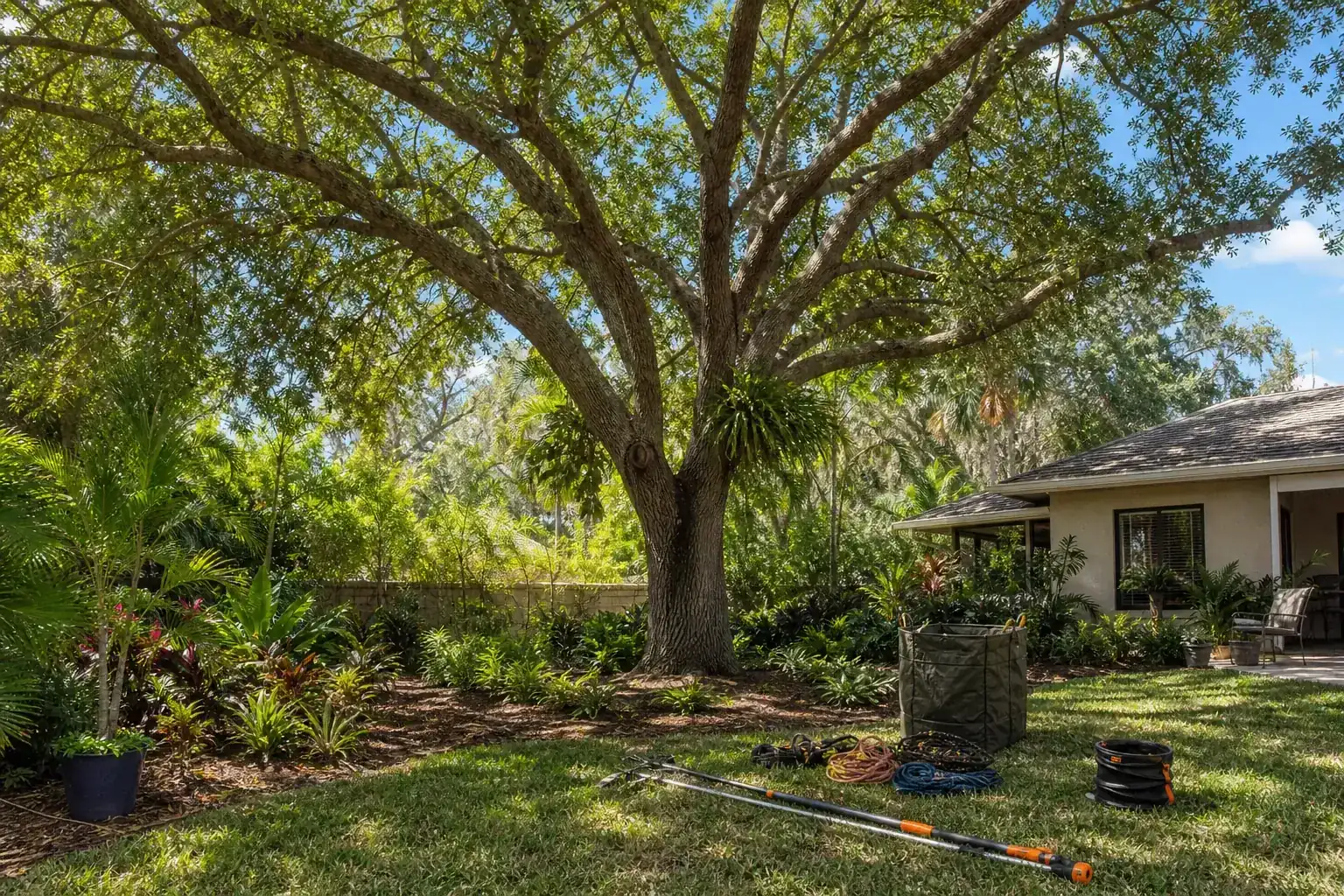
Courtyard trees bring shade, character, and a sense of enclosure to Florida homes, condos, offices, and community spaces. Yet the same walls and buildings that make a courtyard inviting can complicate tree care. Branches may grow toward roofs, balconies, windows, walkways, lighting, and neighboring trees. Limited access can also make routine work more challenging.
Canopy thinning for courtyard trees is a selective form of tree trimming that removes carefully chosen branches from throughout the crown. The goal is not to strip foliage or dramatically change the tree’s natural shape. Proper thinning addresses specific concerns while preserving a balanced, living canopy.
Because every tree and courtyard is different, a thoughtful plan should consider species, structure, health, access, surrounding property, and the reason for trimming. An experienced tree service can determine whether thinning is suitable or whether another approach would better address the site.
What Canopy Thinning Actually Involves
Canopy thinning focuses on selective branch removal rather than cutting every branch back by a set amount. A tree care professional may target dead, damaged, rubbing, crossing, or poorly attached branches. Select interior growth may also be removed where crowding creates a clear structural concern.
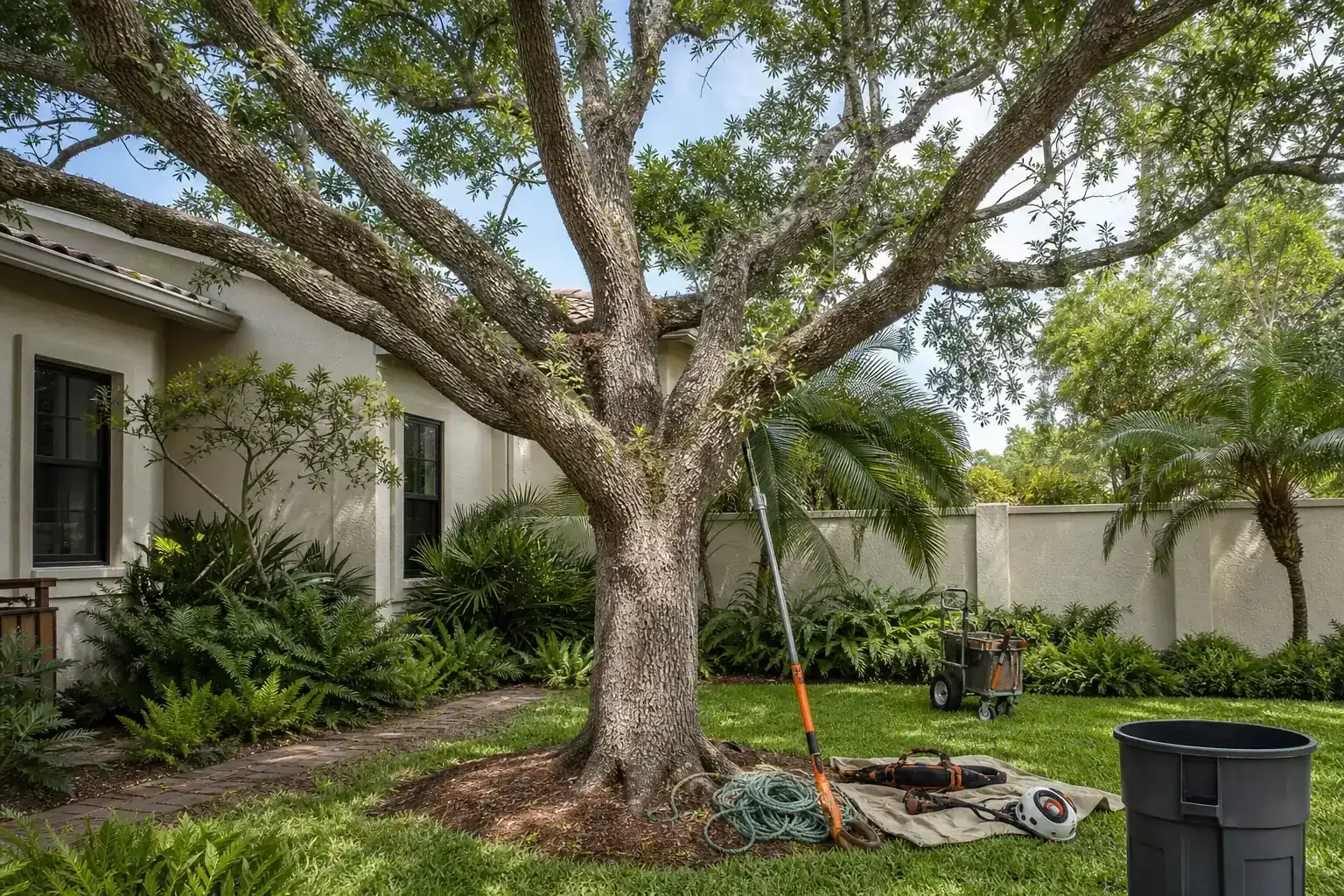
This work should be distributed thoughtfully through the crown. Removing too much interior foliage can create a sparse outer shell of leaves and long, exposed branches. Excessive trimming may also increase sun exposure on bark and stimulate unwanted regrowth. In a courtyard, these effects can be especially noticeable because the tree is viewed closely from several directions.
Thinning is also different from crown reduction. Canopy thinning selectively removes branches within the crown, while crown reduction decreases overall height or spread by pruning back to suitable lateral branches. If a tree has outgrown its available space, thinning alone may not resolve the conflict. Crown reduction or, in some cases, tree removal may need to be considered after inspection.
Why Courtyard Trees Need A Site-Specific Approach
Courtyard trees often grow in restricted soil areas surrounded by pavement, walls, foundations, or raised planters. Reflected heat, irrigation patterns, drainage, and limited rooting space can affect growth. Buildings may block wind from one direction while channeling it through a narrow opening from another.
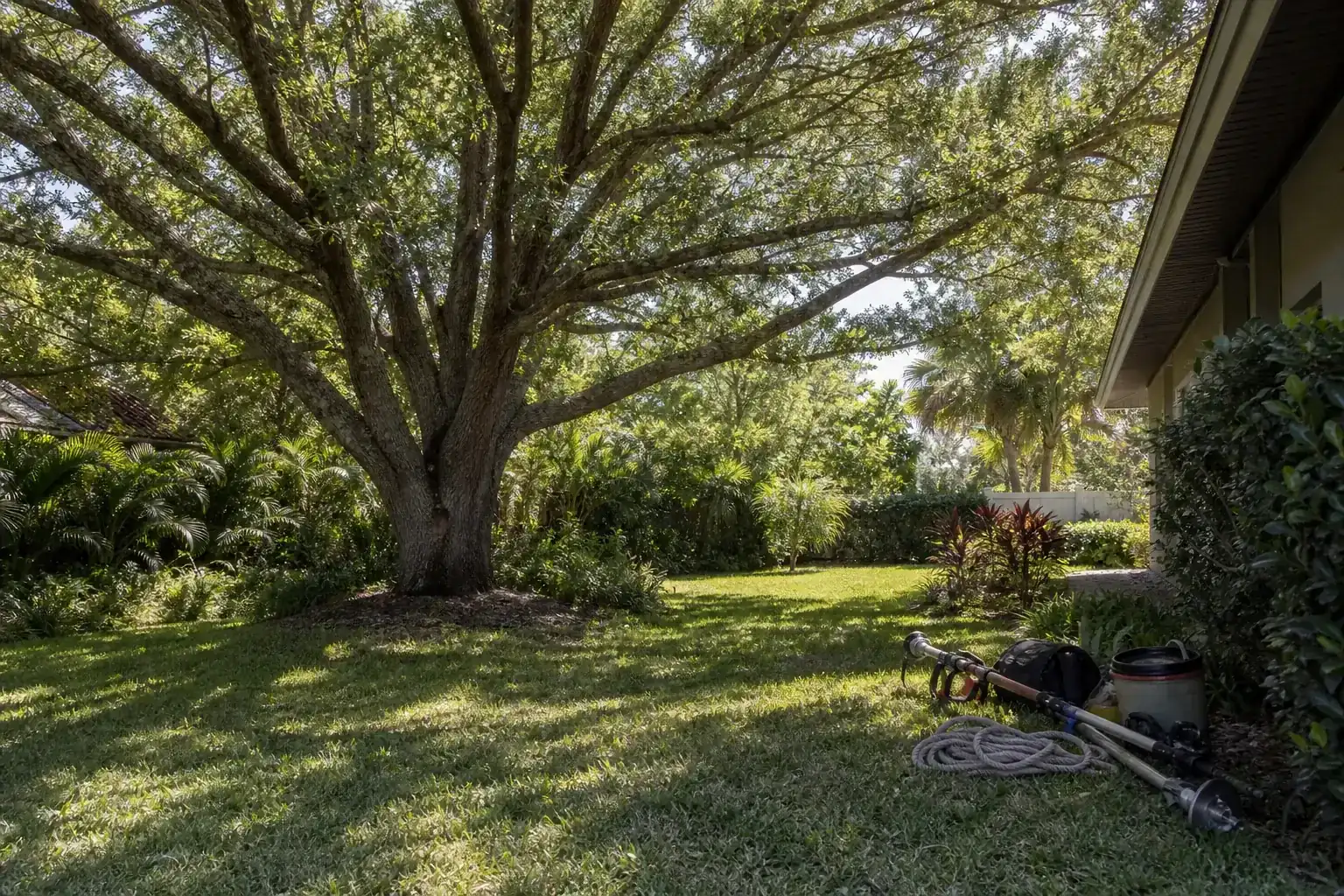
These conditions matter when selecting branches for removal. A branch that appears inconvenient may be contributing to the tree’s balance or shading sensitive bark. Likewise, removing several branches on the building side could create an uneven canopy rather than solving the underlying space issue.
Access should be reviewed before work begins. Crews may need to protect pavers, plan around narrow gates, and account for furniture, fountains, pool areas, landscaping, and pedestrian routes. Some sites may require specialized rigging or crane tree removal when branches cannot be lowered safely through the available space.
Properties managed by an HOA or condo association may also have approval procedures. Local requirements can vary, particularly for protected trees or work near shared property. Owners and managers should confirm applicable rules with their city, county, and association before authorizing work.
Signs A Courtyard Tree May Need Professional Attention
A dense-looking canopy is not automatically a problem. Healthy foliage is essential to the tree, and Florida species have different natural growth habits. Instead of judging density alone, look for specific conditions that merit an arborist report, tree inspection, or professional trimming assessment.
- Dead or broken branches: Loose wood above walkways, seating areas, entrances, or parking spaces should be evaluated promptly.
- Crossing and rubbing limbs: Repeated contact can damage bark and create weak areas that deserve closer inspection.
- Poorly attached branches: Narrow unions, included bark, cracks, or splitting may indicate structural concerns.
- Conflicts with structures: Branches touching roofs, walls, windows, balconies, lighting, or other fixed features may require selective clearance.
- Blocked access: Low growth over doors, paths, service areas, or driveways can interfere with normal property use.
- Sudden canopy changes: Unexpected leaf loss, discoloration, dieback, or unusual sprouting may point to stress that trimming alone will not correct.
- Storm damage: Hanging limbs, torn branches, or a noticeable lean after severe weather should be assessed from a safe distance.
Do not stand beneath damaged limbs or attempt to pull them down. For urgent storm-related hazards, emergency and hurricane tree removal may be more appropriate than routine canopy work.
How To Plan Thinning Without Over-Pruning
Begin with a clear objective. Useful goals include removing deadwood, reducing branch conflicts, improving clearance, or addressing identified structural issues. A vague request to make the canopy much lighter can lead to unnecessary foliage loss.
Ask the tree service to explain which branches are priorities and why. Cuts should support the objective while respecting natural form. The plan should also account for the tree’s condition and the courtyard’s use. A tree beside a busy condo entrance may require different planning than one inside a private, lightly used garden.
Timing can depend on species, current health, weather, and the type of work proposed. Trees already under stress may not respond well to extensive trimming. An inspection can help determine whether work should be limited, phased, or postponed.
Homeowners and property managers should also avoid topping, indiscriminate interior stripping, and repeated removal of new sprouts without understanding why they are forming. These practices can create weak regrowth and recurring maintenance concerns. If the main issue is excessive size, request an evaluation for crown reduction rather than assuming thinning will make the tree fit.
What To Expect From A Courtyard Tree Assessment
A useful assessment begins at ground level. The professional should review visible roots, the trunk, branch unions, canopy condition, nearby targets, and access limitations. Photos or previous arborist reports can provide helpful context, especially if the tree has changed following a storm or earlier trimming.
The discussion should identify the intended result, areas that need clearance, and any branches of concern. It should also cover how cut material will be controlled in the confined space. For commercial properties, HOAs, and condos, scheduling and pedestrian management may be important parts of the work plan.
Not every concern leads to canopy thinning. Tree trimming may address isolated clearance issues. Crown reduction may be considered for overall spread. Tree removal and stump grinding may be discussed when a tree is unsuitable for the location or has serious problems. The recommendation should follow the tree and site conditions rather than a one-size-fits-all method.
Choose Careful Tree Work For A Confined Space
Courtyard trees benefit from restraint, clear objectives, and close attention to their surroundings. Selective canopy thinning can address crowding and branch conflicts, but it should preserve healthy foliage and the tree’s natural structure. When access, storm damage, or property use adds complexity, a professional inspection helps clarify the safest practical approach.
Florida Foliage provides canopy thinning, tree trimming, arborist reports and tree inspections, as well as HOA and condo tree services and commercial tree services. For a calm, site-specific discussion about your Florida courtyard tree, call (386) 481-7913.
Call (386) 481-7913 to talk through next steps.