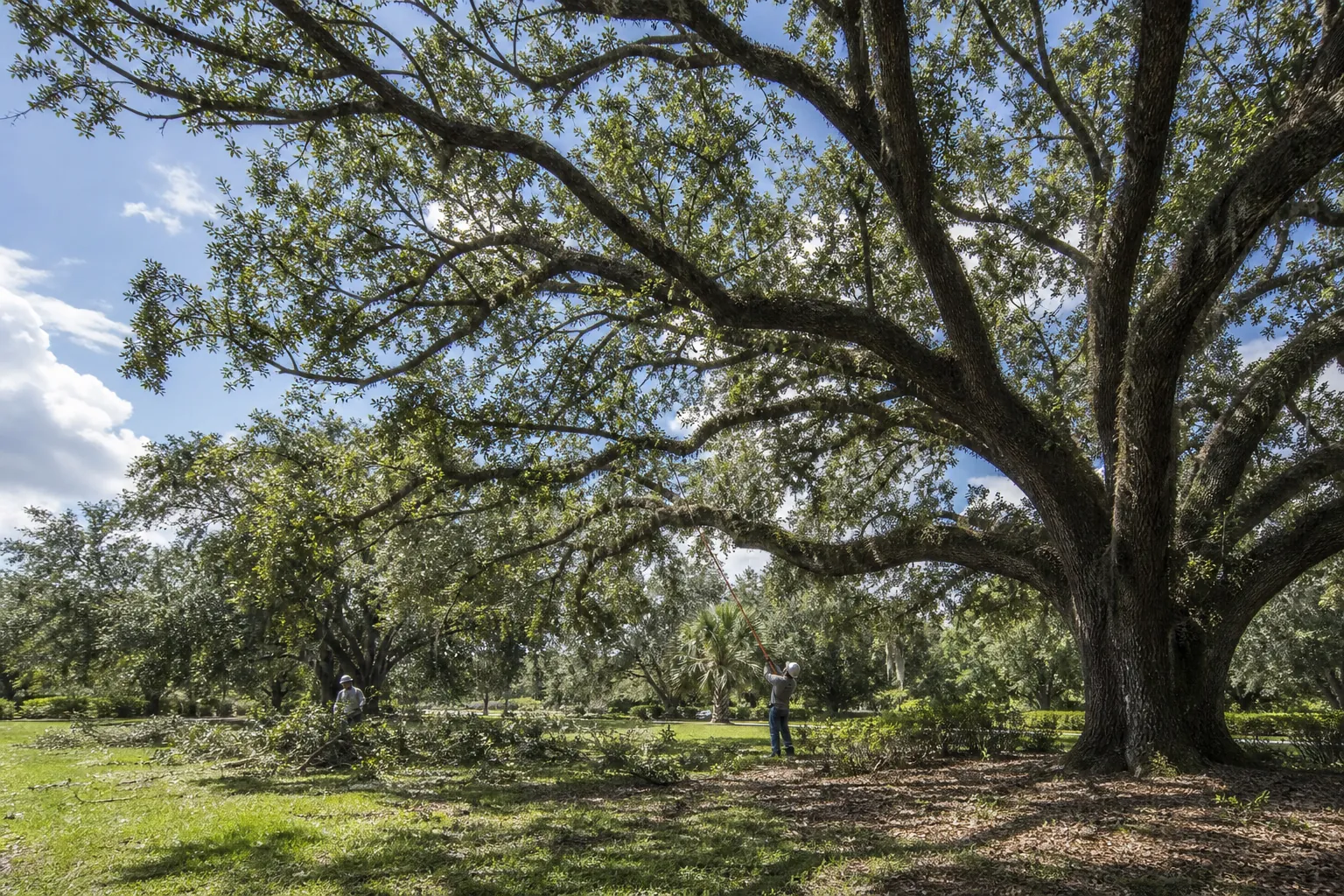
Live oaks are valued across Florida for their broad shade, strong structure, and distinctive branching. As these trees mature, however, their canopies can become crowded with crossing limbs, deadwood, weak sprouts, or branches that interfere with roofs and other features. Thoughtful canopy thinning can address selected concerns while preserving the tree’s natural shape.
Canopy thinning for live oaks is not simply the removal of many interior branches. It is a selective tree trimming practice based on structure, branch condition, and the tree’s surroundings. When performed carefully, it improves canopy organization without stripping away the foliage a live oak needs for energy and protection.
What canopy thinning actually involves
Canopy thinning removes selected branches throughout a tree’s crown. The objective may be to eliminate dead, damaged, crossing, or poorly attached growth while improving spacing among retained limbs. Each cut should have a clear purpose.
A tree service professional should first view the live oak from multiple angles. This helps reveal branch conflicts, uneven weight distribution, old pruning wounds, and areas where foliage is unusually dense or sparse. The condition of the trunk, root zone, and major scaffold limbs also affects the trimming plan.
Proper thinning typically prioritizes defects before considering healthy branches. Deadwood, broken limbs, rubbing branches, and weakly attached growth may be addressed first. Healthy interior branches should not be removed merely to create a clean or open appearance.
How thinning differs from other pruning methods
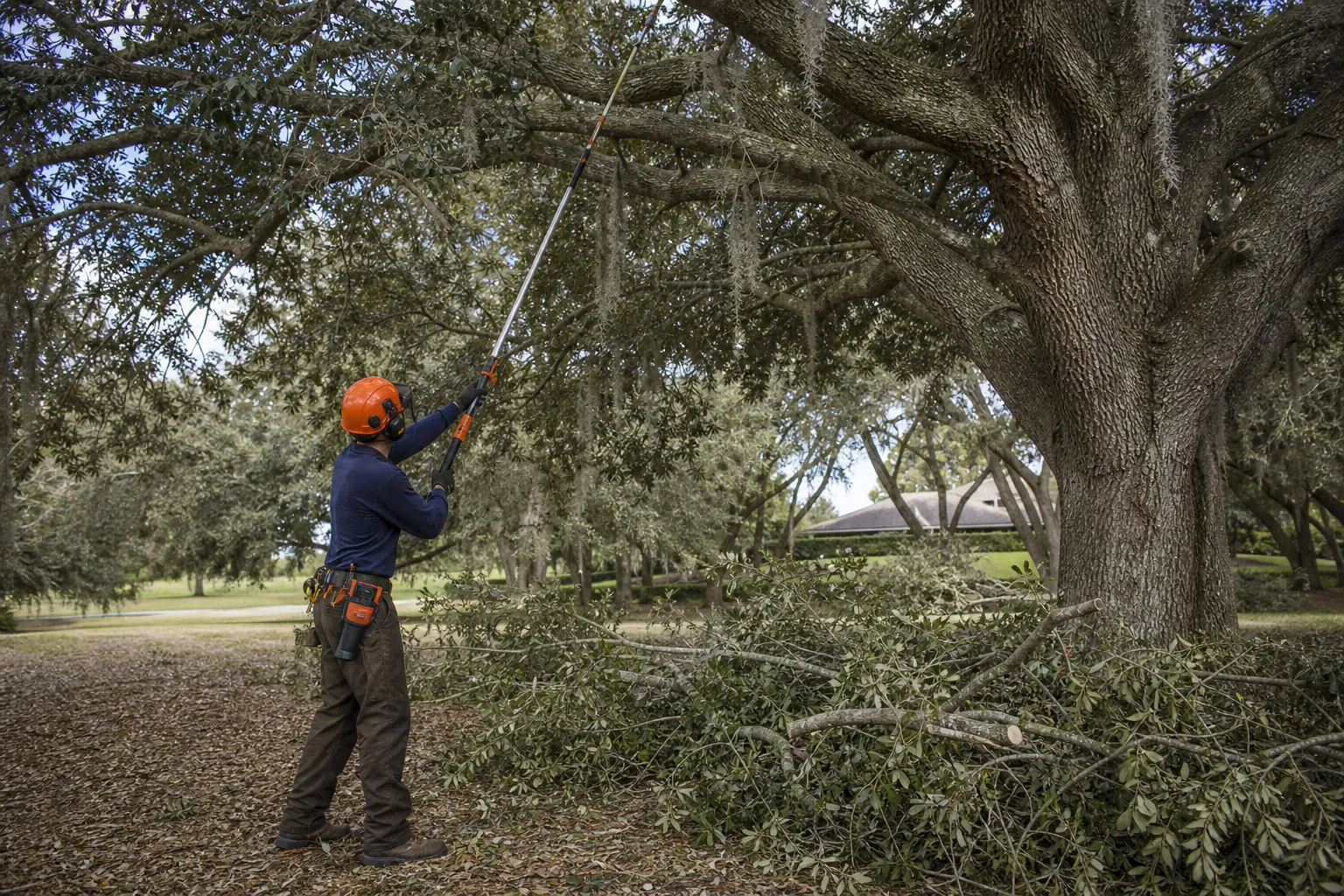
Tree care terms are sometimes used interchangeably, but canopy thinning and crown reduction serve different purposes. Thinning selectively improves branch spacing within the crown. Crown reduction decreases the height or spread of a canopy by cutting limbs back to suitable lateral branches. Reduction may be considered when a live oak has outgrown available space, but it requires careful planning to avoid poor structure.
Routine tree trimming can include several objectives, such as removing deadwood, improving clearance, or correcting young growth. Canopy thinning is one possible component of that broader service. It should not be confused with topping, which leaves large stubs and can trigger weak, rapid regrowth.
Tree removal is a separate decision usually considered when a tree is dead, severely compromised, or unsuitable for its location. If access is limited or a tree is near structures, crane tree removal may be part of a carefully controlled plan. Stump grinding can address the remaining stump after removal.
Signs a live oak may need professional attention
A dense-looking crown does not automatically mean a tree needs extensive thinning. Live oaks naturally develop broad, layered canopies. Changes in branch condition, movement, or structure are more useful indicators than density alone.
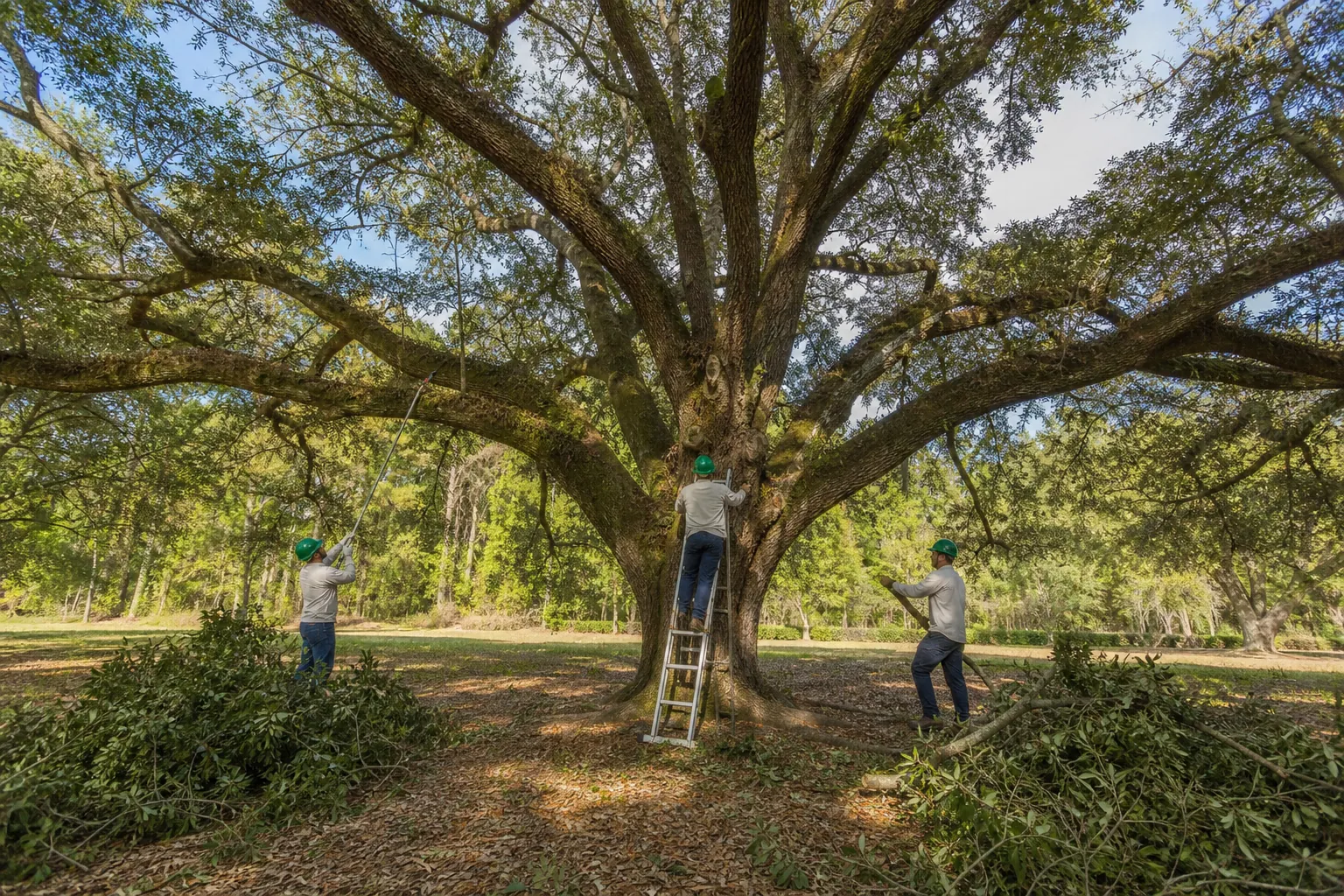
Consider arranging arborist reports and tree inspections when you notice concerns such as:
- Dead, cracked, hanging, or partially detached branches
- Limbs that rub or cross and are beginning to create wounds
- Multiple heavy branches emerging from a narrow attachment point
- New cracks near major unions or along the trunk
- Branches contacting a roof or limiting necessary access
- A sudden lean, lifted soil, or visible changes around the root zone
- Unusual canopy dieback or a noticeable decline in leaf coverage
- Old topping cuts surrounded by clusters of upright sprouts
- Storm damage that has changed the balance of the crown
Some conditions are difficult to evaluate from the ground. An inspection can distinguish routine maintenance needs from structural defects that require a different response. It can also help avoid unnecessary cuts to healthy limbs.
Why over-thinning can harm a live oak
Removing too much foliage at once can reduce the tree’s ability to produce energy. It may also expose previously shaded branches to stronger sunlight and encourage dense sprouting near pruning cuts. A severely opened canopy can lose the natural distribution of smaller branches that helps manage movement in wind.
Another common problem is lion-tailing, where interior branches are removed while foliage remains mainly at branch ends. This creates long, bare limbs with weight concentrated toward their tips. Although the canopy may look cleaner, the resulting structure may be less desirable.
A balanced approach retains healthy interior growth, avoids unnecessary large wounds, and respects the live oak’s natural form. Work should be based on current conditions rather than a preset amount of foliage removal.
Planning tree work around Florida weather
Florida live oaks face heavy rain, strong winds, heat, and occasional hurricanes. Property owners often request aggressive thinning because they believe more open space always allows wind to pass through safely. Tree response is more complex. Branch architecture, root condition, decay, previous damage, and nearby exposure all influence how a tree behaves during severe weather.
Canopy thinning can correct certain defects, but it cannot make a tree storm-proof. Before hurricane season, an inspection may identify dead limbs, cracks, weak attachments, or changes in the soil that deserve attention. After a storm, avoid standing beneath damaged branches or attempting to cut suspended limbs. Emergency and hurricane tree removal may require specialized equipment and controlled work methods.
Preparing for a canopy thinning visit
Good preparation helps the tree care team understand your concerns and work around the property safely. Point out changes you have noticed, including fallen twigs, new cracks, or branches that move differently in wind. Mention recent construction, trenching, grade changes, or vehicle traffic near the root area.
Move portable items away from the work zone when requested and keep people and pets clear. Discuss access limitations, overhead obstacles, fences, and nearby landscaping before work begins. If the tree is near a property line, shared area, or managed landscape, clarify responsibility in advance.
Requirements for tree work vary across Florida. Confirm any applicable rules, approvals, or documentation with your city or county before scheduling. HOAs and condominium communities may also have review processes. Florida Foliage provides HOA and condo tree services as well as commercial tree services for properties that need coordinated planning.
Choosing the right care for the whole property
A live oak’s canopy is only one part of the landscape. Root-zone disturbance from land and lot clearing, brush hogging, excavation, or repeated equipment traffic can affect tree health even when the branches appear normal. Plan nearby work with established trees in mind and protect the area around trunks and major roots.
For canopy thinning for live oaks, the best plan is usually conservative and specific to the tree. Florida Foliage can evaluate branch structure and explain whether canopy thinning, crown reduction, general tree trimming, or continued monitoring is appropriate. To discuss a Florida live oak or arrange a tree inspection, call (386) 481-7913.
Call (386) 481-7913 to talk through next steps.