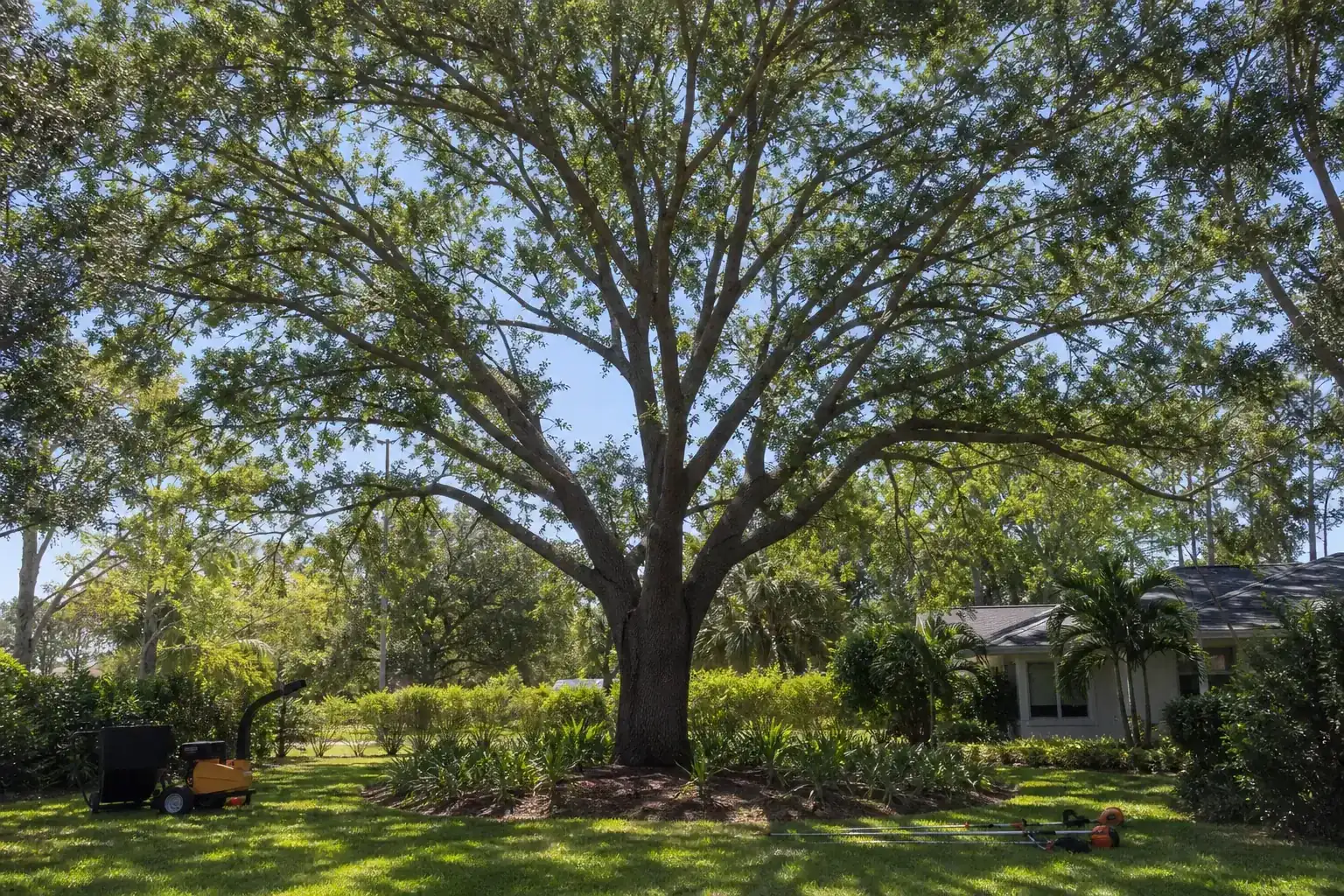
Florida trees grow in a climate shaped by abundant sunlight, seasonal rain, coastal influences, and strong storms. As branches and foliage become dense, property owners may wonder whether opening the crown will help wind move through it. Canopy thinning for wind flow can be useful when it is performed selectively and with the tree's structure in mind.
Thinning is not simply removing as many branches as possible. Proper work preserves the natural form of the tree while addressing crowded, weak, rubbing, or poorly positioned growth. The goal is a balanced canopy that allows better air movement without sacrificing the foliage and branches the tree needs.
What canopy thinning involves
Canopy thinning is a type of tree trimming that selectively removes branches throughout the crown. Attention is often given to dead, damaged, crossing, or competing limbs before healthy growth is considered. Cuts should be distributed carefully rather than concentrated in one area.
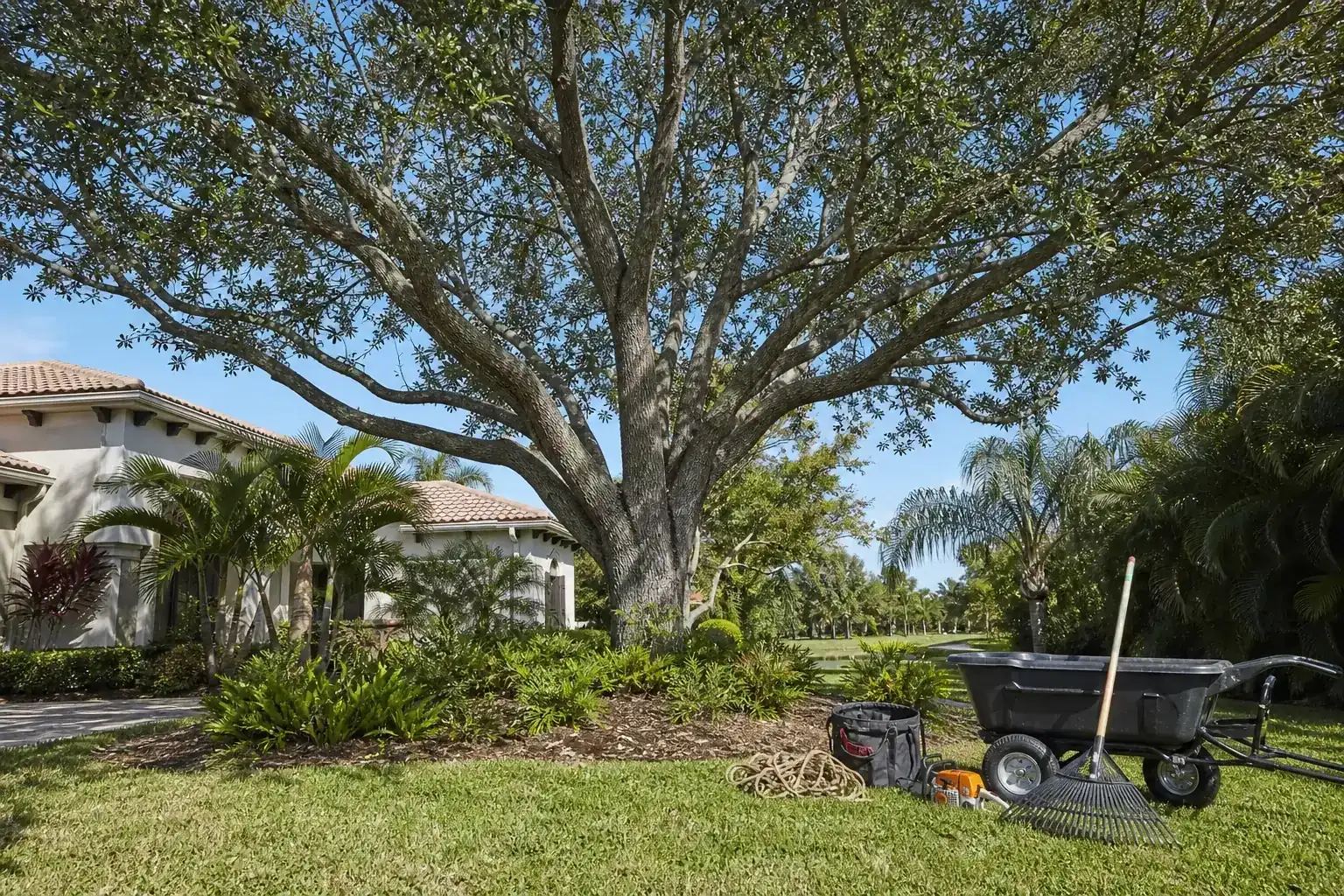
A trained tree care professional evaluates branch attachments, trunk condition, canopy density, tree species, age, and surroundings. This assessment helps determine whether thinning is appropriate and how much work the tree can reasonably tolerate. Some trees may need only minor corrective trimming, while others may benefit from a phased approach over time.
Thinning differs from crown reduction. Canopy thinning addresses selected interior and exterior branches while largely retaining the crown's overall size. Crown reduction shortens specific branches to reduce height or spread while maintaining a natural shape. Choosing the right method depends on the tree and the reason for service.
How selective thinning affects wind movement
A very dense crown can present a broad surface to moving air. Selective thinning creates spaces that may allow some wind to pass through the canopy. It can also remove weak branches that are more likely to break during ordinary storms or seasonal weather.
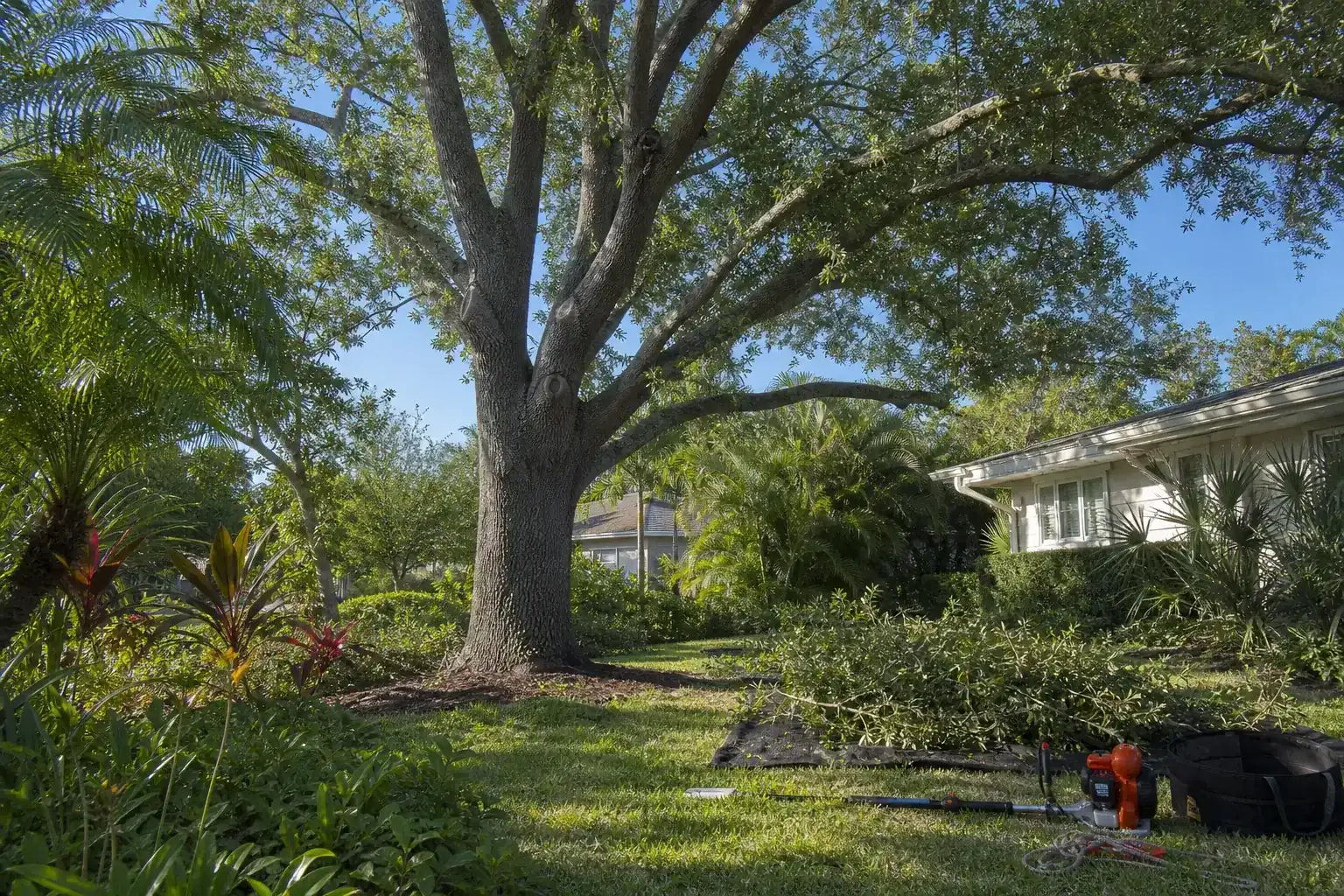
However, wind response is complex. Tree species, root health, soil conditions, trunk defects, branch architecture, nearby buildings, and surrounding trees all influence how a tree reacts. Thinning does not make a tree storm-proof, and excessive pruning can introduce new concerns.
Removing too much live foliage reduces the tree's ability to produce energy. Heavy interior stripping can also leave most foliage at the ends of long branches, a harmful pattern sometimes called lion-tailing. These end-heavy limbs may move more dramatically in wind and can become structurally vulnerable. A balanced canopy is more important than an aggressively opened one.
Signs a tree may need professional evaluation
Not every thick canopy requires thinning. Healthy density can provide shade, support normal growth, and protect branches from sudden sun exposure. An inspection is the best way to distinguish natural fullness from structural crowding or defects.
Consider arranging arborist reports and tree inspections when you notice:
- Dead, cracked, hanging, or partially detached branches within the crown
- Limbs that rub together or compete for the same space
- Multiple branches arising from a tight attachment point
- A canopy that is noticeably heavier on one side
- Branches touching roofs, structures, or other important property features
- Recent storm damage that changed the tree's balance
- New leaning, soil lifting, exposed roots, cavities, or trunk cracks
- Dense growth that limits visibility near driveways or shared spaces
These signs do not automatically mean a tree needs removal. They indicate that its condition and surroundings deserve closer review. Depending on the findings, a professional may recommend canopy thinning, another tree trimming method, crown reduction, monitoring, or tree removal when retention is not suitable.
Why timing and species matter in Florida
Florida contains a wide range of native and introduced trees, and they do not all respond to pruning in the same way. Growth habits, flowering cycles, decay resistance, and seasonal stresses should influence the trimming plan. A technique that works for one species may be inappropriate for another.
Timing also depends on tree condition and the purpose of the work. Routine canopy thinning is best planned before an urgent situation develops. If a branch has already failed or a tree has become unstable after severe weather, emergency and hurricane tree removal may be needed instead of ordinary maintenance.
Property owners should also consider local requirements. Rules related to protected trees, community review, pruning, and removal can differ by city and county. Confirm current requirements with the appropriate city or county before authorizing work. HOA and condo properties may have additional approval procedures, even when professional HOA and condo tree services are used.
Common pruning mistakes to avoid
Topping is one of the most damaging approaches to canopy management. Cutting major branches back to stubs can trigger weakly attached sprouts, expose tissue to decay, and permanently alter the tree's form. It is not a substitute for canopy thinning or crown reduction.
Another mistake is removing all interior growth while leaving foliage only at branch ends. Property owners should also avoid random flush cuts, excessive live-branch removal, and climbing methods that unnecessarily injure bark. Large limbs near buildings or utilities require careful planning and should not be treated as a do-it-yourself task.
When access is limited or limbs are exceptionally large, equipment needs may change. Crane tree removal can be considered when a tree must be removed and site conditions make controlled lifting appropriate. Stump grinding can address the remaining stump after removal. These are separate services, not routine parts of thinning.
Planning practical tree care across a property
Canopy work is most effective when it is part of a broader property plan. A tree inspection can identify immediate hazards, routine maintenance needs, and trees that should be monitored. This helps prioritize work without treating every tree the same way.
Residential communities and business properties may benefit from coordinated commercial tree services or HOA and condo tree services. Vacant or overgrown areas may require land and lot clearing or brush hogging, but those services should be planned separately from the detailed pruning of established trees.
After thinning, monitor the tree for changes in leaf coverage, branch movement, cracks, or storm damage. Avoid assuming that one pruning visit eliminates future maintenance. Trees continue to grow, and site conditions can change after construction, flooding, drought, or nearby tree removal.
Request a tree-specific recommendation
Effective canopy thinning for wind flow begins with understanding the individual tree, not applying a standard number of cuts. Florida Foliage can assess canopy density, branch structure, visible defects, and nearby property features, then discuss suitable tree care options.
For practical guidance about canopy thinning, tree trimming, or an inspection in Florida, call Florida Foliage at (386) 481-7913. A thoughtful evaluation can help you choose work that respects both the tree and the property around it.
Call (386) 481-7913 to talk through next steps.