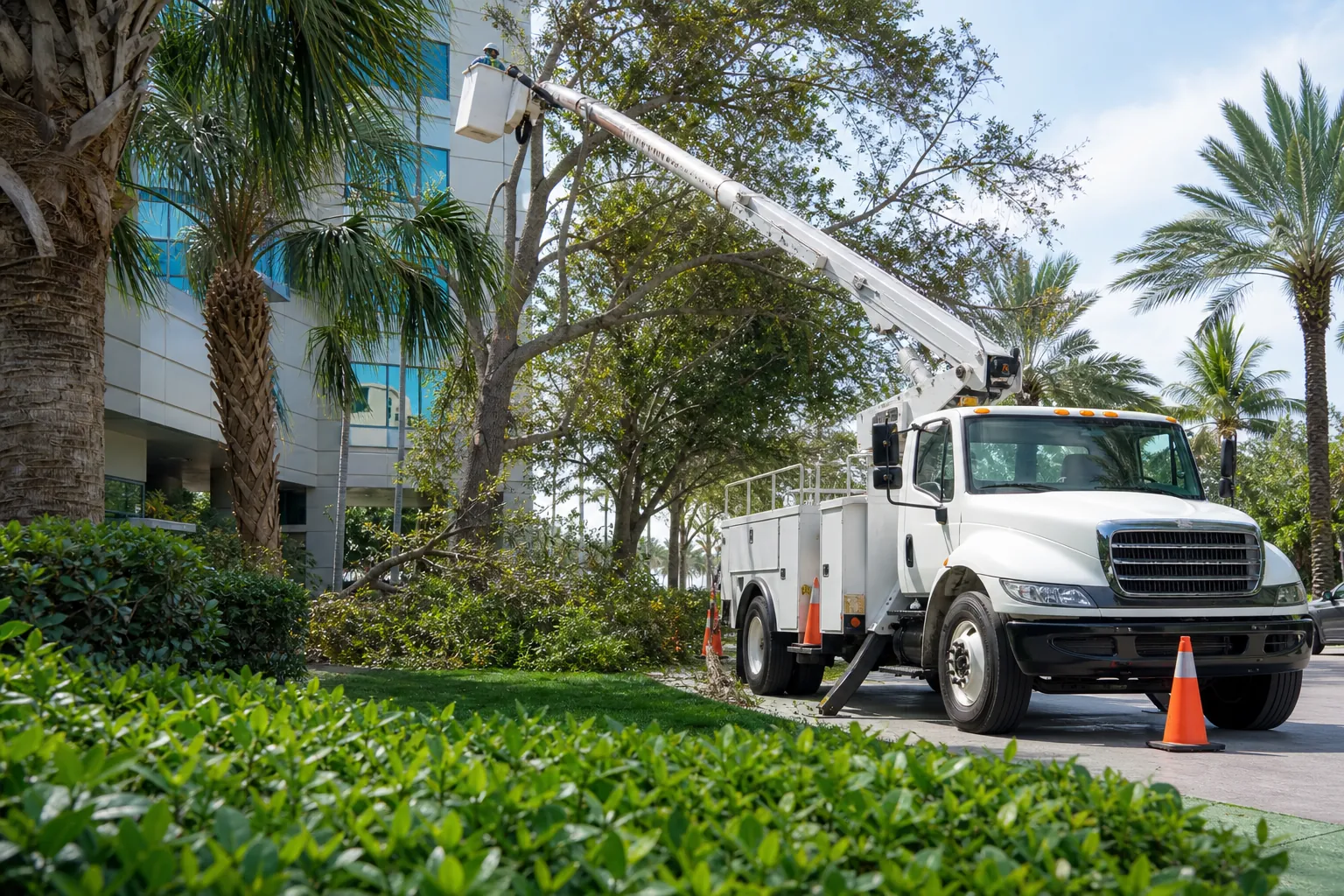
Changing tree care providers can affect more than the appearance of a commercial property. Trees may border parking areas, sidewalks, buildings, stormwater features, entrances, and shared outdoor spaces. If responsibilities are not transferred clearly, routine trimming can be missed, known concerns may go undocumented, and urgent work can become harder to coordinate.
A thoughtful commercial tree service vendor transition helps property managers, facility teams, HOA boards, and condo associations maintain continuity. The goal is not simply to replace one contact with another. It is to give the incoming tree service enough reliable information to understand the property, identify priorities, and build a practical plan for ongoing care.
Start With A Complete Property Record
Begin by gathering the records connected to previous tree work. These may include service summaries, arborist reports and tree inspections, site maps, photographs, work orders, and notes about recurring access issues. Organize the information by property section or tree location when possible.
Document what was completed, what was recommended, and what remains unresolved. For example, a prior vendor may have performed canopy thinning near one building while recommending crown reduction for trees near another area. Clear distinctions help the new provider avoid repeating work or overlooking a pending concern.
Records should also identify trees or areas that receive frequent attention after strong weather. Avoid presenting old observations as current conclusions. Tree condition can change, so historical material should serve as context for a new inspection rather than a substitute for one.
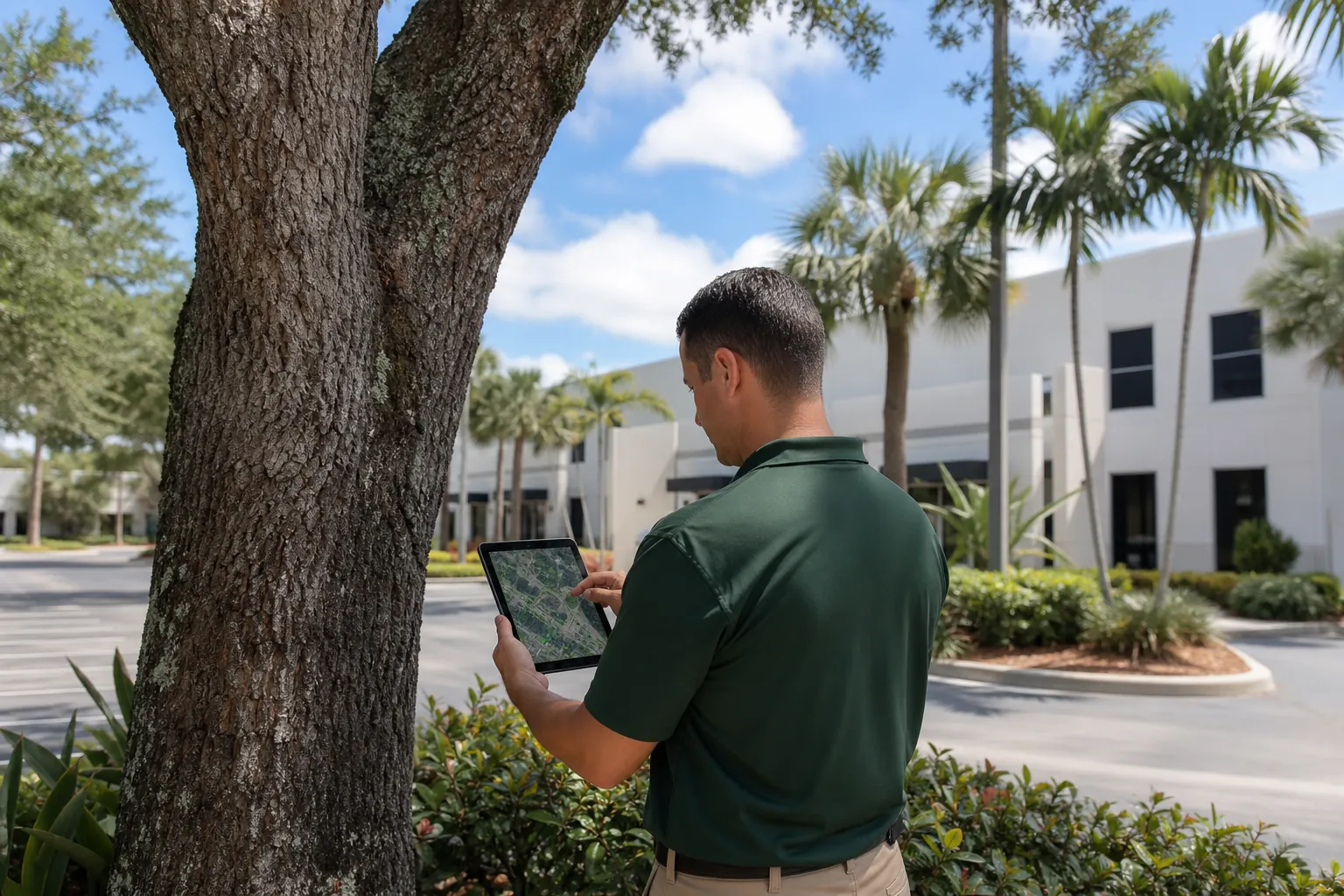
Arrange A Site Walk Before Routine Work Begins
A site walk allows the incoming provider and property representative to compare written records with current conditions. Walk the property during normal operations so both parties can observe traffic patterns, loading zones, resident activity, gate procedures, and areas where equipment placement may require coordination.
Discuss practical concerns such as branches over parking spaces, visibility near entrances, clearance around buildings, fallen limbs, storm-damaged trees, stumps, and overgrown sections of a lot. The walkthrough can also clarify where crane tree removal may need to be evaluated due to tree size, location, or restricted access.
Useful items to review during the visit include:
- Primary contacts for routine scheduling and urgent communication
- Property boundaries, shared areas, and locations with unclear responsibility
- Gate codes, access hours, loading areas, and equipment restrictions
- Pedestrian routes, resident parking, customer traffic, and delivery schedules
- Known tree concerns near roofs, signs, fences, utilities, and common areas
- Previous tree removal, tree trimming, stump grinding, or land and lot clearing
- Areas considered for canopy thinning, crown reduction, or brush hogging
- Procedures for emergency and hurricane tree removal requests
- Communication steps for notices, approvals, photographs, and completion records
The site walk should produce a shared list of priorities, not an assumption that every observed issue requires immediate work. Some concerns may call for arborist reports and tree inspections before a scope is selected.
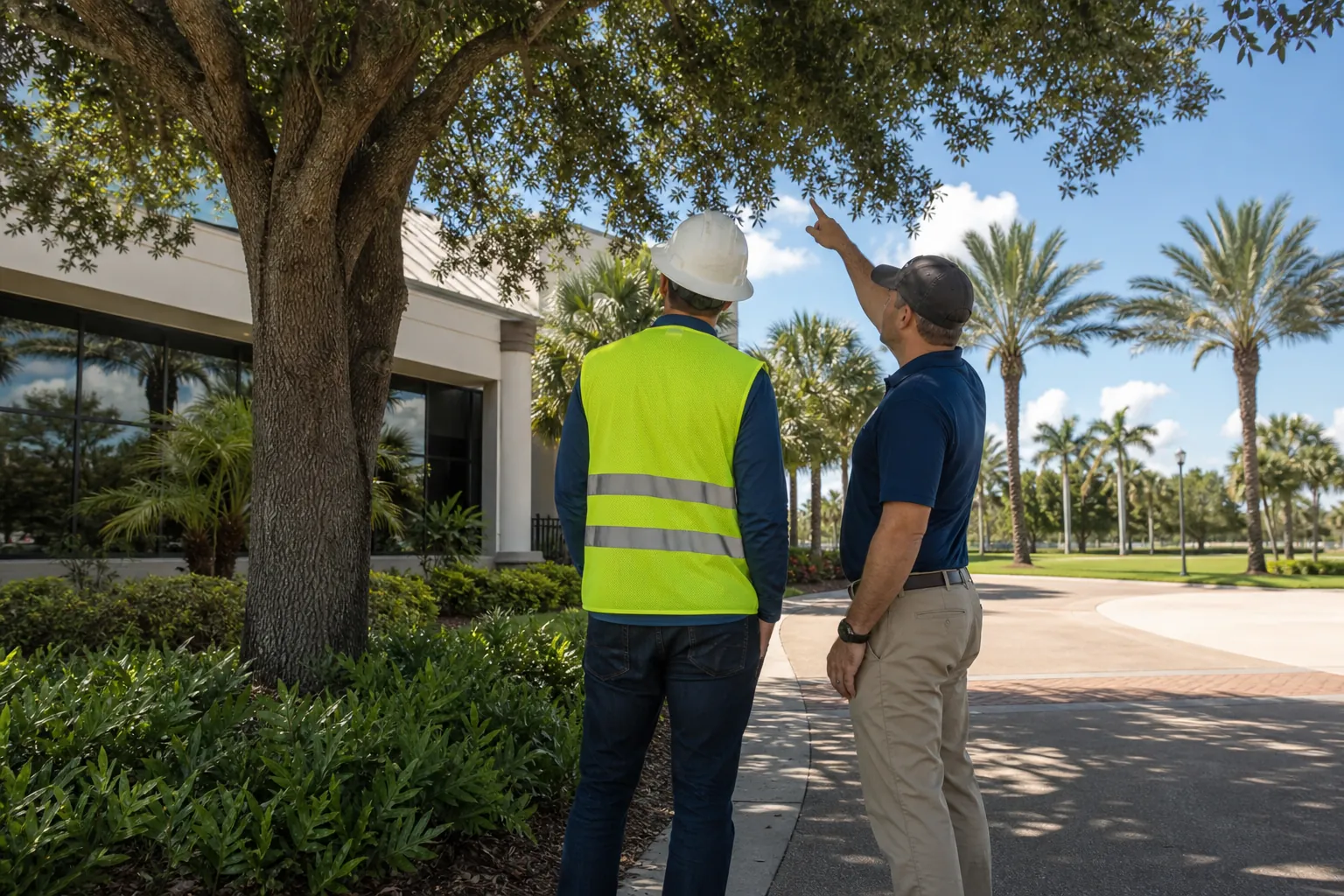
Define Scope, Standards, And Approval Steps
Commercial tree services often involve several stakeholders. A property manager may schedule work, a board may approve it, and an onsite contact may control access. Establish who can request service, approve recommendations, receive documentation, and confirm completion.
Use specific service language in work requests. Tree trimming is a broad category, while canopy thinning and crown reduction describe different objectives. Tree removal and stump grinding should also be listed separately because removing a tree does not automatically explain how the remaining stump will be handled.
For larger sites, separate recurring care from project-based work. Routine tree trimming may follow a planned schedule, while crane tree removal, land and lot clearing, or brush hogging may require additional site coordination. HOA and condo tree services may also need resident notices, parking adjustments, or temporary limits around common areas.
Ask how recommendations will be documented and how scope changes will be communicated. A clear approval process helps prevent confusion when site conditions differ from the original request.
Prepare For Florida Weather And Urgent Calls
Florida weather makes emergency planning an important part of a vendor change. Confirm how the property team will report storm damage and who will be available to provide access. The vendor should receive accurate location details, photographs when safely available, and information about blocked entrances or other immediate site impacts.
Do not wait for a storm to decide who is authorized to request emergency and hurricane tree removal. Create an internal call list and keep it accessible to managers, board members, maintenance staff, and security personnel as appropriate.
After severe weather, keep people away from damaged trees and hanging limbs. Do not attempt to move branches that are near utility lines. Contact the appropriate utility provider or emergency authority when electrical hazards or immediate public safety concerns are present. Tree work can then be coordinated when the area is safe to assess.
Confirm Local Requirements Before Work
Tree work requirements can vary across Florida cities and counties. Before approving tree removal, substantial trimming, land and lot clearing, or related site changes, confirm current requirements with the city or county that has jurisdiction over the property. Some properties may also have association documents, development conditions, or internal approval rules.
Ask who will verify whether general local requirements apply and who will retain relevant records. Do not assume that prior work at the property establishes the process for a new project. Requirements and site conditions may differ.
Review The First Completed Project
The first service visit is an opportunity to test the transition process. Confirm that the crew reached the correct work areas, followed access instructions, and completed the authorized scope. Review photographs or service notes and document any follow-up items.
Also evaluate communication. Were notices issued at the right time? Were parked vehicles or occupied areas handled as expected? Did the property contact receive a clear update? Small adjustments after the first project can make future scheduling more efficient.
Florida Foliage provides commercial tree services and HOA and condo tree services, including tree removal, tree trimming, stump grinding, canopy thinning, crown reduction, crane tree removal, emergency and hurricane tree removal, arborist reports and tree inspections, land and lot clearing, and brush hogging. To discuss a measured transition for your Florida property, call (386) 481-7913.
Call (386) 481-7913 to talk through next steps.