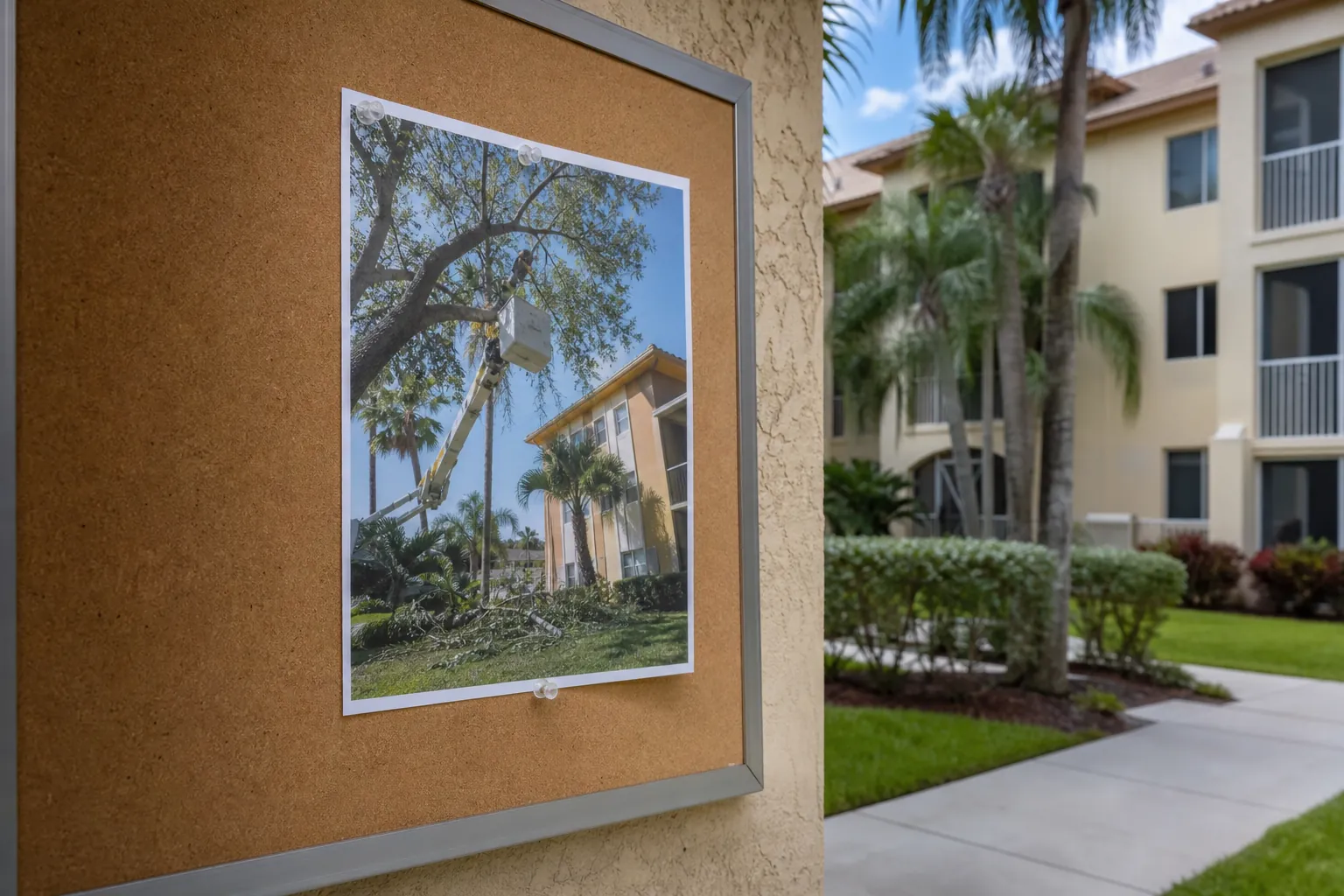
Tree trimming in a condominium community affects more than the trees. Residents may need to move vehicles, avoid certain walkways, secure patio items, or plan around temporary noise. A clear notice helps everyone understand what is happening and what they need to do.
For Florida condominium boards, managers, and associations, the best notice is specific without becoming overly technical. It should identify the work areas, explain the expected impact, and provide a reliable contact for questions. The following guidance can help you prepare a practical condo tree trimming resident notice.
Why Advance Notice Matters
Condo properties often include shared drives, limited parking, sidewalks, pools, courtyards, and landscaping near residential buildings. Tree trimming equipment and falling branches may temporarily affect access to these common areas. Residents need enough information to adjust their routines safely.
Advance communication also helps the tree service complete its work efficiently. When vehicles are moved and patios are cleared, crews can reach designated trees without unnecessary delays. Residents are also less likely to enter an active work zone when they know where and when service will occur.
Send the notice through the communication channels your community normally uses. That might include email, printed door notices, lobby postings, a resident portal, or text alerts. For larger properties, a reminder shortly before work begins can reinforce important instructions.
Essential Details to Include in the Notice
A useful notice answers the questions residents are most likely to ask. Avoid vague language such as “tree work will happen soon.” Instead, provide confirmed details while acknowledging that weather or site conditions may affect the schedule.
- Service dates and working hours: List the planned day or date range and the approximate daily start and finish times.
- Specific work areas: Name buildings, parking rows, courtyards, entrances, streets, or landscape zones that will be affected.
- Type of work: Explain whether the project involves tree trimming, canopy thinning, crown reduction, tree removal, stump grinding, or tree inspections.
- Parking instructions: Identify spaces that must remain empty and state when vehicles need to be relocated.
- Access changes: Note any temporary sidewalk, driveway, gate, amenity, or entrance restrictions.
- Resident preparations: Ask residents to bring in patio furniture, decorations, bicycles, grills, and other movable items near the work zone.
- Pet and child safety: Remind residents to keep children and pets away from equipment, debris, and marked work areas.
- Noise expectations: Mention that chainsaws, chippers, lifts, or other equipment may create temporary daytime noise.
- Weather contingency: Explain how residents will receive an updated schedule if unsafe weather postpones the work.
- Contact information: Provide the appropriate association or management contact for access questions and the tree service contact when relevant.
How to Keep the Message Clear and Calm
Residents do not need a detailed arboricultural report in the initial announcement. Use plain language and short sections with headings such as “Work Area,” “Resident Action Required,” and “Schedule.” Place the most urgent instruction, such as moving vehicles, near the top.
Be careful not to create unnecessary alarm. If tree removal is planned, describe the location and explain that residents must avoid the marked zone. If trimming is intended to improve clearance or manage branch weight, say so without making unsupported claims about a tree's condition.
It is also helpful to distinguish required actions from general reminders. “Vehicles must be removed from spaces 20 through 35 by 7:30 a.m.” is more useful than “Please avoid parking near the trees.” Clear boundaries reduce confusion for residents and contractors.
Sample Condo Tree Trimming Resident Notice
The following framework can be adapted to your community. Replace each bracketed section with confirmed project details before sending it.
Subject: Scheduled Tree Trimming Near [Building or Area]
Tree trimming is scheduled for [date or date range] between approximately [hours]. Work will take place near [specific buildings, parking areas, walkways, or amenities]. The project may include [tree trimming, canopy thinning, crown reduction, or another approved service].
Residents must move vehicles from [specific spaces or area] by [time and date]. Please remove furniture, decorations, bicycles, and other personal items from patios or outdoor areas adjacent to the work zone. Follow all posted signs and crew directions, and keep children and pets away from active equipment and debris.
Temporary noise and short access restrictions should be expected. If weather or site conditions require a schedule change, an update will be sent through [communication method]. For property access questions, contact [management or association contact].
Thank you for helping the crew work safely and efficiently.
Florida Planning Considerations
Florida's rain, wind, lightning, and hurricane season can affect outdoor schedules. Build flexibility into notices and avoid promising an exact completion time. Crews may need to pause or reschedule when conditions make trimming unsafe.
Associations should also confirm whether local approvals apply before work begins. Permit requirements and tree protections can differ by city and county, especially for removal or work involving protected trees. Check with the appropriate city or county office rather than assuming the same rules apply across Florida.
An arborist report or tree inspection can help boards document tree conditions and establish an appropriate scope of work. This is especially useful when a project may involve crown reduction, crane tree removal, or emergency and hurricane tree removal. Keep relevant reports, proposals, notices, and schedule updates with the association's project records.
Coordinating Service Across the Property
Larger communities may benefit from dividing work into phases. A notice can identify which buildings are affected each day, while signs and cones can mark active zones on site. This approach limits disruption and gives residents more precise instructions.
Florida Foliage provides HOA and condo tree services, commercial tree services, tree trimming, tree removal, stump grinding, canopy thinning, crown reduction, crane tree removal, and arborist reports and tree inspections. Related property work can include land and lot clearing or brush hogging when those services match the approved scope.
Before distributing a notice, confirm the schedule and access plan with the tree service. Make sure the crew knows about gate codes, loading areas, irrigation features, restricted surfaces, and emergency access routes. The association should also identify who has authority to approve changes if unexpected conditions are found.
Prepare Residents Before Work Begins
A successful notice tells residents what will happen, where it will happen, and what action they must take. Specific locations, realistic timing, visible reminders, and a weather update plan can make condo tree work easier to coordinate.
If your Florida association is planning tree care, contact Florida Foliage to discuss the property and communication needs. Call (386) 481-7913 to arrange an appropriate tree service or inspection.
Call (386) 481-7913 to talk through next steps.