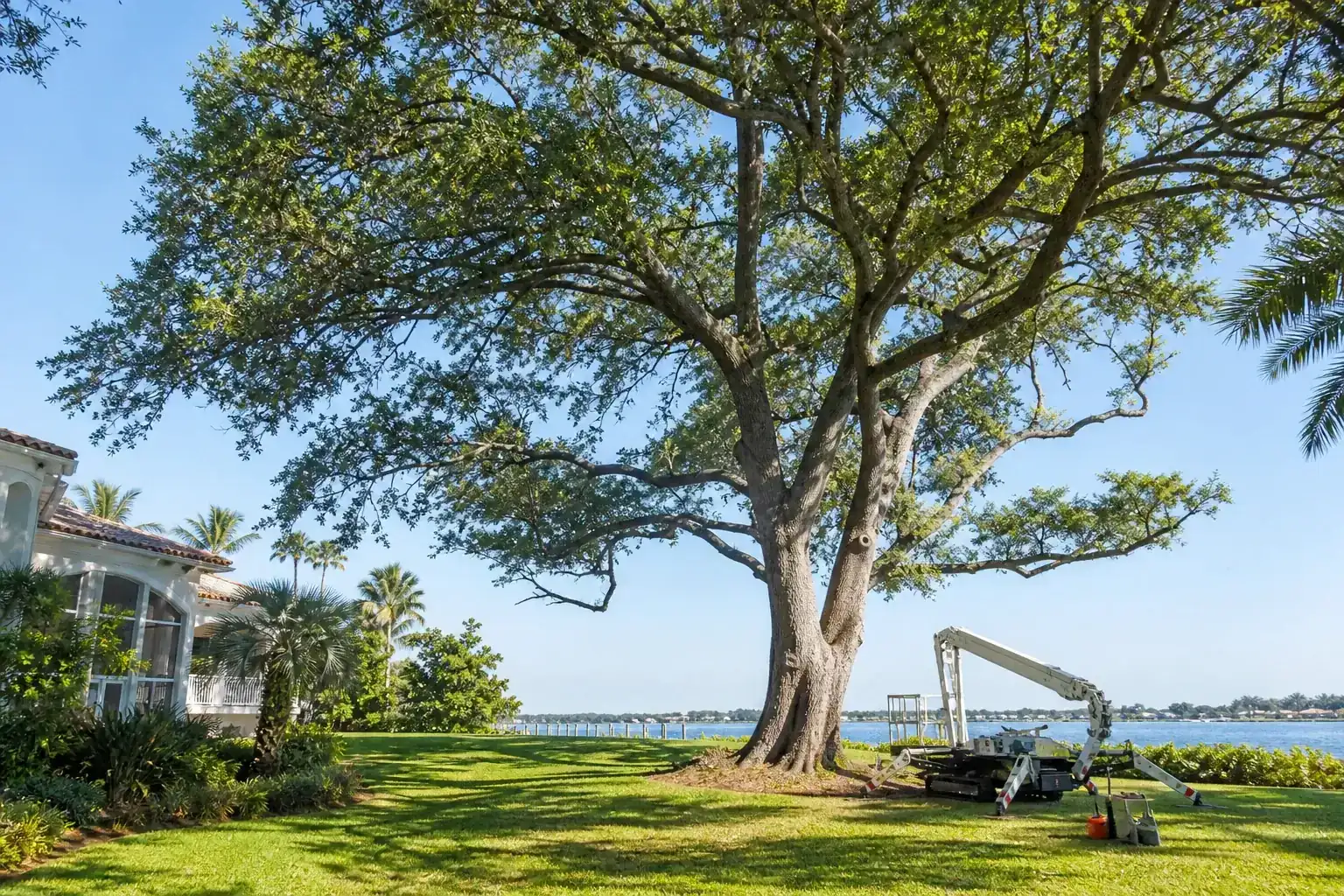
Waterfront trees contribute shade, character, and habitat, but removing a declining or storm-damaged tree near the water can be unusually complex. Limited access, soft ground, nearby buildings, docks, fences, utilities, and sensitive shoreline areas may leave little room for conventional removal methods.
Crane tree removal near waterfront properties can provide controlled lifting when branches or trunk sections cannot be dropped safely. The crane supports and moves cut sections to a designated landing area, helping the crew manage tight spaces while reducing unnecessary contact with the surrounding property.
Florida Foliage provides crane tree removal and related arborist care for Florida homeowners, property managers, HOAs, condos, and commercial sites. Each project should begin with a careful assessment because no two waterfront properties have the same access, soil, tree condition, or nearby obstacles.
Why Waterfront Tree Removal Requires Extra Planning
A tree beside a canal, lake, river, lagoon, or coastal property may lean toward open water or grow over a roof, pool enclosure, dock, parking area, or neighboring lot. Its weight distribution can also be difficult to judge from the ground, especially when decay, cavities, broken limbs, or dense foliage are present.
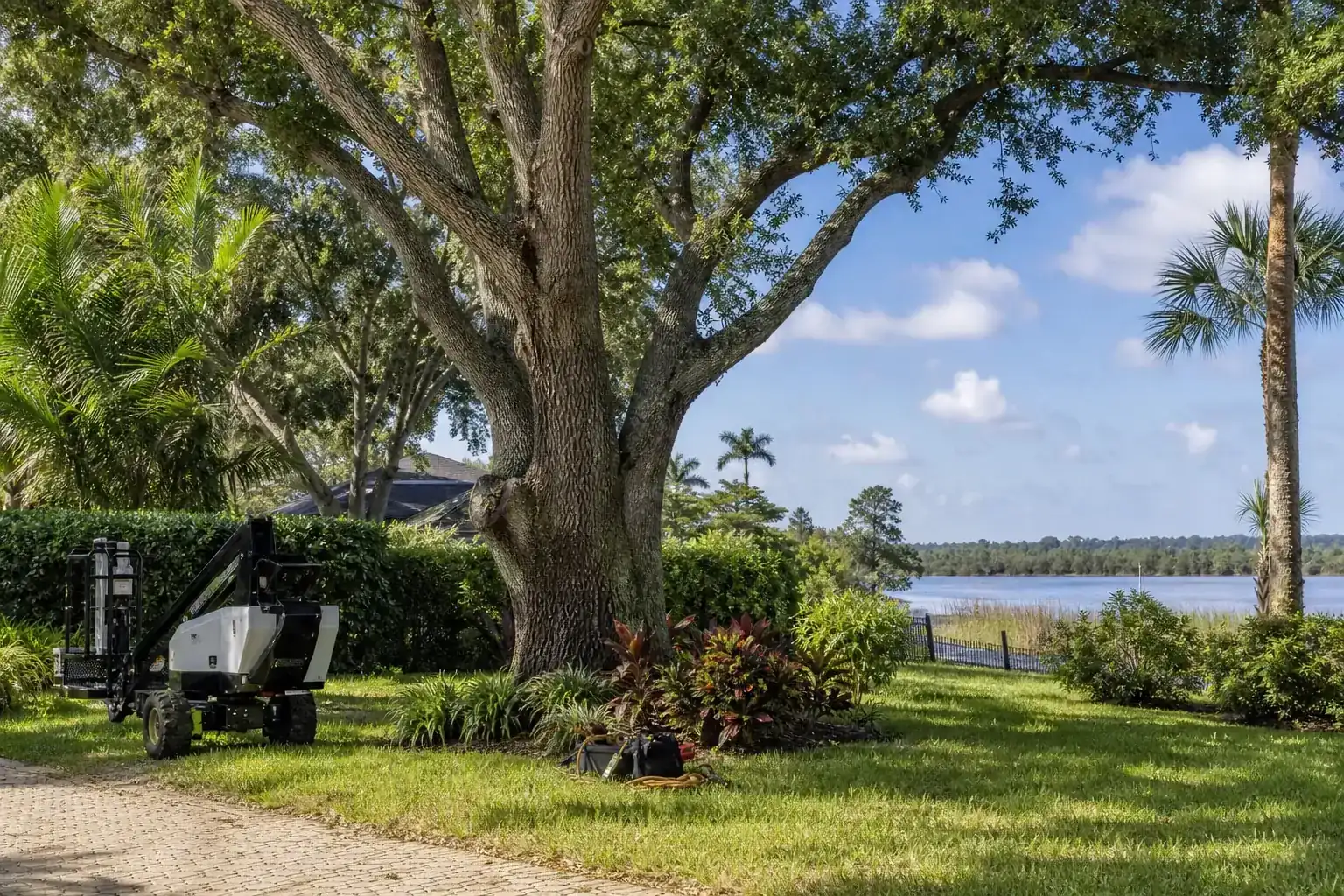
Ground conditions deserve equal attention. Saturated soil may not support heavy equipment in the same way as firm inland terrain. Crews must evaluate where equipment can be positioned, how loads will travel, and where tree sections can be lowered without affecting structures or shoreline features.
Wind exposure is another concern. Waterfront trees often experience persistent winds and stronger gusts during storms. A tree inspection can identify visible defects and help determine whether tree trimming, canopy thinning, crown reduction, or full tree removal is the appropriate option. The goal is to match the service to the tree rather than treating removal as the automatic answer.
How Crane-Assisted Removal Works
Crane removal is a coordinated process involving the crane operator, climber, ground crew, and project lead. Before cutting begins, the team establishes equipment locations, communication procedures, load paths, work zones, and landing areas.
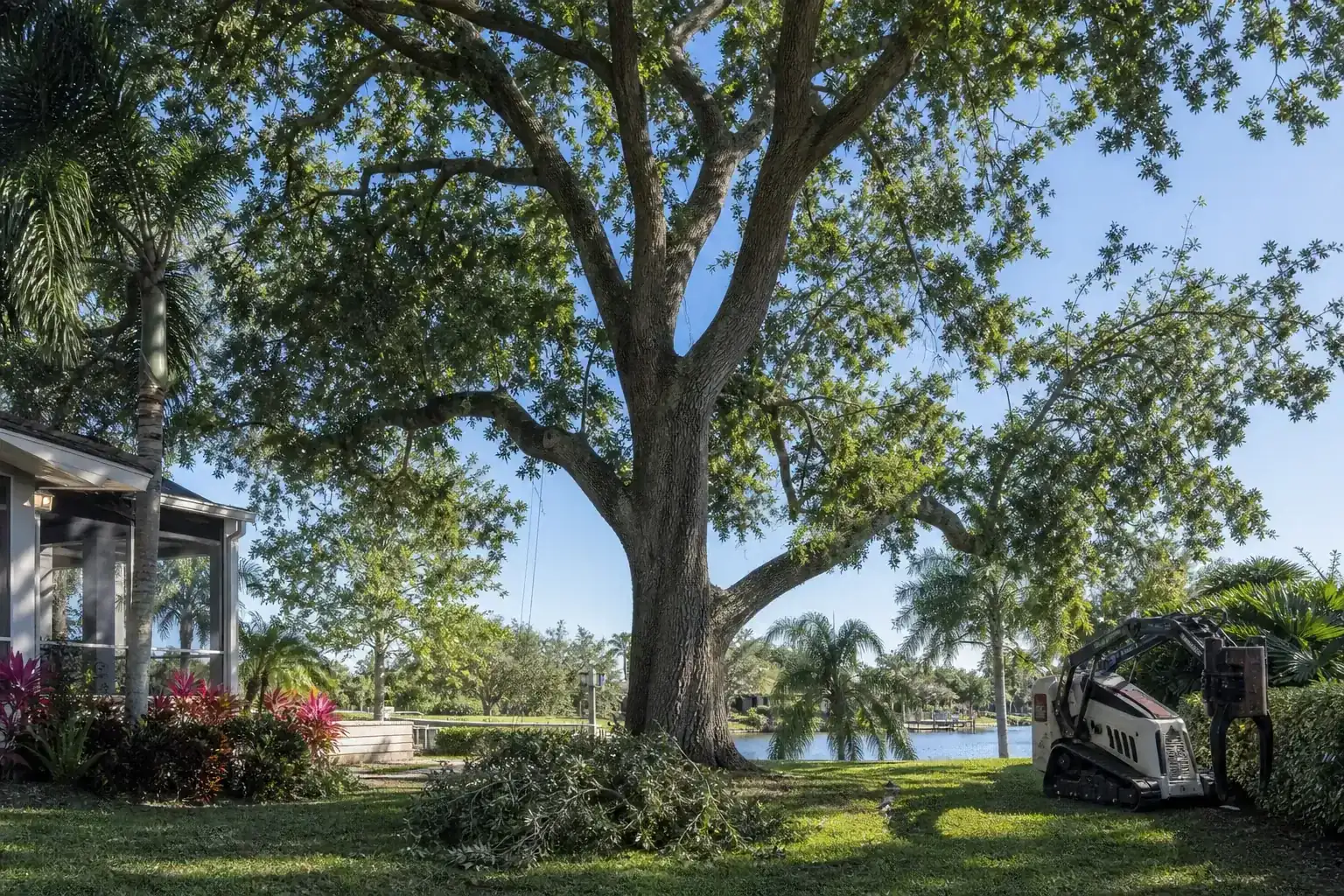
A climber or aerial worker secures a selected branch or trunk section to the crane. After the rigging is checked, the cut is made and the crane lifts the section away from the tree. The material is then transferred to a controlled processing area. This sequence is repeated until the tree has been dismantled to a manageable height.
Using a crane does not mean every piece is simply pulled away. Pick size, balance, rigging points, boom reach, clearance, and weather conditions all influence the plan. Careful preparation helps limit sudden movement and keeps suspended material away from roofs, waterfront features, and occupied areas.
What A Waterfront Site Assessment Should Cover
A useful assessment considers the whole property, not only the trunk. Homeowners and property managers can expect the tree service to review access, hazards, surrounding improvements, and material handling needs. Important planning factors include:
- Tree condition: Visible decay, deadwood, cracks, cavities, root disturbance, storm damage, and the direction of lean.
- Targets below: Homes, garages, pools, screen enclosures, docks, walkways, vehicles, fences, landscaping, and neighboring property.
- Equipment access: Gate widths, driveway layout, overhead clearance, turning space, and potential setup areas.
- Ground stability: Soft soil, recent rainfall, slopes, erosion, septic areas, and surfaces that require protection.
- Utility conflicts: Overhead or nearby utility lines that may affect equipment placement and lifting paths.
- Landing and processing space: A suitable location for receiving, cutting, and managing removed sections.
- Shoreline considerations: Proximity to the water, retaining features, embankments, and areas where debris must be contained.
- Property coordination: Access arrangements for shared drives, HOA or condo common areas, tenants, guests, and adjacent owners.
Photos can help with initial communication, but they do not replace an on-site tree inspection. Conditions that influence removal may be hidden by vegetation, buildings, or the viewing angle.
Permits, Associations, And Waterfront Restrictions
Tree work requirements vary across Florida. Depending on the location, tree type, property designation, and scope of work, local review or authorization may be necessary. Waterfront and environmentally sensitive sites can involve additional considerations.
Property owners should confirm current requirements with their city or county before work begins. HOA and condo communities should also review their governing documents and approval process. An arborist report or tree inspection may help document tree condition when a local agency, association, insurer, or property manager requests supporting information.
A professional plan should also account for site boundaries and shared spaces. Written access approval may be appropriate if equipment or personnel need to enter neighboring or common property.
Preparing Your Property For The Crew
Good preparation supports an orderly workday. Move vehicles, outdoor furniture, portable planters, and other belongings away from the planned work zone. Keep children and pets indoors or in a separate secured area. If the tree is near a dock or shared walkway, prevent unnecessary foot traffic while work is underway.
Let the crew know about irrigation components, septic features, drainage systems, low-voltage lighting, gates, and other concealed property elements. Property managers should notify residents or tenants about access limitations and identify a contact who can answer site questions.
Weather can affect crane operations, particularly near exposed water. A responsible crew may adjust the schedule or pause work when wind, lightning, heavy rain, or ground conditions interfere with the plan.
Related Care Before And After Removal
Some waterfront trees can be managed without removal. Tree trimming may address dead or damaged branches, while canopy thinning can reduce selected interior growth. Crown reduction can shorten specific limbs or reduce overall canopy dimensions when appropriate for the species and structure. These methods should be selected carefully because excessive cutting can stress a tree and create poor growth.
After removal, stump grinding may help reclaim usable ground, although shoreline position, access, roots, and nearby infrastructure must be reviewed first. Florida Foliage also provides emergency and hurricane tree removal when severe weather damages trees, along with land and lot clearing and brush hogging for suitable properties.
Commercial tree services and HOA and condo tree services can include coordinated inspections, planned maintenance, and communication around shared areas. Periodic arborist reports and tree inspections can help decision-makers prioritize work before damaged branches or declining trees become urgent concerns.
Plan A Controlled Waterfront Tree Removal
Crane-assisted removal can be a practical solution when a waterfront tree cannot be dismantled safely using ordinary lowering methods. The right approach depends on tree condition, crane access, ground stability, surrounding structures, weather, and local requirements.
If you are evaluating a difficult tree near the water, contact Florida Foliage for a site-specific discussion. Call (386) 481-7913 to arrange a tree inspection and learn whether crane tree removal fits the conditions at your Florida property.
Call (386) 481-7913 to talk through next steps.