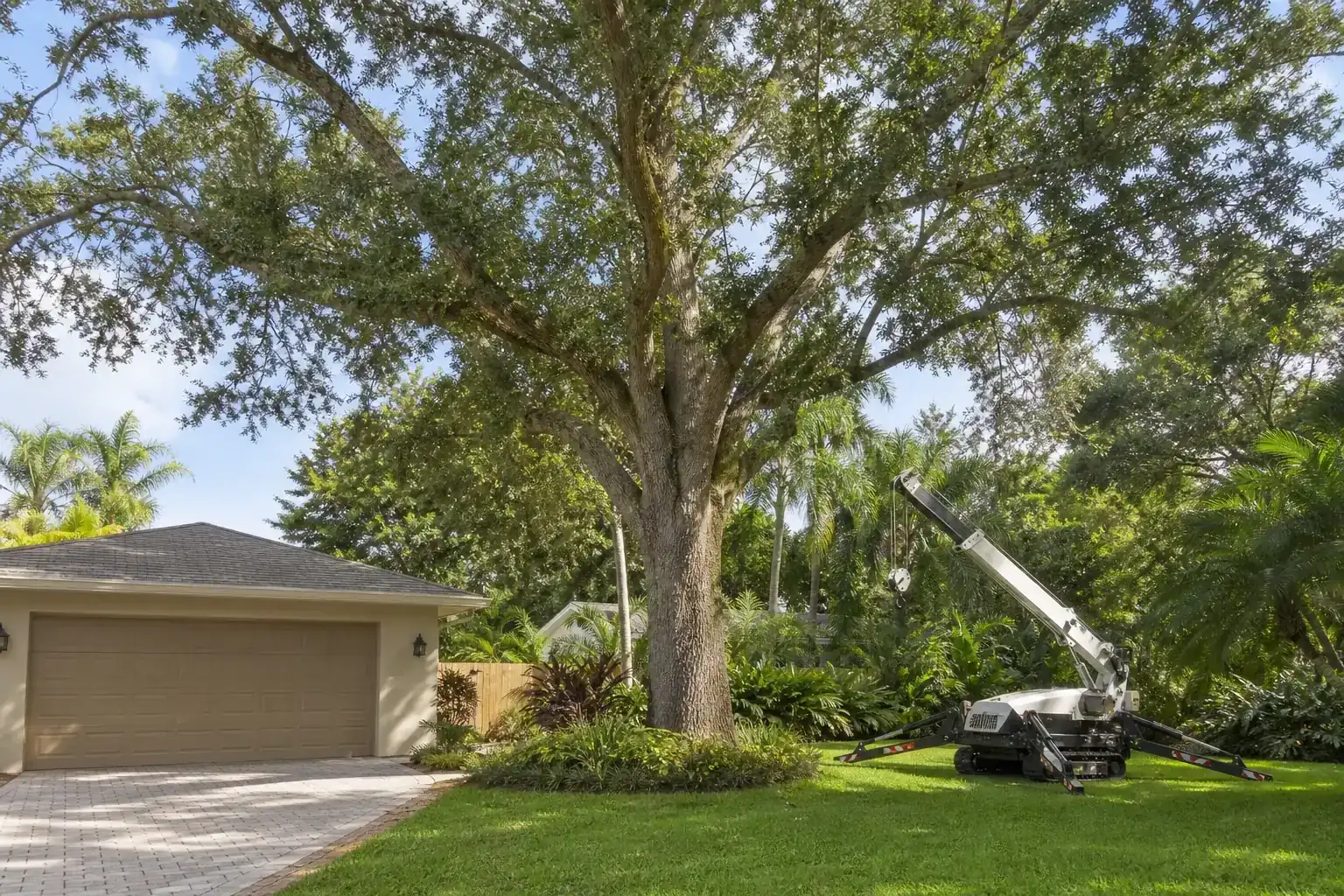
A large tree leaning over a garage can create a difficult removal problem. There may be little room to lower limbs, limited access around the building, and landscaping or utility features that must remain protected. In these situations, crane tree removal over garage structures may provide a controlled way to lift tree sections away from the roof instead of allowing them to fall through the work zone.
Crane work still requires careful planning. The tree, garage, access route, soil, equipment position, and surrounding obstacles all affect how a crew approaches the project. Florida Foliage provides crane tree removal and related arborist care for Florida properties where conventional removal methods may not be appropriate.
When a crane may be appropriate
A crane is not automatically needed whenever a tree grows near a building. Some trees can be handled with standard climbing and rigging techniques. Others have a position, size, condition, or surrounding layout that makes lifting sections the more practical approach.
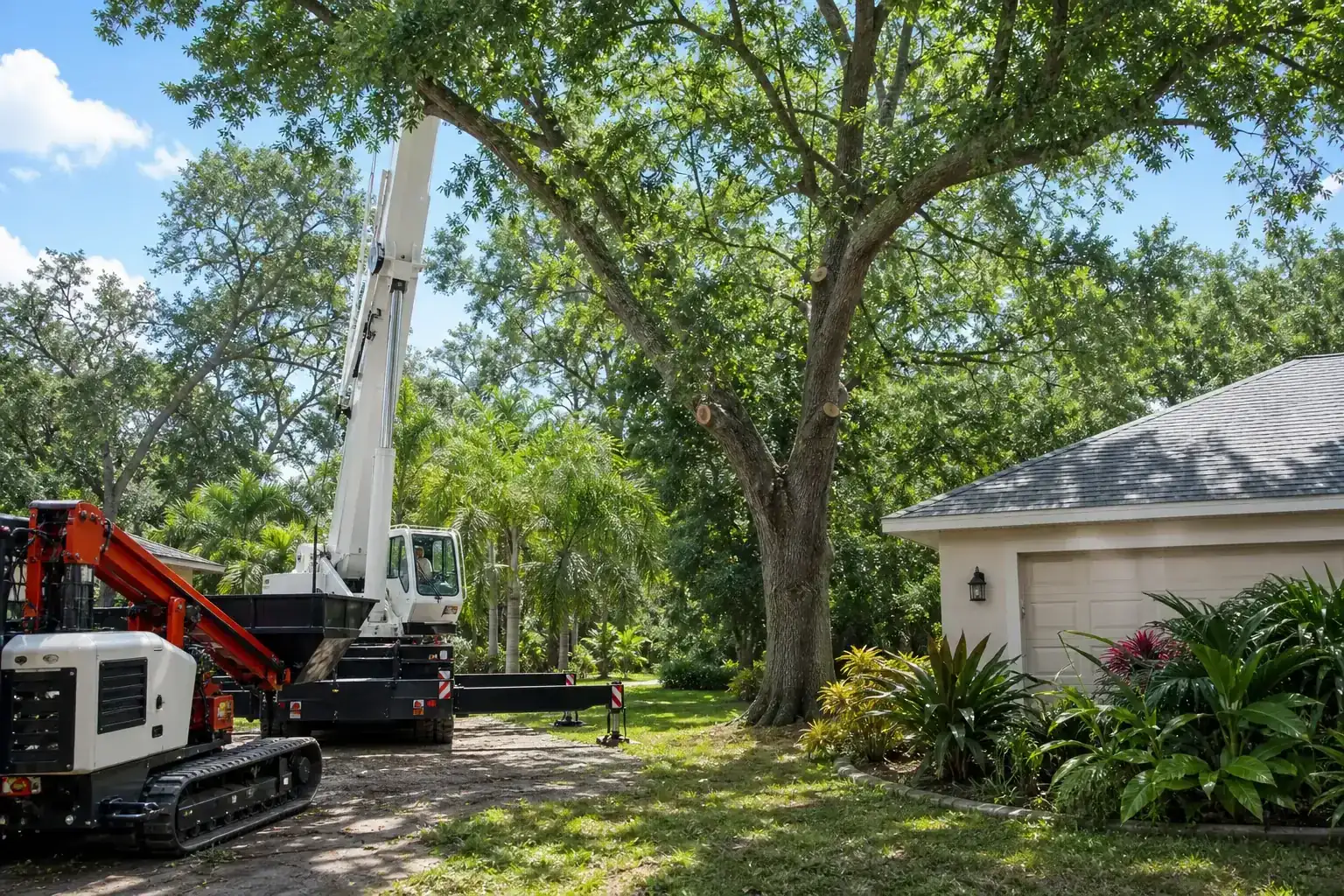
Crane tree removal may be considered when heavy limbs extend directly over a garage, the trunk stands too close to the structure for a normal drop zone, or the yard has limited space for controlled lowering. It can also be useful when a weakened tree cannot safely support a climber or conventional rigging loads.
An inspection helps determine whether complete tree removal is necessary. In some cases, tree trimming, canopy thinning, or crown reduction may address a specific concern while preserving the tree. These services must be selected carefully because improper cuts can weaken structure, trigger excessive regrowth, or create additional exposure during storms.
How the site is evaluated before removal
Planning begins with the tree and expands outward. A tree inspection may identify dead wood, cracks, cavities, root problems, storm damage, unusual movement, or weak branch unions. The crew also evaluates the garage roof, nearby trees, fences, driveways, landscaping, and other features within the potential work area.
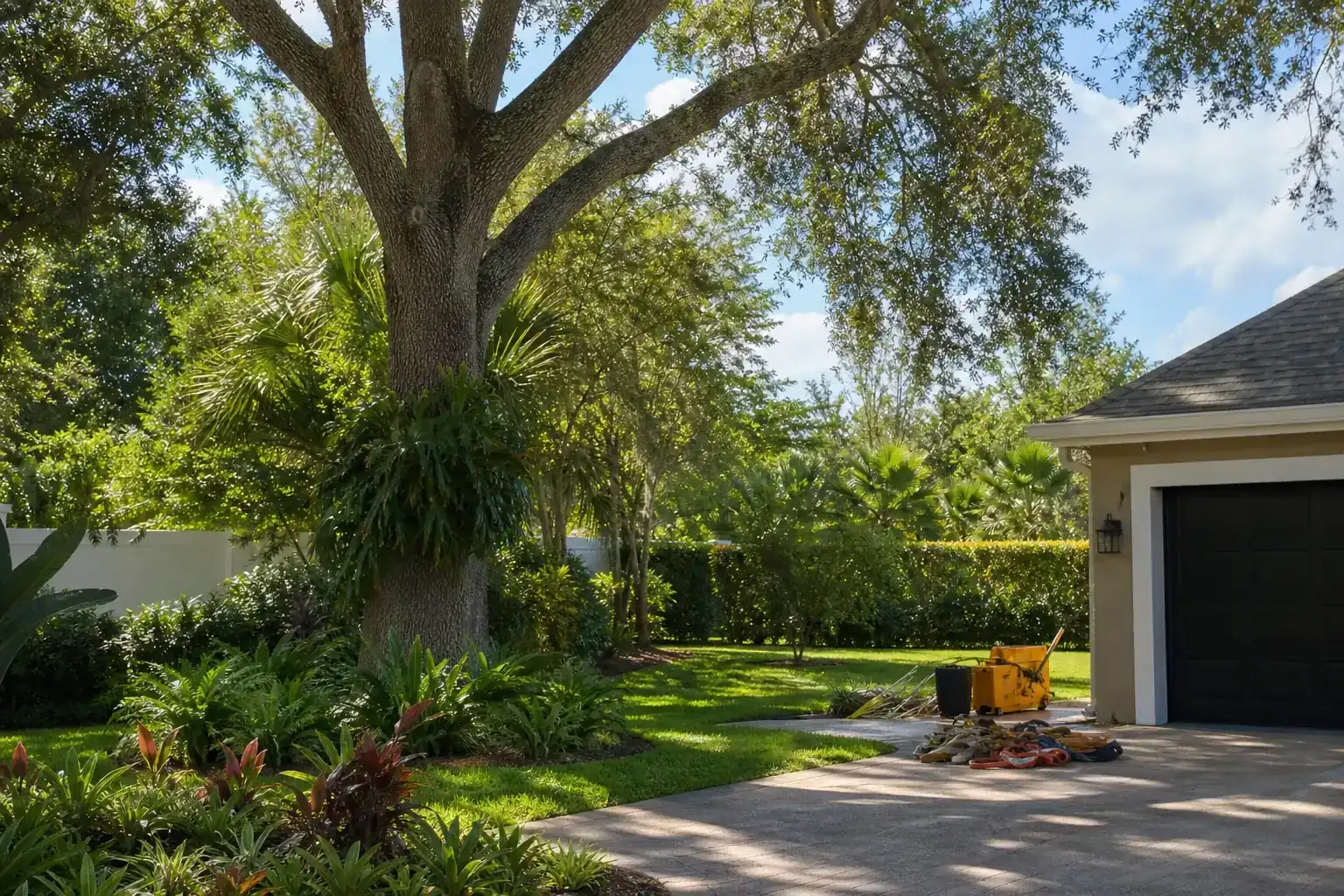
Crane access is a major part of the assessment. The equipment needs a suitable route and setup location. Ground conditions matter because soft, saturated, sloped, or recently disturbed soil can affect equipment placement. Overhead and underground utilities must also be considered by the appropriate parties before work starts.
A useful pre-work review typically addresses:
- The tree species, trunk form, canopy spread, and visible defects
- The location of heavy limbs in relation to the garage roof
- Potential crane setup areas and equipment access routes
- Nearby buildings, fences, pools, landscaping, and parked vehicles
- Ground stability, drainage, slopes, and septic-related areas
- Space for processing and removing lifted tree sections
- The desired final condition, including whether stump grinding is requested
- Any local approval or documentation the property owner may need
Tree work requirements vary across Florida. Property owners should confirm applicable rules, approvals, and protected-tree requirements with their city or county before scheduling removal. An arborist report may be useful when a local authority, HOA, condo association, insurer, or property manager requests written findings.
What happens during crane tree removal
Before cutting begins, the crew establishes the work zone and coordinates communication among the crane operator and tree professionals. The exact process depends on the tree, but removal commonly proceeds in planned sections rather than as one piece.
A tree professional accesses the canopy when conditions allow, attaches the crane line to a selected section, and verifies the connection and expected balance. Cuts are then made in a sequence designed for that individual lift. The crane moves the separated section away from the garage and lowers it into a designated processing area.
This process continues through the canopy and trunk. Each lift must account for shape, weight distribution, attachment points, clearance, and wind. Sections that look manageable from the ground can move unexpectedly if branch growth is uneven, so the lift plan may be adjusted as the canopy is opened.
The crane does not replace skilled cutting or rigging. It is one component of a coordinated operation. A well-organized crew controls access, watches changing conditions, keeps unnecessary people outside the work zone, and avoids rushing the sequence.
Preparing your garage and yard
Homeowners can support an efficient work area by moving vehicles, trailers, grills, planters, toys, and portable furniture before the crew arrives. Garage doors should remain closed, and access gates should be unlocked if the agreed route passes through them. Pets and household members should stay indoors or away from the active work area as directed.
Tell the tree service about irrigation components, shallow drainage lines, septic features, low-voltage lighting, or recently installed landscaping. Marking known features helps the crew plan movement, although the property owner may need to coordinate formal utility location when appropriate.
It is also helpful to discuss debris handling in advance. Tree sections need room for processing and removal. If stump grinding is included, ask what access and clearance the grinding equipment requires and how the resulting grindings will be handled.
Florida weather and damaged trees
Florida storms can leave trees split, uprooted, suspended in neighboring canopies, or resting on structures. These conditions may involve stored tension and unstable wood that can shift without warning. Avoid walking beneath damaged limbs or attempting to cut a loaded branch from a ladder.
Emergency and hurricane tree removal may require a different sequence from planned removal because the tree can already be partially supported by the garage, another tree, or broken limbs. Keep people away from the area and report utility concerns directly to the appropriate utility provider. Tree crews should not enter an unsafe electrical environment.
Not every leaning tree is an immediate emergency, but changes after high winds deserve attention. New soil lifting near roots, fresh trunk cracks, hanging branches, or a canopy that has shifted toward the garage are reasons to arrange a tree inspection.
Choosing the right follow-up care
After removal, stump grinding can reduce the remaining stump and make the area easier to maintain. Nearby trees may benefit from tree trimming, canopy thinning, or crown reduction when an inspection identifies specific structural needs. Routine topping should not be treated as a substitute for proper pruning.
Larger properties may also need land and lot clearing or brush hogging, while businesses, associations, and managed communities may require commercial tree services or HOA and condo tree services. Keeping each task clearly defined helps property owners coordinate access and prioritize tree concerns.
Plan a careful removal with Florida Foliage
Crane tree removal over a garage should begin with a site-specific evaluation, not an assumption based only on tree size. Access, tree condition, structural clearance, ground conditions, and cleanup needs all shape the plan.
For help evaluating a tree above or beside your garage, call Florida Foliage at (386) 481-7913. The team can discuss tree inspections, crane tree removal, tree removal, and appropriate follow-up services for your Florida property.
Call (386) 481-7913 to talk through next steps.