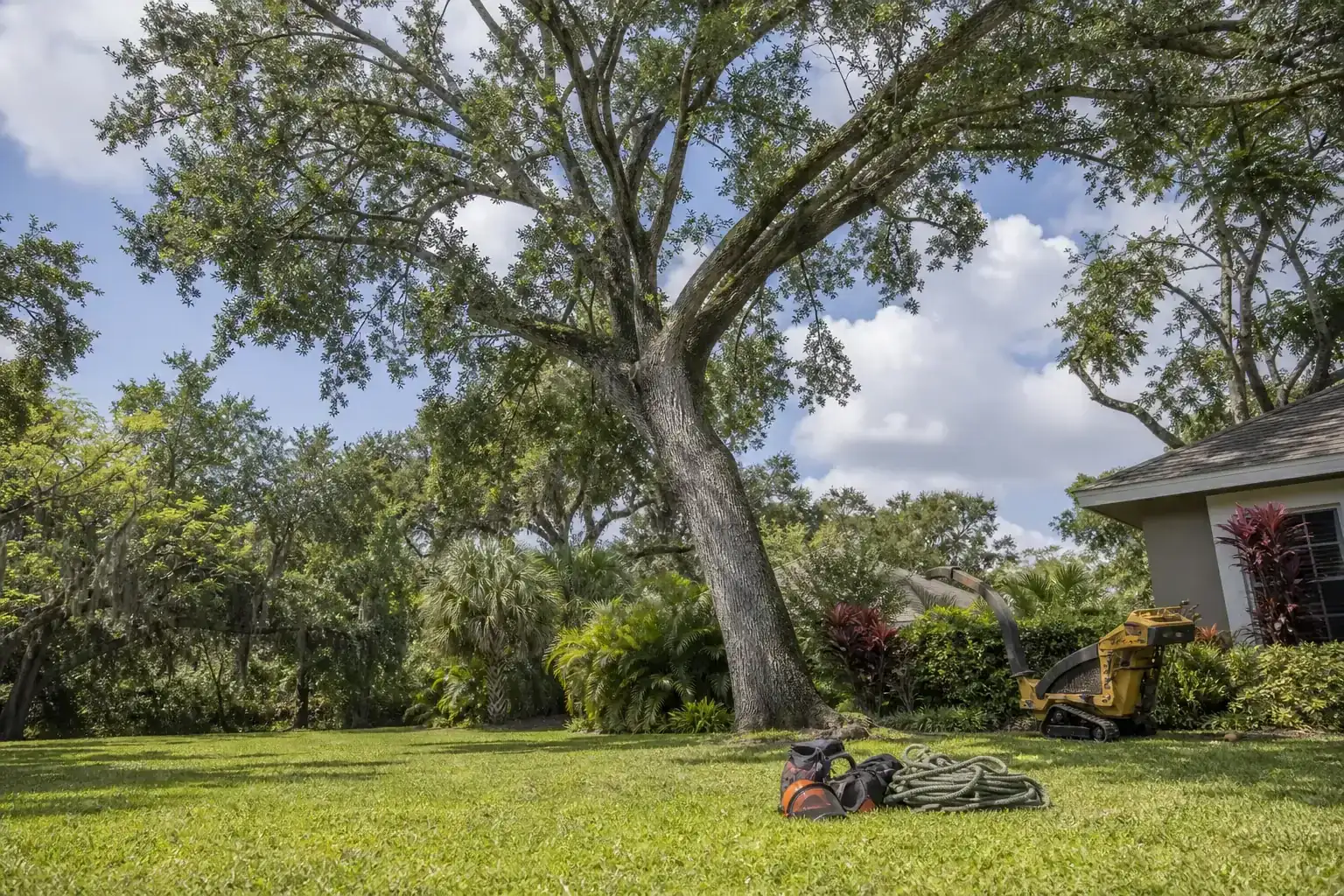
A leaning tree can make a Florida property owner uneasy, especially when the canopy extends over a home, driveway, pool, sidewalk, or neighboring lot. A lean does not automatically mean a tree will fail. Some trees grow at an angle for decades while developing roots and trunk tissue that support their form. Others begin leaning because of root damage, soil movement, decay, or storm forces.
Crown reduction for a leaning tree may be one part of a responsible care plan. The goal is to selectively shorten branches and reduce leverage while preserving a balanced, natural canopy. It is not a way to straighten the trunk, repair damaged roots, or make a hazardous tree safe in every situation. A tree inspection should come first.
Why trees lean in Florida landscapes
Trees develop a lean for several reasons. A young tree may angle toward available sunlight when buildings or nearby trees shade one side. Coastal winds can also influence growth over time. When the trunk, roots, and canopy adapt gradually, the lean may be a normal part of the tree's structure.
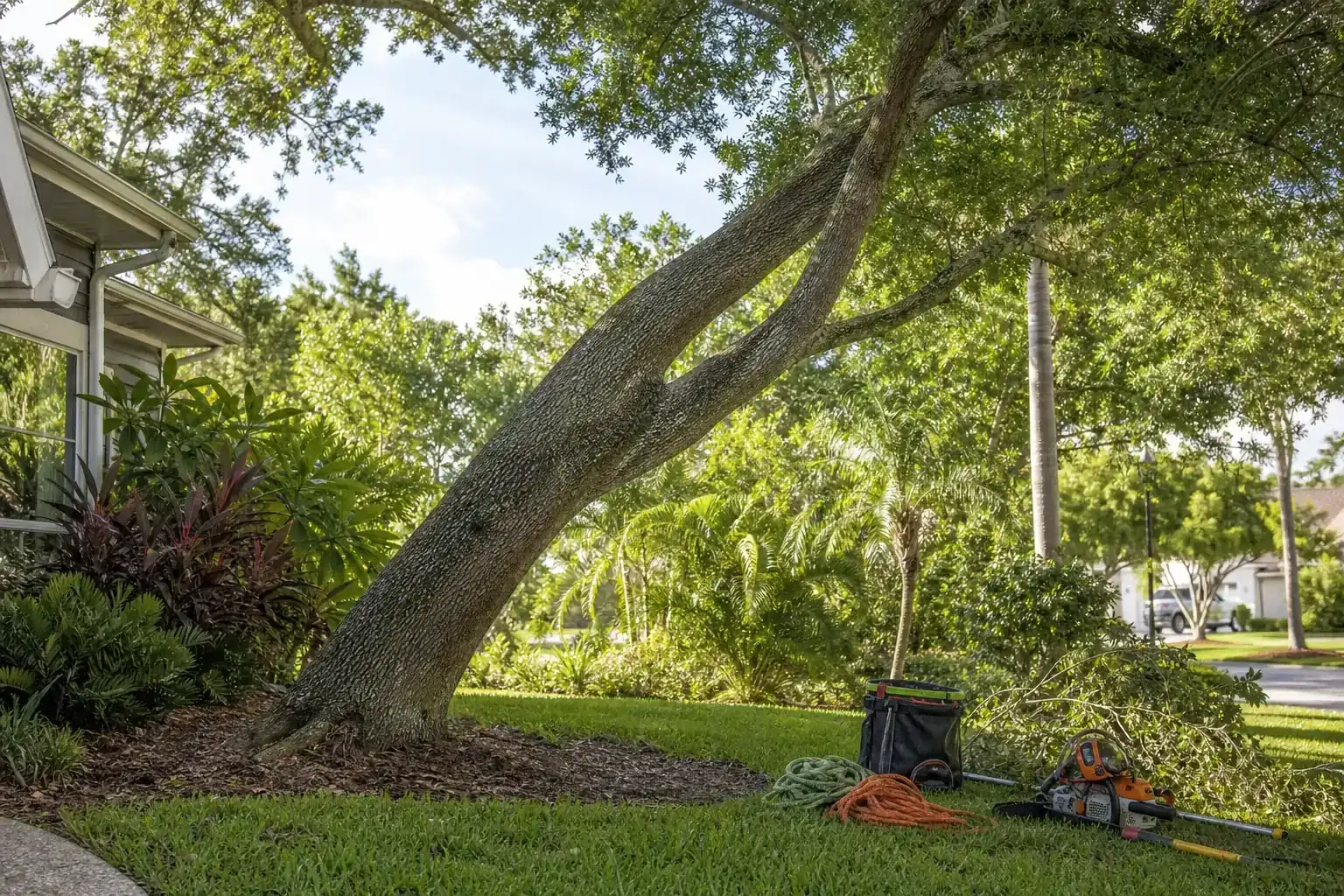
A new or increasing lean is more concerning. Saturated Florida soils can lose holding strength during periods of heavy rain. Root cutting during construction, trenching, driveway work, or grading can reduce stability. Decay at the trunk base, girdling roots, compacted soil, and previous storm damage may also contribute.
Look for changes rather than focusing only on the angle. Fresh soil lifting around the root plate, widening cracks, exposed roots, hanging limbs, or a sudden canopy shift deserve prompt attention. If a tree has moved after a storm or is resting on a structure, keep people away and request emergency and hurricane tree removal assistance rather than standing beneath it to inspect the damage.
What crown reduction actually does
Crown reduction shortens selected limbs by cutting them back to suitable lateral branches. This decreases the height or spread of part of the canopy while maintaining branch structure and foliage. On some leaning trees, carefully reducing longer limbs on the heavy side can lower leverage and improve canopy balance.
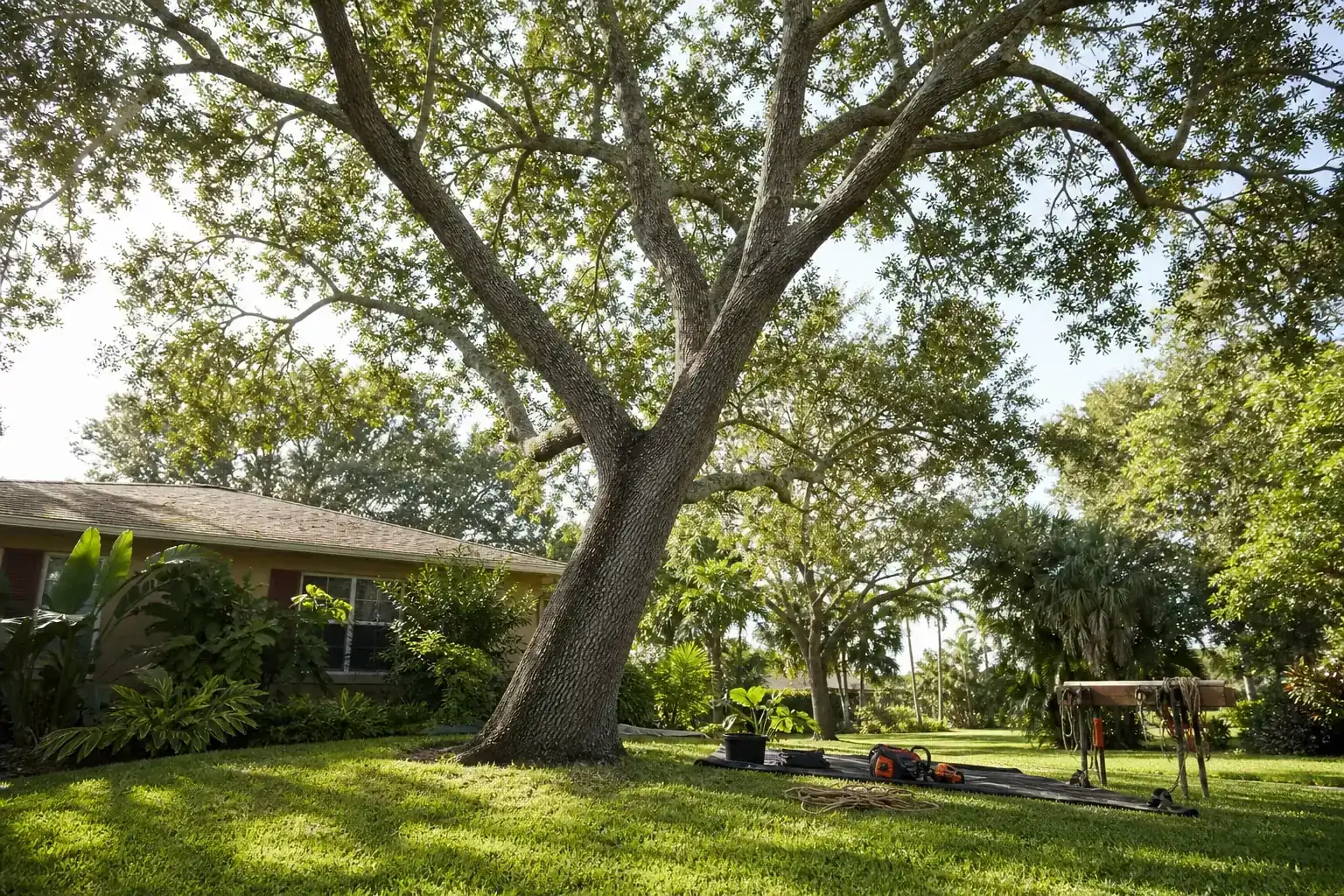
This work differs from topping. Topping leaves large stubs or removes broad sections of canopy without regard for appropriate pruning points. It can trigger weakly attached sprouts, expose internal branches to intense sunlight, and create large wounds. Proper crown reduction is selective and limited by the tree's species, condition, age, and ability to tolerate pruning.
Crown reduction also differs from canopy thinning. Canopy thinning removes selected interior branches to improve spacing and reduce density, but it may not meaningfully shorten long, heavy limbs. In some cases, an arborist may recommend a combination of tree trimming methods. Excessive thinning should be avoided because removing too much interior growth can concentrate weight at branch ends.
What an arborist checks before recommending pruning
The visible canopy is only part of the assessment. An arborist should evaluate the whole tree and its surroundings before deciding whether crown reduction is appropriate. Important considerations include:
- History of the lean: Whether the angle developed gradually or changed recently after wind, rain, excavation, or impact.
- Root plate condition: Soil cracking, mounding, lifting, severed roots, decay, or restricted rooting space.
- Trunk structure: Cavities, cracks, included bark, old wounds, fungal growth, and signs of internal deterioration.
- Branch arrangement: Long horizontal limbs, overextended growth, deadwood, weak unions, and uneven canopy weight.
- Tree species and response: Different Florida trees vary in growth pattern, wood strength, decay resistance, and pruning tolerance.
- Targets beneath the tree: Homes, vehicles, utilities, walkways, outdoor living areas, and neighboring property affect the consequences of failure.
- Site exposure: Recent removal of nearby trees can leave a previously sheltered canopy exposed to stronger winds.
- Current health: Leaf density, dieback, pests, disease symptoms, and overall vigor influence how well the tree may respond.
Arborist reports and tree inspections can document these observations and provide practical recommendations. A report may be useful for property planning, commercial tree services, or HOA and condo tree services when multiple people are involved in a decision.
When crown reduction may be appropriate
Crown reduction may be considered when the root system appears stable, the trunk has adequate structural integrity, and specific canopy sections create excessive leverage. It can also help manage branches growing toward a building or reduce the length of a dominant limb without removing the entire tree.
The pruning plan should be tailored to the tree. Cuts need to preserve suitable lateral branches, and the amount removed should remain within what the tree can reasonably tolerate. Mature trees often require a conservative approach. Sometimes work is staged over time rather than completed in one aggressive visit.
Access also matters. A large leaning tree may require specialized positioning to avoid loading weak branches or damaging the landscape. Crane tree removal is a separate service used when removal is selected and controlled lifting is appropriate for the site. A crane does not determine whether a tree should stay or go. Condition, risk, access, and surrounding targets guide that decision.
When pruning is not enough
Crown reduction cannot restore severed roots, stop active root plate movement, or reverse advanced decay. If the structural system is badly compromised, reducing canopy weight may not address the primary failure point. Tree removal may be the more responsible recommendation when defects and potential consequences are significant.
Warning signs that call for timely professional evaluation include a recently increased lean, soil lifting opposite the lean, major trunk splitting, extensive basal decay, large broken limbs, or roots damaged during construction. Do not attempt to pull a mature tree upright with a vehicle, attach improvised cables, or make large cuts from a ladder.
After removal, stump grinding can address the remaining stump where site conditions allow. For properties being prepared for another use, land and lot clearing or brush hogging may help manage surrounding vegetation, but these services should not replace an individual tree assessment when a leaning tree could affect people or structures.
Planning safe, practical tree care
Start by noting when you first observed the lean and whether it has changed. Take photos from a safe, consistent location for comparison. Keep vehicles, play areas, and routine foot traffic away from the potential fall zone until the tree is evaluated, particularly after severe weather.
Ask the tree service to explain the objective of each proposed cut, how canopy balance will be maintained, and why pruning is preferred over removal. Property owners should also confirm any applicable tree work requirements with their city or county before work begins. Requirements can vary by location and property type.
Florida Foliage provides crown reduction, canopy thinning, tree trimming, tree removal, and arborist reports and tree inspections for Florida properties. If you are concerned about a leaning tree, call (386) 481-7913 to discuss an inspection and an appropriate next step.
Call (386) 481-7913 to talk through next steps.