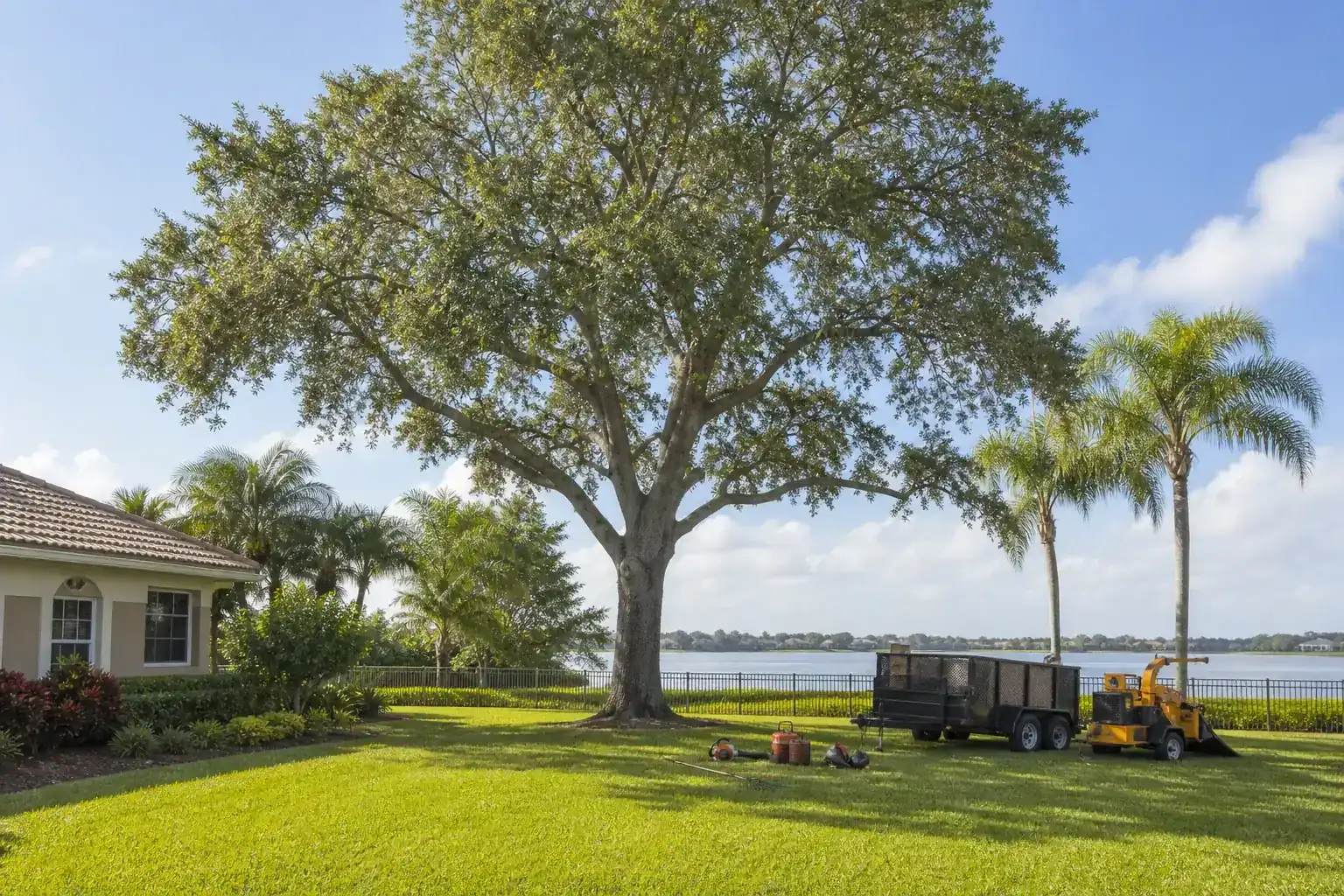
A mature tree can be one of the most valuable features in a Florida landscape, offering shade, character, and a natural frame for the surroundings. However, branches may eventually block a water view, hide a building entrance, interfere with sightlines, or make an outdoor area feel enclosed.
Crown reduction for view clearance can sometimes improve those sightlines without removing the entire tree. This specialized form of tree trimming reduces selected portions of the crown while preserving a natural shape and sound branch structure. The process requires careful planning because excessive or poorly placed cuts can cause lasting stress.
What crown reduction means
Crown reduction decreases the height or spread of a tree by shortening specific limbs. A qualified tree care professional cuts branches back to suitable lateral branches that can assume the growth role of the removed sections. The objective is not to flatten the top or strip away most of the foliage.
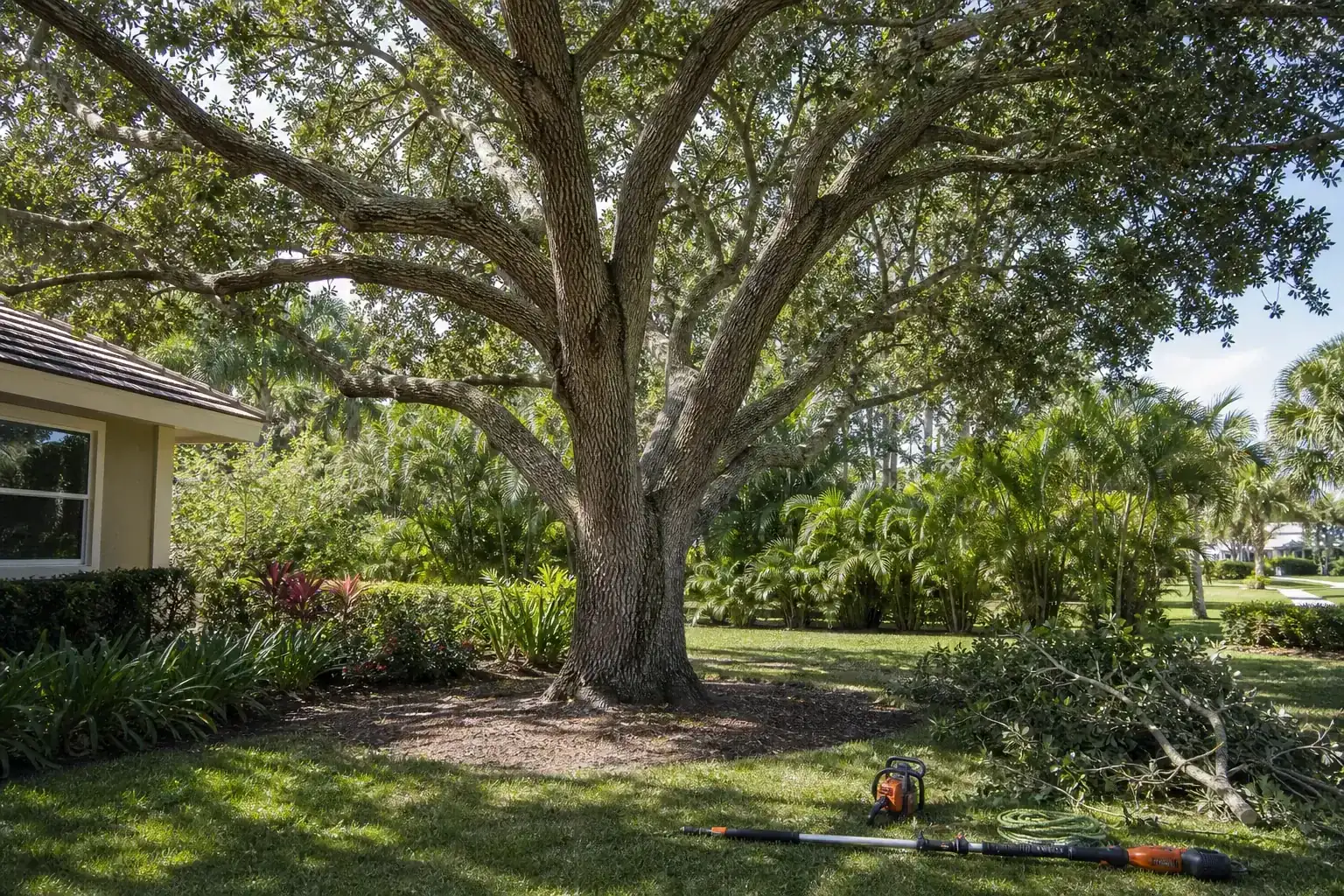
For view clearance, crown reduction is usually focused on the part of the canopy obstructing a desired sightline. The work may involve reducing a broad side of the crown, lowering selected upper branches, or creating a more balanced outline around a viewing corridor.
Not every tree responds to crown reduction in the same way. Species, age, health, branch arrangement, previous trimming, and site conditions all affect what can reasonably be done. A tree inspection helps determine whether the desired view can be achieved without creating an unacceptable structural concern.
Why topping is not a suitable shortcut
Topping removes large branches without cutting back to appropriate laterals. Although it may create an immediate opening, it often leaves large wounds and an unnatural canopy. The tree may respond with clusters of fast-growing shoots that are weakly attached and quickly obscure the view again.
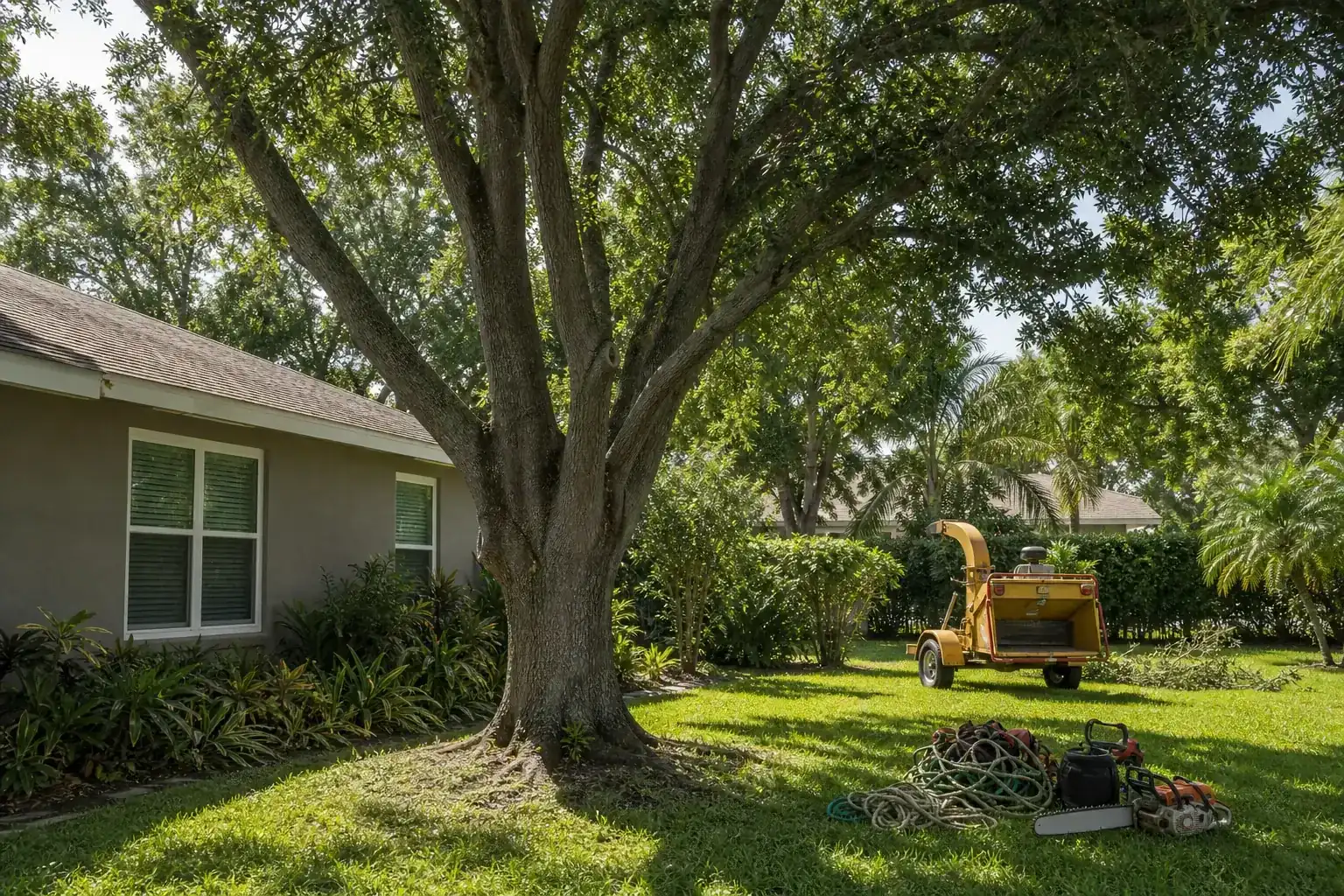
Proper crown reduction is more selective. Cuts are distributed thoughtfully, branch collars are respected, and enough foliage remains to support the tree. The finished crown should still look like the same kind of tree rather than a collection of bare stubs.
Repeated severe cutting can also complicate future care. Decay, weak regrowth, and altered weight distribution may develop over time. A conservative plan is generally more practical than attempting to create the widest possible view in one trimming cycle.
How professionals plan for view clearance
Successful view management begins at the viewing location, not at the trunk. The arborist or tree care professional should understand where people stand or sit, what feature they want to see, and whether the sightline changes with the season or time of day.
A practical assessment may include:
- The desired viewing corridor: A narrow, well-positioned opening may provide better results than reducing the entire canopy.
- Tree condition: Dead, damaged, rubbing, or poorly attached branches may influence the trimming plan.
- Species response: Some Florida trees tolerate reduction better than others, while certain species require especially restrained pruning.
- Branch size and placement: Smaller, well-planned cuts are often preferable to removing major structural limbs.
- Canopy balance: Reduction should not leave the tree heavily weighted on one side or unusually exposed to wind.
- Nearby targets: Roofs, walkways, parking areas, utilities, fences, and neighboring properties affect access and cutting decisions.
- Long-term growth: New foliage can gradually fill an opening, so ongoing maintenance expectations should be discussed.
- Local requirements: Owners should confirm applicable tree rules, approvals, and protected-tree requirements with their city or county before work begins.
Crown reduction vs canopy thinning
Crown reduction and canopy thinning are related but distinct services. Crown reduction shortens selected limbs to decrease the crown's overall height or spread. Canopy thinning selectively removes branches throughout portions of the crown to improve light penetration and air movement while generally retaining the tree's dimensions.
Canopy thinning may improve a filtered view through foliage, but it is not intended to shrink the tree. Removing too many interior branches can produce an uneven canopy with foliage concentrated at the ends of long limbs. This condition may also increase sun exposure on previously shaded bark.
In some cases, a restrained combination works well. Limited crown reduction can open the main sightline, while careful canopy thinning improves visibility through adjacent foliage. The appropriate method depends on the tree and the goal, not simply on how many branches can be removed.
Florida conditions that affect trimming decisions
Florida's long growing season can lead to vigorous regrowth after pruning. Heat, intense sunlight, heavy rain, sandy soils, coastal exposure, and storm winds may also affect tree health and structure. These conditions make cut selection and canopy balance especially important.
View clearance should not be confused with storm preparation. A smaller-looking canopy is not automatically a better-prepared canopy. Structural weaknesses, included bark, decay, root concerns, and previous damage require individual evaluation. Arborist reports and tree inspections can provide useful information when owners are managing mature, prominent, or questionable trees.
Timing also matters. Active nesting wildlife, tree condition, species characteristics, and recent storm damage may change the recommended approach. If a tree has split, shifted, or dropped major limbs, emergency and hurricane tree removal may be more appropriate than routine trimming. Crane tree removal can be considered when access, tree size, or nearby structures make conventional removal impractical.
When reduction may not be the right option
Crown reduction cannot solve every conflict. A severely declining tree, a tree with extensive structural damage, or one requiring removal of major limbs to create the requested view may not be a suitable candidate. In those situations, tree removal may need to be evaluated instead.
Removal should still be based on site-specific conditions rather than appearance alone. If removal is selected, stump grinding can help address the remaining stump. For broader property projects, land and lot clearing or brush hogging may be relevant, but these services serve different purposes from selective tree care.
Commercial properties, HOAs, and condominium communities may also need a coordinated plan. Commercial tree services and HOA and condo tree services can help account for shared views, parking areas, pedestrian routes, landscape standards, and consistent maintenance across multiple trees.
Set realistic expectations for the finished view
A healthy-looking result is usually gradual and selective. The opening may be narrower than originally imagined, particularly when large structural branches define the obstructed area. Retaining those branches can be important for tree form and stability.
Before work starts, identify the priority view and discuss acceptable limits. Photos taken from the main viewing point can help communicate the goal. It is also useful to ask how future growth may affect the opening and when another inspection would be appropriate.
Florida Foliage provides tree trimming, crown reduction, canopy thinning, and tree inspections for Florida properties. To discuss crown reduction for view clearance and determine whether it fits your tree and site, call (386) 481-7913.
Call (386) 481-7913 to talk through next steps.