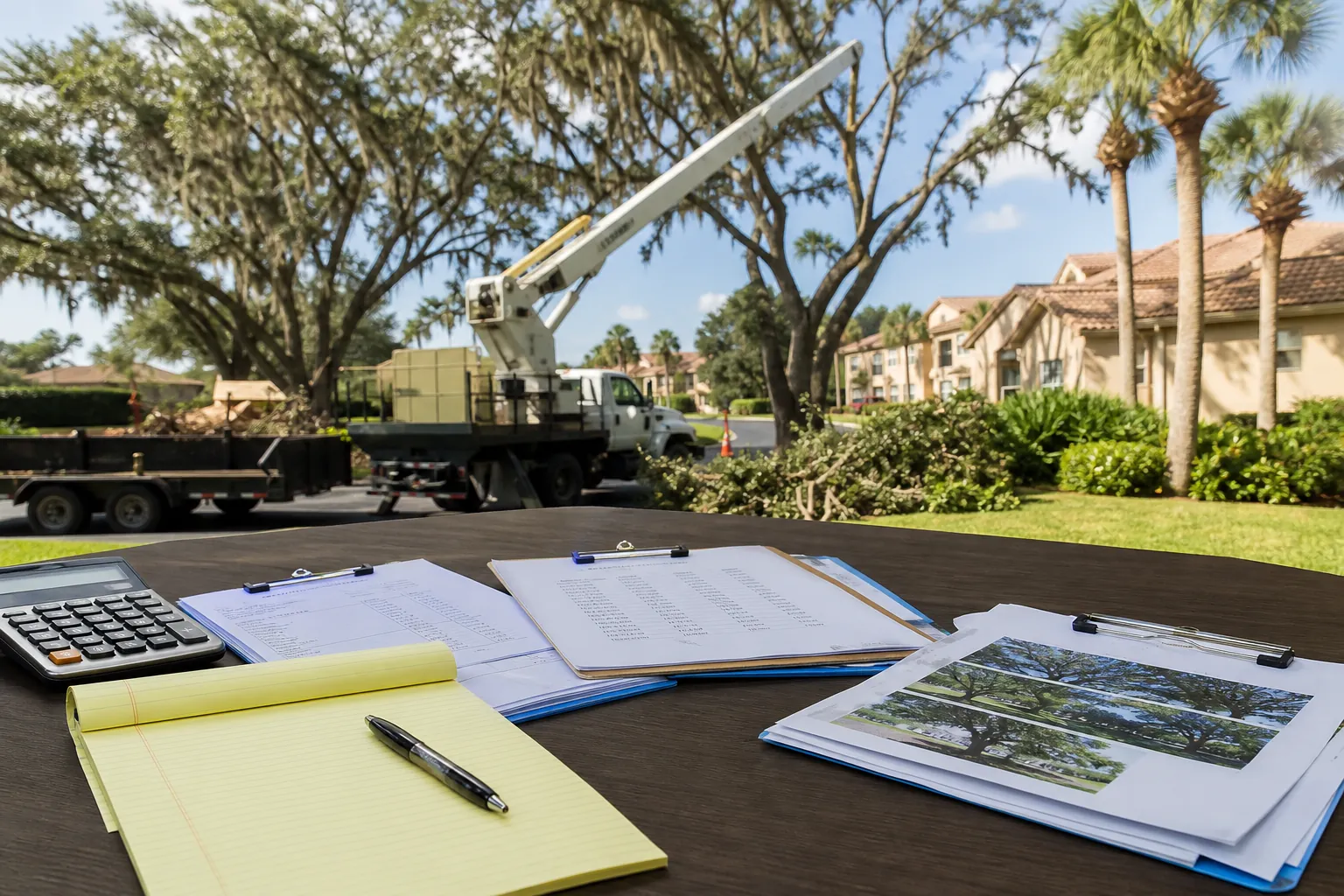
Comparing tree service proposals for a homeowners association involves more than checking the final total. Each contractor may describe the work differently, include different cleanup tasks, or recommend a different approach to the same tree. Without a consistent review process, an HOA board can easily compare bids that do not cover the same scope.
A careful HOA tree bid comparison in Volusia County should focus on clarity, tree care objectives, site access, safety planning, and responsibility for debris. The goal is to identify which proposal best addresses the community's actual needs while helping the board understand what will happen before, during, and after the work.
Start With A Consistent Scope Of Work
Before requesting bids, create a property list that identifies each work area. Include street names, building numbers, parking areas, entrances, ponds, fences, sidewalks, and other landmarks that help contractors locate the trees. Numbering or tagging trees can reduce confusion on larger properties.
Describe the desired outcome rather than using broad instructions such as “trim all trees.” One tree may need canopy thinning to reduce selected interior growth, while another may need crown reduction to manage the size or spread of the canopy. Some trees may require removal because of condition, location, or site plans. Stumps may need separate stump grinding.
When every contractor receives the same written request, the board can identify differences more easily. If a contractor recommends changing the scope, ask for the reason in writing. That recommendation may reveal a condition that deserves further review rather than being treated as an unexplained difference.
Check What Each Proposal Actually Includes
A useful proposal should connect each task to a specific tree, group of trees, or defined area. It should also distinguish tree trimming from tree removal, stump grinding, brush hogging, or land and lot clearing. These services require different equipment and produce different site conditions.
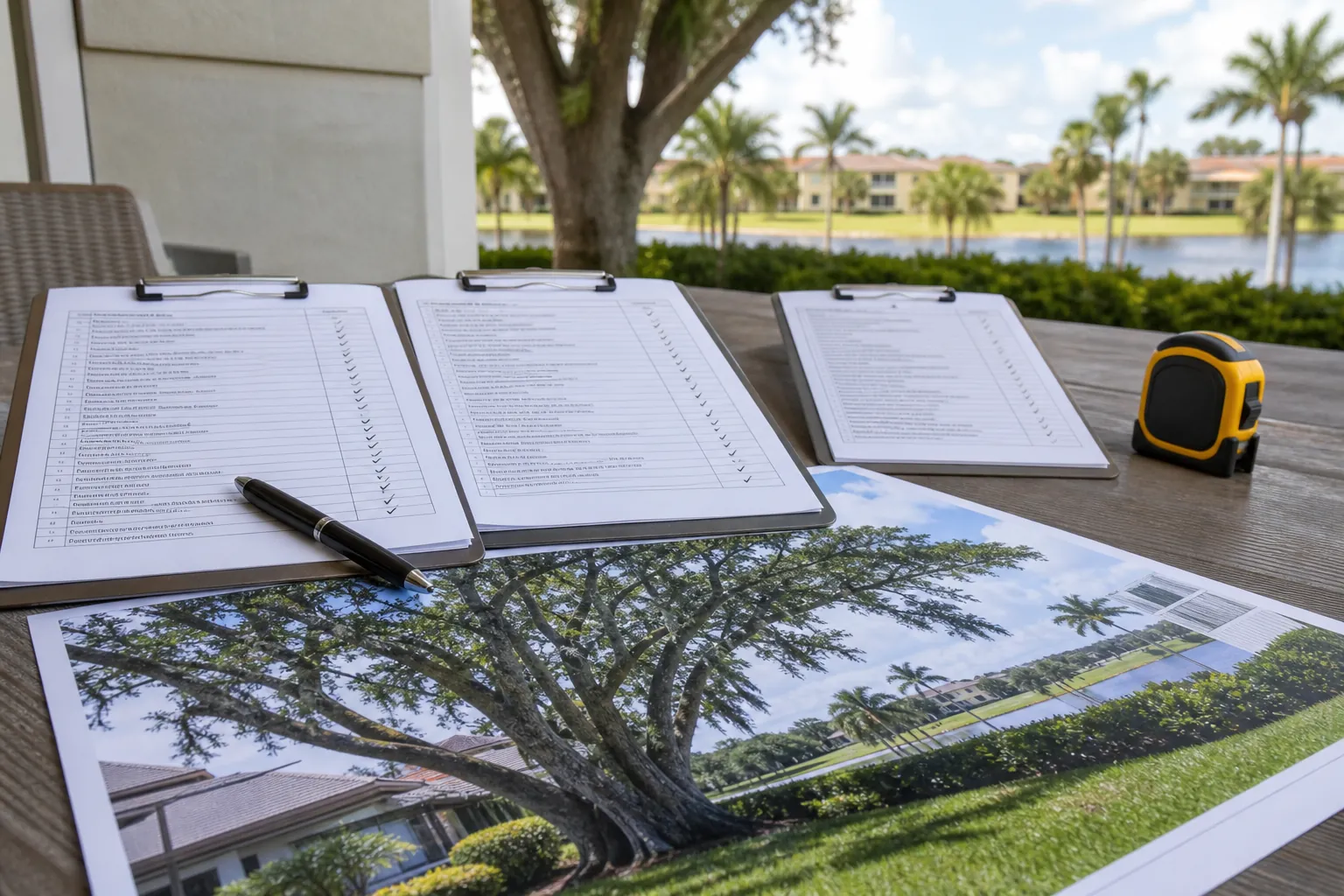
Review each bid using a checklist rather than relying on the proposal format. Important questions include:
- Tree identification: Does the proposal clearly show which trees or work zones are included?
- Service method: Does it specify tree trimming, canopy thinning, crown reduction, tree removal, or another listed service?
- Debris handling: Does it explain whether branches, logs, and routine work debris will be removed?
- Stump treatment: If a tree is removed, is stump grinding included, excluded, or listed separately?
- Access needs: Are gates, parking spaces, traffic paths, irrigation features, and equipment routes addressed?
- Special equipment: If crane tree removal is proposed, does the scope explain where and why a crane is expected?
- Resident coordination: Does the plan identify areas that need temporary access control or advance notice?
- Documentation: Are arborist reports and tree inspections included when the board needs written findings?
- Schedule assumptions: Does the proposal state whether work will occur in phases or as one coordinated project?
- Exclusions: Are tasks that fall outside the proposal clearly identified?
Boards should ask for clarification when an item is vague. A short written question can prevent disagreements about whether a stump, debris pile, or secondary work area was included.
Evaluate Tree Care Recommendations, Not Just Volume
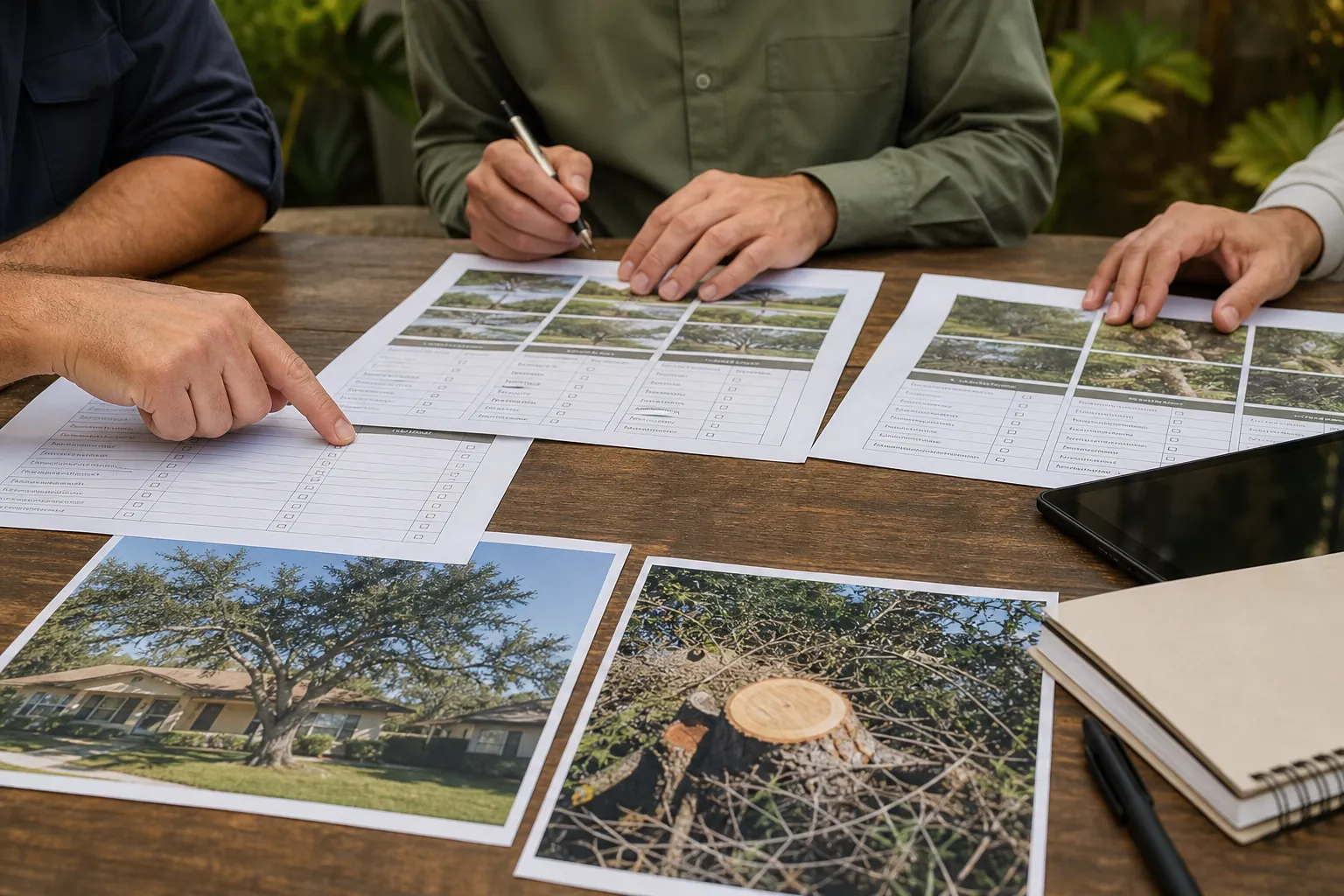
More cutting does not automatically mean a stronger proposal. Tree trimming should have a defined purpose, such as improving clearance, addressing selected limbs, or managing canopy structure. Canopy thinning and crown reduction are distinct approaches, and the recommended method should match the desired result.
An arborist report or tree inspection can be helpful when board members face conflicting recommendations, are reviewing a tree with visible defects, or need documentation for internal decision-making. A report can organize observations and suggested actions without forcing the board to rely only on verbal explanations.
Ask contractors to separate priority work from preventive or appearance-focused work. This allows the HOA to understand which items address immediate concerns and which may be scheduled as part of ongoing HOA and condo tree services. It also helps avoid applying the same treatment to every tree regardless of species, condition, or location.
Review Safety, Access, And Property Protection
Volusia County communities often have narrow drives, shared parking, gated entries, closely spaced buildings, and landscaped common areas. Equipment access can affect how work is performed. A proposal should account for nearby roofs, vehicles, fences, signs, utilities, pedestrian routes, and irrigation components visible around the work zone.
Crane tree removal may be appropriate where tree sections cannot be lowered through the available space using standard access. Emergency and hurricane tree removal may require a different response plan because damaged trees can involve unstable limbs, blocked routes, or changing site conditions.
Ask how the contractor plans to establish work zones and communicate temporary restrictions. The board should also review insurance documentation and any vendor requirements in the association's own policies or governing documents. Permit and tree-protection requirements can vary by city, county, location, and project type, so confirm current requirements with the applicable city or Volusia County before authorizing work.
Compare Cleanup And Final Site Conditions
Cleanup language can significantly change the practical value of a bid. “Tree removal” does not always explain what happens to the stump, surface roots, wood, or displaced landscaping. Likewise, land and lot clearing or brush hogging may leave a different finished surface than residents expect.
Ask each contractor to describe the expected condition of the site after completion. Determine whether logs and branches will be hauled away, whether stump grinding debris will remain, and whether the board is responsible for landscaping restoration. If grinding is included, confirm which stumps are covered and how accessible they are to equipment.
For commercial tree services across multiple common areas, a phased completion review can be useful. A manager or board representative can inspect each area against the written scope before equipment moves to the next section.
Create A Clear Board Decision Record
Use a comparison sheet with one row for every tree or work zone and one column for each contractor. Record proposed services, exclusions, cleanup, access assumptions, documentation, and timing. This format gives board members a shared reference and keeps the discussion focused on meaningful differences.
Once a proposal is selected, attach the final scope to the approval record. Document any revisions, especially changes involving additional trees or altered cleanup responsibilities. Residents should receive practical notice when vehicles must move or access to a common area will be temporarily limited.
Florida Foliage provides HOA and condo tree services, commercial tree services, tree inspections, tree trimming, tree removal, and other listed vegetation management services in Florida. For calm, practical help reviewing the tree care needs behind your bids, call (386) 481-7913.
Call (386) 481-7913 to talk through next steps.