Reviewed by Clinton Funk
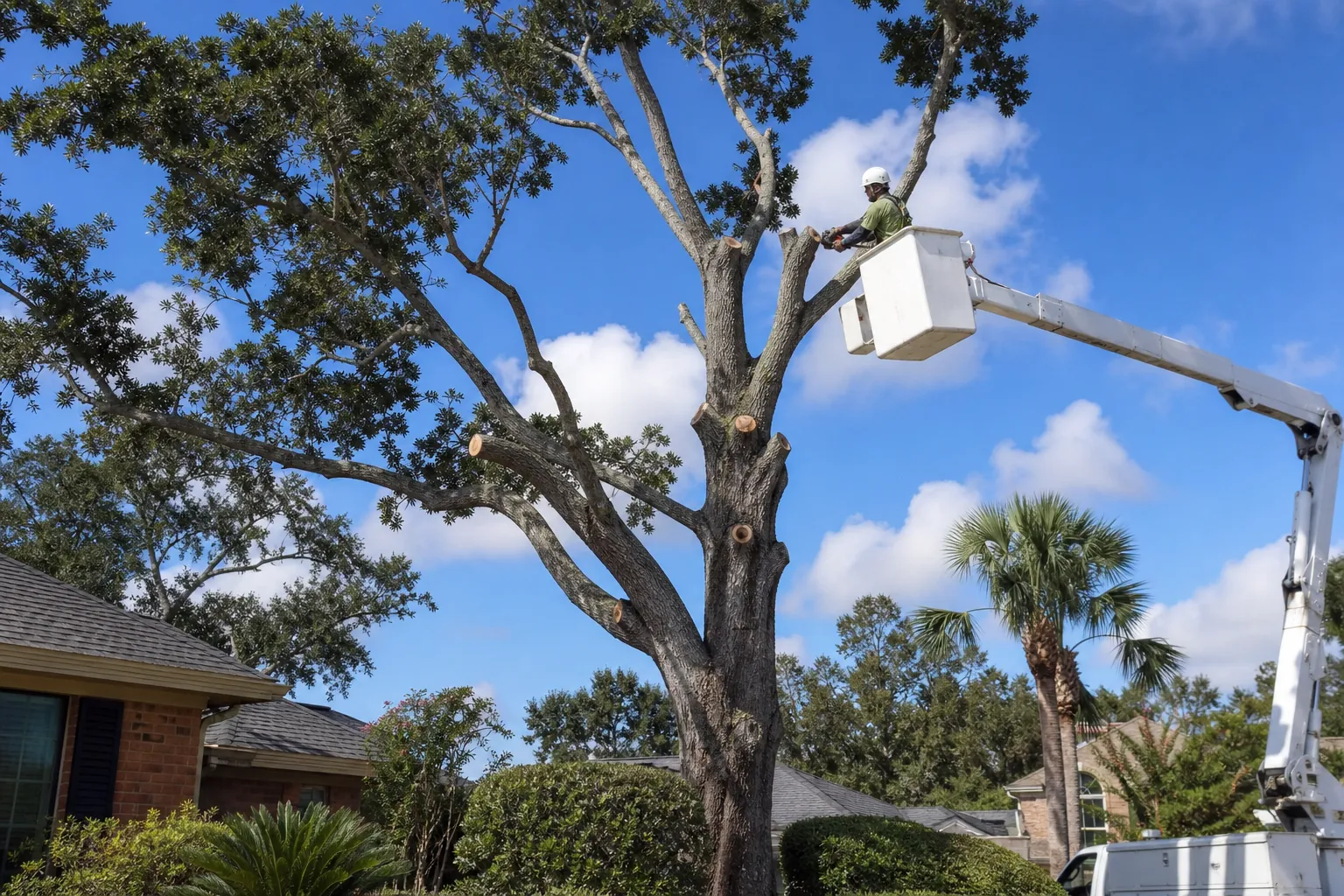
Hurricane crown reduction means shortening select branches while keeping a tree's natural form. For Pensacola homeowners, the first step is a close tree inspection. Some trees need limited pruning. Others have root or trunk defects that pruning can't solve. No pruning method makes a tree storm-proof.
The goal is a clear storm-care plan, rather than a smaller tree at any cost. Good planning looks at branch shape, tree health, nearby structures, and cleanup access. It also separates routine pruning from work that needs a different approach.
This guide explains what to ask before work starts. It covers pruning choices, warning signs, and the limits of crown care. Florida Foliage's headquarters remains in Daytona Beach. This page offers homeowner guidance without suggesting a Pensacola crew location or current availability.
When does hurricane crown reduction make sense?
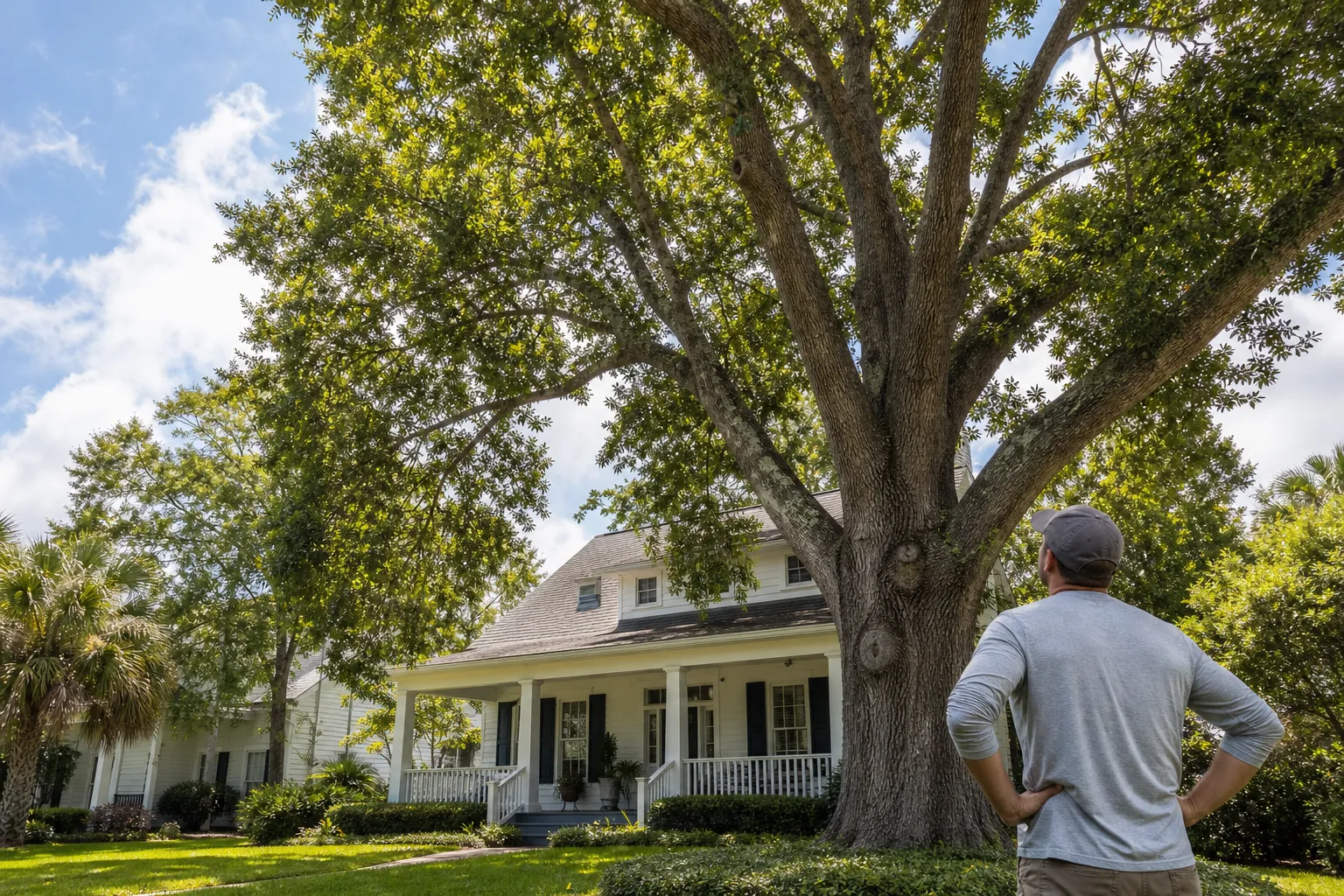
Crown reduction may suit a tree with long, overextended branches. The aim is to shorten selected limbs without stripping the crown. A tree inspection should come first. The person assessing the tree should explain which branches need work, why they matter, and what should stay.
A large crown alone doesn't settle the question. A healthy tree may have a broad, balanced shape. A smaller tree may have weak branch unions or old wounds. The useful question is how the whole tree supports its branches before hurricane season.
Look at the tree from several points on the ground. Note branches that stretch far beyond the main crown. Notice limbs over a roof, driveway, or place where people gather. These observations help frame an inspection, though they don't replace one.
Crown reduction should have a clear purpose for each cut. For example, a branch may need less length at its outer end. The remaining side branch must suit that role. This differs from cutting every branch back to an even outline.
Ask how the proposed work will affect the tree's shape. The answer should describe specific limbs and the intended result. A vague request to make everything shorter can lead to excess cutting. Hurricane readiness calls for measured work, with the tree's condition guiding the scope.
Timing matters for planning, too. Arrange inspections before storm forecasts create a rush. That gives you time to understand the findings and compare options. Avoid choosing an aggressive cut simply because hurricane season feels close.
How do reduction, thinning, and topping differ?
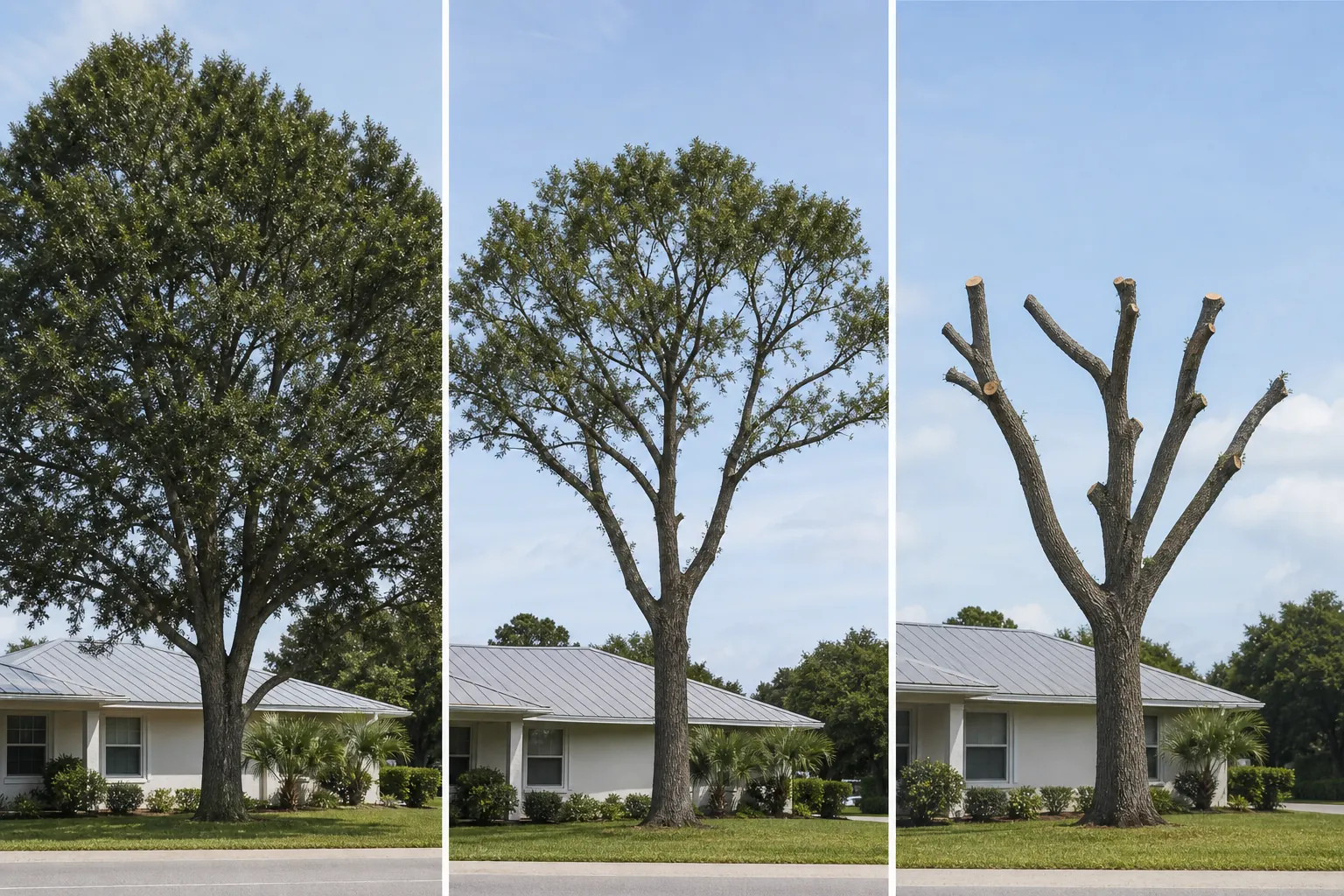
Crown reduction shortens chosen limbs back to suitable side branches. Canopy thinning removes selected branches within the crown. Topping cuts major branches back without regard for a sound remaining branch. These methods can leave very different results, so ask which cuts the storm-care plan actually includes.
Tree trimming is a broad service name. It doesn't explain how much foliage will come off or where cuts will go. Before hurricane work begins, ask for plain descriptions. You should understand which branches will be shortened, removed, or left alone.
Canopy thinning and crown reduction serve different goals. Thinning may address crowding within the crown. Reduction changes the reach of specific branches. Neither should become a reason to strip the tree's interior or remove healthy growth without a clear purpose.
- Ask which long branches need shorter reach before the next hurricane season.
- Request a clear reason for each major branch removal in the plan.
- Confirm that healthy inner growth will remain where it serves the tree.
- Ask how the finished crown will keep its natural shape after pruning.
Topping isn't a sound shortcut for hurricane preparation. Large, blunt cuts can leave wounds and prompt dense new shoots. A tree may look smaller right away, yet still need more care later. Size alone is a poor measure of useful storm preparation.
Request examples of the intended cut locations during the inspection. You don't need to choose cuts yourself. You do need to know what the proposed work means. Clear terms help prevent confusion between selective crown care and severe cutting.
Keep the focus on tree structure, rather than an open-looking canopy. Seeing more sky through the branches doesn't prove the tree is ready for storms. A sound plan explains the condition being addressed and the limits of pruning.
What should a pre-hurricane tree inspection check?
A pre-hurricane inspection should consider the roots, trunk, branch unions, and crown. It should also note nearby buildings and normal foot traffic. The goal is to find concerns that affect the work plan. Some findings call for pruning, while others need further assessment or a removal discussion.
Start by sharing what has changed since the last storm. A branch may have broken, or a tree may have developed a new lean. Recent digging near roots is worth mentioning. So are past pruning cuts and repeated branch failures.
From the ground, note visible cracks, dead limbs, and damaged bark. Tell the inspector about changes without trying to diagnose them. Some defects are easy to see. Others need a closer look or more testing before anyone can judge their extent.
Root conditions deserve attention during hurricane planning. A neat crown doesn't reveal everything below ground. Soil changes, root cuts, and past site work may affect the assessment. Share the location of recent trenches, paving, or grade changes near the tree.
Ask the inspector to separate observations from conclusions. For instance, a visible cavity is an observation. Its meaning depends on its size, location, and surrounding wood. A useful explanation makes those limits clear instead of treating every hollow alike.
Arborist reports and tree inspections can help organize these findings. Ask what the report will include before requesting one. Useful details may include tree location, visible defects, suggested work, and follow-up needs. Missing information should stay identified as unknown.
Photos can help track changes between inspections. Take them from a clear ground-level location during calm weather. Keep the date and viewing point with each image. They provide context for future storm-care talks, rather than proof of tree strength.
When isn't crown reduction the right approach?
Crown reduction has limits when a tree has major structural concerns. Shortening branches doesn't repair a split trunk, restore lost roots, or remove internal decay. An inspection should explain those limits. Tree removal may be discussed when keeping the tree can't reasonably address the observed condition.
A tree may need a different plan if defects extend beyond its crown. That doesn't mean every damaged tree needs removal. It means the decision should follow the findings. Ask which concern pruning would address and which concern would remain afterward.
Past topping can complicate hurricane preparation. Dense shoots may grow around old cuts, with decay or weak attachments nearby. A staged care plan may be considered in some cases. In others, the tree's condition may lead to a removal discussion.
Don't judge a proposal by how much wood it removes. More cutting isn't always more useful. Removing sound branches can create new wounds and alter growth. The goal is suitable work for the tree, rather than the largest possible change.
Ask for a clear comparison when both pruning and removal are discussed. What condition supports each option? What would remain after pruning? What signs would prompt another inspection? These questions keep the focus on hurricane readiness and the tree's actual condition.
Crane tree removal may be considered where the tree's position limits other methods. A site assessment must guide that choice. Tight spaces, nearby structures, and access routes all matter. A homeowner shouldn't assume that a crane is needed from tree height alone.
Stump grinding is a separate part of a removal plan. Confirm whether it belongs in the requested scope. It doesn't replace the assessment of nearby trees. After one tree is removed, the remaining trees may still need their own hurricane-readiness review.
How should homeowners plan work before a hurricane?
Plan inspections and routine crown care before a storm threatens. Build a clear list of trees, concerns, and requested tasks. Keep emergency preparation separate from ordinary pruning decisions. Ready.gov advises people to prepare for hurricanes in advance and follow local officials' instructions as conditions change.
Ready.gov's hurricane guidance supports advance planning, local alerts, and evacuation instructions. Tree work shouldn't delay those actions. A pruning appointment is one part of property care, not a substitute for a household hurricane plan.
Create a simple site map for the inspection. Mark each tree by a clear feature, such as the front walk. Add nearby roofs, fences, and access gates. This helps everyone discuss the same tree without relying on broad descriptions.
- List each tree that has changed since the last hurricane season.
- Mark branches near roofs, parked vehicles, and frequently used outdoor spaces.
- Ask which tasks belong in routine pruning and which need further assessment.
- Confirm how cut branches and other tree debris will be handled.
- Keep the written scope where you can find it before work begins.
Discuss access during the planning stage. Gates, narrow drives, and nearby plant beds can shape the work area. Note anything that must remain clear. These details help define the task without assuming a particular crew or equipment setup.
For shared grounds, use one clear list of tree concerns. HOA and condo tree services may involve several common areas. Commercial tree services may involve busy entrances or parking spaces. A mapped scope helps keep hurricane preparation focused on the right trees.
Review unfinished work when a storm forecast changes your plans. Follow local guidance rather than rushing to finish outdoor tasks. For active threats, use National Weather Service hurricane safety guidance. Current alerts matter more than a routine tree-care schedule.
What should happen after hurricane tree damage?
After a hurricane, personal safety comes before tree cleanup. Wait for local guidance before going outside or returning home. Ready.gov warns about damaged power lines and floodwater after storms. Assess tree concerns only from a place that avoids those hazards, and leave damaged trees alone until assessed.
Use Ready.gov's after-hurricane guidance when planning your first steps. A fallen branch may hide wires or block a view of other damage. Don't treat an area as clear because the wind has stopped. Conditions can remain unsafe after the storm passes.
Keep away from hanging limbs and damaged trees. OSHA identifies falling limbs and contact with power lines as tree-care hazards. Its tree care safety guidance explains why this work needs trained workers and suitable methods. Homeowner cleanup should not extend into those hazards.
When conditions allow, record visible damage from a safe location. Note which trees have broken branches, changed lean, or lost major limbs. Use photos to explain the site before an assessment. Don't walk under damaged crowns to get a better picture.
Emergency and hurricane tree removal concerns differ from routine crown care. The first task is to understand the damaged tree and surrounding hazards. Final shaping can wait for that assessment. A rushed effort to restore a tidy outline may overlook larger concerns.
Ask for a cleanup scope that names the work clearly. It might include tree removal, selected branch removal, and handling cut debris. Crown reduction belongs only where the remaining tree supports that approach. Storm damage doesn't make every surviving tree a pruning candidate.
Plan a later review for trees kept after cleanup. Some concerns become clearer once broken material is removed. Ask which changes should prompt another inspection. Keep those notes with your pre-storm photos so future decisions have useful context.
What should a hurricane crown-care scope include?
A useful scope identifies each tree and the purpose of proposed work. It distinguishes crown reduction from thinning, removal, and cleanup. It should also state what remains outside the task. Clear wording helps homeowners understand the plan without assuming every storm-related concern has been resolved.
Start with tree locations and observed concerns. Then list the intended work in plain terms. Avoid broad phrases such as complete storm protection. The scope should describe actions that can be performed, rather than promise how a tree will behave in a hurricane.
- Identify each tree by location and a clear feature on the property.
- Describe the branches selected for reduction and the reason for that work.
- State which trees need further inspection before a final work decision.
- Separate branch handling, tree removal, and stump grinding within the requested scope.
- Record follow-up questions about tree condition and future hurricane-season care.
For larger grounds, keep unrelated tasks distinct from tree assessment. Land and lot clearing or brush hogging may address overgrown areas. Those services don't establish the condition of retained trees. Hurricane planning still needs a tree-by-tree review where concerns exist.
Before work starts, ask how changes to the scope will be discussed. An inspection may reveal a concern that wasn't visible earlier. The next step should be explained in clear terms. Keep the focus on observed conditions and suitable storm-care choices.
Hurricane crown reduction FAQs
Can crown reduction stop a tree from falling during a hurricane?
No. Crown reduction cannot make a tree storm-proof. Roots, trunk condition, branch structure, wind, and soil conditions all matter. An inspection can help guide pruning choices, but it can't predict every storm outcome. Keep tree care within a broader hurricane plan.
Should every tall tree be shortened before hurricane season?
No. Height alone doesn't show that a tree needs reduction. Some tall trees have sound structure, while shorter trees may have serious defects. Ask for a whole-tree inspection. The proposed work should follow specific findings rather than a standard height target.
Is canopy thinning the same as hurricane crown reduction?
No. Thinning removes selected branches within the crown. Reduction shortens selected branches back to suitable side branches. Ask which method is proposed and why. Neither approach should mean removing healthy growth without a clear tree-care purpose.
Should a damaged tree be pruned right after a hurricane?
It needs an assessment before a pruning decision. Broken limbs, damaged trunks, and nearby wires can change the approach. Follow Ready.gov's post-hurricane safety guidance before entering affected areas. Don't approach damaged trees to start cutting or inspect hanging branches.
How can I discuss a Pensacola hurricane tree-care estimate?
Prepare tree photos, locations, and a short list of concerns. Ask about the assessment process and the proposed scope. Florida Foliage is headquartered in Daytona Beach. Confirm location fit and scheduling directly, without assuming a Pensacola crew or immediate availability.
To discuss a neutral estimate, call Florida Foliage at (386) 481-7913. Share your Pensacola tree-care concerns and ask about next steps.
Call (386) 481-7913 to talk through next steps.