Reviewed by Clinton Funk
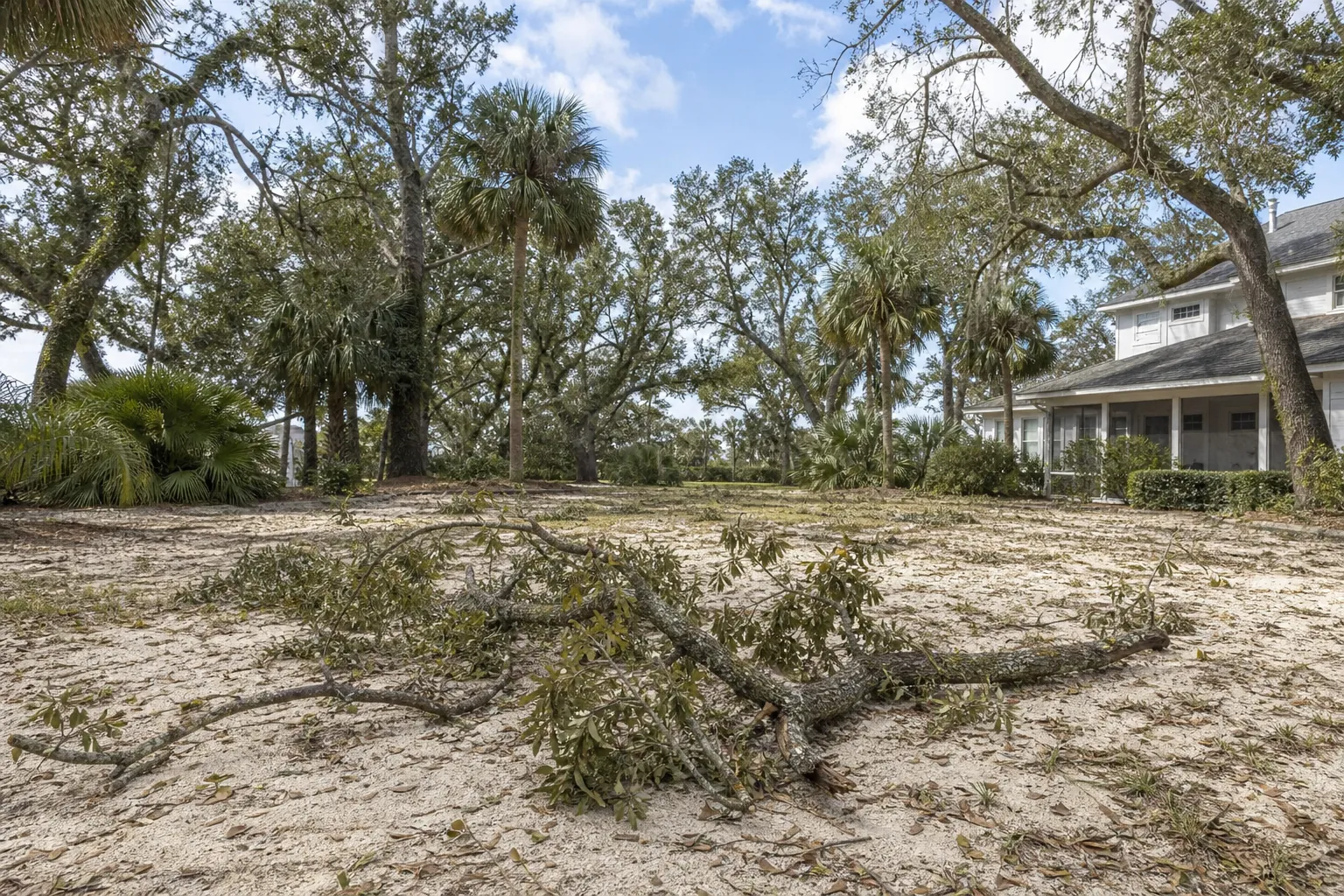
Plan Isaias tree cleanup in Pensacola around three tasks: follow official instructions, note what you can already see. Ask for the right help. Start with a safe indoor or distant view and make a short list of concerns and questions. You do not need to inspect a tree yourself to begin that list.
Use the latest National Hurricane Center advisory for current storm information. Follow local officials before planning tree work; a forecast does not establish damage at your address.
How should Isaias tree cleanup begin in the first 48 hours?
Start with official instructions and a short list of questions. Then note what you can already see from a safe indoor or distant spot. Use the storm cleanup guide and storm tree guide to plan calls and next steps. The first 48 hours are a planning window, not a cleanup deadline.
The local weather statement says to follow local officials. It also says to check local emergency management for updates. Keep those instructions separate from advice about tree care. A tree guide does not grant access to a street or home. Read the local statement.
- Check the latest instructions. Note who issued them and when.
- Write down visible concerns. Use plain words, such as branch above gate.
- List questions for each concern. Ask who needs to review it first.
- Gather photos already available. Include older views of the same place.
- Keep a call log. Save names, times, replies and reference numbers.
- Ask about debris collection. Record the instructions for your address.
- Compare written work plans. Mark questions that still need answers.
If return is still restricted, work on the list remotely; leave blank spaces for details you cannot yet confirm. For nearby places, use the coast cleanup guide alongside official updates. For Walton and Bay, the Tallahassee statement lists warnings for those areas.
What should you ask when a limb is near a power line?
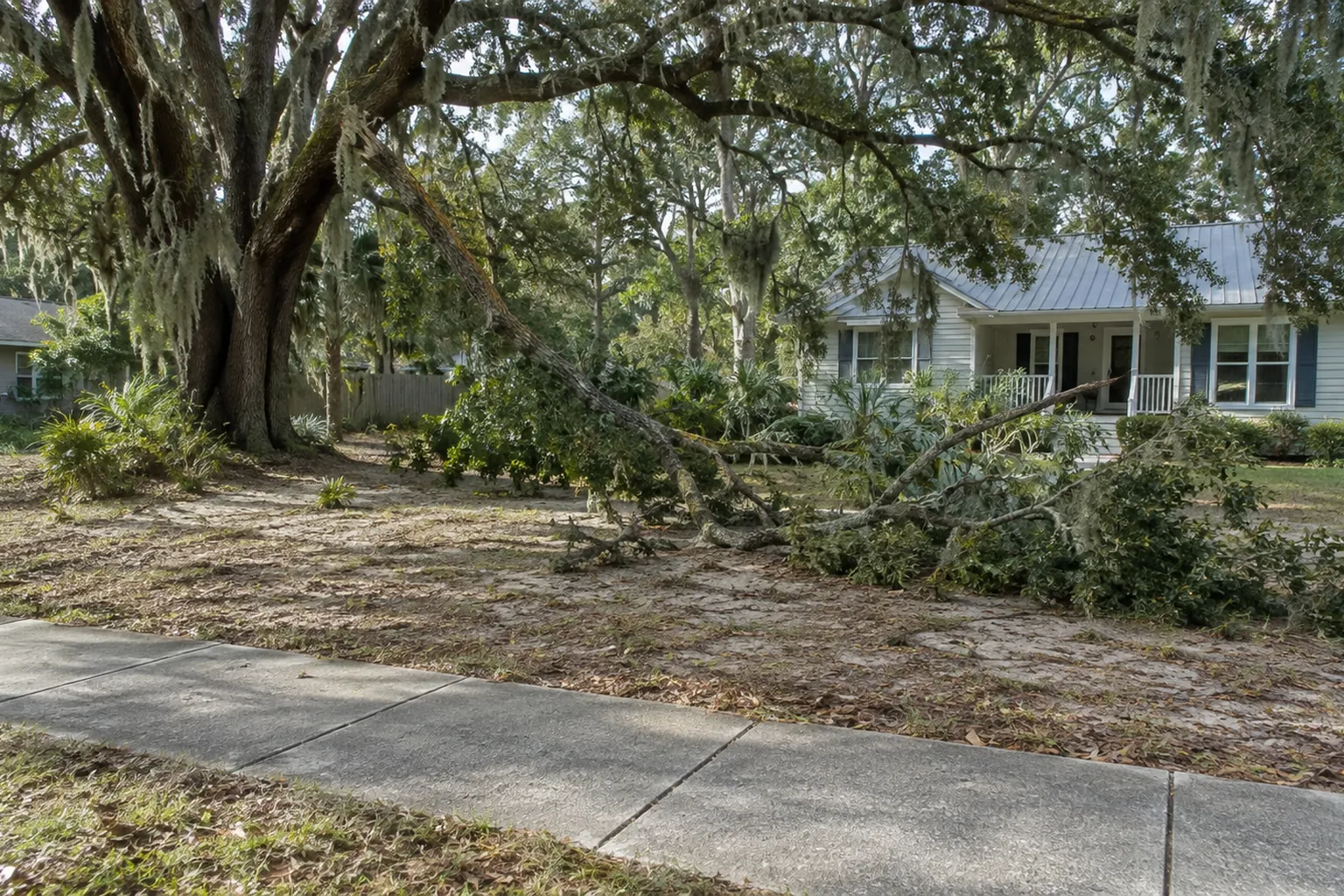
Ask who is qualified to handle the line-related work. UF/IFAS says a fallen limb near power lines needs a qualified line-clearance arborist. Read its guidance. Use the tree risk assessment and tree risk assessment to prepare questions. Keep the first report separate from the photo task. Related background: Pensacola guide.
Working near electrical lines can be fatal, according to UF/IFAS. Its guidance assigns this work to a qualified specialist. Treat your role here as reporting what is already visible. See the line warning.
A close photo is not the goal of that report; begin with the address and the view you already have. Say what you know; state what remains unclear. For example, you might note a branch near a wire; leave the type of wire and needed work as questions.
- Which address or nearby landmark identifies the spot?
- What part of the tree is visible from your location?
- Who has received the report, and what did they say?
- Who will confirm the next step before tree work starts?
Give the same notes to anyone asked to quote tree work; keep each reply with its date and contact name. That makes it easier to pass along the instructions you received.
What if a tree is on the house or a limb hangs above it?
Make the first conversation about the tree and the building. UF/IFAS puts large hanging limbs and leaning trees that could hit a house first for professional attention. Read the risk guidance. The tree risk assessment and tree risk assessment help frame separate questions about each concern. Related background: Pensacola guide.
Use a brief description of the view you already have; tree across roof is more useful than a guessed diagnosis. Branch above front door is another clear description; add which side of the home appears in your photo.
- Who will review the tree concern?
- Who will review the building concern?
- What does each person need from the other?
- Which parts of the proposed job remain undecided?
Keep the answers in one place; ask each person to explain their part in plain words. Record any limits they place on their proposed work; that helps you spot gaps before comparing quotes.
How can photos and notes help without a closer look?
Build a record from views you already have; use photos taken from a safe indoor or distant place. Add dates, simple labels and questions for later. The tree risk assessment and storm cleanup guide can help organize that record. Keep what you see separate from what you think caused it.
Start with one broad view, if one is available; label the place shown, such as back fence or garage. Keep the original file as well as any marked copy; a note can explain what the frame does not show.
- Place: Name the part of the property shown.
- Time: Record when the photo was taken, if known.
- Visible condition: Describe it without guessing the cause.
- Earlier view: Add an older photo of that place.
- Open question: Note what needs a later review.
For example, write trunk across fence in your notes; do not turn that label into a claim about tree health. If a detail is unclear, mark it as unclear. Someone reading the file can then distinguish facts from questions.
Name files by date and place. A small, clear set is easier to discuss than many unlabeled shots.
What should you confirm before sorting debris in Escambia County?
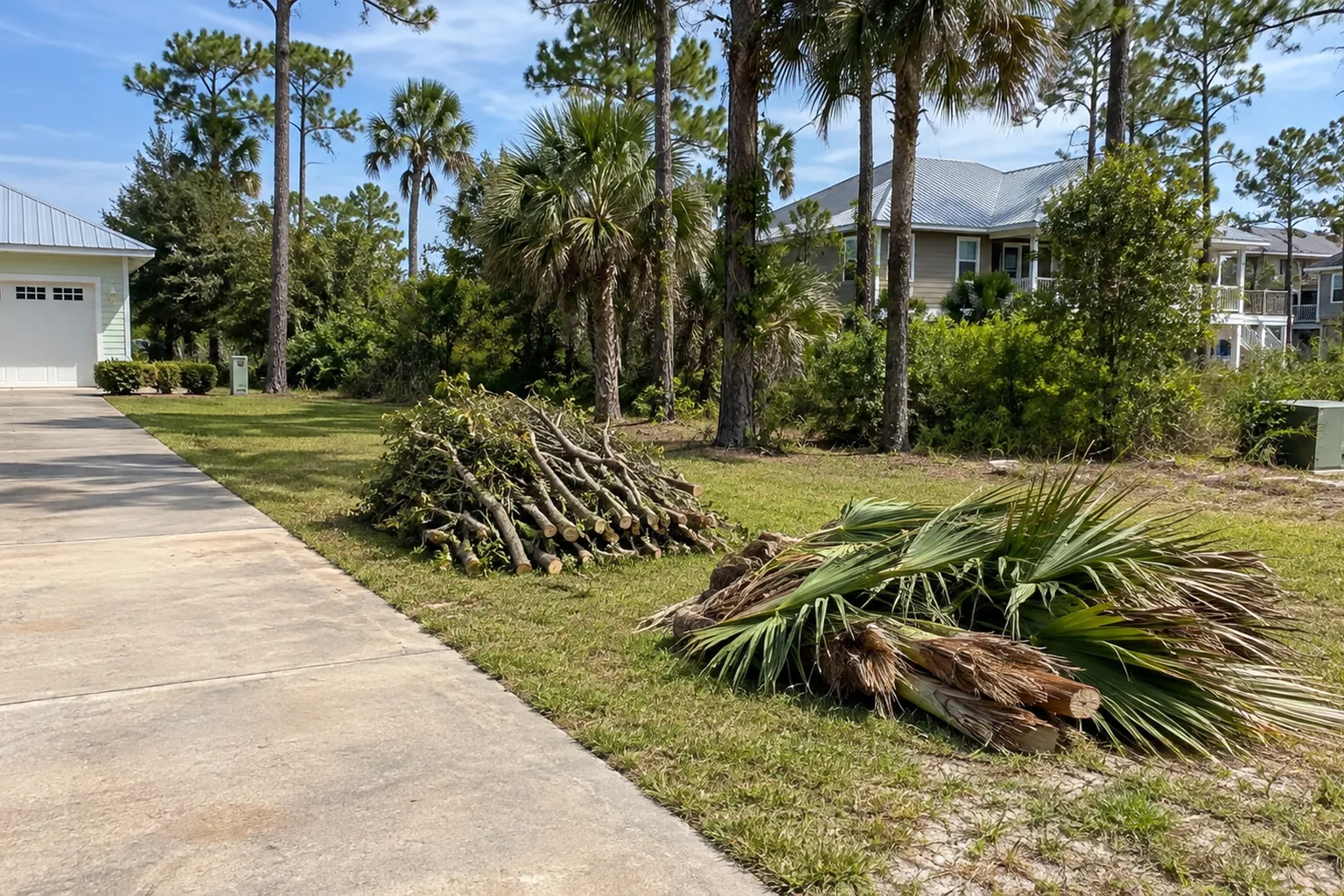
Confirm the collection instructions for your address before planning piles. Write down the source, date and any questions left open. Use the storm debris hauling and storm debris hauling to prepare that call. A pickup plan and a paid removal quote need separate sets of answers. Related background: tree risk assessment.
This page does not list a current pickup date; it does not set pile sizes or approved locations. Ask the office responsible for collection to explain those details. Then keep its reply with the rest of your notes.
- Does the collection plan apply to this address?
- Which types of debris does it accept?
- Where does the plan say each type should go?
- Are there size limits or items it excludes?
- How will changes to the plan be announced?
How should you approach the choice to keep or remove a tree?
Ask for a reason tied to each tree's condition. UF/IFAS says recovery depends on age, health, size, species and damage. Read the recovery guide. Use the tree removal information and tree risk assessment to prepare questions. A distant view can start the conversation without settling the choice.
Leaf loss alone does not rule out recovery; uF/IFAS says trees can recover from complete leaf loss. It also says major trunk damage is often irreparable. Those are different kinds of damage and need different consideration. See the restoration guidance.
For each tree, request an explanation of the proposed work. Keep the reason next to the tree's photo or label; ask what was found and what remains uncertain. This gives you a clearer basis for discussing the options.
- What damage did the person reviewing the tree find?
- How does that finding affect the proposed work?
- Is the proposal for removal or a recovery plan?
- What follow-up would a recovery plan involve?
UF/IFAS describes restoration as a process that can take years. It often requires more than one pruning visit; ask how future visits would fit into the proposed plan. This is a planning question, not a home pruning schedule. Read about restoration.
Keep separate entries for separate trees. A general yard cleanup quote may leave those reasons unclear.
What changes if saltwater reached the property?
Add known flood exposure to the tree review questions. UF/IFAS says saltwater in the landscape can seriously injure many palm species. Read the palm guidance. Use the tree risk assessment and storm tree guide to organize the discussion. Keep confirmed exposure separate from a forecast or a guess.
Write down what you know about water at the property; note where that information came from and when. An older photo may help explain what was present before. If you do not know whether the water was salty, leave that question open.
- What flood exposure is known?
- Which trees or palms need review?
- Are earlier photos available for comparison?
- What should a follow-up record include?
Palm recovery can take time to become clear; uF/IFAS says it may take at least six months. It also notes that some problems may predate the storm; ask how the review will account for both points. See the recovery discussion.
What belongs in a written cleanup plan?
Keep the work scope and price in writing. The storm cleanup information and debris hauling information provide related context. Name each area of work and mark any details that still need an answer.
- Name each tree or debris area in the scope.
- List the work included and any stated exclusions.
- Ask who handles each part of the job.
- Record proposed dates and the payment schedule.
- Include promises made in calls or messages.
- Mark unclear terms for an answer before signing.
Keep the agreed plan beside your original list of concerns. Check whether each concern has an answer or an open question. Save changes to the scope with the date they were agreed.
Frequently Asked Questions
Use these answers to separate urgent tree concerns from planning tasks. Keep your own notes beside the tree risk assessment and tree risk assessment. Each answer points to a specific next question. None can determine the condition of a tree at your address.
Who can answer questions about insurance coverage?
Use your policy and speak with your insurer or agent about coverage. Keep that reply apart from the contractor's work scope. The Florida insurance overview explains that debris and tree removal coverage can have limits. Save the reply with the date and contact name. A work estimate alone does not confirm policy coverage.
Does the storm advisory prove my home has tree damage?
No. The advisory describes the storm and expected conditions; it does not record damage at your address. Keep the forecast separate from your own property notes; label photos by place and time. Describe only what they show. Use the official advisory for storm information and your records for property questions. Read the advisory.
Do I need a close photo before asking for help?
No. Begin with the address and details you already have; mark anything you cannot see as unknown. UF/IFAS puts line-related limbs, large hanging limbs and potentially falling leaning trees first for professional attention. A close photo is not listed as a first step in that guidance. Keep the report separate from gathering more images. Read the first step.
Should every tree that lost its leaves be removed?
No. UF/IFAS says trees can recover from complete leaf loss. It distinguishes that condition from major trunk damage, which is often irreparable. Ask for a reason tied to the tree under review. Record the findings and proposed next steps for that tree. Leaf loss by itself does not answer the whole recovery question. Read the recovery guidance.
Must the whole cleanup be finished within 48 hours?
No. This guide uses 48 hours to organize first questions; it sets no deadline for finishing the work. UF/IFAS puts potential tree risks first and explains that restoration may take years. Keep the immediate work scope separate from any later care plan. Ask what belongs in each stage and save the answers. Read the response plan.
Related Reading And Scope
See the Pensacola tree guide and tree risk assessment guide for related background.
Florida Foliage is a Daytona Beach tree service that works with an ISA Certified Arborist consultant. For a property in Volusia or Flagler County, call (386) 481-7913 to request an estimate.
For related reading, see the Pensacola tree guide and tree removal guide. For a property outside Volusia or Flagler County, contact a local tree professional.
Drafting disclosure: This article was drafted with AI assistance using public sources. It does not independently verify live forecasts, site conditions, pickup notices, or insurance coverage. Check current details with the responsible agency or a qualified local professional.
Call (386) 481-7913 to talk through next steps.