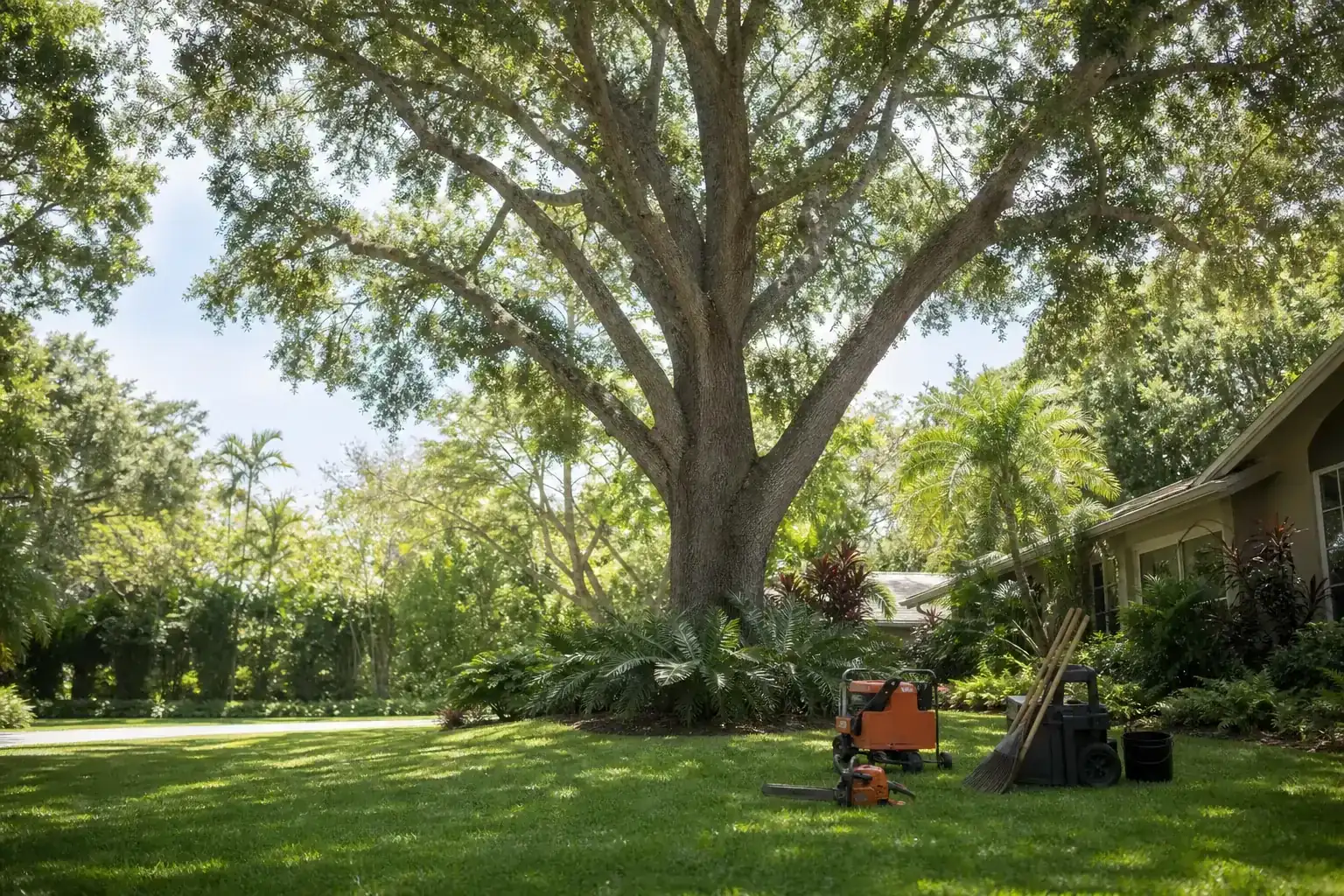
Preparing a Florida property for development often involves both vegetation work and professional surveying. The order of those steps matters. Land clearing before site survey work can improve access and visibility, but clearing too much may remove useful reference points, disturb protected vegetation, or create avoidable work.
The best approach is usually selective preparation coordinated with the surveyor. Property owners should understand what the survey crew needs to reach, what vegetation can remain, and which trees require closer evaluation. Florida Foliage provides land and lot clearing, brush hogging, tree removal, tree trimming, stump grinding, and tree inspections that can support an organized site preparation plan.
Why a survey may require vegetation access
A site survey documents property features that may affect planning, design, construction, or ownership decisions. Depending on the survey's purpose, crews may need access to property corners, boundary lines, elevation points, structures, roads, drainage features, utilities, or other visible conditions.
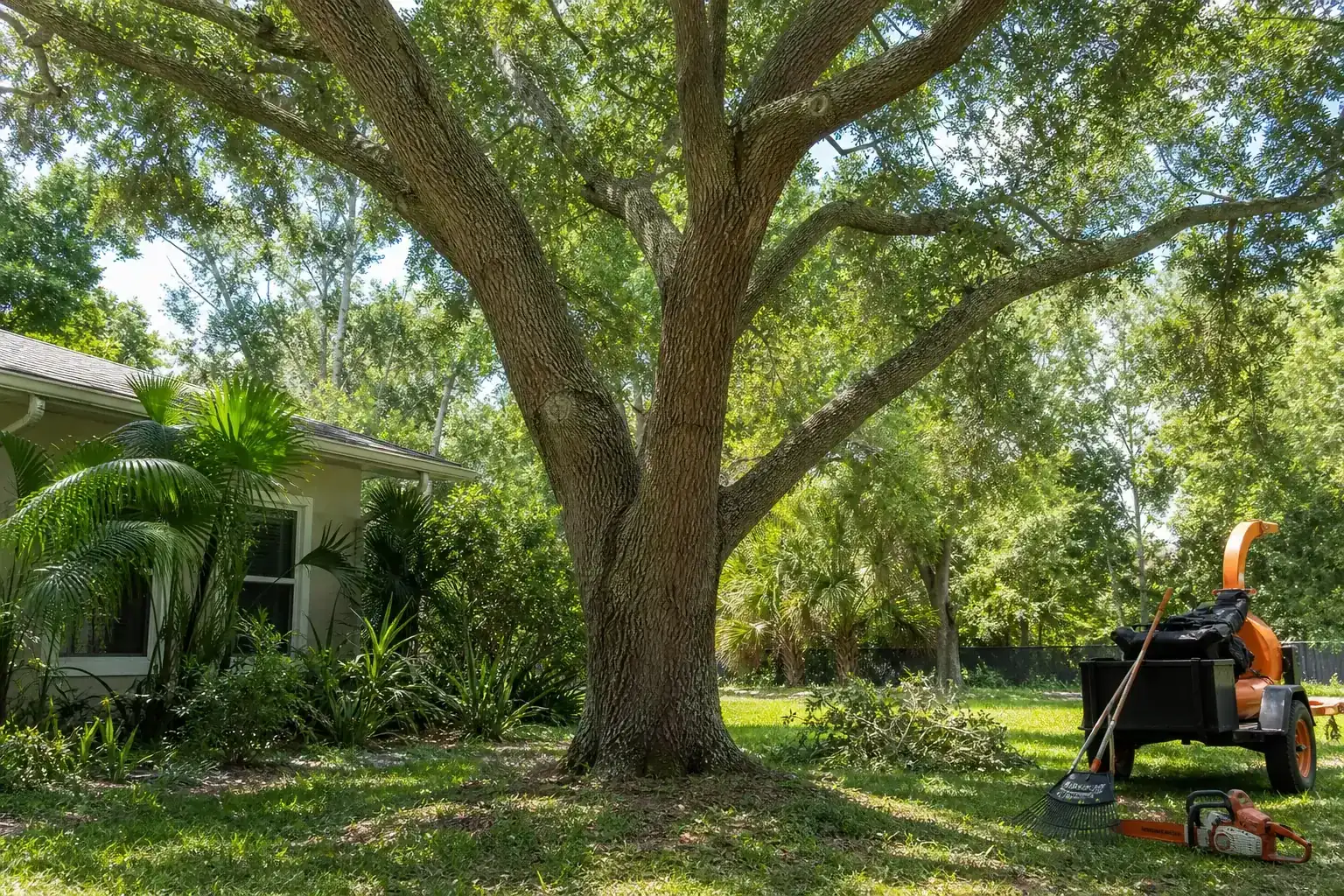
Dense palmettos, vines, tall grass, fallen limbs, and unmanaged brush can make movement difficult. Thick vegetation may also prevent a clear line of sight between survey instruments and target points. On wooded parcels, low branches and crowded understory growth can block access even when mature trees do not need to be removed.
This does not mean the parcel should automatically be cleared from edge to edge. A surveyor may only need narrow access paths, small work areas around reference points, or selective canopy and understory management. Asking for the surveyor's access requirements first can prevent unnecessary disturbance.
What to confirm before clearing begins
Before scheduling vegetation work, contact the surveyor and explain the property's current condition. Photos may help the surveyor identify obvious access concerns, although an on-site review may still be needed. Ask whether the crew wants existing stakes, pipes, monuments, fences, trees, or other features left untouched.
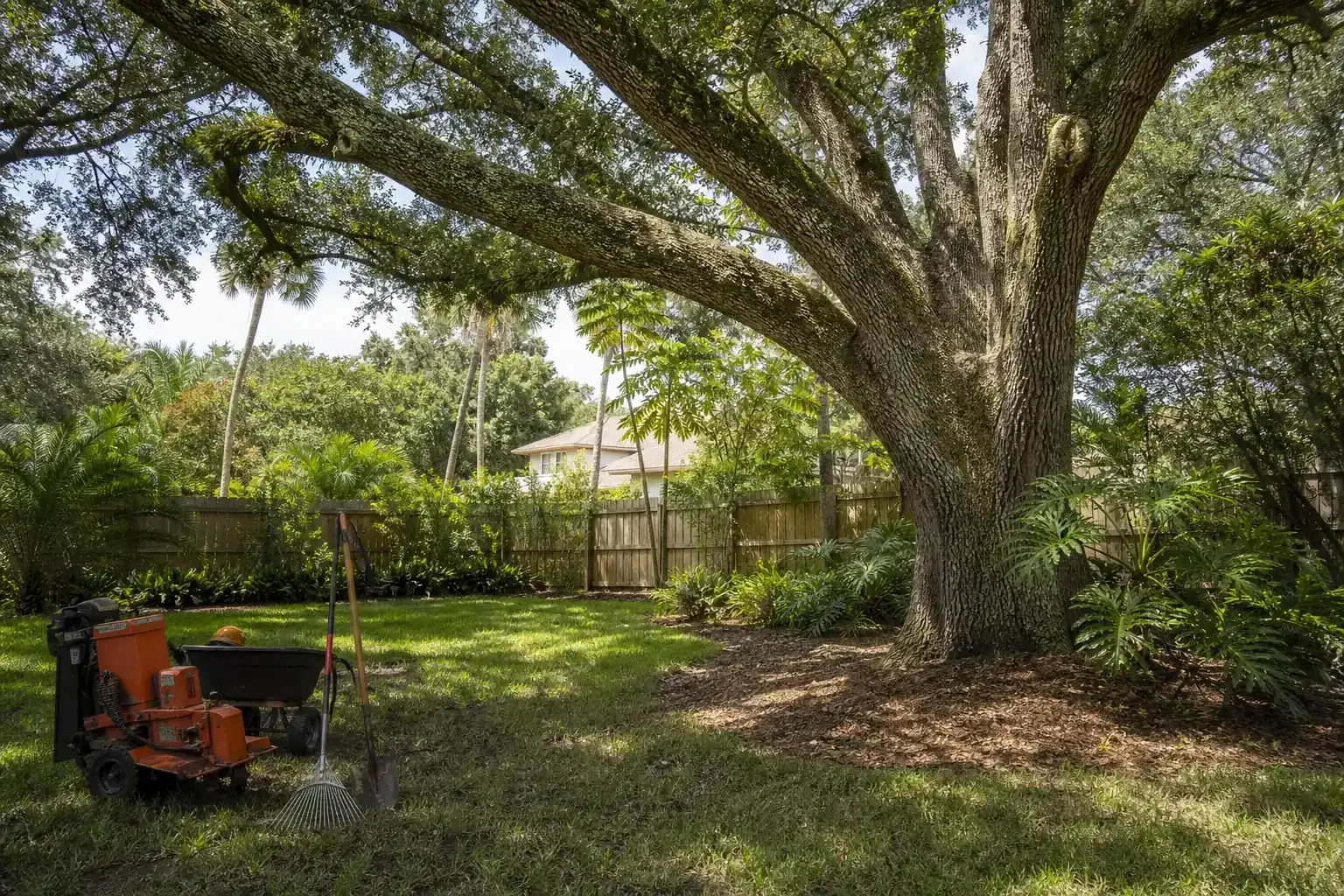
Property owners should also confirm local requirements with their city or county. Rules affecting tree removal, protected vegetation, buffers, wetlands, erosion controls, and debris handling vary by location and project. If the parcel belongs to an HOA or condo community, review applicable approval procedures before work starts.
A practical pre-clearing discussion should address:
- The type of survey: Boundary, topographic, construction-related, and other surveys may require different levels of access.
- Known property markers: Existing stakes, pins, pipes, monuments, and flagged points should be identified and protected.
- Required paths: Ask where crews need to walk and where instruments may need an unobstructed line of sight.
- Trees to preserve: Mark valued shade trees, healthy native trees, screening vegetation, and trees that may influence the site plan.
- Potential hazards: Note hanging limbs, storm-damaged trees, unstable trunks, concealed stumps, and heavy vine growth.
- Site limitations: Identify soft ground, standing water, steep areas, gates, narrow entrances, overhead obstacles, and nearby structures.
- Follow-up needs: Determine whether additional clearing may be required after boundaries and planned work areas are established.
Selective clearing is often the better first step
Selective work focuses on making the site usable without committing to full-scale clearing too early. Brush hogging may help manage accessible areas covered in tall grass and brush. Hand or equipment-based land and lot clearing can open targeted routes through denser vegetation. Tree trimming, canopy thinning, or crown reduction may improve clearance where branches interfere with safe access or visibility.
Tree removal should be based on site needs, tree condition, and the future plan for the property. A mature tree that appears inconvenient before the survey may ultimately fall outside the building area and provide useful shade or screening. Conversely, a damaged or structurally concerning tree near a work path may need inspection before people or equipment enter the area.
Arborist reports and tree inspections can help document tree condition and inform preservation or removal decisions. This is especially useful when a parcel contains large trees, visible defects, storm damage, or trees close to neighboring property and existing structures.
Protect survey markers and useful site features
Clearing equipment can unintentionally dislodge stakes, cover markers with debris, or erase visual features that matter to the surveyor. Before work begins, communicate all known marker locations to the tree service. Highly visible temporary flagging may help, but only the surveyor should identify or establish official survey points.
Do not assume a fence, hedge, driveway edge, or row of trees represents the legal boundary. Keep clearing conservative near uncertain property lines until the surveyor confirms them. This reduces the risk of vegetation work extending onto neighboring land.
Existing drainage patterns also deserve attention. Removing vegetation or moving heavy material can alter how water travels across a low-lying Florida property. Initial access work should avoid filling swales, blocking culverts, or piling debris where runoff naturally flows.
Plan tree and stump work around the final layout
Once the survey is complete, owners, designers, and contractors can make better-informed clearing decisions. Survey data may show setbacks, easements, elevations, boundaries, and existing features that affect where construction or site improvements can occur.
At that stage, land and lot clearing can focus on confirmed work zones. Tree removal may be appropriate for trees within the approved footprint or access route, subject to applicable requirements. Crane tree removal can be considered where conventional removal methods are limited by nearby structures or restricted working space. Stump grinding can address remaining stumps when the planned use of the area requires it.
Keeping stump work until the layout is understood can be beneficial. Some stumps may be outside active areas and may not need immediate attention, while others could interfere with access, grading, or future use. The project team should also decide how grindings, brush, logs, and other vegetation debris will be managed.
Prepare for Florida weather and tree hazards
Florida weather can quickly change site conditions. Saturated soil may limit equipment access and increase the chance of rutting. High winds can dislodge weakened limbs, while hurricane damage may leave trunks and branches under tension. These conditions require a careful assessment rather than routine clearing.
If storm damage creates an immediate access concern, emergency and hurricane tree removal may be needed before surveying continues. Crews should not work beneath hanging limbs or near unstable trees. Commercial properties and managed communities can also coordinate commercial tree services or HOA and condo tree services to address access, communication, and shared-site concerns.
Coordinate the work in a practical sequence
A sensible sequence begins with a conversation with the surveyor, followed by identification of access needs and known hazards. Next, arrange selective brush management, trimming, or tree work. Allow the survey crew to complete its fieldwork, then use the finished survey and project plan to guide broader clearing and stump decisions.
Florida Foliage can evaluate vegetation conditions and help prepare practical access while avoiding unnecessary clearing. For assistance with land clearing before site survey work, tree inspections, brush hogging, or related tree care, call (386) 481-7913 to discuss the property and the surveyor's access needs.
Call (386) 481-7913 to talk through next steps.