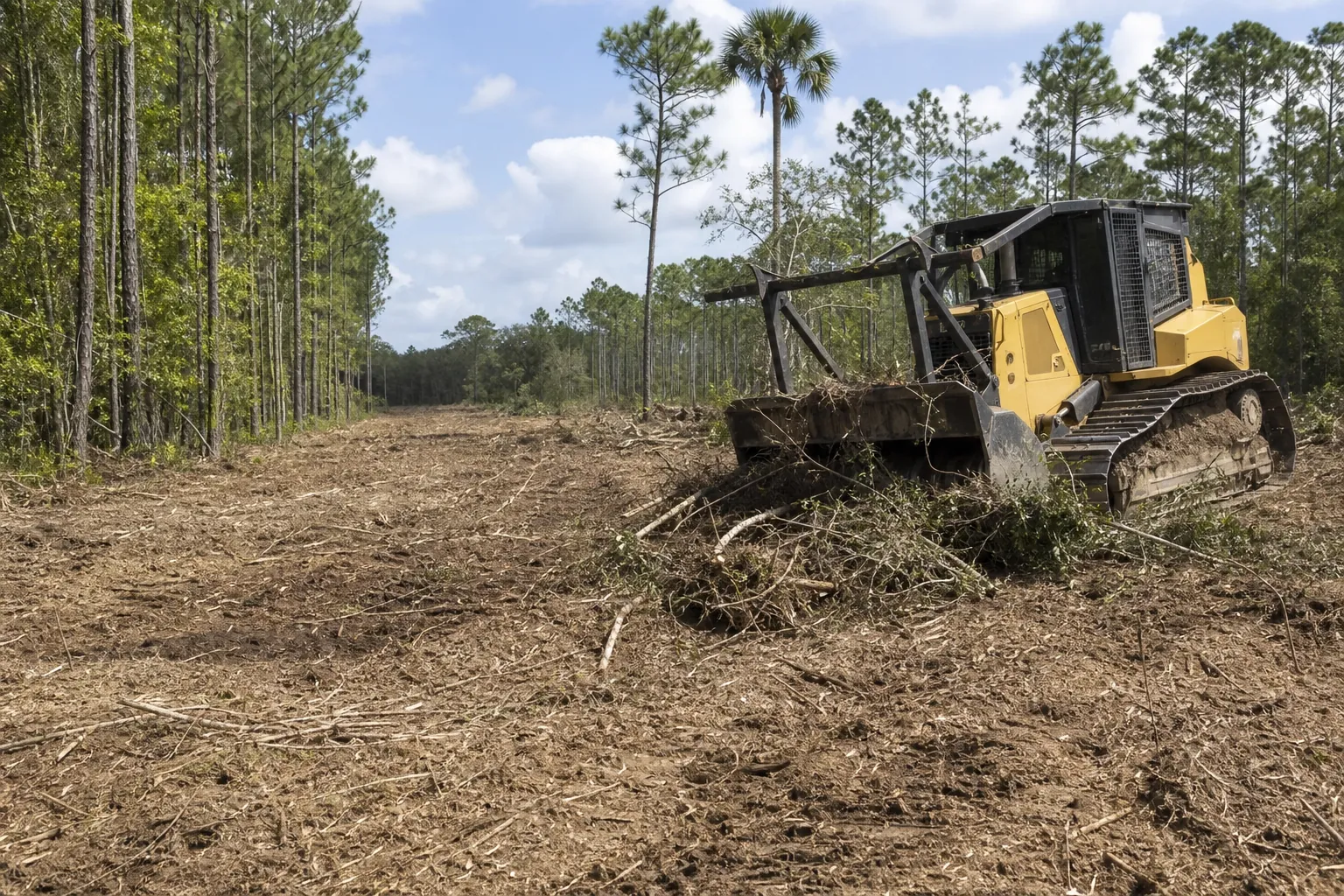
Utility installation depends on more than trenching, equipment, and connections. The site must first provide enough room for crews to work, move machinery, stage materials, and follow the planned route. In Florida, that preparation often involves dense brush, mature trees, hidden stumps, storm-damaged limbs, and soft or uneven ground.
Land clearing before utility installation should be coordinated carefully rather than treated as a quick removal project. Clearing too little can obstruct the work. Clearing too much can remove valuable shade, affect drainage, expose soil, or damage trees that could have remained. A thoughtful plan creates a practical work zone while preserving suitable vegetation outside it.
Why Utility Routes Need Careful Site Preparation
Water, sewer, electrical, communications, and other utility projects each have distinct access and clearance needs. A narrow route on a drawing may require additional room for machinery, spoil placement, worker movement, and material delivery. Overhead utilities can also require vertical clearance that is not obvious from ground level.
Vegetation can complicate these needs. Low branches may block trucks, vines can conceal hazards, and root systems may cross the proposed route. Dead trees or weak limbs near the work area can create avoidable risks. Stumps left at grade may interfere with excavation or equipment movement even when the tree itself is gone.
Before clearing begins, the utility contractor, property owner, and tree service should understand the proposed alignment and access requirements. Utility locating and project layout should be completed by the appropriate parties. Existing utility markings must remain visible and undisturbed throughout the clearing process.
What To Evaluate Before Clearing Starts
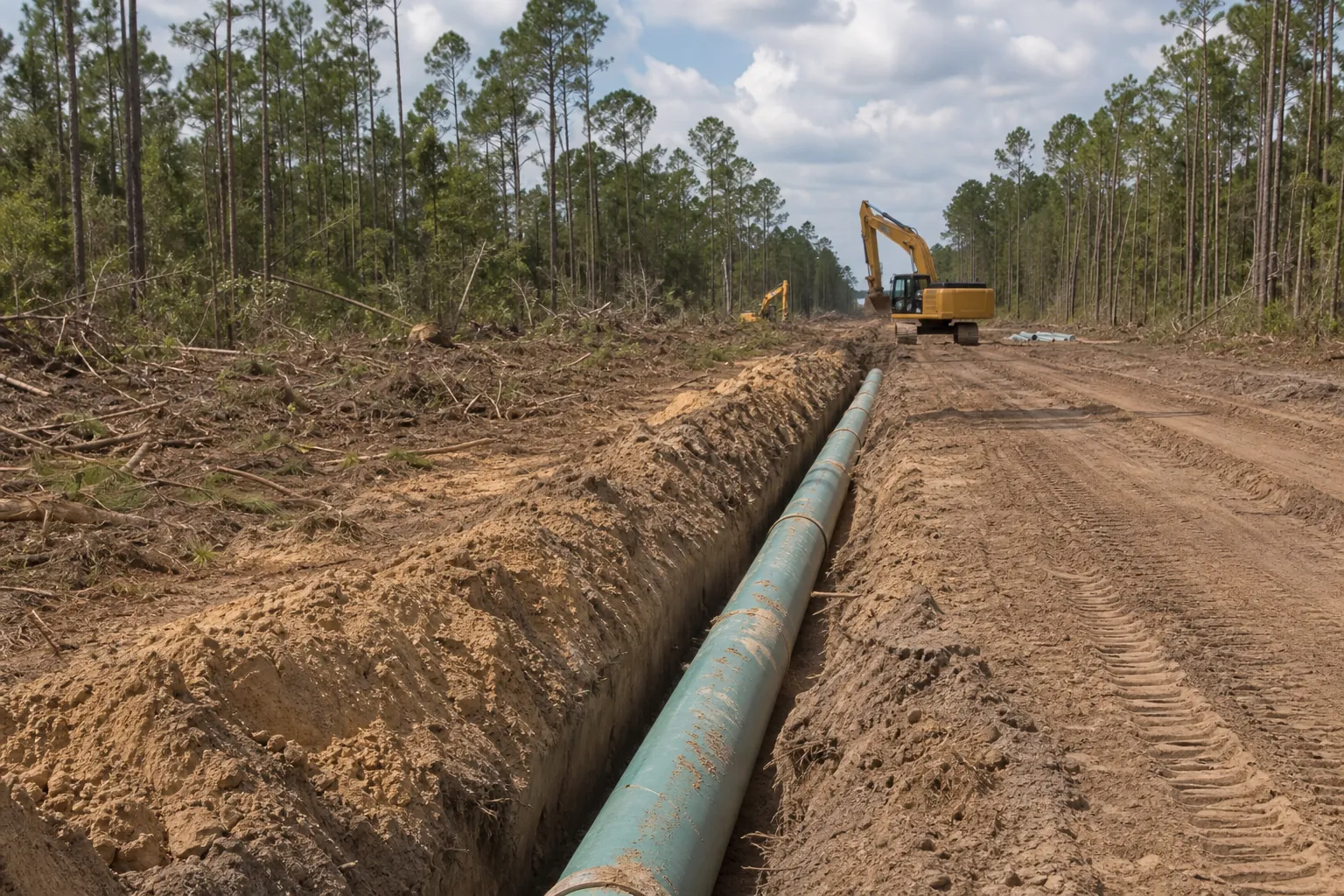
A site walk helps connect the utility plan with actual ground conditions. It can identify trees directly within the work area, branches that restrict access, and vegetation that may be preserved. An arborist report or tree inspection may be useful when mature trees stand near the route or when their condition is uncertain.
Important items to review include:
- The planned utility corridor: Confirm its boundaries, entry points, staging areas, and any space needed for excavation equipment.
- Existing utilities: Make sure the appropriate utility-locating process has occurred before stump grinding, tree removal, brush hogging, or soil disturbance.
- Tree condition: Look for dead limbs, decay, severe lean, storm damage, weak branch unions, or root disturbance near the proposed work zone.
- Root zones: Consider whether excavation, heavy machinery, or soil storage could affect trees intended to remain.
- Overhead clearance: Evaluate branches above access routes and work areas, not only vegetation at ground level.
- Drainage and soil: Identify low areas, saturated ground, slopes, and places where removed vegetation could increase erosion.
- Debris handling: Decide how logs, brush, vines, and grindings will be managed without blocking access.
- Local requirements: Confirm applicable approvals, tree protections, and debris rules with the relevant Florida city or county.
This review should happen before machinery arrives. Last-minute changes can create scheduling conflicts and may lead to unnecessary vegetation loss.
Choosing The Right Clearing Methods
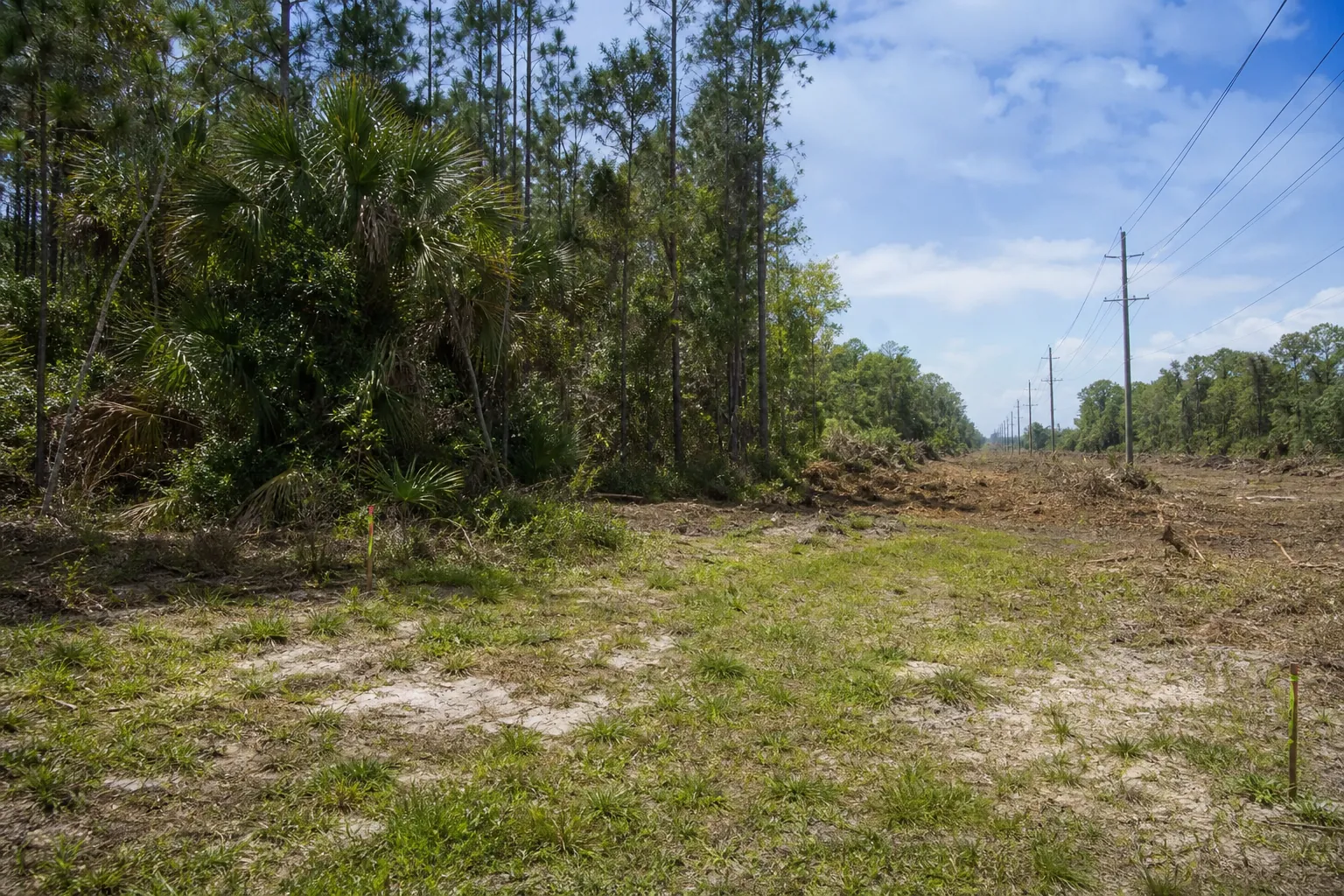
Different site conditions call for different services. Land and lot clearing can open a defined utility corridor and prepare access areas. Brush hogging can manage thick grass and brush where larger woody vegetation is not the primary obstacle. Neither approach should proceed until existing utilities and protected areas are clearly identified.
Tree removal may be appropriate when a tree stands directly in the approved route or cannot safely remain after the planned excavation. Crane tree removal can help address trees where conventional lowering methods offer limited control or where nearby structures and work areas constrain access. Emergency and hurricane tree removal may be needed when storm damage creates an immediate obstruction or hazard before scheduled utility work.
Tree trimming can provide equipment clearance while retaining the tree. Depending on its structure, canopy thinning may reduce selected branch density, while crown reduction can shorten specific portions of the crown. These techniques are not interchangeable, and excessive pruning can weaken a tree. The pruning plan should reflect tree species, condition, and the clearance actually required.
Stump grinding can remove above-ground obstructions after tree removal, but its depth and location should be coordinated with the utility plan. Grinding near marked lines or unknown infrastructure requires particular caution. The utility contractor should also confirm whether remaining roots could affect trenching.
Protecting Trees That Will Remain
Trees outside the direct corridor can still be harmed during installation. Heavy equipment may compact soil over roots, while trenching can sever structural or absorbing roots. Soil piles, parked machinery, and repeated traffic can affect root zones even when no trunk or branch is struck.
Preservation begins by defining boundaries before work starts. Keep equipment, excavated material, and debris away from designated tree protection areas. If branches must be removed for access, complete purposeful tree trimming rather than allowing machinery to break them. Avoid attaching cables, signs, or materials to trunks.
When a trench must pass near an established tree, the project team should discuss alternatives before excavation. A route adjustment may preserve both the tree and efficient access. Where impacts cannot be avoided, a tree inspection can help document current condition and identify concerns for the property owner and contractor.
Coordinating Clearing With The Utility Schedule
Timing affects site stability and efficiency. Clearing far in advance can allow vegetation to regrow and leave soil exposed longer than necessary. Starting too late may put tree crews and utility crews in the same limited space. A coordinated sequence usually works best: confirm the route, locate existing utilities, mark clearing limits, complete approved vegetation work, remove debris, and then release the corridor for installation.
Commercial properties, HOAs, and condos may also need traffic planning, resident communication, or phased access. Commercial tree services and HOA and condo tree services can support work in shared or active spaces, but site representatives should identify parking restrictions, gates, delivery windows, and areas that must remain open.
After clearing, inspect the route with the utility contractor. Confirm that access is sufficient, debris is out of the corridor, marked utilities remain visible, and retained trees have not been damaged. Any requested expansion of the clearing limits should be reviewed before additional work occurs.
Plan A Clear, Practical Work Zone
Good site preparation balances access, safety, and tree preservation. The goal is not to clear the largest possible area. It is to create the space the utility project genuinely needs while recognizing roots, canopy structure, drainage, neighboring property, and future landscape use.
Florida Foliage provides land and lot clearing, brush hogging, tree removal, tree trimming, stump grinding, arborist reports and tree inspections, and related tree services for utility preparation. To discuss site conditions and coordinate an appropriate scope, call (386) 481-7913.
Call (386) 481-7913 to talk through next steps.