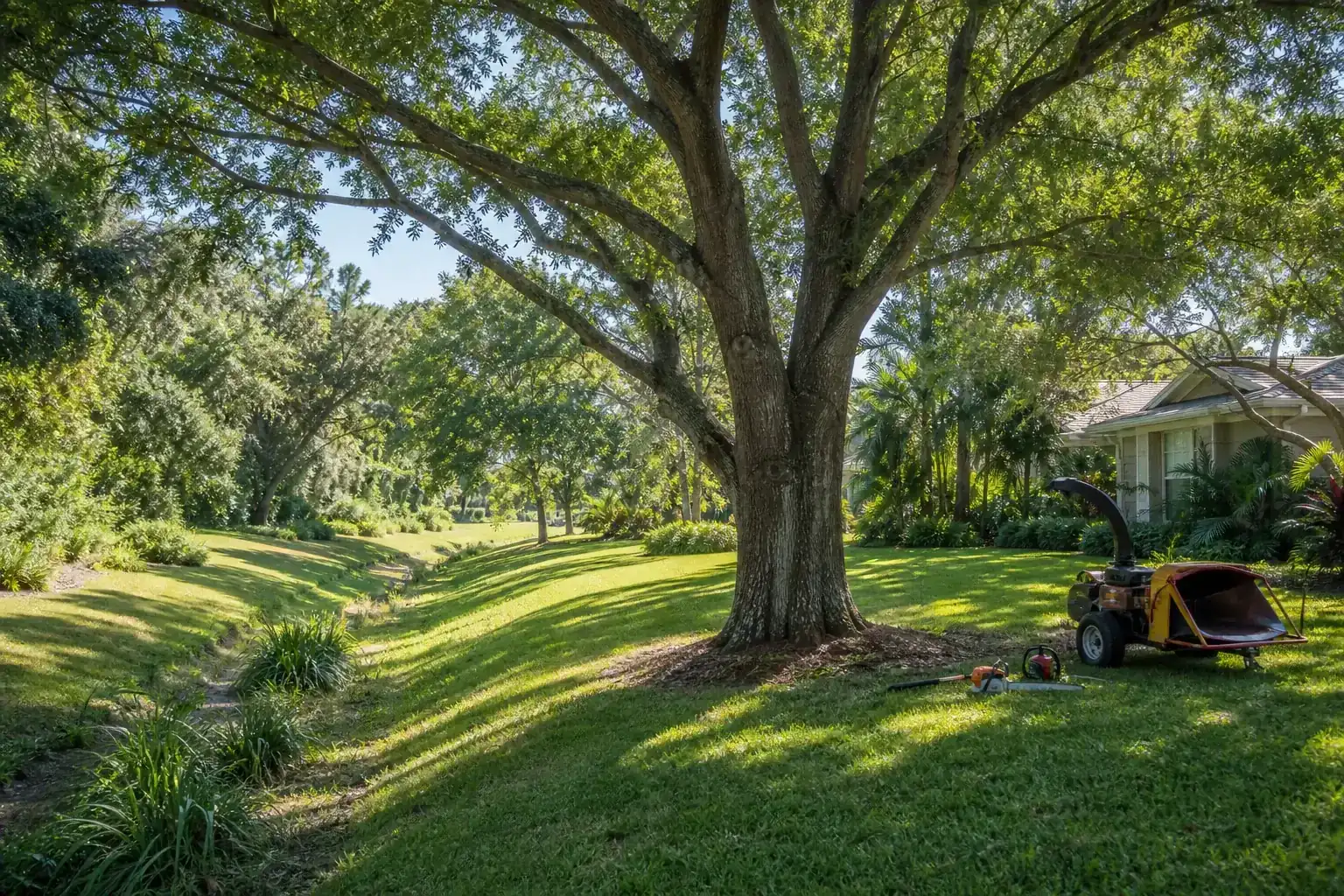
Florida properties often receive intense rainfall over short periods. When runoff cannot move through a yard or undeveloped lot, water may collect near structures, saturate root zones, erode exposed soil, or flow toward neighboring land. A drainage swale can help guide runoff, but vegetation and tree conditions must be evaluated before grading begins.
Lot clearing for drainage swale preparation is not simply a matter of removing every plant in the proposed path. Effective clearing creates safe access, addresses conflicting trees and stumps, and preserves useful vegetation where practical. Coordination among the property owner, tree service, and drainage or site contractor can reduce avoidable disturbance.
Understand the purpose of the drainage swale
A swale is a shallow, shaped channel that collects or redirects surface water. Its slope, width, depth, and discharge point depend on site conditions. Clearing makes the planned corridor accessible, but it does not determine the drainage design.
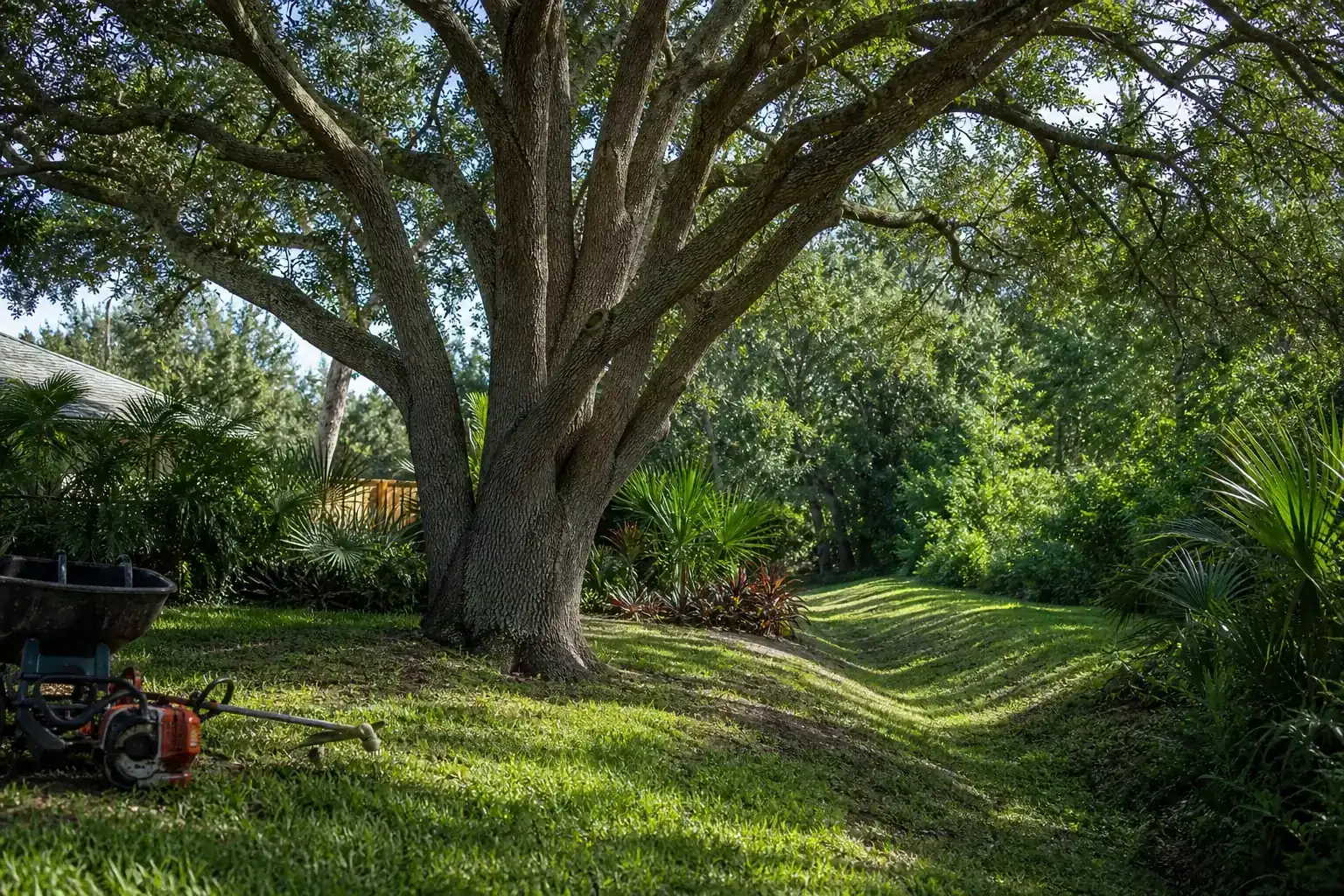
Before tree work starts, have the intended route clearly marked by the appropriate drainage, excavation, or site professional. The markings should identify the working area as well as space needed for equipment, removed vegetation, and soil handling. A clear plan helps a tree crew distinguish between plants that conflict with construction and trees that may remain.
Property owners should also confirm applicable requirements with their city or county. Local rules may affect tree removal, work near wetlands or waterways, protected vegetation, erosion controls, and how runoff may leave the property. Utility locations and property boundaries should be established through the appropriate providers and professionals before digging or stump grinding.
Inspect trees before deciding what to clear
Trees near a proposed swale deserve individual attention. Excavation can remove structural roots, change soil moisture, or alter the grade around a trunk. A tree that appears far enough from the centerline may still have important roots within the construction area.
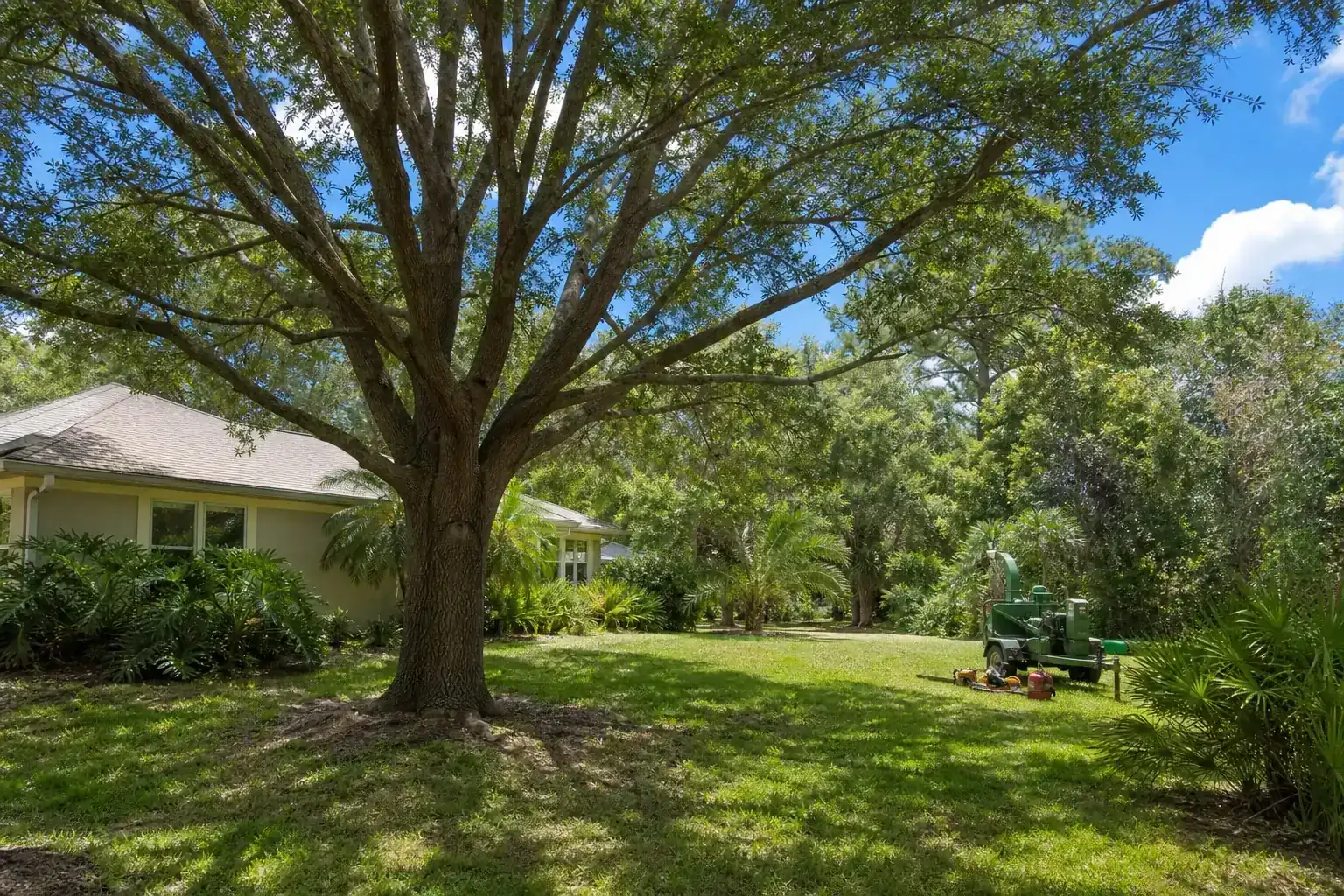
Arborist reports and tree inspections can document tree condition and identify concerns such as decay, weak unions, root disturbance, or storm damage. This information supports practical decisions about retention, tree removal, or modifications to the work zone. It is especially useful on commercial sites and shared properties managed through commercial tree services or HOA and condo tree services.
Tree trimming may provide clearance for equipment without requiring removal. Depending on tree structure and project needs, canopy thinning or crown reduction may be considered. These services have different purposes and should be selected according to tree health and clearance goals, not used as interchangeable ways to make a tree smaller.
Plan selective clearing around the swale corridor
Land and lot clearing can be targeted to the drainage footprint rather than applied across the entire property. Selective work may preserve shade, screening, and stable vegetation outside the construction zone. It can also keep unnecessary equipment traffic away from retained root areas.
A practical clearing scope may include:
- Marking the work limits: Identify the swale route, equipment access, staging areas, and vegetation designated to remain.
- Removing conflicting trees: Use tree removal where trunks or critical root areas prevent the approved drainage work.
- Creating overhead clearance: Use appropriate tree trimming when branches obstruct safe equipment movement.
- Managing dense undergrowth: Brush hogging can open suitable areas covered by tall grass, brush, or light woody growth.
- Addressing stumps: Stump grinding can reduce obstacles where grading or access requires a more workable surface.
- Protecting retained trees: Establish visible boundaries that discourage equipment, stored soil, and repeated traffic near trunks and root zones.
- Planning debris movement: Decide how cut material will leave the corridor without blocking access or damaging preserved vegetation.
Large, leaning, or difficult trees may require crane tree removal when site access and tree conditions make that method appropriate. The safest approach depends on the individual tree, surrounding targets, and available working space.
Coordinate stump and root management carefully
A stump in the swale path can interfere with grading and water movement. Stump grinding reduces the visible stump and some surrounding material, but it is not the same as excavating an entire root system. The drainage contractor should clarify the depth and area that must be free of woody material.
Roots from retained trees require a different approach. Cutting major roots can affect stability and health, while adding or removing soil near a trunk can stress the tree. If the planned swale crosses a significant root zone, review the conflict before excavation. Adjusting the route or work method may sometimes preserve a valuable tree, but that decision should be based on site design and tree condition.
Grinding debris should also be considered during final site preparation. A thick mixture of wood chips and soil may settle differently from mineral soil and can influence how the channel is shaped. The grading professional should determine how the ground is prepared after clearing.
Protect soil and drainage during the work
Clearing temporarily exposes soil and may change how water moves across the lot. Timing and sequencing matter, particularly during Florida's rainy periods. Ideally, vegetation removal, grading, and stabilization are coordinated so bare ground is not left unmanaged longer than necessary.
Heavy equipment can compact wet soil or leave ruts that redirect runoff. A designated access path helps limit disturbance. Soil and debris should not be piled against retained trunks, within active drainage paths, or where material can wash off the site.
If severe weather damages trees before or during the project, emergency and hurricane tree removal may be needed to address immediate hazards. That work should be separated from routine clearing decisions and coordinated with the broader site plan once urgent conditions are resolved.
Prepare for an efficient site visit
Before requesting lot clearing for drainage swale work, gather the drainage plan or marked route, known utility information, property boundary details, and any available tree documentation. Explain which trees you hope to retain and how equipment is expected to enter the site.
During the walkthrough, discuss overhead obstacles, soft ground, nearby buildings, fences, neighboring property, and debris access. Confirm whether the scope calls for tree removal, tree trimming, stump grinding, brush hogging, or a combination of approved services. Clear responsibilities between the tree crew and grading contractor help prevent gaps after the vegetation is removed.
Arrange a thoughtful clearing assessment
Florida Foliage provides tree care and land and lot clearing services that can support drainage-site preparation. The appropriate scope begins with the marked swale corridor, existing tree conditions, and realistic equipment access.
To discuss a property and schedule an assessment, call Florida Foliage at (386) 481-7913. The team can review relevant trees and vegetation, explain suitable tree-service options, and help you prepare for coordination with your drainage professional.
Call (386) 481-7913 to talk through next steps.