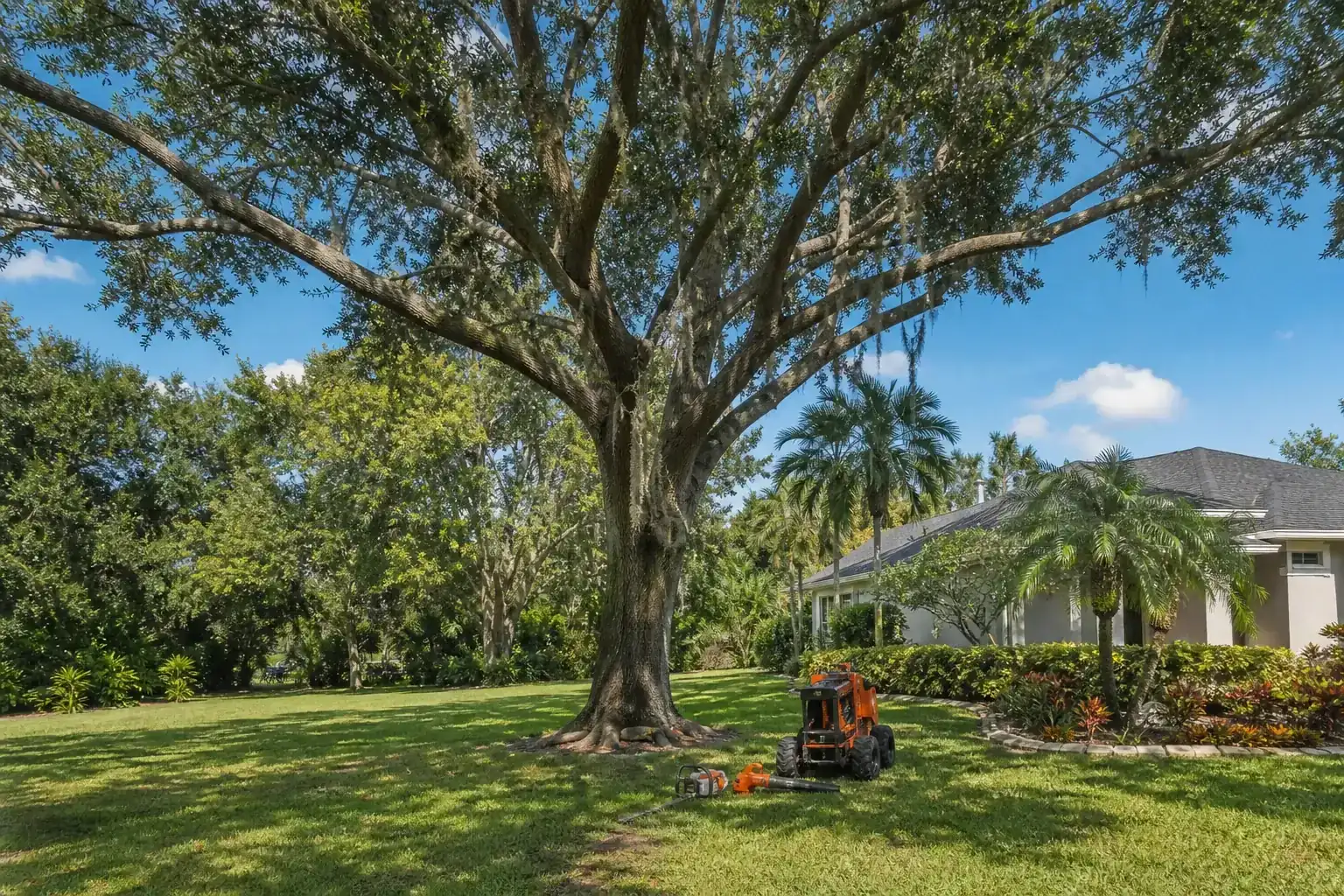
Florida properties can become difficult to reach when brush, low limbs, fallen trees, vines, and storm debris narrow access routes. Thoughtful lot clearing for fire access can help create a more usable path for emergency response while preserving valuable trees and avoiding unnecessary disturbance.
This work is not the same as clearing every plant from a property. It involves identifying practical routes, removing specific obstacles, and managing vegetation around entrances, driveways, structures, gates, and turning areas. A tree service can also identify hazardous trees that may fall into an access route during severe weather.
Property owners should coordinate access needs with local fire officials or other appropriate emergency personnel. Requirements can vary by location and property type, so confirm current guidance with your city or county before work begins.
Why clear access matters on wooded Florida lots
Dense Florida vegetation can change quickly. Fast-growing brush may reduce driveway width, while low branches can limit vertical clearance. Palms, pines, oaks, and other trees may drop limbs or lean toward a route after storms. Soft soil, drainage issues, and hidden stumps can create additional problems for vehicles.
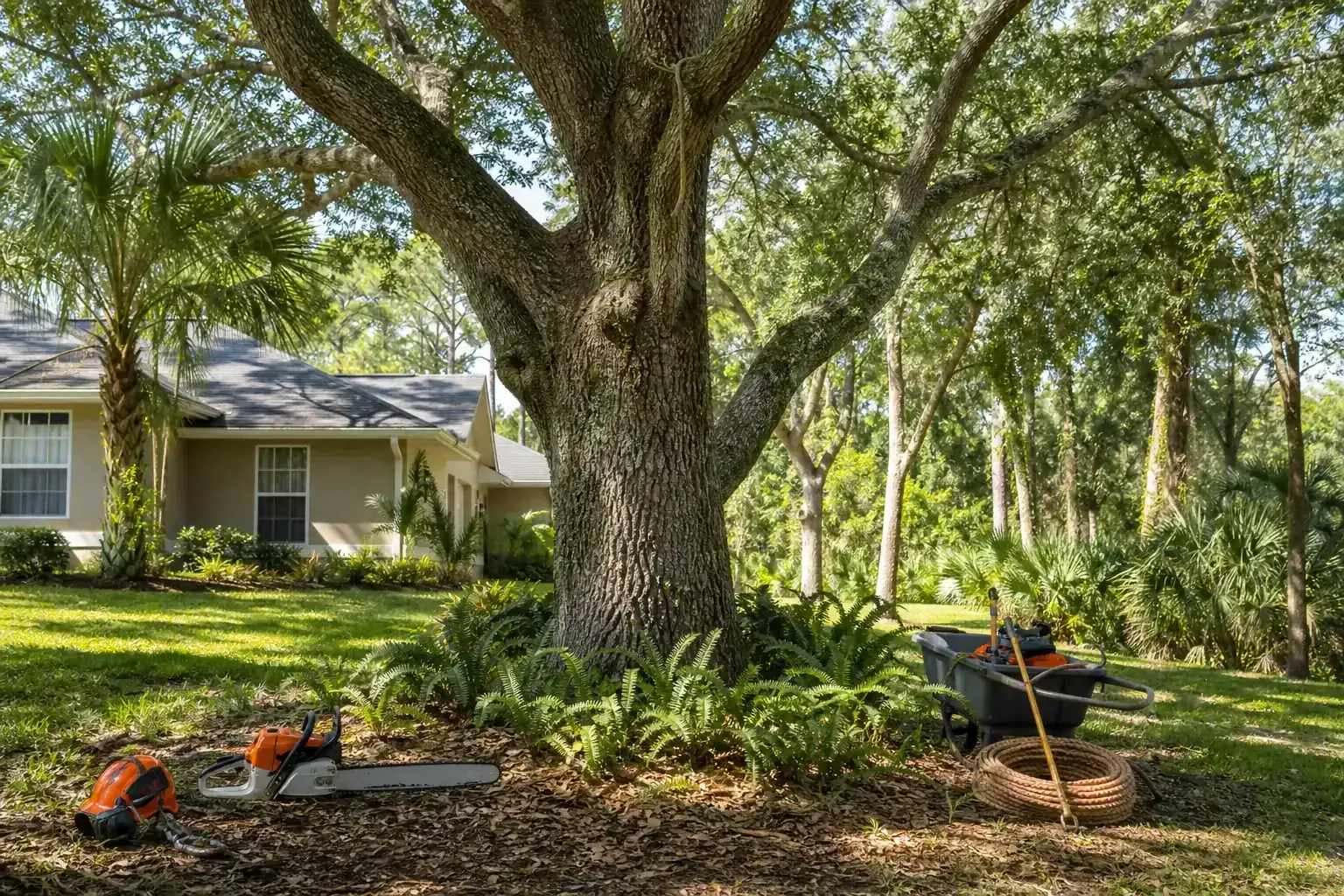
An accessible route gives emergency personnel a clearer way to approach a home, outbuilding, commercial site, or undeveloped parcel. It can also make routine property maintenance easier. The objective is to establish a defined corridor rather than leave crews to navigate through unmanaged growth.
Emergency access planning should consider more than the main driveway. Gates, sharp turns, narrow sections, overhead limbs, and areas where vehicles might need to reposition all deserve attention. Vegetation near addresses or entrances may also need management so the property can be located without delay.
What a practical clearing assessment should cover
A useful assessment starts at the public road and follows the expected route into the property. The tree service should note vegetation at ground level, branches extending into the route, dead or declining trees, storm-damaged material, stumps, and sections where growth reduces visibility.
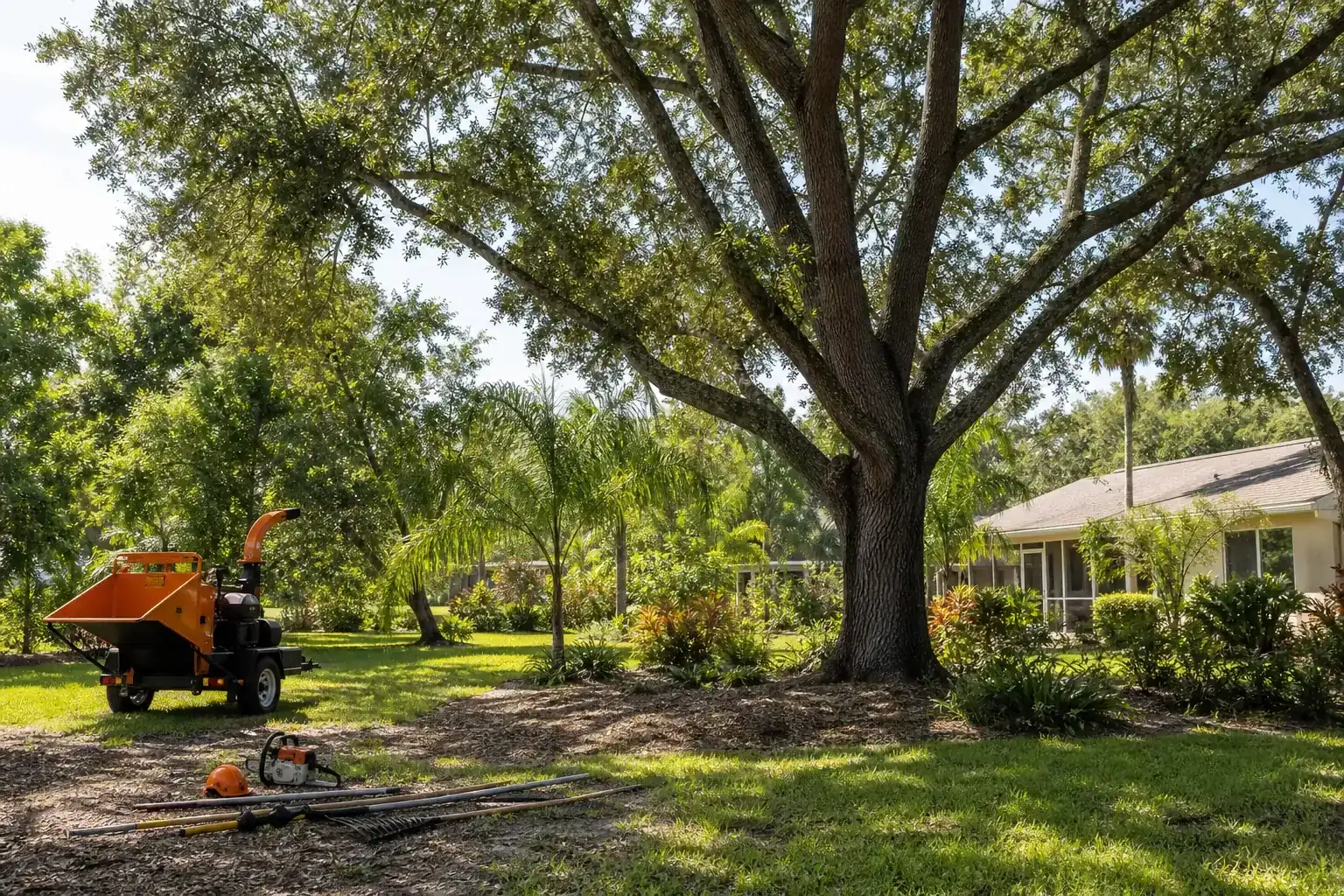
Tree inspections can help separate manageable limbs from trees with more serious structural concerns. Arborist reports may be appropriate when documentation is needed for a commercial property, HOA or condo community, development plan, or tree-related decision. Not every tree beside a driveway needs removal. Tree trimming, canopy thinning, or crown reduction may provide suitable clearance while retaining the tree.
Important points to review include:
- Entrance visibility: Check whether brush or low foliage hides the driveway, gate, address area, or approaching traffic.
- Usable route width: Identify shrubs, vines, leaning trunks, and debris that push vehicles toward ditches, trees, or soft shoulders.
- Overhead clearance: Look for low limbs that could interfere with taller equipment or break during contact.
- Turning space: Review bends, dead ends, and potential turnaround areas for restrictive vegetation and obstacles.
- Tree condition: Note dead branches, split trunks, severe leans, root damage, and storm impacts near the access corridor.
- Ground obstacles: Locate stumps, logs, brush piles, and concealed woody debris that could affect travel.
- Future growth: Consider how quickly trimmed branches and cleared brush may return in Florida's growing conditions.
Choosing the right vegetation management methods
Land and lot clearing can open an overgrown route, but different obstacles call for different methods. Brush hogging is useful for reducing broad areas of tall grass and brush where the terrain and hidden objects allow equipment to operate safely. It does not replace detailed tree work where trunks, heavy limbs, or hazardous trees block access.
Tree trimming can remove low or encroaching branches. Canopy thinning may reduce selected interior growth without stripping the canopy, while crown reduction can shorten specific limbs when appropriate for the tree. Improper cuts can weaken structure or encourage poor regrowth, so pruning decisions should account for species, condition, and branch attachment.
Tree removal may be considered when a tree occupies the necessary route, is severely compromised, or cannot reasonably be managed through trimming. Crane tree removal can help with trees in confined or difficult areas when site conditions make that approach appropriate. Stump grinding can address remaining stumps that interfere with the planned corridor, though underground conditions and the intended use of the area should be reviewed first.
After hurricanes or strong storms, emergency and hurricane tree removal may be needed to clear fallen or dangerously damaged trees. Property owners should avoid walking beneath suspended limbs or attempting to cut storm-loaded trees, which can shift unexpectedly.
Protecting trees and the surrounding site
Effective lot clearing for fire access should balance clearance with responsible tree care. Excessive clearing can expose remaining trees to changed wind conditions, damage roots, increase erosion, or remove useful shade. Heavy equipment can also compact soil or injure roots when travel paths are not planned carefully.
Before work begins, identify trees intended for retention and keep unnecessary traffic away from their root areas. Existing drainage patterns, slopes, utilities, fences, septic components, and nearby structures should be considered. Property boundaries should be verified so vegetation is not removed from neighboring land.
Florida sites may contain protected trees, wetlands, wildlife habitat, or other regulated features. Permit and vegetation rules differ among cities and counties. Contact the relevant local offices to confirm what approvals, reviews, or restrictions apply before clearing, trimming, or removing trees.
Maintaining access after initial clearing
A cleared corridor needs periodic attention. Florida's long growing season can bring brush and vines back into the route, and storm seasons can add fallen limbs or leaning trees. Regular inspections help catch these changes before access becomes restricted again.
Walk the route periodically and after significant weather. Look upward for broken branches, check edges for encroaching vegetation, and note erosion or debris around turns and entrances. Schedule tree trimming or brush hogging based on actual growth rather than waiting until the route is heavily obstructed.
Commercial tree services can support ongoing access management for business properties. HOA and condo tree services can help communities evaluate shared roads, entrances, common areas, and designated routes while keeping decisions consistent across the property.
Plan a clear and manageable route
The best approach begins with a defined access goal and a site-specific review. Clearing should focus on obstacles that affect entry, movement, overhead space, visibility, and tree safety. Local fire personnel can provide guidance about their operational needs, while your city or county can explain applicable clearing and tree requirements.
Florida Foliage provides land and lot clearing, brush hogging, tree removal, tree trimming, stump grinding, tree inspections, and related tree care services. To discuss vegetation conditions and practical options for your Florida property, call (386) 481-7913.
Call (386) 481-7913 to talk through next steps.