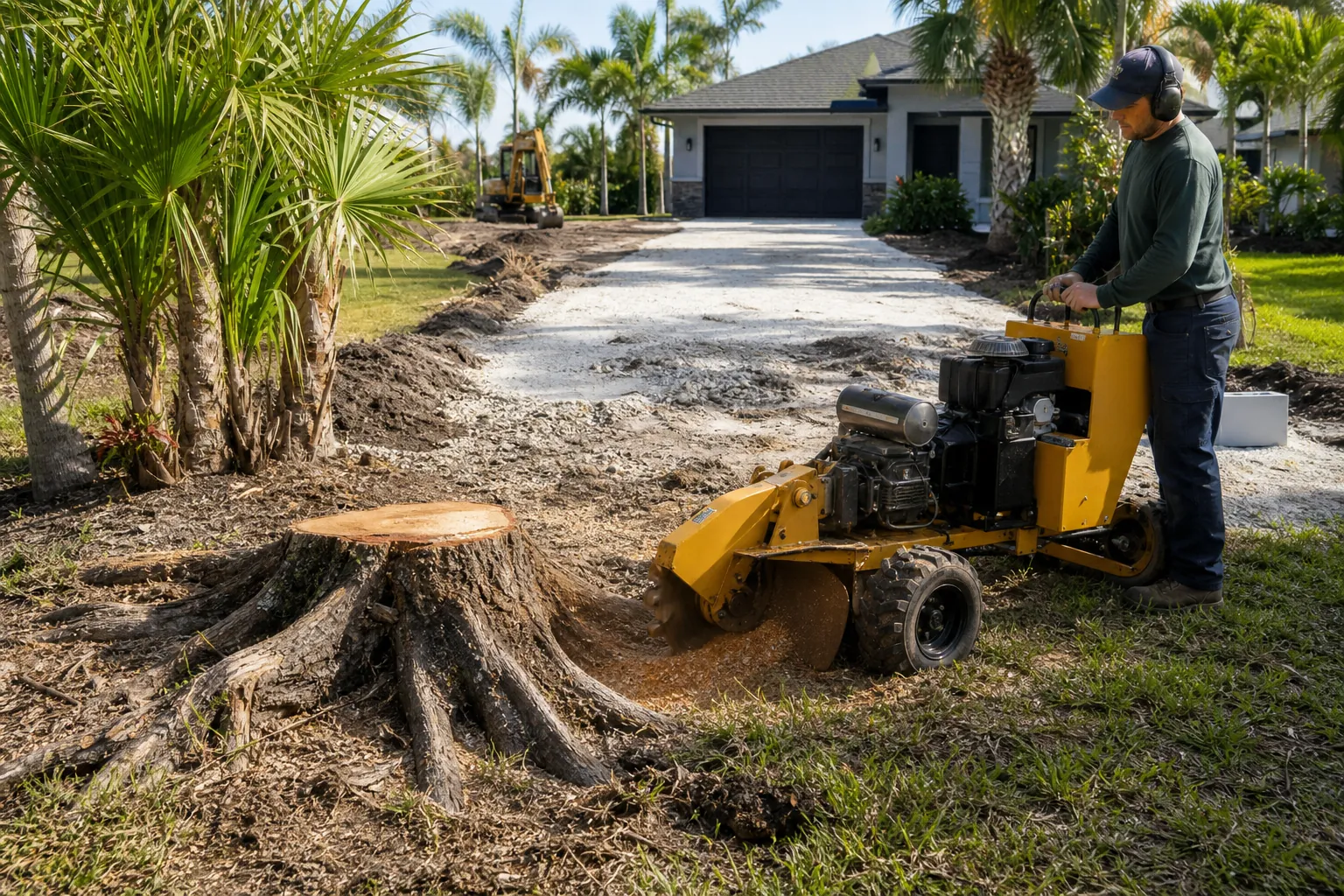
Expanding a driveway can improve parking, access, and the overall use of a Florida property. When a stump sits inside or near the planned work area, however, it should be addressed before grading and paving begin. Stump grinding before driveway expansion gives contractors a clearer site and reduces the chance that buried wood will interfere with excavation, drainage, or the finished surface.
The timing matters. Grinding too late can interrupt the construction schedule, while grinding without understanding the driveway plan may leave roots or debris where the base needs to go. Coordination between the property owner, tree service, and driveway contractor helps each phase move in the right order.
Why A Buried Stump Can Affect Driveway Work
A cut stump is only the visible portion of a larger root structure. Beneath the soil, the trunk flare and major roots may extend into the area where a driveway contractor needs to excavate, establish grade, or install a compacted base. Covering that material without proper site preparation can create avoidable complications.
Wood also changes as it decays. If substantial woody material remains beneath a future driveway, it may leave voids or areas that compact differently from the surrounding soil. The driveway contractor should decide how much material must be removed and what preparation is appropriate for the planned surface.
Stump grinding breaks the stump and accessible roots into smaller material below ground level. The resulting grindings and disturbed soil still need attention. Grinding is not the same as preparing a structural driveway base, so the excavation and paving contractor must evaluate the area after the tree work is complete.
Coordinate The Grinding Depth With The Driveway Plan
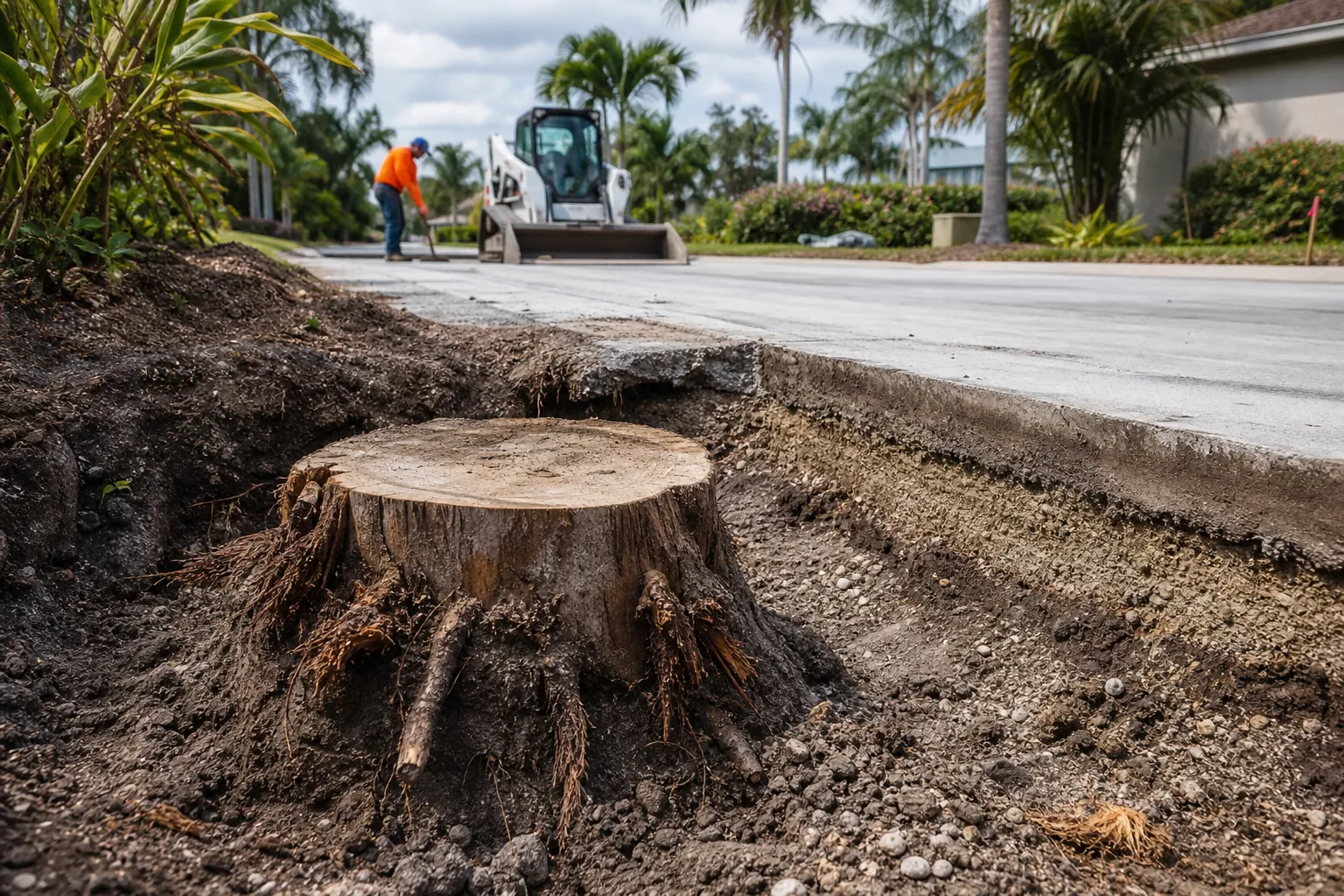
There is no single grinding depth that fits every project. A widened parking pad, concrete apron, paver driveway, or gravel extension may require different excavation depths and edge clearances. Before the stump grinding appointment, obtain the proposed driveway layout and discuss where excavation will occur.
Mark the planned edges, changes in grade, drainage paths, and any area where construction equipment will travel. This allows the tree service to see whether the stump is directly under the new driveway, beside it, or within an area needed for forming and equipment access.
The driveway contractor should specify whether the grindings need to be removed and whether additional root excavation will be necessary. Large roots may extend beyond the main stump. Some can be ground where accessible, but others may require decisions based on nearby trees, utilities, structures, and site conditions.
What To Check Before Stump Grinding
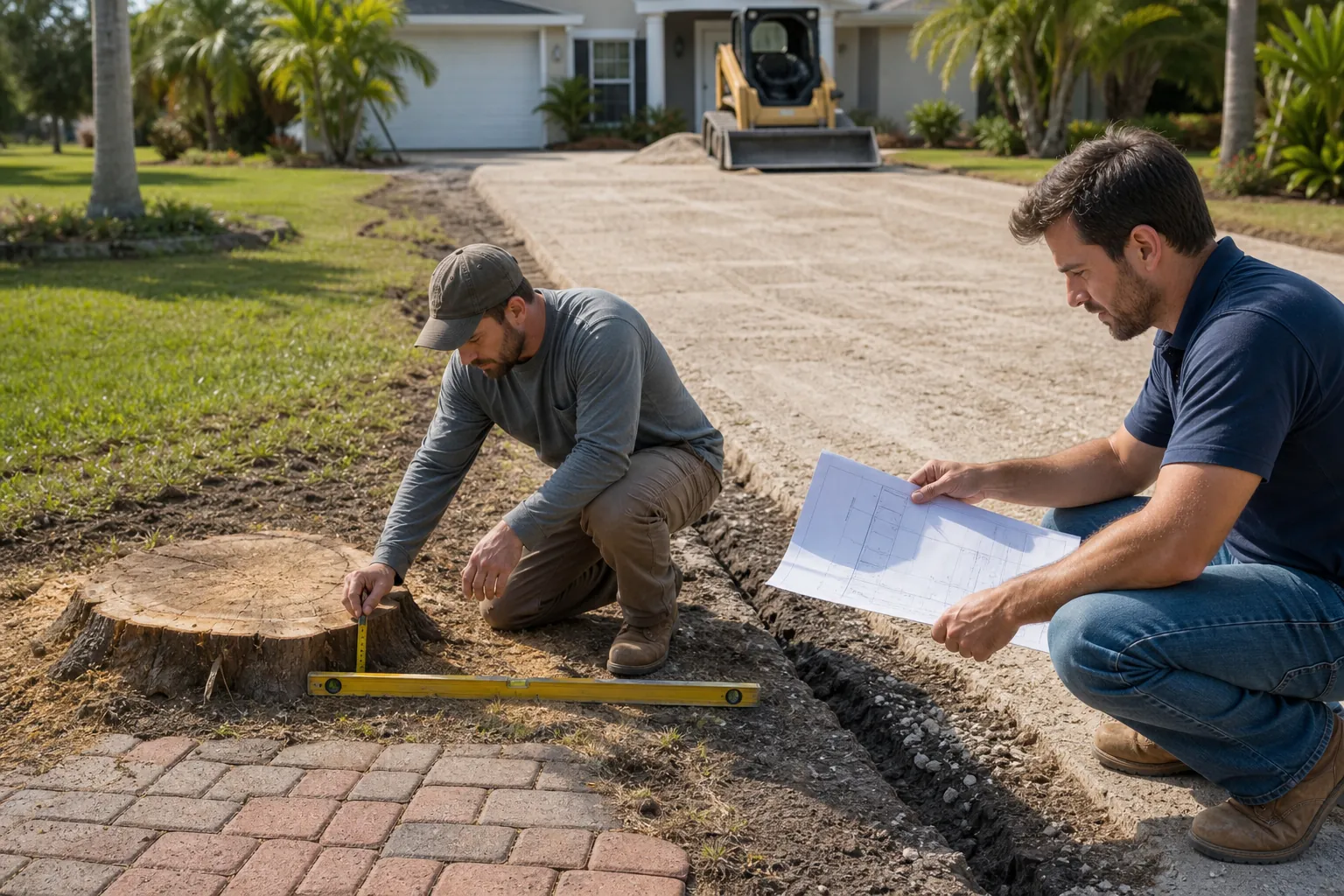
A brief planning review can prevent delays and damage. Florida properties often have irrigation lines, landscape lighting, drainage components, fences, and utility connections near driveways. Property owners should share known locations and arrange appropriate utility locating before excavation or grinding.
- Confirm the driveway footprint: Use visible markings so the tree service understands the complete expansion area.
- Identify underground concerns: Note irrigation, drainage, lighting, private utility lines, septic components, and other buried features that may not be apparent.
- Plan equipment access: Check gate widths, slopes, soft ground, overhead branches, parked vehicles, and nearby structures.
- Discuss grinding depth: Base the requested depth on the driveway contractor's excavation and sub-base requirements.
- Decide how debris will be handled: Determine whether grindings will remain temporarily, be removed, or be managed during later site preparation.
- Review nearby trees: Roots from trees that will remain may cross the work area and should not be cut without evaluating potential effects.
- Check local requirements: Confirm any applicable tree, right-of-way, access, or construction requirements with the relevant Florida city or county.
Protect Nearby Trees During Expansion
Driveway expansion can affect more than the removed tree. Excavation, root cutting, soil compaction, and construction traffic may stress nearby trees that are intended to remain. A mature tree's roots can extend well beyond the canopy edge, and important roots may be present within the proposed driveway area.
An arborist report or tree inspection can help clarify site concerns before the final layout is approved. Where appropriate, alternatives such as shifting an edge, adjusting the footprint, or using crown reduction or tree trimming for equipment clearance may reduce conflicts. Tree trimming should be based on tree structure and clearance needs, not performed simply to make heavy equipment fit without considering tree health.
Canopy thinning may be suitable for specific arboricultural objectives, but it does not solve root-zone conflicts. Likewise, removing surface roots without evaluating the tree can affect stability or health. Decisions about roots and branches should be considered together when construction occurs close to a retained tree.
Prepare The Site After Grinding
After the stump is ground, the hole typically contains a mixture of soil and woody material. That mixture is useful in some landscape settings, but it should not automatically be treated as a driveway-ready base. The driveway contractor should inspect the excavation area, remove unsuitable material as needed, and rebuild the area with the specified fill and compaction process.
Drainage also deserves attention. Florida's intense rainfall can reveal low spots, blocked flow paths, and erosion around newly disturbed ground. The final grade should direct water appropriately without sending runoff toward a building, neighboring property, or vulnerable tree root zone. Drainage design and paving preparation fall outside stump grinding and should be handled by the appropriate contractor.
If the project includes broader vegetation removal, land and lot clearing or brush hogging may help prepare accessible areas. Those services should still be coordinated with the driveway plan so valuable trees, drainage features, and marked utilities remain protected.
Choose The Right Sequence Of Work
For many projects, the practical sequence is to finalize the driveway footprint, inspect affected trees, complete any necessary tree removal, grind the stump to the coordinated depth, clear residual material, and then begin excavation and base preparation. Complex removals may call for crane tree removal when site constraints make conventional methods unsuitable.
Storm-damaged trees can change the schedule. If a hazardous condition develops before construction, emergency and hurricane tree removal may need to occur first. Keep the driveway contractor informed so the revised work does not create conflicting access or leave disturbed ground unaddressed.
Plan Your Florida Project With Clear Communication
Stump grinding before driveway expansion is most effective when it is treated as one part of a coordinated construction plan. Clear markings, known excavation requirements, utility awareness, and an evaluation of nearby trees help the tree service complete its work without guessing what the paving phase will require.
Florida Foliage provides stump grinding, tree removal, tree inspections, and related arborist care for Florida properties. To discuss a stump within a planned driveway expansion area, call (386) 481-7913. Having a sketch or marked layout available can make the initial conversation more useful.
Call (386) 481-7913 to talk through next steps.