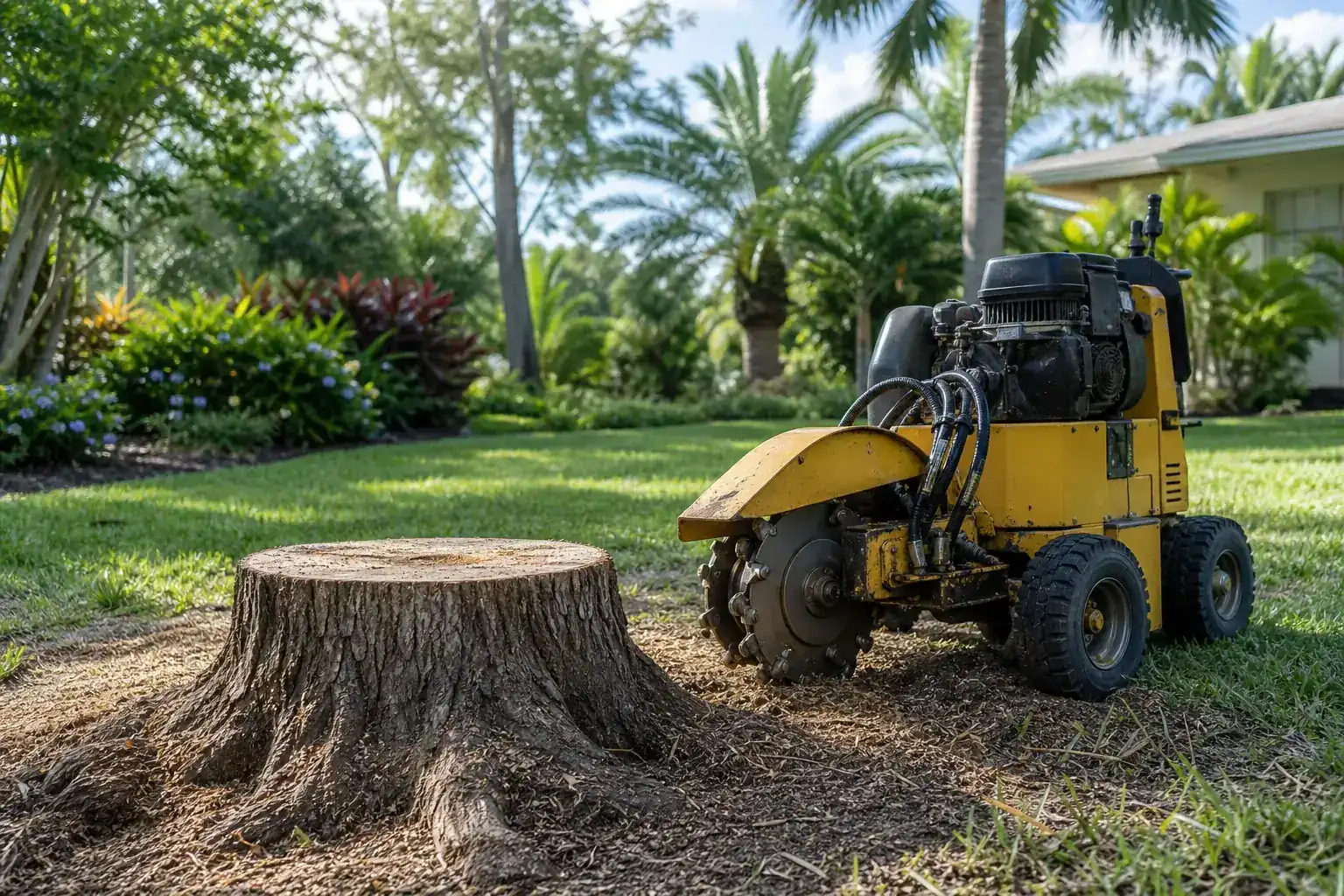
A new paver patio can create a comfortable outdoor space, but its long-term performance depends heavily on what lies beneath it. If a tree was recently removed from the planned patio area, covering the remaining stump with base material and pavers is not a sound shortcut.
Scheduling stump grinding before paver patio construction helps clear woody material from the project footprint and gives the patio contractor a better starting point. It also allows the site to be evaluated before layers of aggregate, sand, edging, and pavers make hidden problems difficult to reach.
Florida Foliage provides stump grinding and related tree services for Florida properties. Understanding how this work fits into patio preparation can help homeowners coordinate contractors, protect nearby trees, and avoid preventable disruptions.
Why a buried stump can affect a paver patio
A stump is not the same as compactable fill. Although the visible trunk may seem solid, wood changes as it decays. A stump buried under a patio can gradually lose volume and leave weak areas or voids beneath the prepared base.
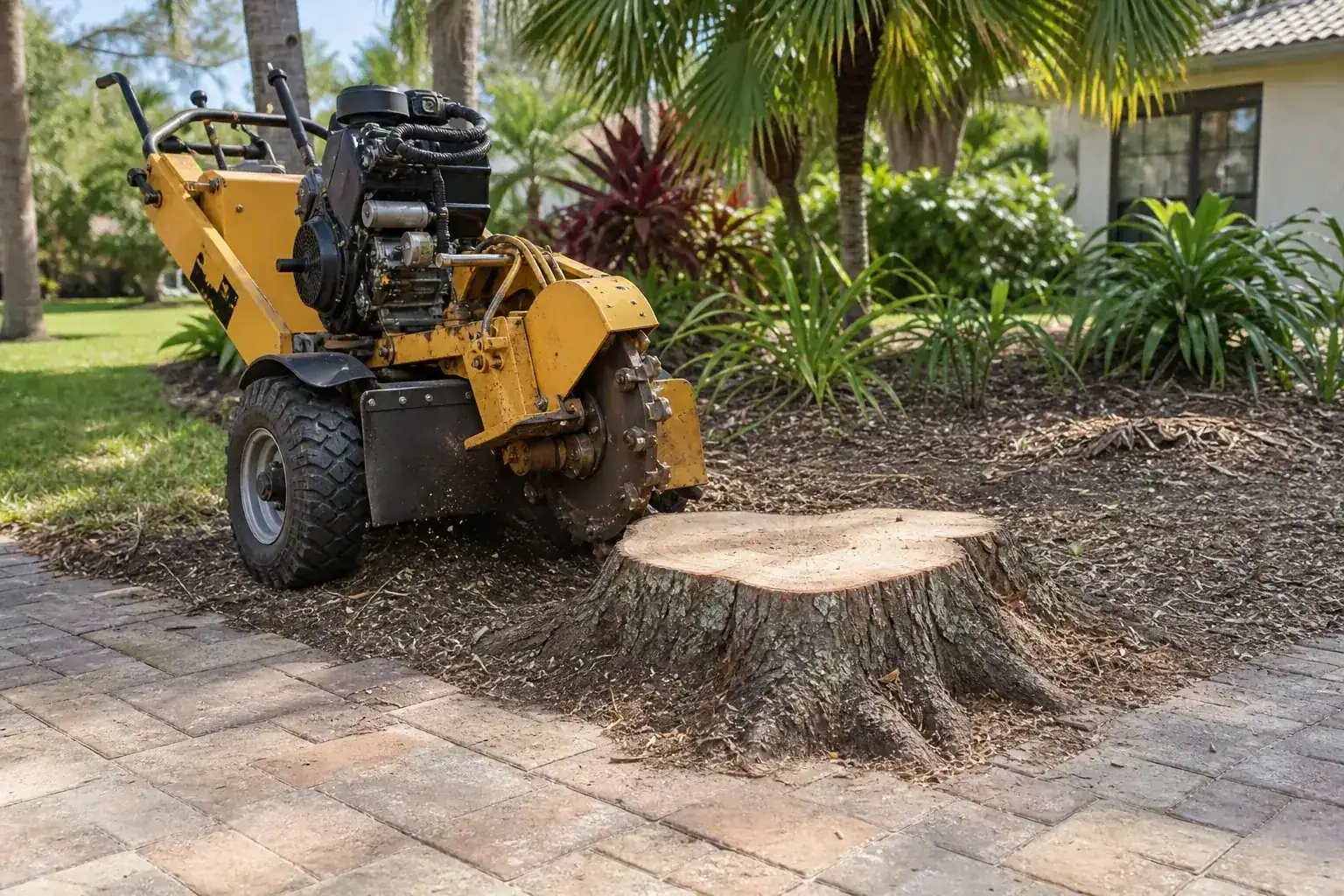
Pavers are individual units, so movement below the surface may appear as settling, uneven joints, rocking pavers, or low spots where water collects. Removing the pavers later may be possible, but repairs still require time and can disturb a finished outdoor space.
Roots also matter. Large structural roots may cross the patio footprint, while smaller roots can occupy soil that must be excavated and compacted. Grinding addresses the stump and accessible roots in the immediate area, but it does not remove an entire underground root system. The patio installer should evaluate remaining soil and roots during excavation.
How deep should stump grinding go?
There is no single grinding depth that fits every patio. The appropriate depth depends on the stump, root flare, finished patio elevation, and the base design specified by the hardscape contractor. A patio built near existing grade may require a different approach than one installed on a sloped site or beside a pool deck.
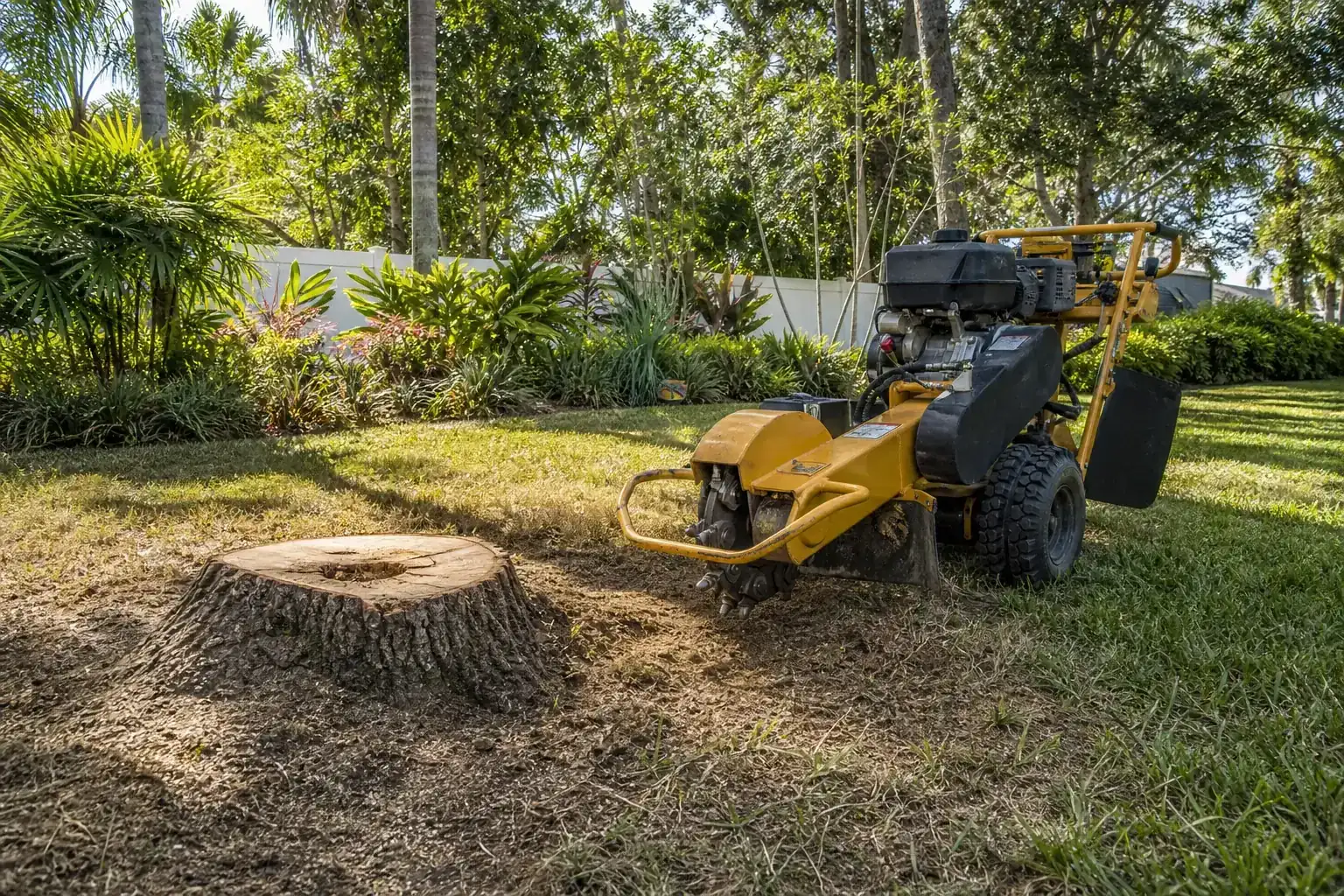
Before grinding begins, share the patio layout and planned excavation depth with the tree service. Marking the exact footprint helps the operator understand which portions of the stump and major surface roots could interfere with construction.
Grinding depth should be coordinated rather than assumed. The paver contractor determines how much material must be excavated for the patio assembly, while the tree service determines what can be safely reached with grinding equipment. Underground utilities, irrigation, lighting wires, drainage components, fences, structures, and nearby trees may influence access and technique.
Property owners should have utility locations addressed before work starts and tell the contractor about private lines or systems that public utility marking may not identify. If local approvals apply to tree work or site changes, confirm current requirements with the appropriate city or county.
What happens to roots and grinding debris?
A stump grinder turns wood and some surrounding soil into a mixture commonly called grindings. That material is useful in some landscape applications, but it should not automatically be treated as structural patio fill. It contains organic matter that can break down over time.
For a paver project, discuss who will remove grindings and how the resulting cavity will be handled. Responsibilities can vary between the tree service, homeowner, and hardscape contractor. The patio contractor may need the area cleared so unsuitable material can be removed and replaced with the specified base in properly compacted layers.
Stump grinding usually targets the central stump, root flare, and reachable surface roots. Long roots may remain beyond the grinding zone. Once disconnected from a living tree, those roots generally decompose in place. If substantial roots run through the patio footprint, the contractors should review them during site preparation instead of concealing them.
A practical sequence for patio site preparation
Good coordination reduces repeated work and protects the prepared base. In most cases, tree-related work should occur before patio excavation and installation. Heavy equipment should not travel over a completed base unless the patio contractor approves it.
- Finalize the patio footprint: Mark the edges, steps, seating walls, pathways, and equipment access areas.
- Inspect the tree or stump: Identify decay, trunk size, root flare, nearby trees, overhead clearance, and access limitations.
- Complete tree removal if needed: When a standing tree occupies the project area, arrange tree removal before stump work. Crane tree removal may be appropriate when access or surrounding structures require specialized handling.
- Locate potential conflicts: Address utilities and disclose irrigation, drainage, lighting, septic components, and other private features.
- Confirm excavation needs: Ask the paver installer for the planned depth and area that must be free of woody material.
- Grind the stump: Remove the stump and specified surface roots within the accessible work zone.
- Manage grindings: Clarify whether debris will be removed, relocated, or left for another approved use.
- Evaluate the exposed area: Have the patio contractor inspect soil conditions, remaining roots, and the cavity before placing base material.
- Prepare drainage and base: Follow the hardscape design for grading, aggregate placement, compaction, edging, and bedding material.
If multiple trees, dense vegetation, or neglected areas affect the project, land and lot clearing or brush hogging may be part of broader preparation. These services serve different purposes, so the scope should match the actual site rather than treating every condition as routine stump work.
Protecting trees that will remain near the patio
A patio can sometimes be planned near retained trees, but excavation and compaction may damage important roots. Cutting major roots can affect stability and tree health, while adding excessive material over the root zone can alter air and water movement.
Before finalizing the design, consider an arborist report or tree inspection for valuable, mature, leaning, or visibly stressed trees. The review can help identify structural concerns and guide conversations about patio placement. Tree trimming, canopy thinning, or crown reduction may address specific canopy objectives, but none of these services replaces proper root-zone planning.
Avoid assuming that all roots can be cut because they cross a proposed edge. Moving the patio, changing its shape, or adjusting construction methods may be preferable. Keep material stockpiles and equipment away from protected root areas when possible, and coordinate access before crews arrive.
When professional coordination is especially important
Extra planning is useful when a stump sits close to a house, pool enclosure, retaining feature, fence, or neighboring property. It also matters when access is narrow, the ground is soft, the tree was storm-damaged, or the site includes several contractors working in sequence.
Emergency and hurricane tree removal should focus first on immediate hazards. Patio preparation can be evaluated after the site is safe. Commercial tree services and HOA and condo tree services may involve additional scheduling, access, and approval steps. Property managers should confirm responsibilities and any applicable city, county, association, or community requirements before authorizing work.
Plan stump grinding before construction starts
The best time to address a stump is before patio materials arrive and before the base is prepared. Early evaluation allows the tree service and patio installer to align their scopes, identify access needs, and decide how grindings and remaining roots will be handled.
If a stump is located within your planned Florida patio area, Florida Foliage can assess the stump and discuss practical grinding considerations. Call (386) 481-7913 to arrange a site review before paver patio construction begins.
Call (386) 481-7913 to talk through next steps.