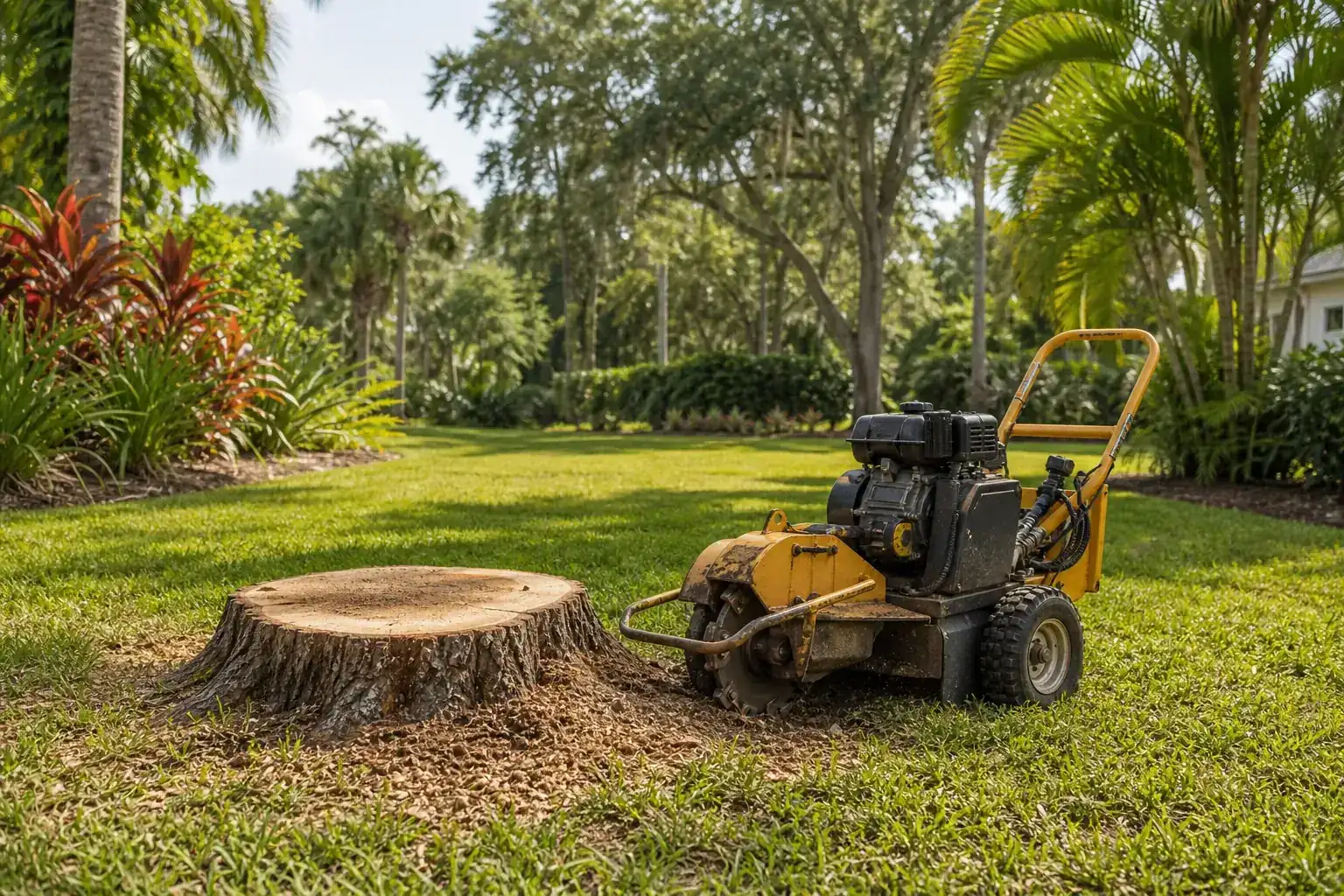
Installing new sod can quickly improve the appearance and usability of a Florida yard, but the finished lawn is only as sound as the ground beneath it. If a tree was recently removed, covering the remaining stump or shallow roots with soil and sod may create avoidable problems. Proper stump grinding before sod installation helps prepare a more consistent surface for grading, soil preparation, watering, and routine lawn care.
The goal is not simply to make the stump disappear from view. It is to address woody material that could interfere with sod placement and change as it decays. Planning the work in the right order gives your landscape contractor a cleaner, more manageable area for the next phase.
Why a buried stump can affect new sod
A stump left just below the soil line remains a solid obstruction. Sod placed over a thin layer of soil above that wood may dry differently from the surrounding grass because roots have limited access to suitable soil. The area can also be difficult to grade evenly.
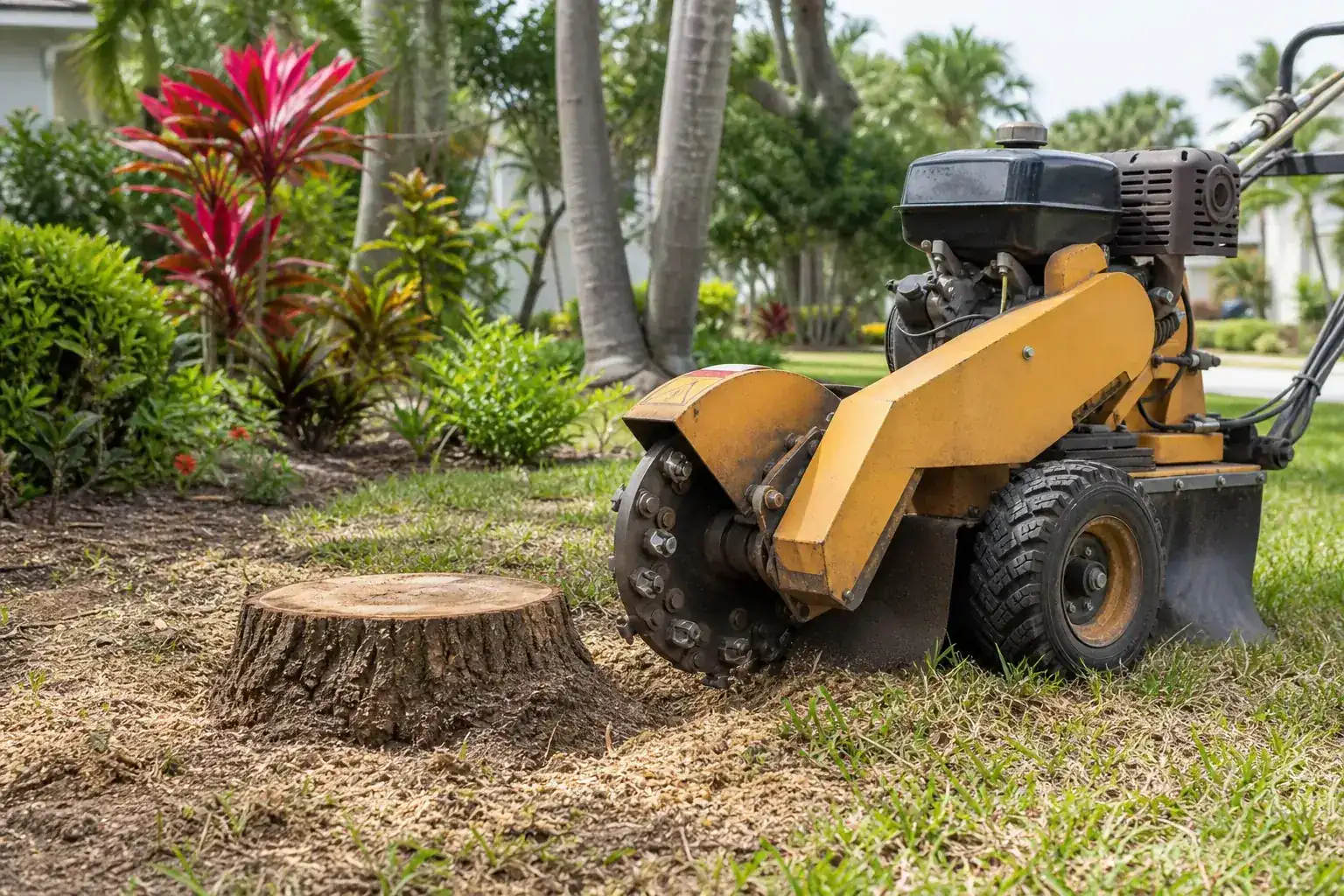
Over time, buried wood breaks down. As the stump and larger roots decay, the soil above them may settle. This can leave a low spot that collects water, feels soft underfoot, or causes a mower to scalp the grass. Decomposition can also produce mushrooms or other fungal growth. These organisms are commonly associated with decaying wood, but their appearance can be frustrating in a newly finished lawn.
Stump grinding reduces the primary obstruction and allows the site to be prepared more deliberately. It does not remove every root extending through the yard, and it should not be presented as complete underground excavation. Instead, grinding breaks the stump and accessible flare into smaller material below the surrounding grade.
How deep should the stump be ground?
The appropriate grinding depth depends on the stump, root flare, equipment access, planned grading, and intended use of the site. A lawn restoration may have different preparation needs than a planting bed, walkway, or construction area. Tell the tree service that sod is planned so the crew can evaluate the site with that purpose in mind.
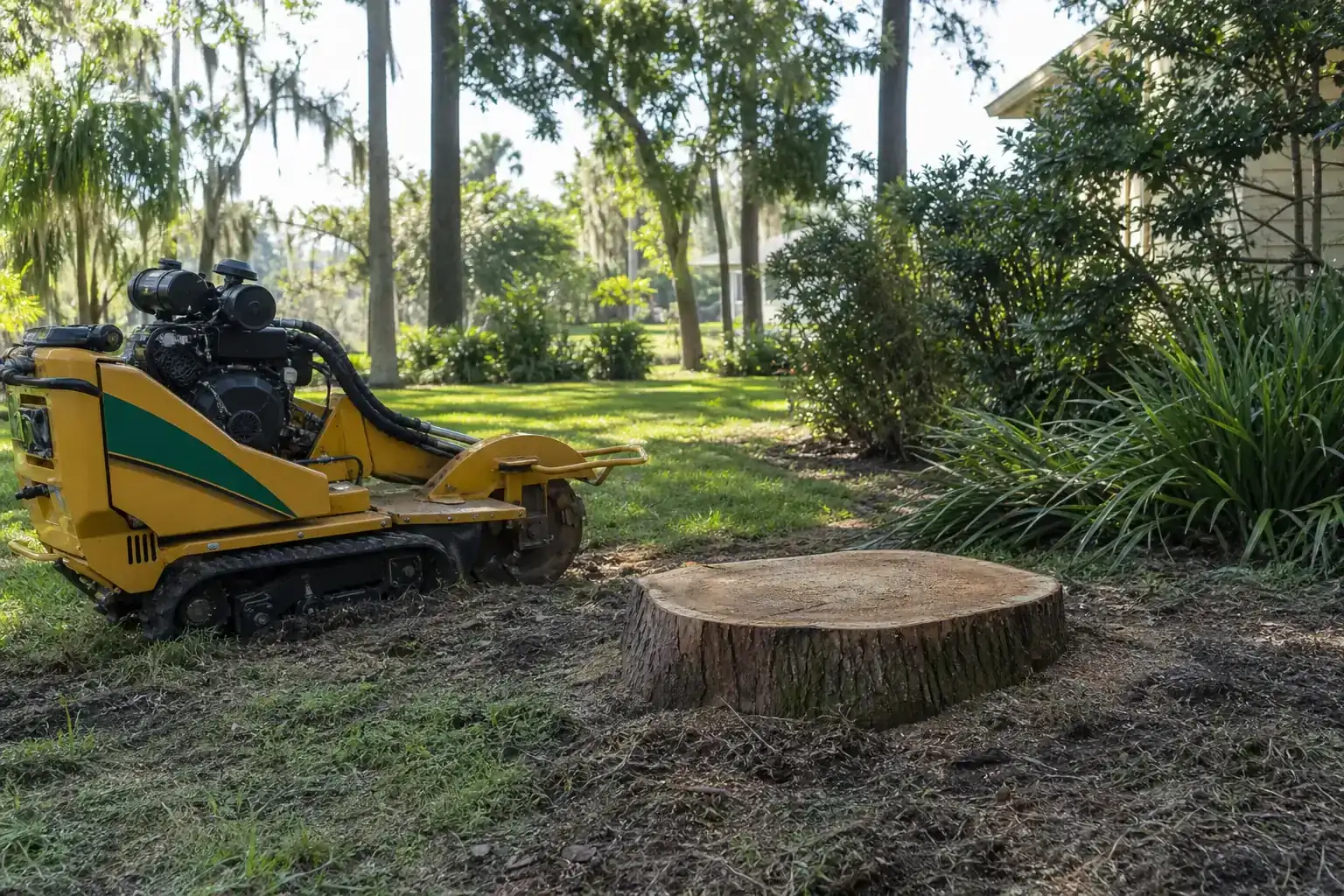
Visible surface roots near the stump may also interfere with grading. Some can be addressed during stump grinding, but roots may extend far beyond the immediate work zone. Grinding every distant root is generally neither practical nor necessary for sod installation. The priority is creating sufficient room for suitable soil and a reasonably even lawn surface while avoiding damage to utilities or nearby trees.
Before any grinding begins, underground utility locations and private lines must be considered. Irrigation pipes, low-voltage lighting, invisible pet fencing, drainage components, and other privately installed features may not be covered by standard utility marking. Share known locations with the contractor. Local requirements can vary, so confirm any applicable rules with your city or county.
What to do with stump grindings
Grinding produces a mixture of wood chips, small wood fragments, and soil. This material is useful in some landscape settings, but a deep pocket of fresh grindings is not an ideal base for sod. Wood-rich material can settle as it decomposes and may create inconsistent moisture conditions beneath the grass.
The work area should be assessed after grinding. Depending on the volume of debris and the final grade, excess grindings may need to be moved away from the lawn area. Some material can potentially be used as mulch in an appropriate bed, provided it is kept away from trunks and structures and does not contain unwanted debris.
A practical site-preparation sequence includes:
- Complete tree removal and stump grinding before final lawn grading.
- Identify irrigation, drainage, lighting, and other private underground features.
- Remove excess wood chips and loose woody debris from the sod area.
- Allow disturbed material to settle enough to reveal obvious low spots.
- Fill the ground area with soil appropriate for the site and intended turf.
- Compact and grade carefully without creating a hard, impermeable surface.
- Match the surrounding drainage pattern rather than directing water toward buildings.
- Coordinate final soil preparation and sod placement with the lawn installer.
Do not assume the grinding debris will behave like clean fill soil. Discuss responsibility for debris removal, backfilling, grading, and sod preparation before work starts, since these tasks may be handled by different contractors.
Timing stump work with sod installation
The best schedule leaves enough time between stump grinding and sod installation to clean the area, inspect the resulting cavity, add soil, and correct the grade. Rushing directly from grinding to sod placement can hide loose debris or an underfilled depression.
Florida weather also matters. Heavy rain can saturate disturbed soil, expose settlement, and make equipment access difficult. Conversely, exposed prepared soil can erode or develop weeds if left unfinished for too long. Coordinate the tree service and sod contractor so the site is not rushed but also does not remain open unnecessarily.
If several trees are involved, complete all planned tree removal, tree trimming, canopy thinning, or crown reduction before installing the lawn. Foot traffic, falling branches, machinery, and cleanup can damage fresh sod. Projects requiring crane tree removal, emergency and hurricane tree removal, land and lot clearing, or brush hogging should likewise be completed before fine grading whenever practical.
Questions to ask before scheduling the work
Clear communication helps prevent gaps between tree work and lawn installation. Ask how equipment will reach the stump, whether gates or soft ground limit access, and what protection may be needed for nearby landscaping. Confirm the expected grinding area, anticipated depth, treatment of surface roots, and plan for the resulting chips.
It is also helpful to ask the sod installer how much clean soil depth and site preparation they want over the ground area. If a nearby tree is being retained, avoid unnecessary root damage. An arborist report or tree inspection may be appropriate when the condition of remaining trees, construction impacts, or root conflicts need professional evaluation.
Commercial properties, HOAs, and condominiums may require additional scheduling and communication among managers, residents, landscapers, and tree crews. Commercial tree services and HOA and condo tree services can help organize access and define the work zone, while property representatives should confirm local requirements and internal approvals.
Prepare the ground for a better lawn transition
Stump grinding before sod installation is a practical step that supports smoother grading and reduces the chance of placing turf directly over solid, decaying wood. The strongest results come from coordinating tree removal, grinding, debris handling, soil replacement, and sod installation as connected parts of one project.
Florida Foliage provides stump grinding and related tree service and arborist care throughout Florida service areas. To discuss a stump that needs to be addressed before new sod is installed, call (386) 481-7913. The team can review access, surrounding roots, and site conditions so you can plan the next stage calmly and clearly.
Call (386) 481-7913 to talk through next steps.