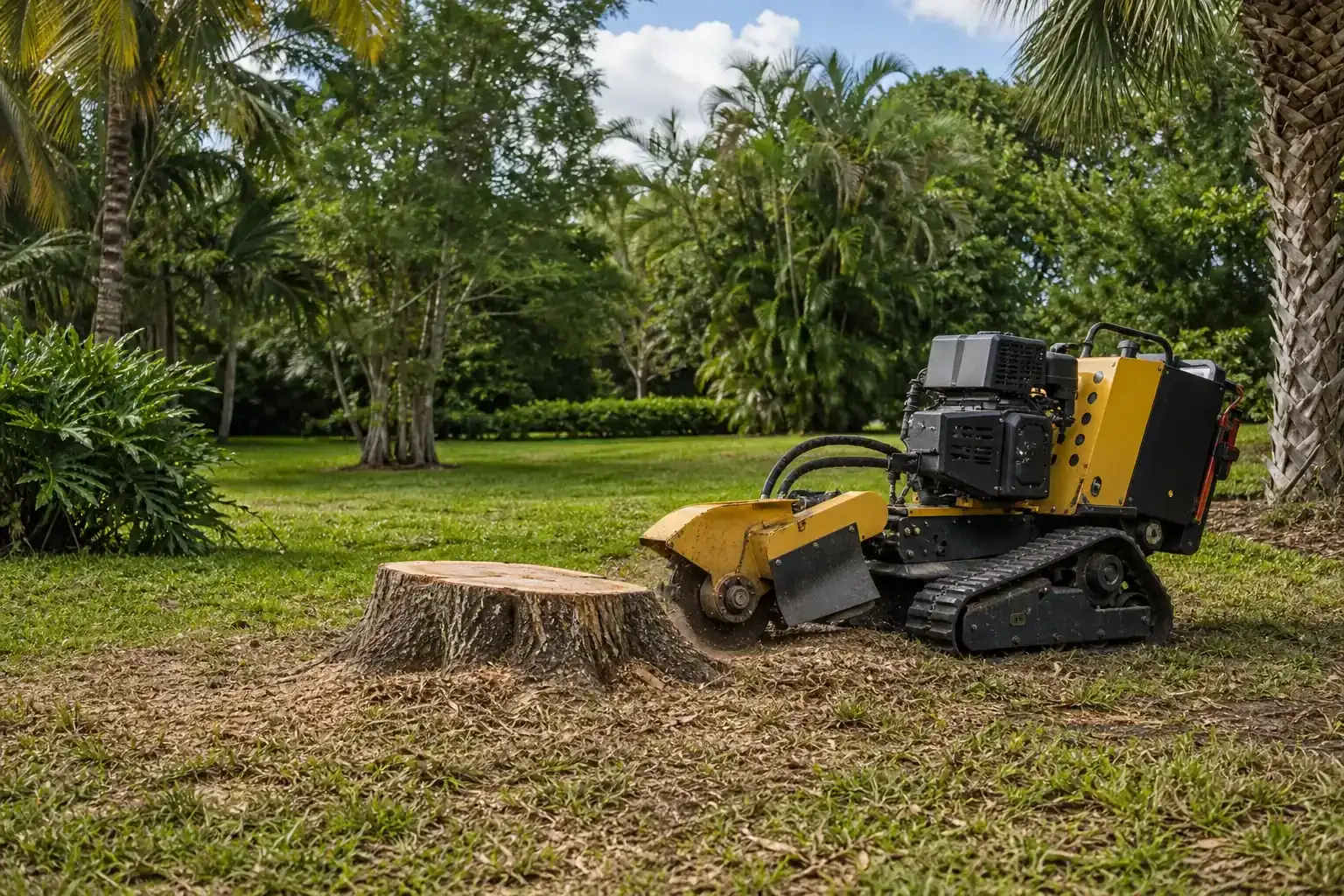
Removing a stump can make a Florida yard easier to maintain, reduce tripping hazards, and prepare an area for future landscaping. However, stump grinding becomes more complex when electrical lines, communication cables, gas piping, water service, irrigation components, or other buried infrastructure may be nearby.
Stump grinding near buried utilities should never begin with assumptions about what lies underground. A careful process includes reviewing the site, arranging appropriate utility locating, identifying private systems, and selecting a grinding approach based on actual conditions. Florida Foliage helps property owners evaluate these factors before stump grinding begins.
Why buried utilities change the stump grinding process
A stump grinder removes wood by using a rotating cutting wheel to reduce the stump and accessible roots into chips. Although the work is concentrated around the stump, roots can extend outward and cross areas containing underground services. The machine may also need room for access, positioning, and controlled movement.
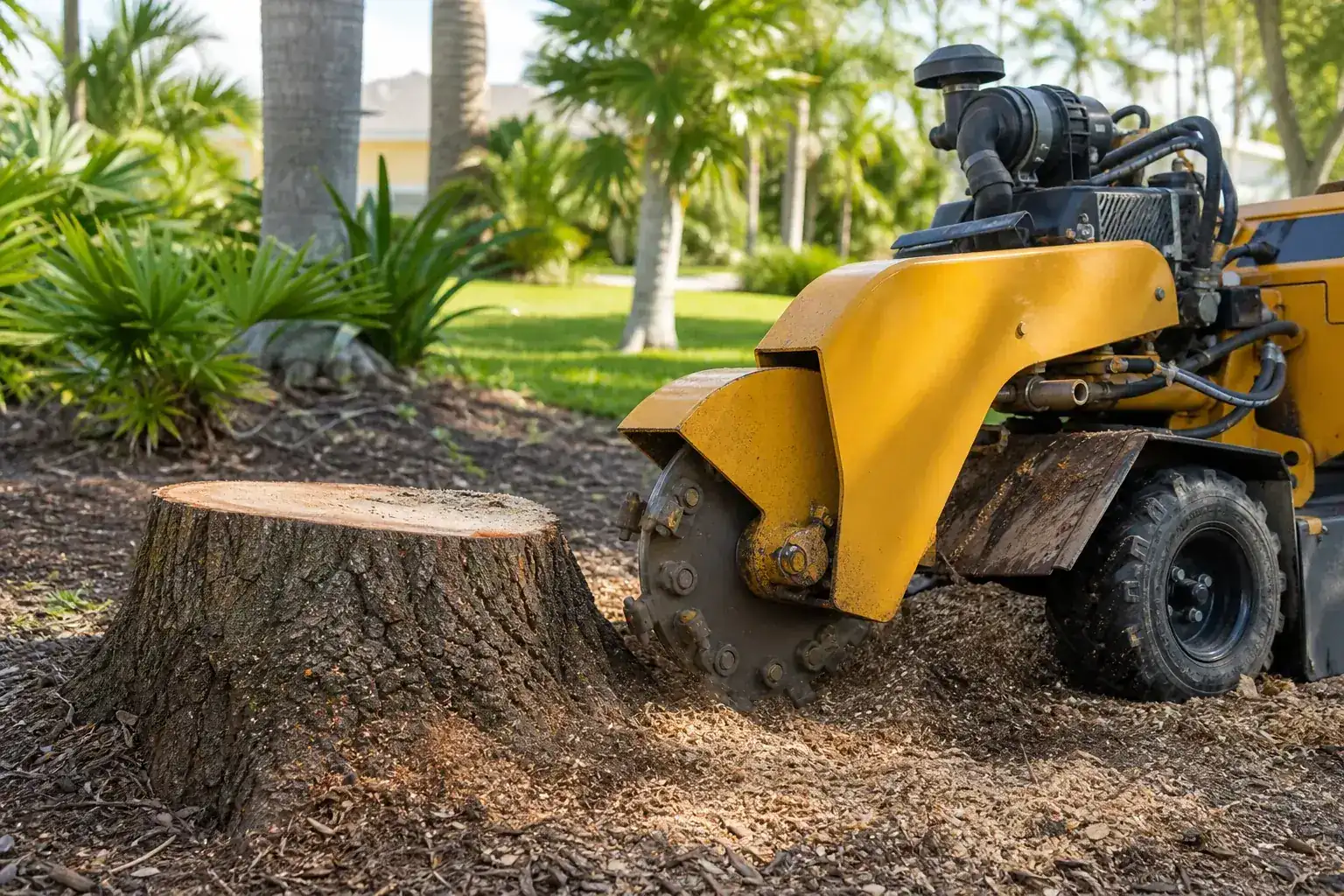
Visible clues do not always reveal the complete underground layout. A utility meter, irrigation valve, or conduit may indicate that infrastructure is present, but it may not show the exact route or depth. Soil movement, previous landscape work, erosion, and property renovations can make visual estimates unreliable.
The goal is not simply to grind cautiously. It is to establish what can reasonably be identified before work starts, then set boundaries that protect marked areas and private property systems. If the available information does not support safe grinding, the scope may need to be adjusted.
Utility locating should come before excavation or grinding
Public utility locating is an important early step before ground-disturbing work. Property owners should use the applicable utility notification process and allow utilities to be marked before the scheduled project. Markings typically use paint or flags to identify the approximate location of covered facilities.
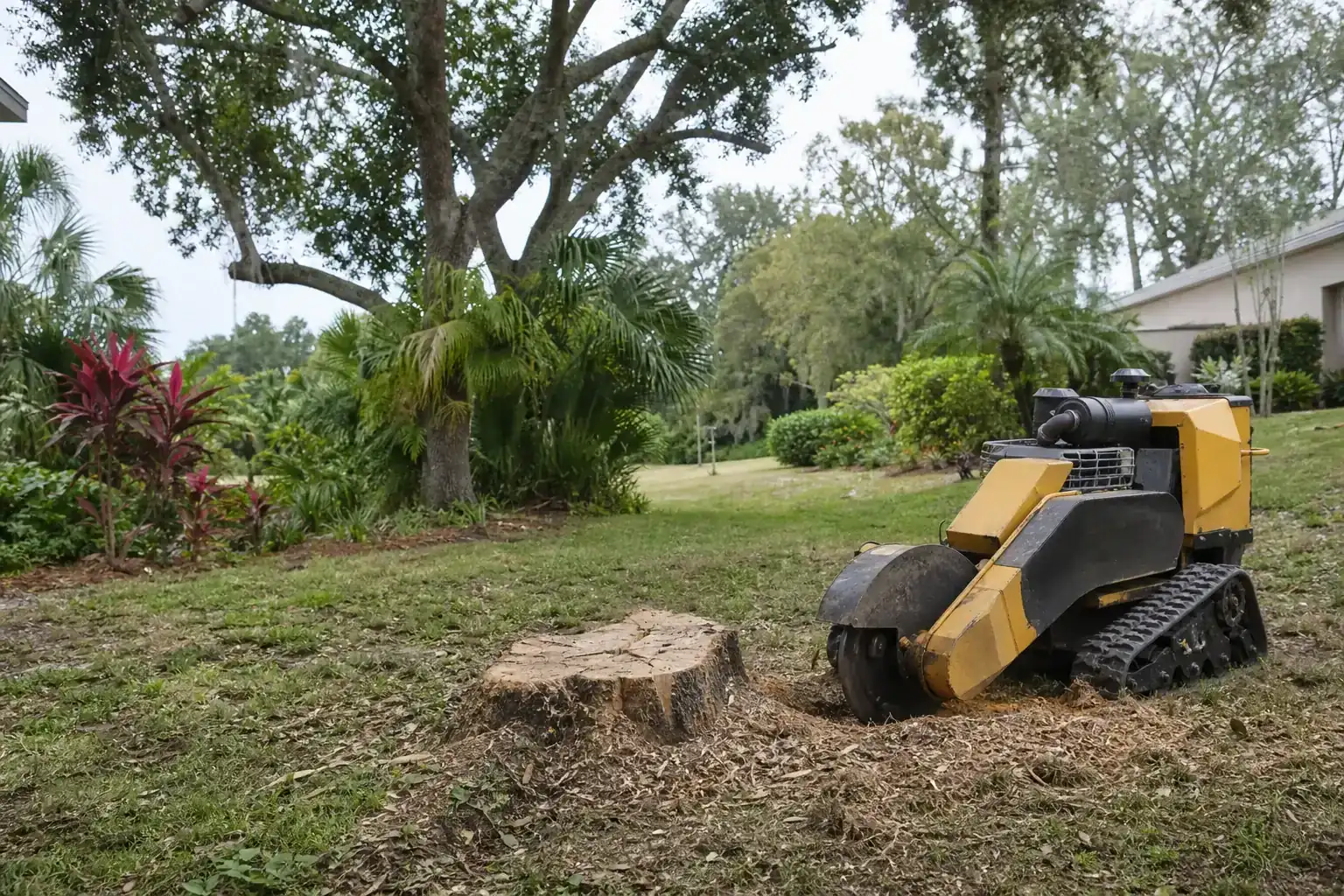
Public locating may not include every line on private property. Irrigation pipes, landscape lighting wires, pool-related connections, septic components, private electrical runs, and utilities extending to detached structures may require separate investigation. The owner should share plans, records, installation details, and known repair history with the tree service.
Do not move marking flags, cover paint, or treat a marked line as an exact path with no surrounding concern. Markings communicate important limits, but they do not eliminate the need for professional judgment. If markings are unclear, damaged, or inconsistent with site features, clarification should be requested before work proceeds.
What a pre-work site assessment should cover
A useful assessment considers more than the distance between a paint mark and the center of the stump. The crew needs to understand the stump's size, root flare, condition, surrounding grade, machine access, and the location of structures or landscape features.
Before stump grinding near buried utilities, review these practical items:
- Current utility markings: Confirm that the relevant public utilities have responded and that marks remain visible.
- Private underground systems: Identify irrigation, lighting, gates, wells, septic features, pool equipment, and detached-building connections.
- Root direction: Look for major surface roots and root flares that lead toward marked areas.
- Machine access: Check gates, slopes, soft soil, pavers, drainage areas, and overhead clearance.
- Grinding boundaries: Establish the permitted depth and horizontal work area before the cutting wheel enters the stump.
- Debris control: Plan shielding around vehicles, windows, pedestrians, and nearby properties.
- Work-zone control: Keep residents, pets, tenants, customers, and unauthorized workers away from the operating area.
- Future land use: Explain whether the area will become turf, a planting bed, pavement, fencing, or part of a larger clearing project.
These details help determine whether the proposed work can proceed as planned or requires a narrower scope. They also help the owner understand what material will remain below ground after grinding.
How grinding depth and root work affect risk
Grinding depth should match the site's known conditions and intended use. A request to remove every root can expand the disturbed area far beyond the original stump. Near marked or suspected utilities, extensive root chasing may not be appropriate.
Roots can grow around pipes, conduits, and cables. Even when a utility is not directly under the stump, pulling or aggressively grinding a connected root may affect the surrounding soil. For that reason, the operator may establish a stop line, reduce the grinding footprint, or leave part of a root system undisturbed.
Property owners should also remember that stump chips mixed with soil behave differently from compacted fill. If the area will support construction, hardscaping, or another load-bearing feature, discuss site preparation with the appropriate qualified contractor. Stump grinding removes accessible wood, but it does not automatically prepare the ground for every future use.
Florida site conditions that deserve attention
Florida properties can present sandy soils, saturated ground, dense ornamental planting, storm-damaged roots, and narrow access between buildings. Heavy rain may obscure markings, soften the work area, or create rutting concerns. Hurricane damage can also shift root plates and make the relationship between the stump, roots, and nearby infrastructure harder to interpret.
If a stump remains after emergency and hurricane tree removal, the follow-up work should be treated as a new site assessment rather than an automatic continuation. Conditions may have changed during the tree failure or removal process.
Local permit and site requirements can vary. Property owners should confirm applicable rules with their city or county, especially when work is near rights of way, protected areas, drainage features, or regulated trees. Arborist reports and tree inspections may also be useful when a stump project is connected to broader tree care or site planning.
Coordinating stump work with other tree services
Stump grinding is often part of a larger property plan. Florida Foliage also provides tree removal, tree trimming, crane tree removal, canopy thinning, crown reduction, land and lot clearing, brush hogging, commercial tree services, and HOA and condo tree services.
Sequencing matters. For example, tree removal should be completed before the stump area is finalized, while land and lot clearing may require a broader review of utilities across the entire work zone. Commercial, HOA, and condo properties may also need coordination with managers, residents, vendors, and access schedules.
Clear communication helps keep the scope practical. Share utility information, intended land use, access restrictions, and known site history before work is scheduled. Avoid planting, trenching, or installing landscape features in the marked area until the grinding plan has been reviewed.
Plan the work with care
A stump close to buried infrastructure requires patience and accurate information. Utility locating, private-system identification, sensible grinding limits, and site-specific planning all contribute to a more controlled project.
If you are considering stump grinding near buried utilities in Florida, contact Florida Foliage at (386) 481-7913. The team can discuss the stump, access conditions, visible site features, and the next steps needed before work begins.
Call (386) 481-7913 to talk through next steps.