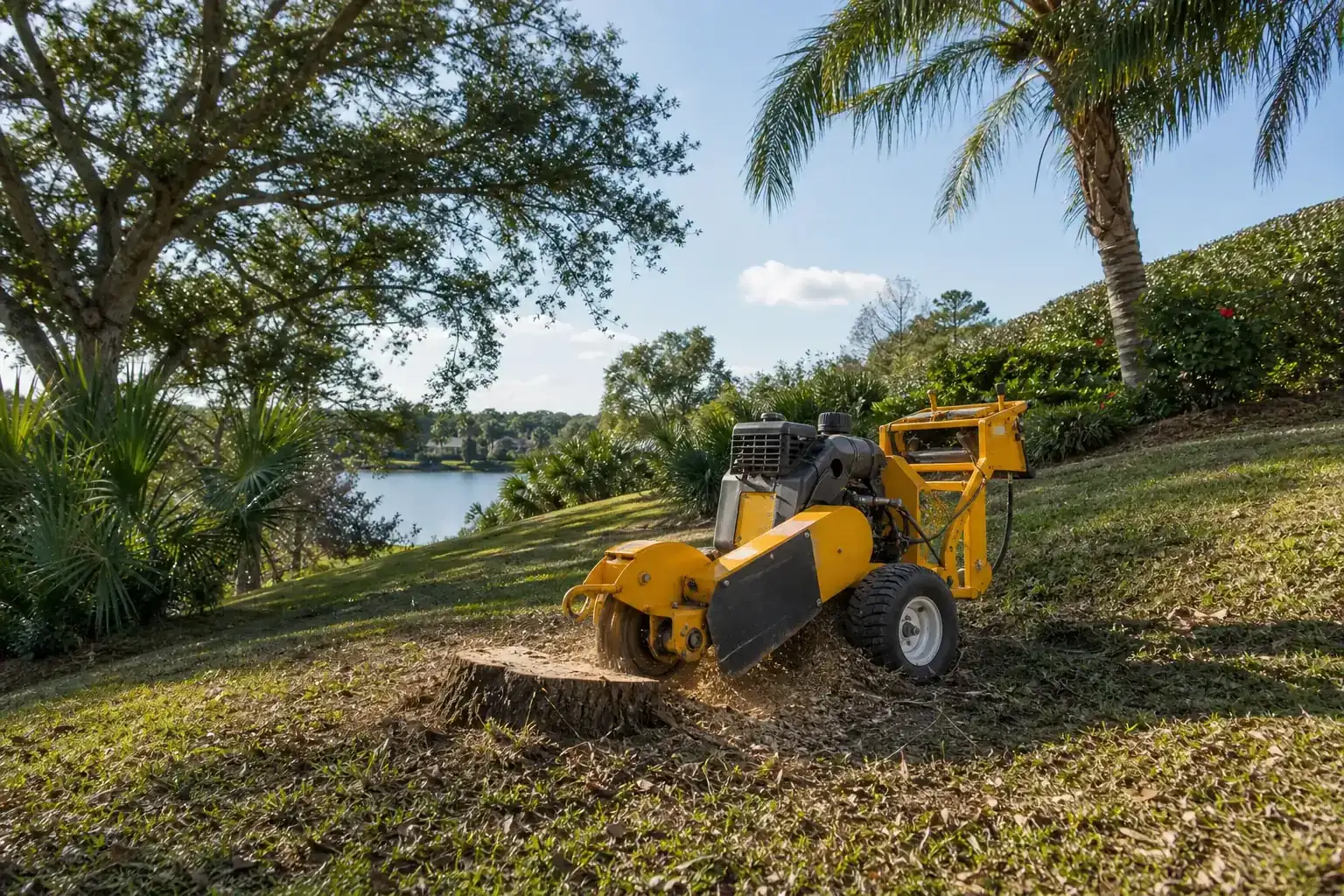
Removing a stump from level ground is usually straightforward. Stump grinding on a sloped yard requires more planning because the machine must operate on uneven terrain while the surrounding soil, roots, landscaping, and drainage remain protected.
Florida properties can present additional challenges, including sandy soil, heavy seasonal rain, dense vegetation, exposed roots, and limited backyard access. A careful site assessment helps determine whether a grinder can reach the stump, where it can be positioned, and how the area should be restored afterward.
Understanding the process can help homeowners prepare their property and ask practical questions before work begins.
Why a slope changes the stump grinding process
A stump grinder uses a rotating cutting wheel to reduce wood into chips. For effective operation, the machine needs a suitable approach and a stable working position. A slope can affect the grinder's balance, traction, cutting angle, and ability to move around the stump.
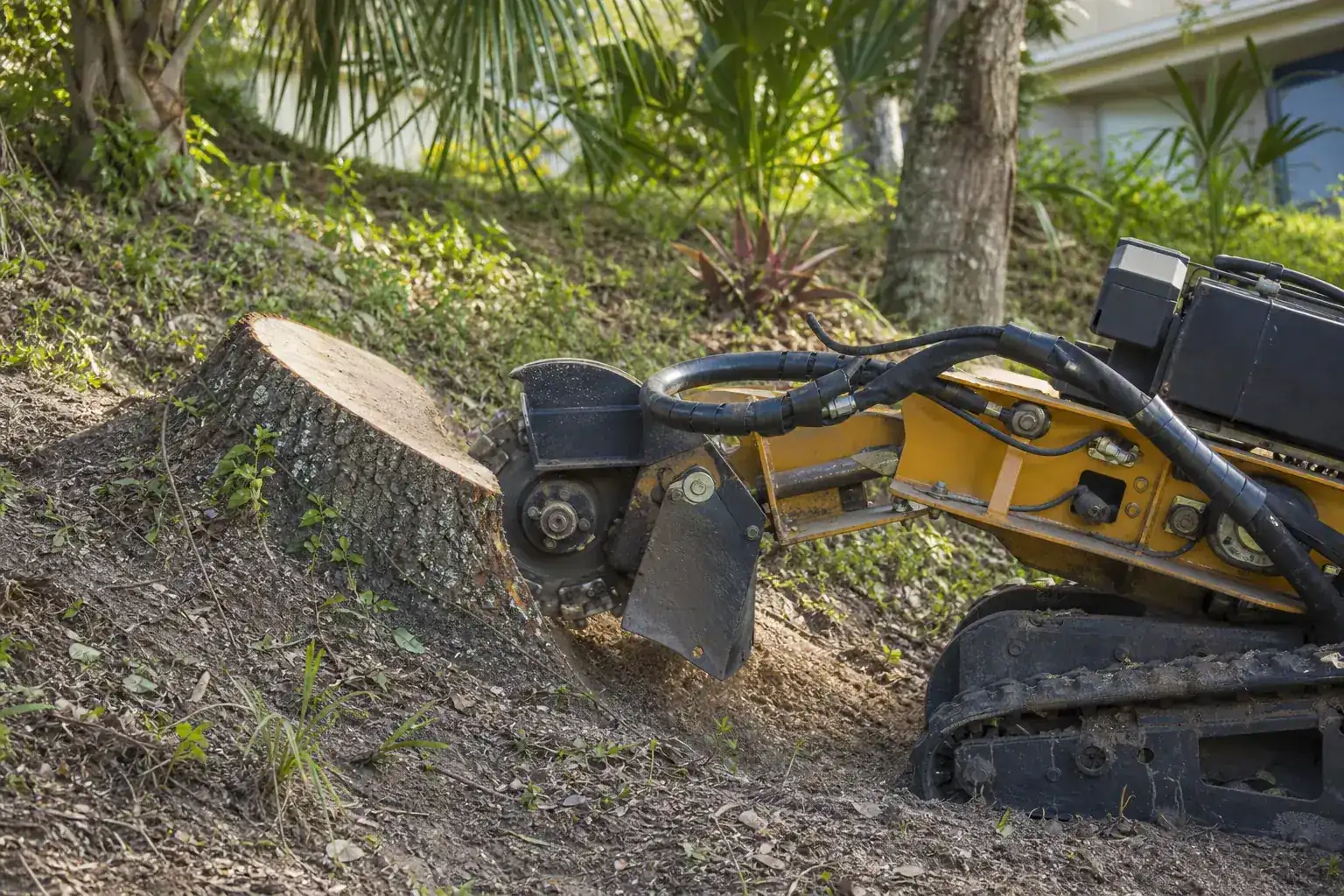
The steepness of the grade is only one consideration. Soft soil may shift beneath equipment, especially after rain. Loose sand can reduce traction, while exposed roots, landscape edging, irrigation components, and retaining walls may limit safe positioning.
The stump's location on the slope also matters. A stump near the top of an embankment can be approached differently from one at the bottom of a narrow incline. A stump beside a drop-off, fence, pool enclosure, or structure may require additional planning or a different equipment approach.
What professionals evaluate before grinding
A tree service should inspect the work area rather than considering only the visible stump. The assessment helps identify access restrictions and site conditions that may affect the grinding plan.
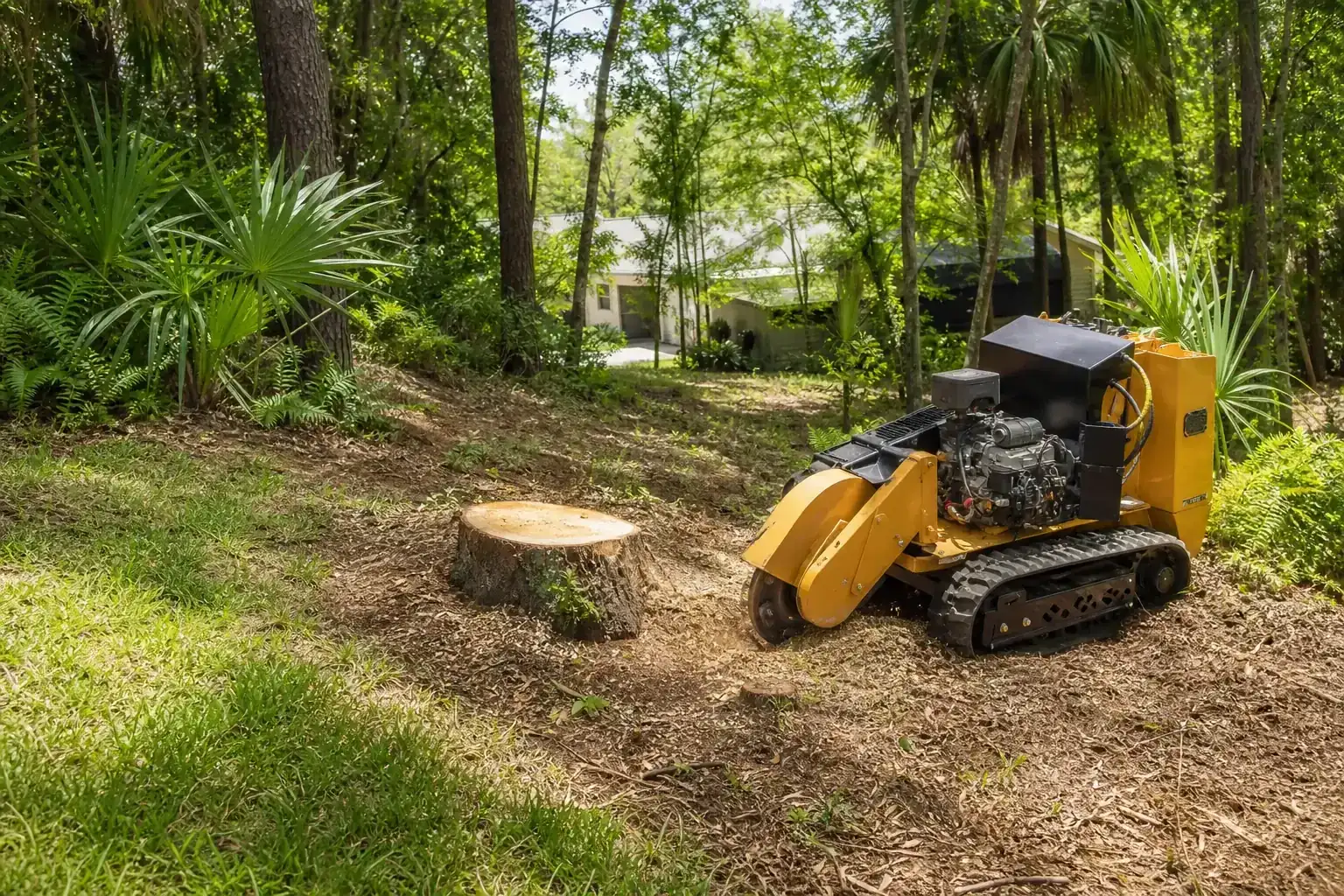
Important factors include:
- Slope direction and severity: The operator needs to understand how the ground falls away around the stump and where stable positioning may be possible.
- Soil condition: Saturated, sandy, eroded, or recently disturbed soil may not support equipment in the same way as firm ground.
- Access width: Gates, paths, air-conditioning units, fences, and planted beds can affect which machine can reach the site.
- Root flare and surface roots: Large roots may extend downhill or cross areas used for walking, mowing, or drainage.
- Nearby obstacles: Retaining walls, foundations, pavement, utilities, irrigation, and landscape lighting require careful consideration.
- Desired grinding depth: The intended use of the area influences how much of the stump and accessible roots should be addressed.
- Drainage patterns: Removing wood and roots can change how loose soil behaves during heavy Florida rain.
- Debris management: Wood chips need to be contained so they do not wash downhill or block a swale or drain.
Underground utilities should be located through the appropriate utility-marking process before digging or grinding near suspected lines. Private irrigation, lighting, or other property-installed systems may require separate identification by the owner or an appropriate professional.
Preparing a sloped Florida yard
Good preparation reduces delays and protects nearby property. Start by clearing movable furniture, planters, toys, hoses, and decorations from the access route and work zone. Keep children and pets indoors or well away from the operation.
Point out irrigation heads, valve boxes, shallow drain lines, septic components, landscape lighting, and other known features. These items may be difficult to see under grass, mulch, or leaves. Avoid assuming that an operator can identify every private underground component from the surface.
If the yard is wet, discuss conditions before the appointment. Florida rain can quickly soften a slope, create ruts, and make machine positioning less stable. Rescheduling may be appropriate when the ground cannot support the planned equipment safely.
Provide access through gates and unlock any areas needed for entry. If neighboring property appears necessary for access, obtain permission before work is scheduled. Homeowners should also confirm any relevant city, county, community association, or property requirements that may apply to tree work and equipment access.
Grinding depth, roots, and erosion concerns
Grinding does not pull the entire root system from the ground. It reduces the stump and selected accessible roots to a planned depth. Remaining roots usually stay in the soil and break down over time.
On a slope, removing every visible root may not be desirable. Roots can contribute to soil structure, even after a tree has been removed. Aggressively disturbing the downhill side of a stump could loosen soil or create a channel for runoff. The appropriate approach depends on the grade, soil, root pattern, and future use of the site.
Tell the tree service whether the area will become lawn, a planting bed, a path, or part of another landscaping project. A shallow depression filled mostly with fresh chips may settle differently from surrounding mineral soil. Wood chips can be useful as mulch, but they are generally not a direct substitute for suitable soil where turf or new plants will be installed.
After grinding, monitor the area during rainfall. Look for soil movement, pooling water, exposed roots, or chips washing downhill. Promptly correcting small drainage or settlement issues can help prevent a larger washout.
What happens to the chips and disturbed area
Stump grinding creates a mixture of wood chips, soil, and fine root material. On flat ground, this material may remain in a mound temporarily. On a hill, containment and cleanup deserve more attention because loose debris can migrate with runoff.
Discuss whether chips will be left, spread, or removed from the immediate area. If some material stays, it should not obstruct drainage features or be piled against structures, tree trunks, or retaining walls. The site may need additional soil after the debris settles, depending on its intended use.
When the stump is part of a larger project, coordinated services may help simplify site planning. Florida Foliage provides stump grinding as well as tree removal, tree trimming, canopy thinning, crown reduction, land and lot clearing, brush hogging, arborist reports and tree inspections, and other listed tree services. The correct sequence depends on the property and project goals.
When a broader tree assessment is helpful
A stump on a slope can be a symptom of a wider concern. The removed tree may have left erosion, exposed adjacent roots, altered sunlight, or changed wind exposure for nearby trees. An arborist report or tree inspection may be useful when remaining trees lean over the slope, show root damage, or have recently been affected by storms.
Properties with difficult access may also require planning beyond standard removal methods. Depending on the tree and location, services such as crane tree removal, emergency and hurricane tree removal, commercial tree services, or HOA and condo tree services may be relevant. Each site should be evaluated individually rather than assuming the same method works everywhere.
Questions to ask before scheduling
Ask how the crew plans to access the stump, protect the slope, manage chips, and address visible surface roots. Clarify the approximate work zone and whether gates, fencing, or landscaping could affect entry.
It is also helpful to discuss recent rain, known underground features, drainage concerns, and the intended use of the space. Clear information allows the service provider to select an appropriate approach and explain realistic limits before equipment arrives.
For help evaluating stump grinding on a sloped yard in Florida, contact Florida Foliage at (386) 481-7913. A site-specific conversation can clarify access, terrain, root, and cleanup considerations without rushing the decision.
Call (386) 481-7913 to talk through next steps.