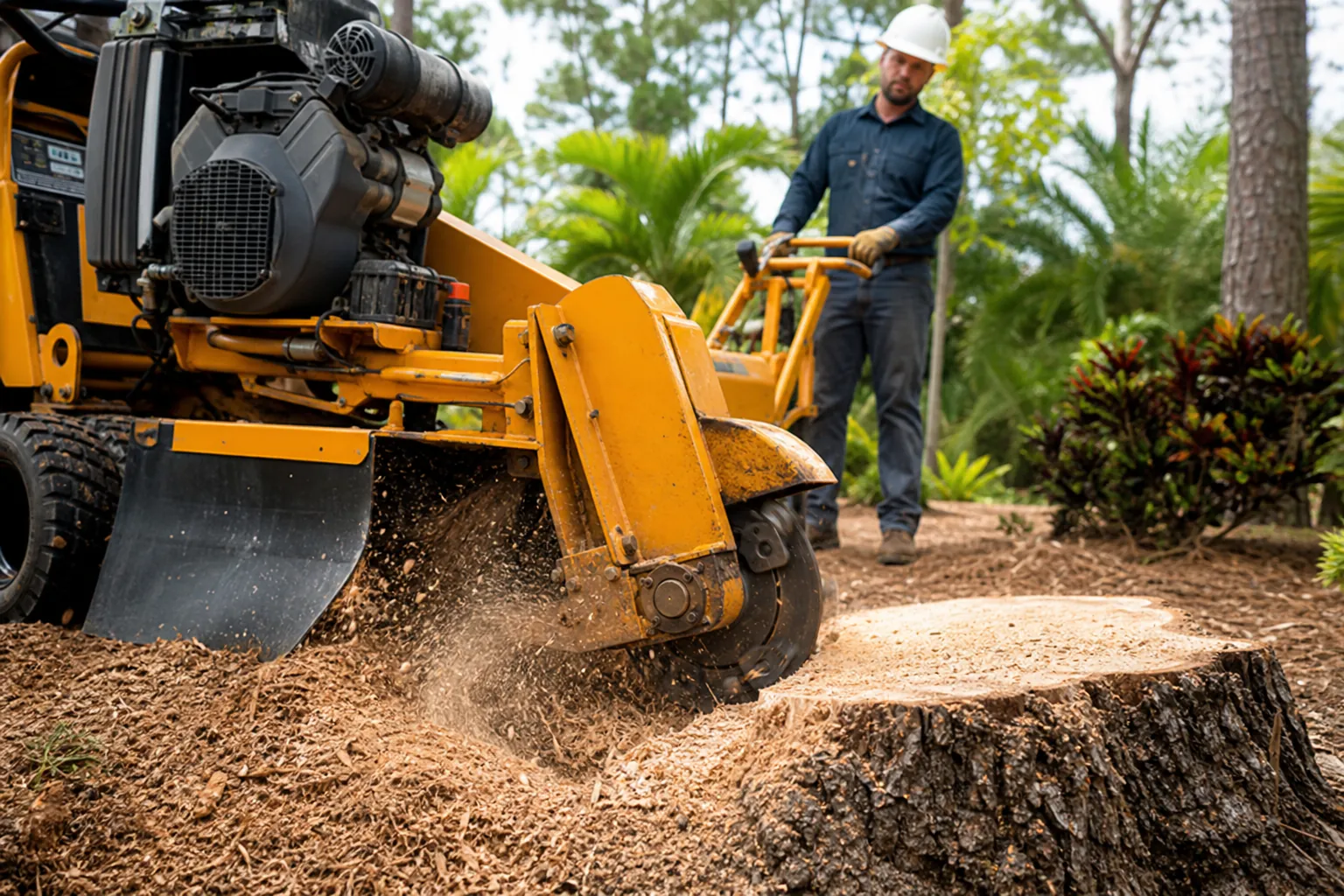
After tree removal, the remaining stump can become more than an obstacle in the yard. In Florida's warm, humid environment, decaying wood may attract insects and hold moisture near the soil. That often leads property owners to ask whether stump grinding helps reduce termite concerns.
The short answer is that grinding removes much of the accessible wood termites could use, but it is not a termite treatment. Understanding what remains underground, how to manage the grindings, and what warning signs to watch can help you make informed decisions about your property.
Why Old Stumps Can Attract Termites
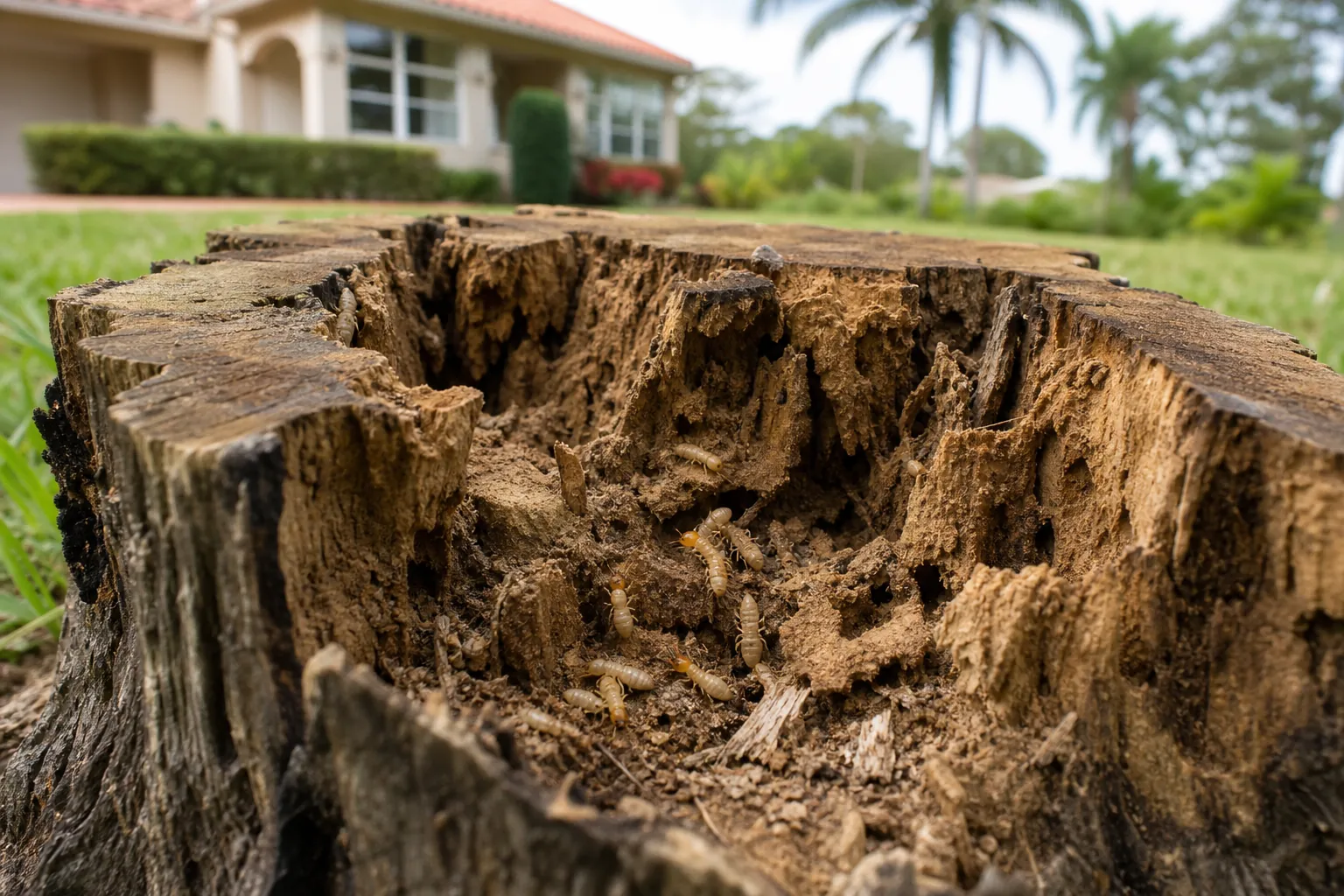
Termites feed on cellulose, a natural material found in wood. A dead stump, buried roots, fallen branches, and other woody debris can provide a food source. Moisture and soil contact can make deteriorating wood especially appealing to subterranean termites.
Finding termites in a stump does not automatically mean they have entered a nearby building. Termites are naturally present in many Florida environments and can forage through soil over significant areas. However, leaving decaying wood close to a house, garage, fence, or other structure may create unnecessary conditions that deserve attention.
Stumps can also make routine inspection difficult. Grass, vines, mulch, and shoots may conceal the wood, while a hollow or softened stump can hold water. Removing the visible stump makes the area easier to maintain and monitor.
What Stump Grinding Removes And What It Leaves
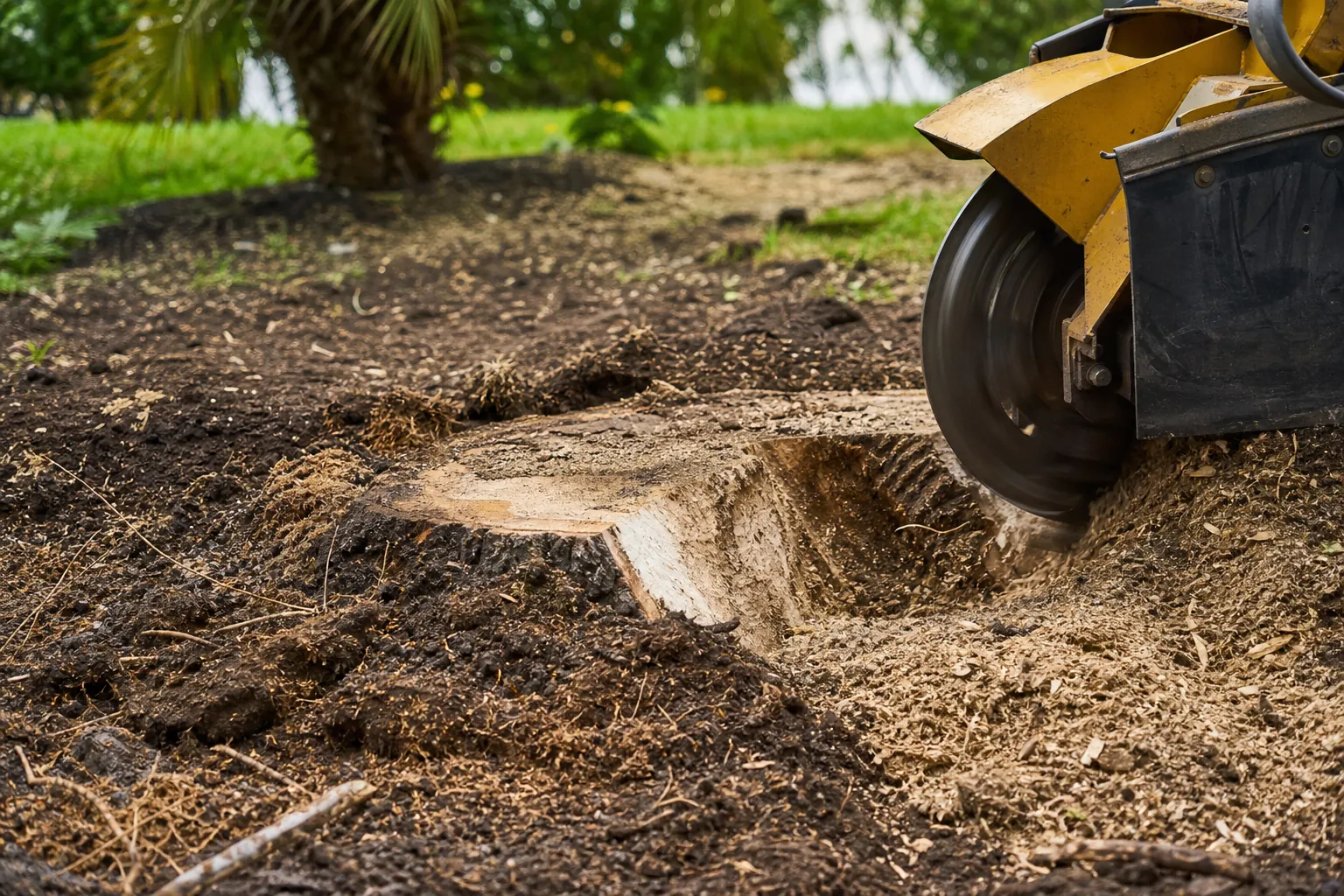
Stump grinding uses specialized equipment to reduce the stump and portions of the upper root flare into small wood chips. The work typically brings the remaining stump below the surrounding grade so the area can be cleaned up, filled, and restored.
Grinding is different from pulling out the entire root system. Most tree roots remain underground and gradually decompose. Large surface roots may be addressed when accessible and appropriate, but deep or widely spreading roots generally stay in place. Those buried roots can remain a cellulose source as they decay.
This distinction is important when discussing stump grinding termite concerns in Florida. Grinding greatly reduces the concentrated mass of dead wood at the surface, but it does not create a termite-proof zone. If active termites are discovered, a licensed pest control professional should evaluate the infestation and recommend any necessary treatment. An arborist or tree service professional addresses the stump and surrounding vegetation, not structural pest control.
How To Manage Grindings And The Finished Area
Stump grinding creates a mixture of wood chips and soil. Some material may be useful as mulch in appropriate landscape areas, but piling fresh grindings against a building is not advisable. Thick layers can retain moisture, hide insect activity, and reduce visibility along the foundation.
After grinding, practical site care includes:
- Remove excess chips: Clear surplus grindings rather than leaving a deep, damp mound over the former stump.
- Keep wood away from structures: Do not stack grindings, firewood, branches, or logs against exterior walls or foundations.
- Restore drainage: Fill and grade the depression so water does not collect after rain or irrigation.
- Maintain inspection access: Keep vegetation and mulch managed near the building so exposed foundation areas remain visible.
- Watch for settling: As underground roots decompose, the soil may sink and require additional clean fill.
- Remove related debris: Pick up loose limbs, root pieces, and other dead wood left around the work area.
- Monitor regrowth: Some species may send up sprouts from remaining roots and require follow-up care.
If you plan to replant, consider the old root system, available soil volume, drainage, and the mature size of the new plant. Planting a new tree directly in the same spot may be difficult because remaining roots and chips can affect soil conditions. A professional tree inspection can help identify a more suitable location.
Signs That Call For Closer Inspection
Termites can be difficult to identify without training, and several insects found in stumps are harmless decomposers. Carpenter ants, beetle larvae, and other organisms may occupy damp wood without being termites. Avoid relying only on the presence of insects as proof of a structural problem.
Warning signs that merit a pest control evaluation may include mud tubes on a foundation, winged insects emerging indoors, discarded wings near doors or windows, and wood that sounds hollow or appears damaged. Termites discovered during stump grinding are also worth documenting, particularly when the stump is near a structure.
Tree-related conditions may need separate professional attention. A leaning dead tree, cracked trunk, hanging limb, or root failure can create an immediate safety concern. Florida Foliage provides tree removal, tree trimming, emergency and hurricane tree removal, crane tree removal, canopy thinning, crown reduction, and arborist reports and tree inspections. These services address tree condition and site safety rather than termite treatment.
When Stump Grinding Makes Practical Sense
Termite concerns are only one reason to grind a stump. A stump can interfere with mowing, create a trip hazard, obstruct landscaping, or prevent better use of an outdoor area. On commercial, HOA, and condo properties, old stumps can also complicate grounds maintenance and affect the appearance of shared spaces.
Timing depends on access, stump size, nearby utilities, surrounding hardscape, and the condition of the site. Before work begins, identify irrigation components, lighting wires, septic features, and other hidden obstacles. Utility locating and site preparation may be needed. Property owners should also confirm any applicable requirements with their city or county, especially when tree removal or work in regulated areas is involved.
For larger projects, stump grinding may be coordinated with land and lot clearing or brush hogging. Commercial tree services and HOA and condo tree services can also help organize work across multiple areas while accounting for traffic, pedestrians, buildings, and landscape features.
A Balanced Approach To Wood And Moisture
Reducing termite-friendly conditions requires more than removing one stump. Manage moisture, avoid wood-to-structure contact, keep dead material from accumulating, and maintain clear access for inspections. Stump grinding can be a useful part of that approach because it removes a substantial piece of decaying wood and improves access to the area.
If a stump is close to your home or is showing signs of decay, Florida Foliage can assess access and explain the stump grinding process. For calm, practical guidance on tree and stump care, call (386) 481-7913. If termite activity is suspected, pair tree service guidance with an evaluation from a properly licensed pest control professional.
Call (386) 481-7913 to talk through next steps.