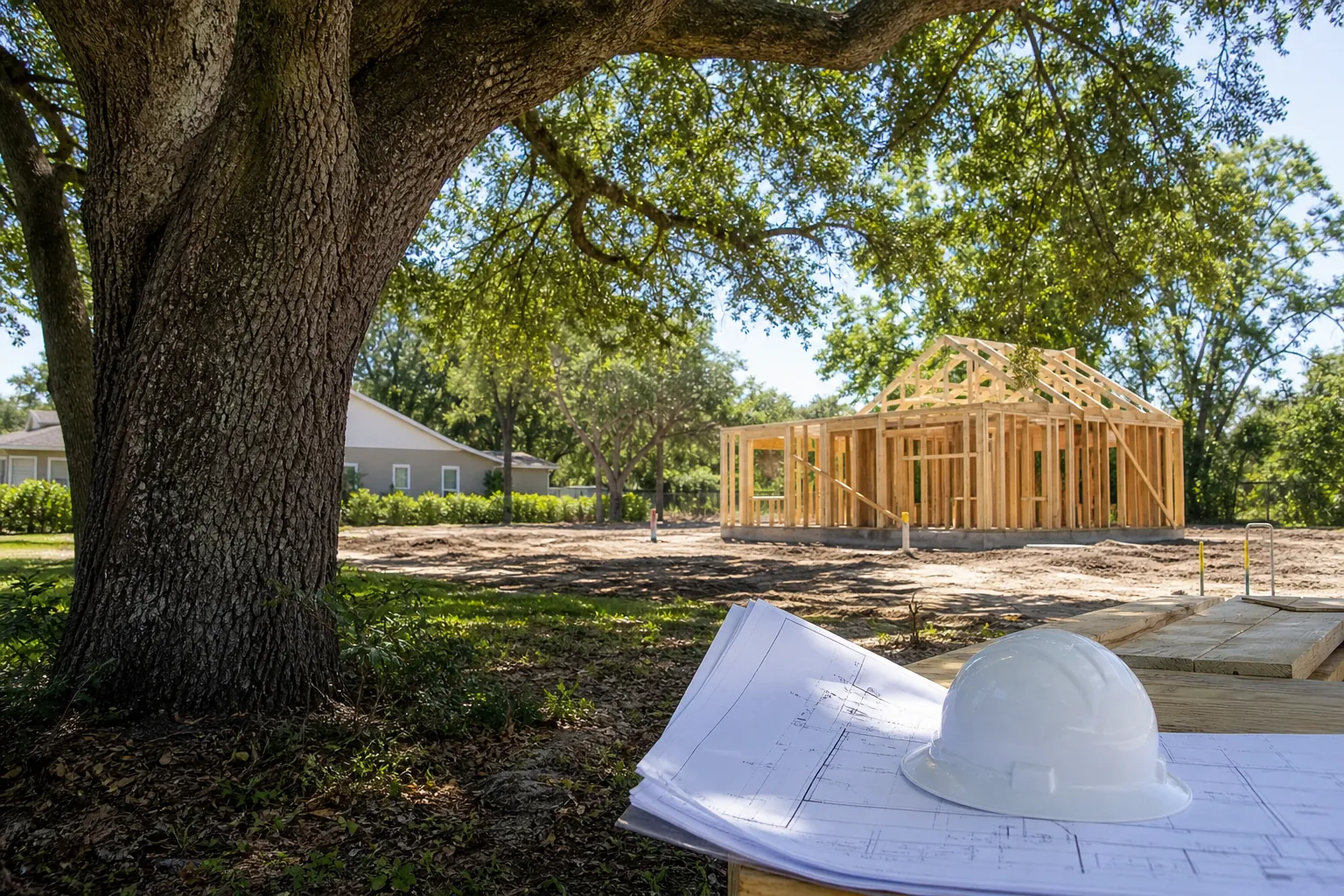
Construction can change a property long before walls go up or concrete is poured. Survey crews, heavy equipment, material storage, grading, and repeated foot traffic may all affect nearby trees. A tree that appears healthy from a distance can have structural defects, limited root space, or stress that should be considered during site planning.
A professional tree inspection before construction in DeLand helps property owners, builders, HOAs, and commercial managers understand which trees may be suitable to retain and which conditions deserve attention. Florida Foliage provides arborist reports and tree inspections that support practical conversations about access, tree protection, trimming, removal, and site preparation.
Why Trees Should Be Evaluated Early
The best time to evaluate trees is before equipment arrives. Early review gives the project team more flexibility to adjust access routes, staging areas, grading plans, or the footprint of work. Waiting until roots have been cut or branches have been struck can limit the available options.
An inspection considers more than whether a tree has green leaves. The evaluator may look at species characteristics, trunk condition, branch structure, visible root conditions, canopy balance, lean, cavities, decay indicators, and conflicts with the proposed work. Site drainage and recent land changes may also provide useful context.
Not every visible defect means a tree must be removed. Likewise, a full canopy does not necessarily indicate sound structure. The goal is to document observable conditions and help the property owner make informed decisions before construction activity changes the site.
How Construction Can Affect Established Trees
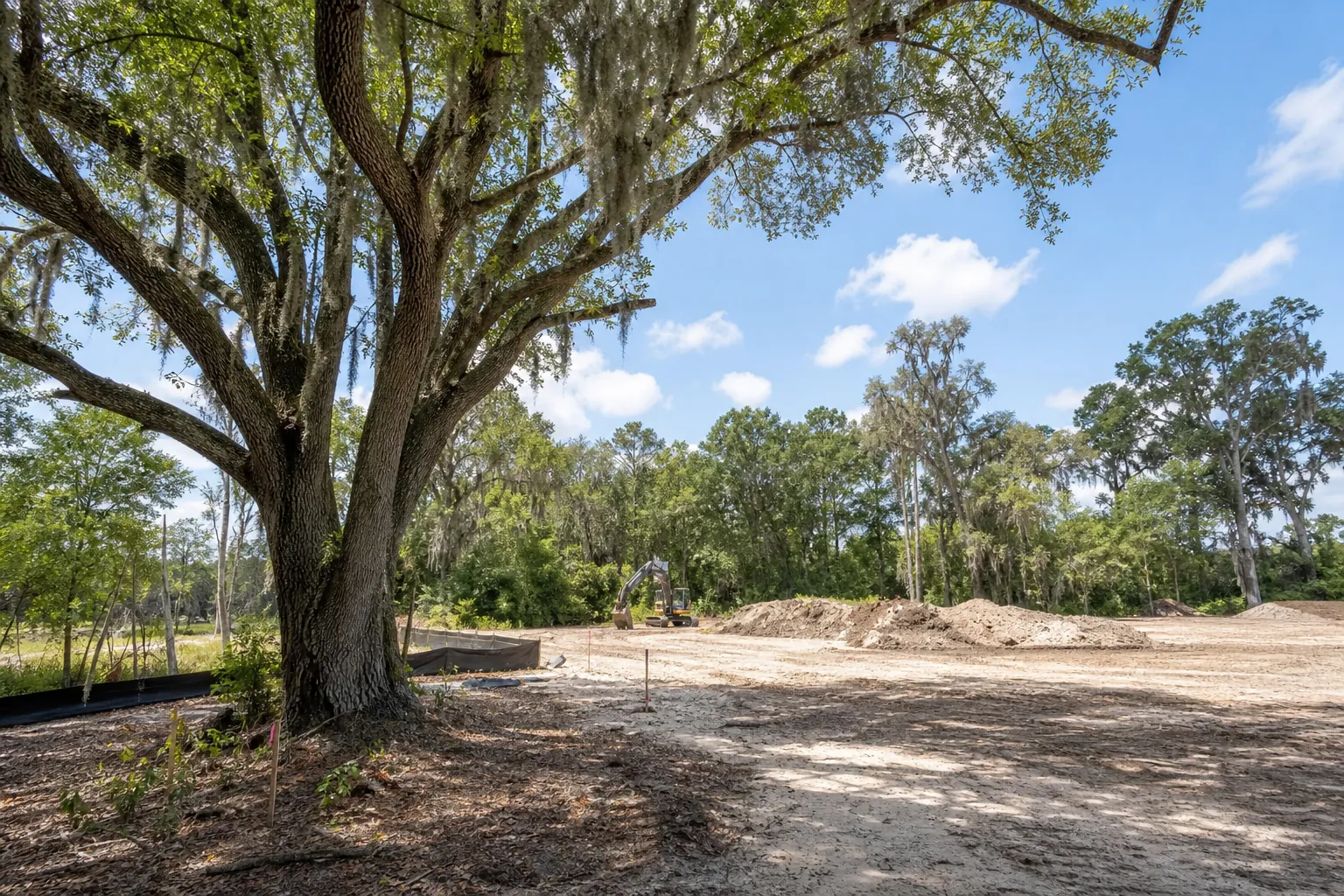
Tree roots often extend well beyond the area directly beneath the canopy. Many roots responsible for absorbing water and nutrients are relatively close to the soil surface, where they can be affected by excavation, trenching, soil compaction, and grade changes.
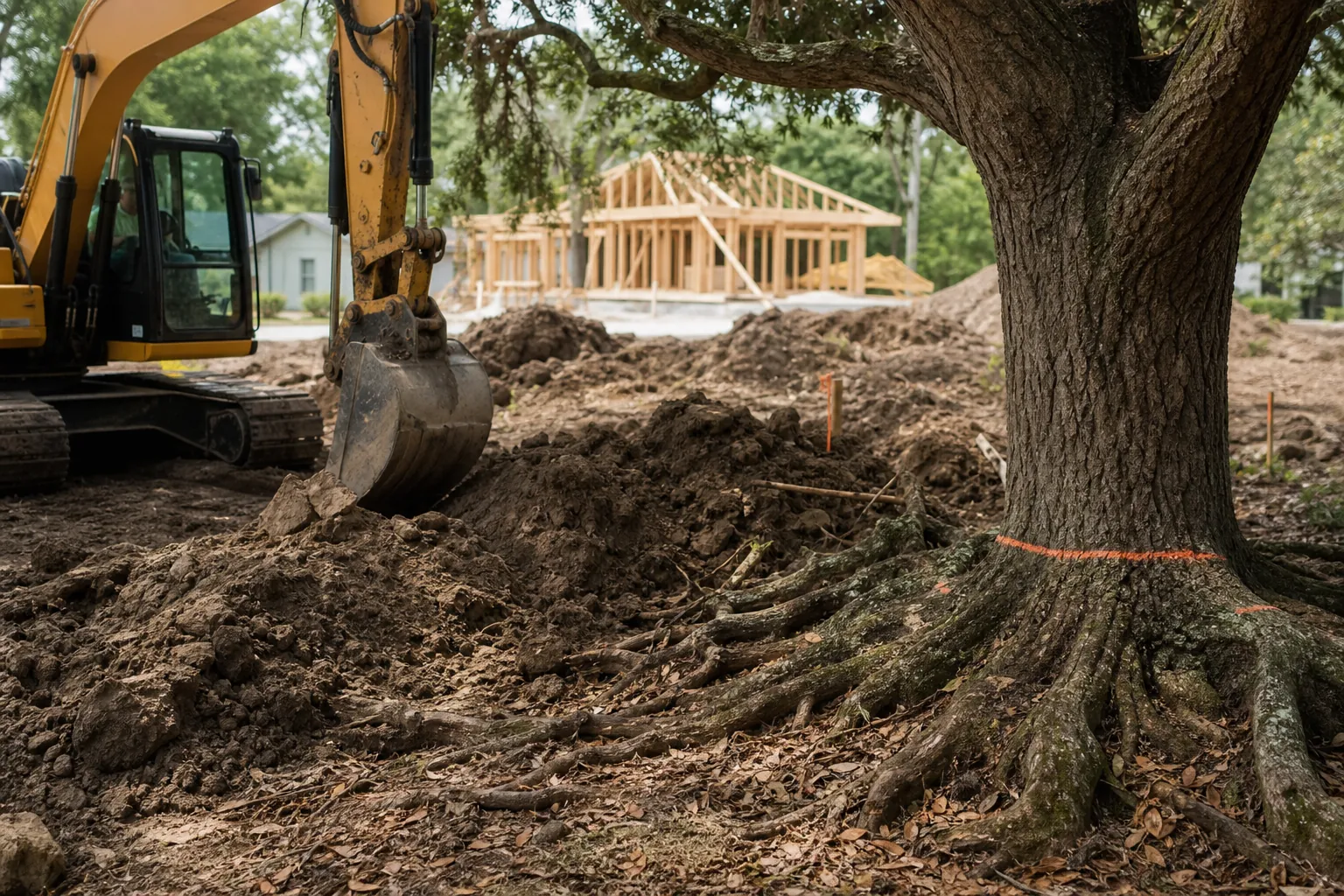
Heavy machinery driven repeatedly over a root area can compress soil and reduce the movement of air and water. Adding fill soil may alter oxygen availability, while removing soil can expose or sever roots. Changes to drainage can leave a tree receiving too much or too little water after the project is complete.
Above ground, construction vehicles may damage trunks or low limbs. New buildings, driveways, signs, lighting, and utility routes can also create conflicts that were not obvious during preliminary planning. Recognizing these issues early can help teams coordinate work more carefully.
What To Prepare For The Inspection
Useful information allows the inspection to focus on the actual construction plan. Final documents are not always necessary, but even a preliminary site layout can clarify where excavation, access, utilities, and structures may be located.
Before the visit, gather any materials that are available and identify your main concerns. Helpful items may include:
- A current survey or basic sketch showing property features and tree locations
- Preliminary plans for buildings, additions, driveways, parking, drainage, or utilities
- Proposed access points for cranes, trucks, loaders, and other equipment
- Locations intended for soil piles, dumpsters, building materials, or temporary parking
- Known tree history, including previous storm damage, trimming, or nearby excavation
- Photos of cracks, cavities, dead branches, exposed roots, mushrooms, or changing lean
- Questions about trees that are especially important for shade, appearance, or screening
- Information about neighboring trees whose roots or branches extend into the work area
Clear communication among the owner, contractor, designer, and tree professional is valuable. If the project changes, the tree-related recommendations may need to be reviewed again.
Possible Recommendations After A Site Review
Recommendations depend on the tree, the site, and the proposed construction. Some trees may be reasonable candidates for retention if work zones and access can be arranged to reduce disturbance. Others may have defects or unavoidable conflicts that call for a different approach.
Tree trimming may be considered when branches interfere with safe equipment access or the proposed structure. Canopy thinning can address selected branch density when appropriate, while crown reduction may help manage specific clearance or structural concerns. These methods are not interchangeable, and excessive pruning can create additional stress.
Tree removal may be discussed when a tree is unsuitable for retention because of its condition, location, or direct conflict with essential construction. Crane tree removal may be appropriate where space is restricted or nearby structures require controlled handling. Stump grinding can help prepare certain areas for later use, although underground utilities and planned grades should be considered.
For larger parcels, land and lot clearing or brush hogging may support site preparation. Those services should still be coordinated with identified trees, boundaries, access needs, and erosion or drainage planning. Commercial tree services and HOA and condo tree services can also help property managers organize work across shared or high-traffic areas.
Local Approval And Documentation Considerations
Tree-related requirements can vary by property location, project type, zoning, and the agencies involved. A project in DeLand may involve city or county review, depending on jurisdiction and scope. Requirements may also change, so property owners should confirm current rules directly with the appropriate city or county department before removing trees or beginning regulated site work.
An arborist report can document observed tree and site conditions for planning or review. However, an inspection does not replace an official permit decision, boundary survey, engineering assessment, or utility locate. Ask the relevant authority what documents are needed for your specific project and when they must be submitted.
Protecting Trees During Active Construction
Retained trees need more than a verbal instruction to avoid damage. Protection measures should be visible, communicated to crews, and maintained throughout the job. A designated protection area can help keep vehicles, stored materials, washout, fuel, and excavated soil away from sensitive roots and trunks.
Crews should know whom to contact if roots are exposed, branches are struck, or the plan changes. Unplanned root cutting or aggressive branch removal can affect tree stability and health. Prompt evaluation is especially important after storm damage. Florida Foliage also provides emergency and hurricane tree removal when storm-affected trees require urgent professional attention.
Post-construction observation matters as well. Stress symptoms may not appear immediately, particularly after root disturbance or drainage changes. Watching canopy density, leaf condition, branch dieback, soil moisture patterns, and new fungal growth can help identify concerns that deserve follow-up.
Start With A Clear View Of The Site
Thoughtful tree planning can reduce surprises and help construction teams work around established vegetation more responsibly. Whether the project involves a home addition, commercial property, condo community, HOA grounds, or a larger lot, an early inspection provides useful information before the site becomes crowded with equipment and materials.
To discuss arborist reports and tree inspections for a DeLand construction site, call Florida Foliage at (386) 481-7913. The team can review your concerns and help you determine an appropriate next step for the trees and proposed work.
Call (386) 481-7913 to talk through next steps.