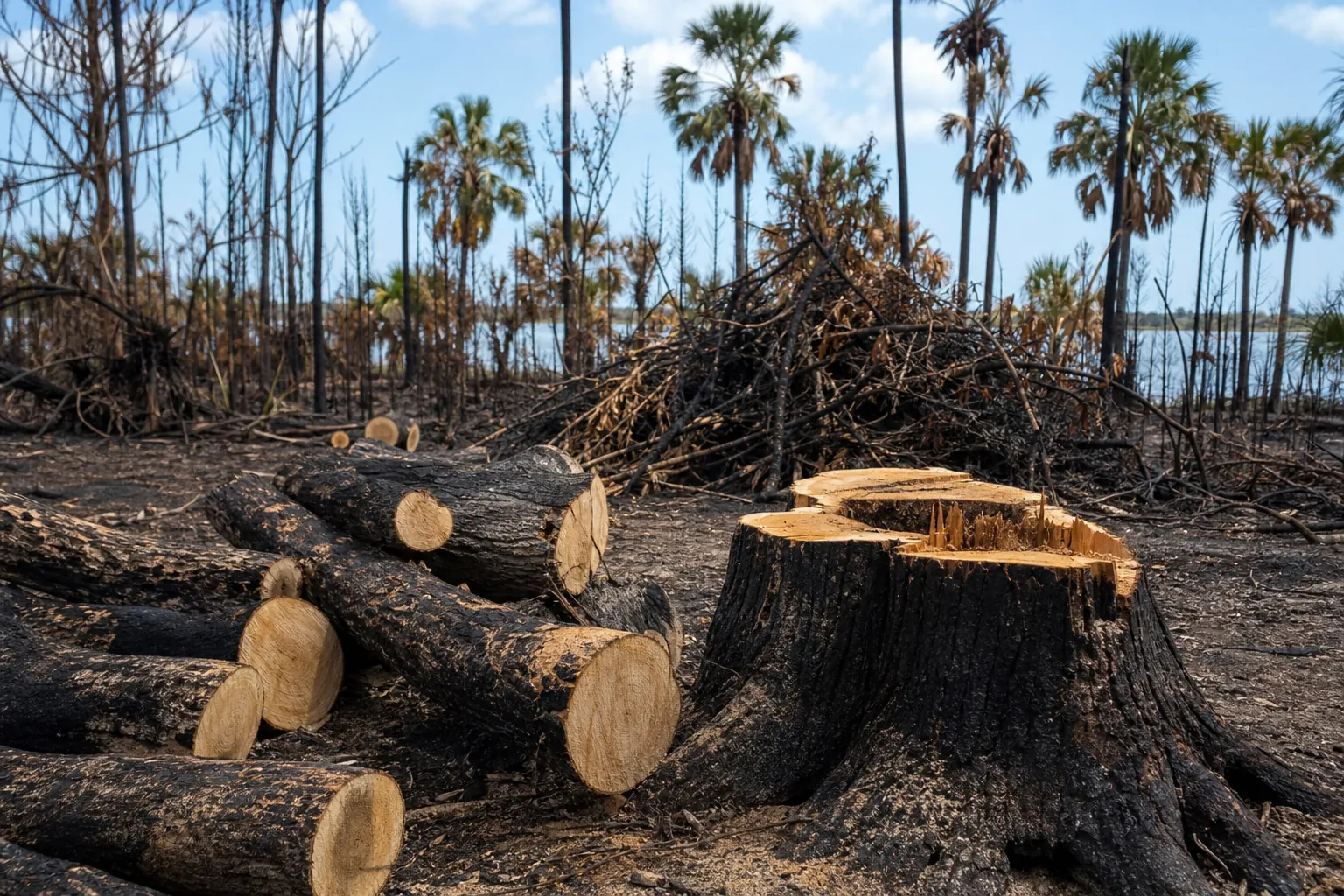
A property fire can leave trees looking stable even when heat has weakened their trunks, roots, or major limbs. Some damage is obvious, such as a split trunk or burned canopy. Other problems may develop below the bark or underground, making rushed decisions unsafe.
Tree removal after fire damage should begin with a careful review of the site. In Florida, heat exposure may combine with wind, heavy rain, saturated soil, and hurricane risks. A qualified tree service can help identify immediate hazards, determine whether a tree may be retained, and plan removal when recovery is unlikely.
Keep the fire-damaged area secure
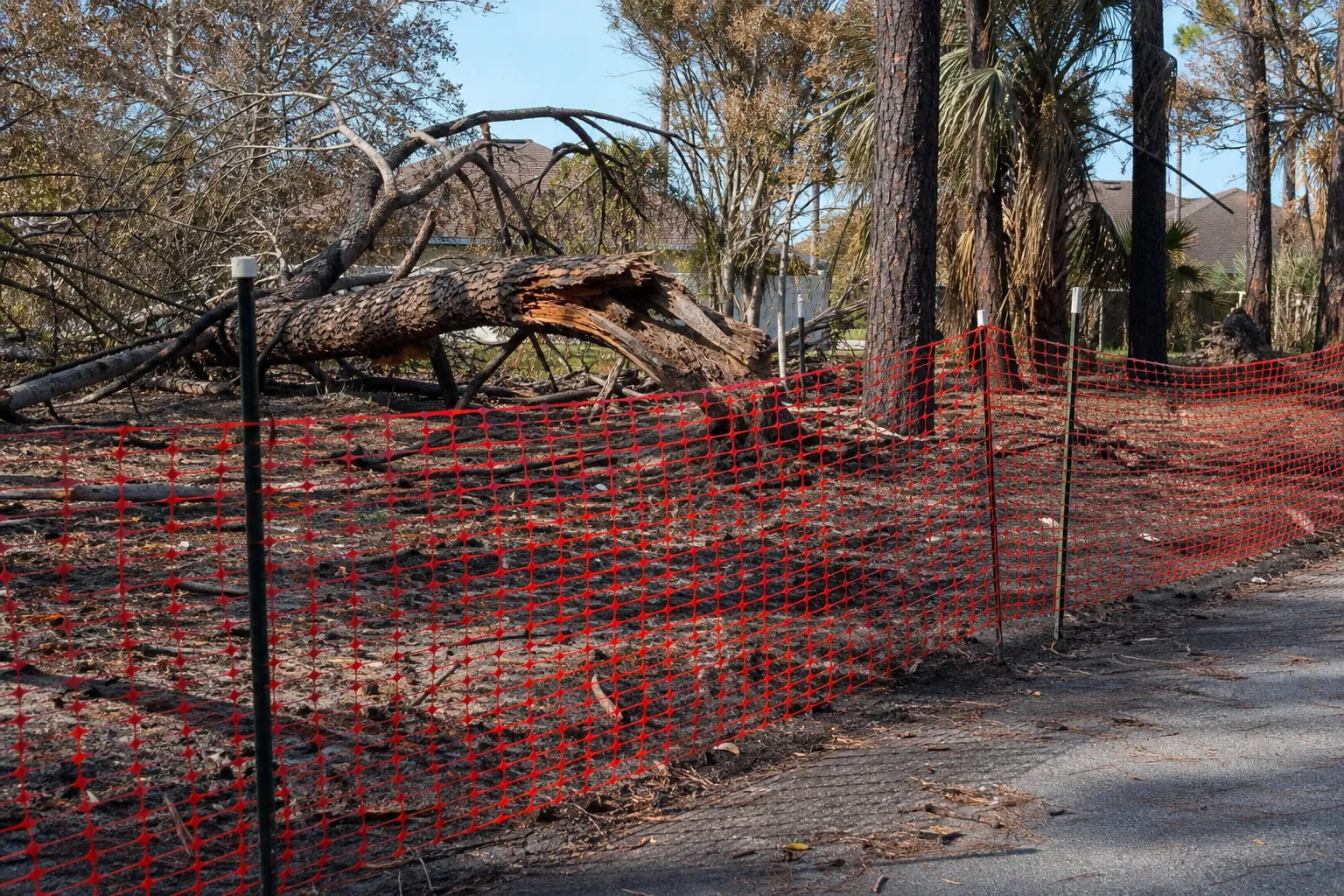
Wait until fire officials or other responding authorities have cleared the property before approaching affected trees. Burned trunks can shed bark, weakened branches may fall without warning, and damaged roots can reduce stability. Smoldering material, utility hazards, and unstable structures may also be present.
Keep people, pets, and vehicles outside the potential fall zone. Do not tie ropes to a burned tree, climb it, or cut hanging limbs yourself. Avoid parking beneath scorched canopies, especially during wind or rain.
If a damaged tree threatens a building, driveway, road, or utility area, contact an experienced provider for emergency tree removal. For utility lines, notify the utility company and follow its directions. Tree crews should not enter an unsafe utility zone without proper coordination.
Arrange a professional tree inspection
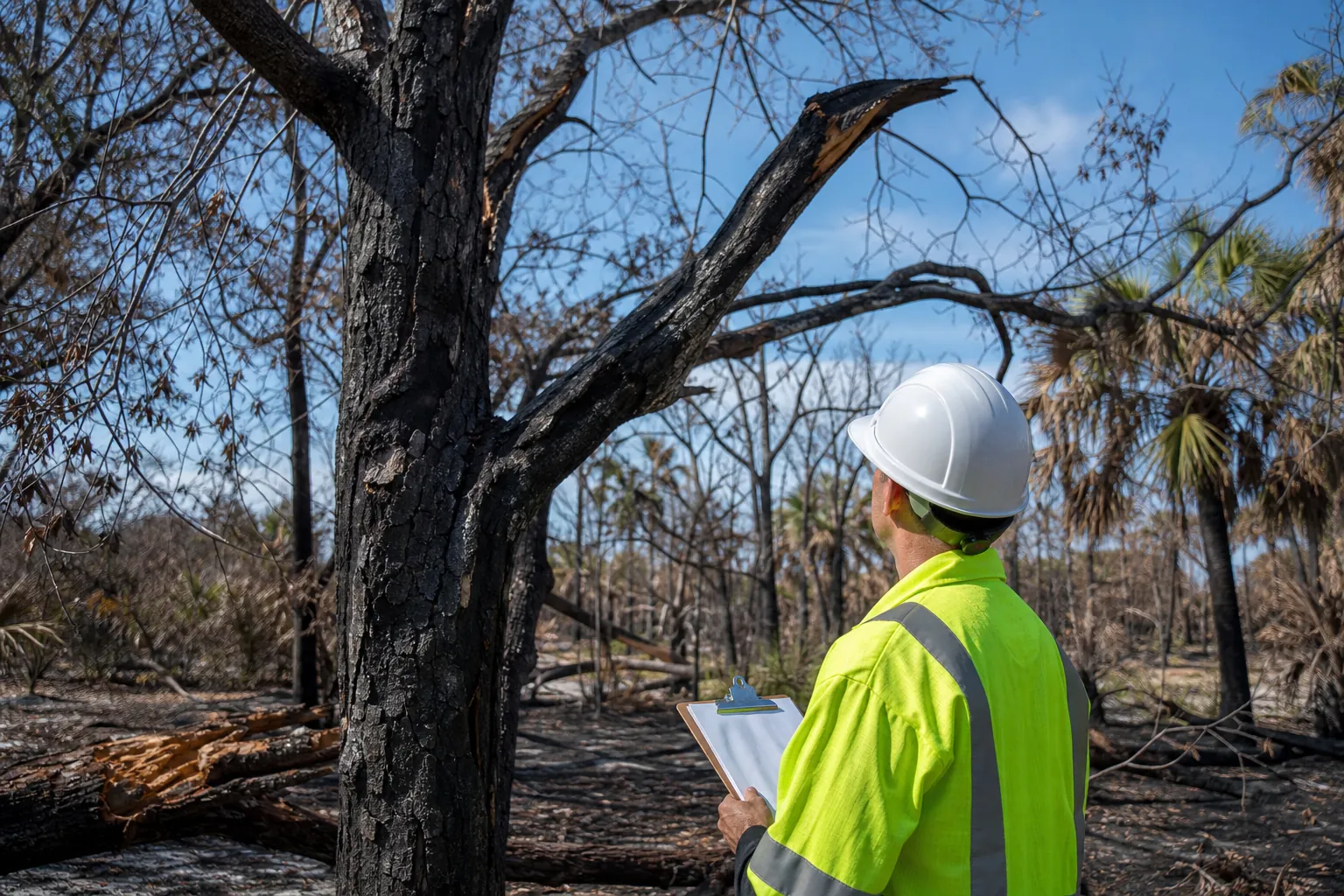
A blackened trunk does not automatically mean a tree must be removed. Bark thickness, species, fire intensity, exposure duration, canopy condition, and root damage can all influence the outcome. An inspection helps separate superficial scorching from structural or biological decline.
During arborist reports and tree inspections, the tree and its surroundings should be considered together. Important warning signs include:
- Deep cracks, splits, cavities, or char extending into structural wood
- Large dead, burned, broken, or hanging branches
- Damage around much of the trunk circumference
- Loose bark with soft, brittle, or hollow wood beneath it
- Exposed, burned, cut, or visibly weakened roots
- New leaning, lifted soil, or cracking near the root plate
- A scorched canopy that fails to produce expected seasonal growth
- Fungal growth, decay, insect activity, or worsening bark loss
- Limited room for the tree to fall without striking nearby targets
Photos taken soon after the fire can be helpful, provided they can be captured from a safe location. Record changes in leaf growth, branch dieback, trunk condition, and lean over time. For insurance documentation, ask the insurer what photographs, reports, or authorization it requires before work begins.
Decide whether removal or monitoring is appropriate
The right response depends on both tree condition and location. A moderately damaged tree in an open area may present a different level of concern than similar damage beside a home, sidewalk, parking area, playground, or busy entrance.
When a tree retains adequate living tissue and structural strength, monitoring may be appropriate. Selective tree trimming can address clearly damaged branches, while crown reduction may reduce specific end weight when suitable for the tree. Canopy thinning must be prescribed carefully because excessive foliage removal adds stress and does not repair burned wood.
A tree may be considered for removal when fire has severely compromised the trunk, major unions, root system, or overall stability. Removal may also be appropriate when progressive decline leaves little viable canopy or when the tree creates an unacceptable risk to occupied areas.
Avoid aggressive pruning simply to make the canopy look cleaner. Leaves support recovery, and unnecessary cuts create additional wounds. Topping should not be treated as a way to save a structurally compromised tree.
Plan a controlled removal process
Fire-damaged wood may behave differently from healthy wood. It can be brittle, hollow, cracked, or unable to support a climber. The crew should select equipment and work methods based on the tree's condition, access, nearby structures, and available drop zone.
Crane tree removal may be useful when sections cannot be lowered or dropped safely through conventional methods. A crane can help manage large pieces in confined settings, but its use depends on site access, ground conditions, overhead obstacles, and the removal plan. The assessment should determine whether climbing, aerial equipment, rigging, or crane support is appropriate.
Before work starts, ask how the crew will establish an exclusion zone, protect nearby property, manage debris, and respond to hidden weakness. Also identify septic components, irrigation lines, fences, landscaping, and other site features that could affect access.
Address the stump and surrounding ground
Removing the trunk does not automatically resolve every site issue. The remaining stump may obstruct repairs, mowing, replanting, or construction. Stump grinding can reduce the visible stump and surface roots, depending on access and future plans for the area.
Tell the tree service about suspected underground utilities and arrange required utility locating before grinding. Private lines, irrigation, lighting, and septic features may require separate identification. If the fire affected a larger wooded area, land and lot clearing or brush hogging may help manage vegetation, but those services should follow a site-specific plan rather than disturb the property unnecessarily.
Do not assume burned debris is safe to spread as mulch. It may contain nails, glass, building residue, or other contaminants from nearby structures. Keep tree debris separate when practical and follow local disposal guidance.
Confirm local requirements before authorizing work
Florida tree requirements vary by city, county, property type, and site conditions. Protected trees, shared property lines, conservation areas, stormwater features, and community rules can affect what documentation or approval is needed. Confirm current requirements directly with the applicable city or county before removal.
HOA and condo tree services may also involve association approval, common-area access, resident notices, or traffic planning. Commercial tree services may require coordination around customers, employees, deliveries, and parking. An arborist report may support decision-making, but property owners should verify what their local authority, insurer, or association requires.
Support the landscape after removal
After the immediate hazard is addressed, inspect nearby trees that were exposed to radiant heat, firefighting activity, soil compaction, or equipment traffic. Damage may not appear at the same time across the site. Schedule follow-up tree inspections if leaves wilt, bark separates, limbs die back, or a tree begins leaning.
Avoid piling soil or mulch against trunks, cutting major roots during repairs, or saturating damaged root zones without a reason. If hurricane season is approaching, review remaining trees for broken limbs and structural concerns. Emergency and hurricane tree removal planning is easier when access routes and priority hazards are identified in advance.
Florida Foliage provides tree removal, tree trimming, stump grinding, crane tree removal, and arborist reports and tree inspections for Florida properties. For calm guidance on a fire-affected tree, call (386) 481-7913 to discuss the site and arrange an appropriate next step.
Call (386) 481-7913 to talk through next steps.