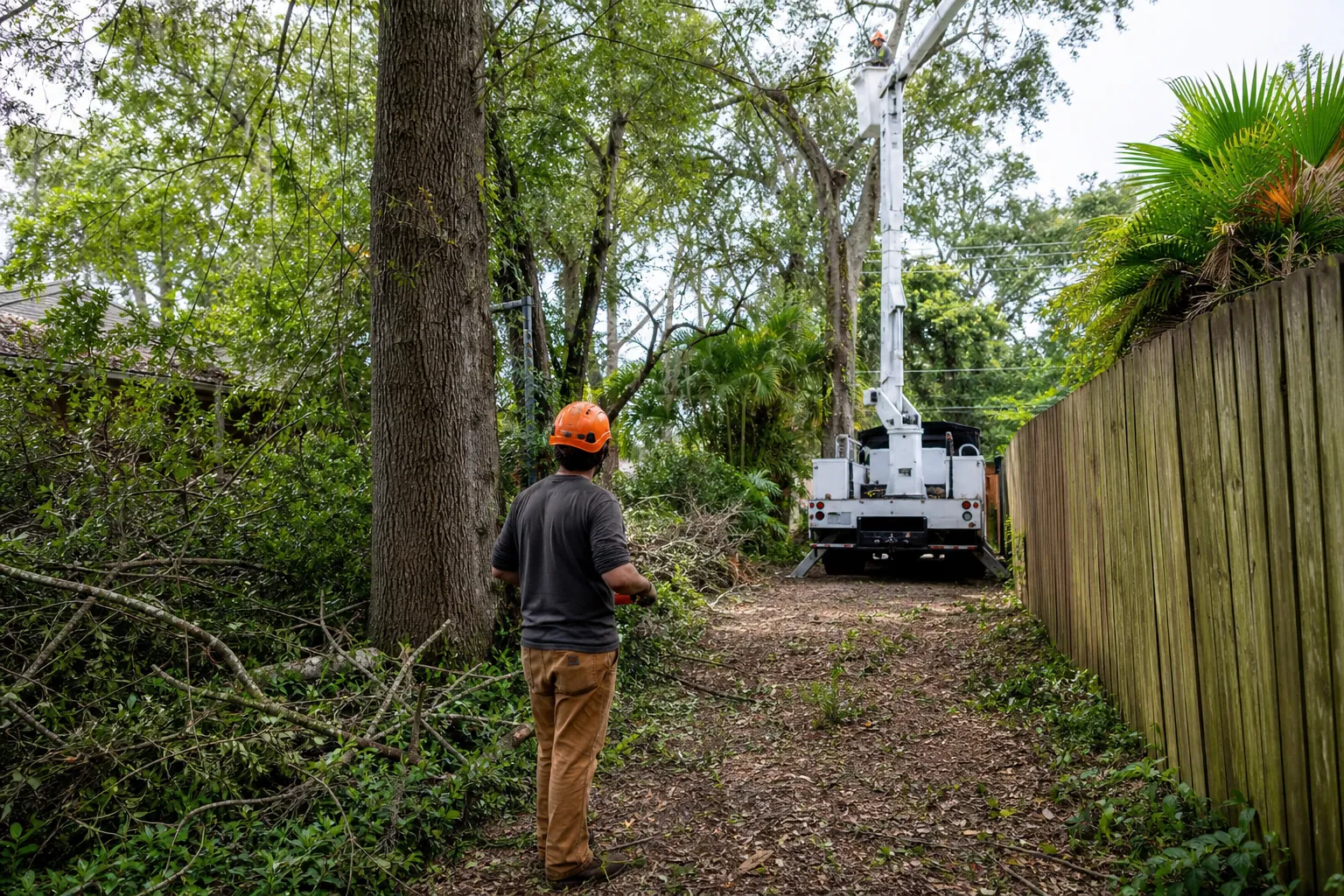
Tree removal is not always as simple as bringing equipment to the trunk. In DeLand, a tree may stand behind a home, beside a drainage corridor, near utility lines, or along a narrow strip shared with neighboring properties. When crews must use or work near an easement, careful planning helps protect people, property, and essential services.
For property owners researching tree removal easement access DeLand, the first step is understanding what the easement allows and whether it provides practical access. A document showing an easement on a survey does not automatically mean tree equipment can travel through it. Ground conditions, gates, overhead clearance, underground utilities, and property rights all matter.
What an easement means for a tree project
An easement generally gives a person, utility, government entity, or association a defined right to use part of a property for a stated purpose. Common examples involve utilities, drainage, access, or shared driveways. The property may still belong to the owner, but use of that area can be restricted.
Before scheduling tree removal, review your survey, deed, association documents, and any recorded easement information available to you. Confirm who has rights to the area and what activities are permitted. If the language is unclear, consider asking a qualified real estate professional or attorney to interpret it.
Local requirements can also affect work near roads, drainage areas, protected trees, or public property. Permit and approval rules vary, so confirm current requirements with the City of DeLand, Volusia County, your utility provider, or another relevant authority before work begins.
Why legal access and physical access are different
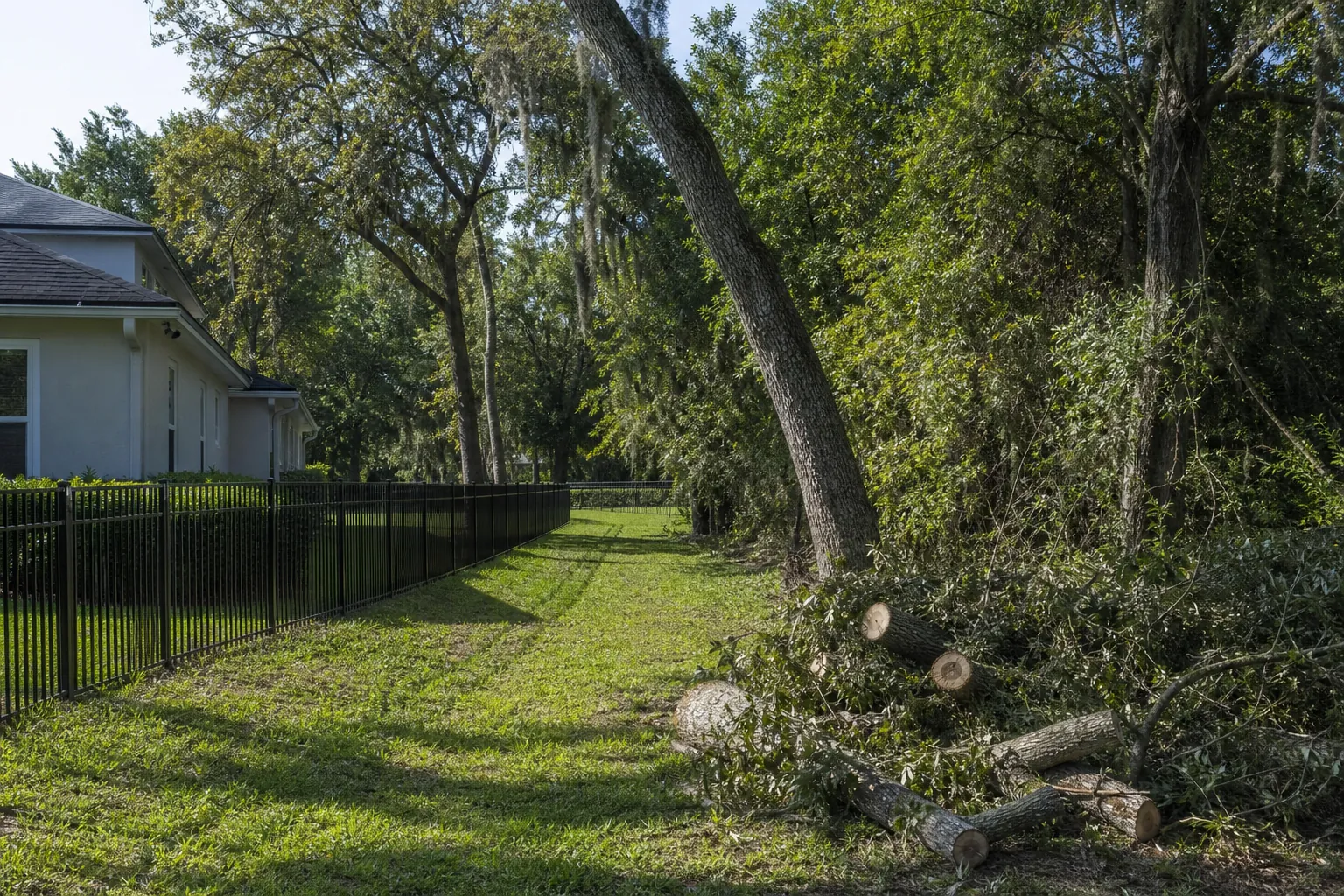
Legal access describes a right to enter or use an area. Physical access describes whether workers and appropriate equipment can safely reach the tree. A narrow side yard may offer a walking route but not enough width for larger machinery. Soft soil may be unable to support equipment without significant disturbance.
A tree inspection should consider the entire route from the street or staging area to the work zone. The crew may need to account for fences, septic components, irrigation, landscaping, air-conditioning units, rooflines, parked vehicles, and low branches. Access planning also includes a safe area for processing and removing debris.
Useful questions for a site review include:
- Who owns the land containing the easement, and who has a right to use it?
- Does the easement language permit the proposed access or tree work?
- Are written approvals needed from a neighbor, HOA, condo association, or utility?
- Is the route wide and tall enough for the selected equipment?
- Are there overhead wires or known underground utilities along the route?
- Could wet ground, slopes, roots, pavers, or drainage features limit movement?
- Where can tree sections and brush be handled without blocking traffic or access?
- Will fences, gates, vehicles, or personal items need to be moved beforehand?
- Can the work be completed from another location with less disruption?
How arborists plan removal in confined areas
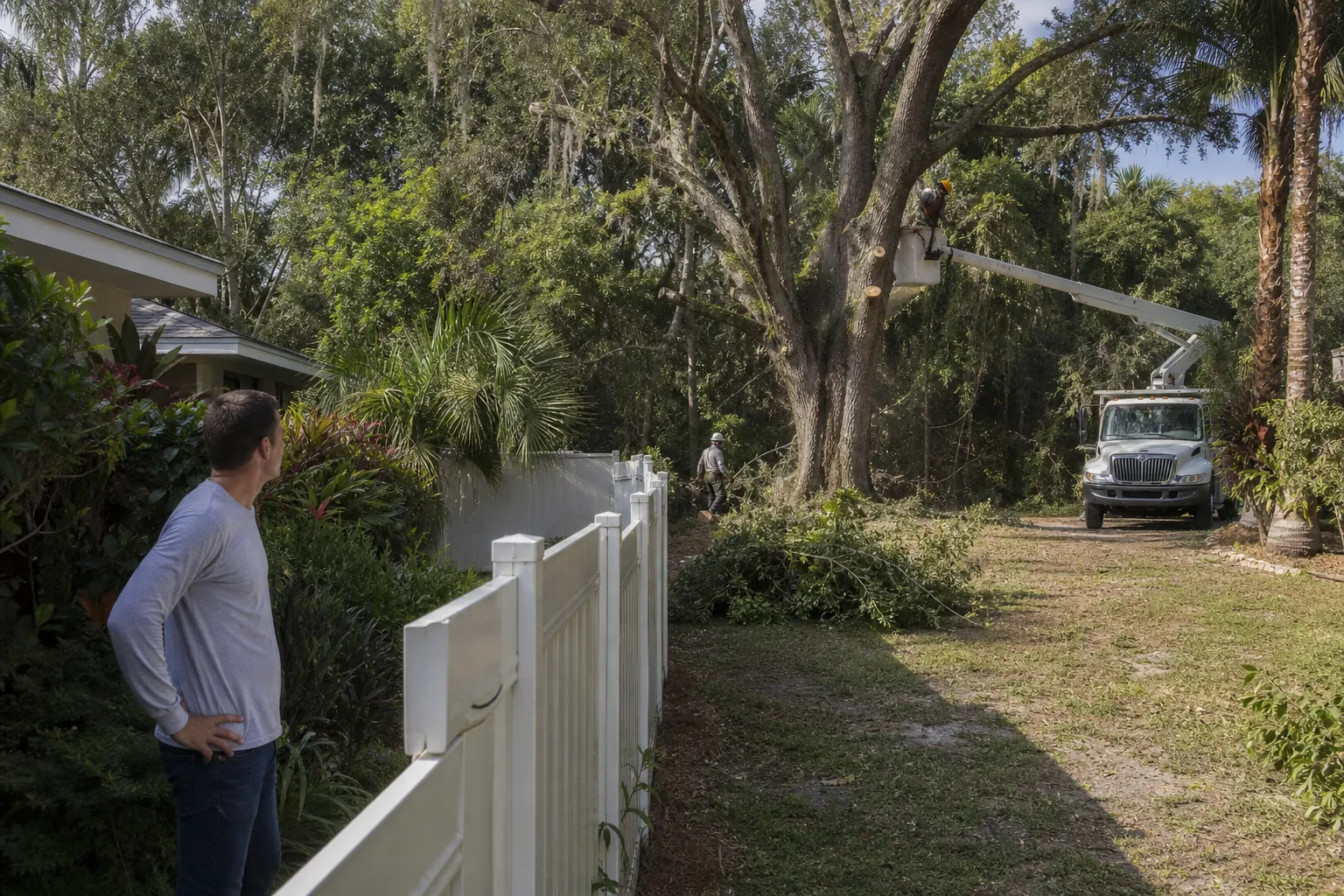
Limited access changes how a tree may be dismantled. Open-space removal may not be appropriate when a tree is close to structures or when the drop zone crosses an easement. Crews may instead remove the canopy in controlled sections and lower material into a designated area.
Crane tree removal can be considered when trees are large, compromised, or difficult to reach from the ground. A crane may lift sections over a structure or other obstacle, but it requires suitable setup space, overhead clearance, and stable ground. The feasibility of this approach depends on actual site conditions.
Canopy thinning or crown reduction may be appropriate when removal is not necessary and the tree can reasonably be managed. Tree trimming should match the tree's structure and condition rather than simply creating clearance. An arborist report or tree inspection can help document visible concerns and support decisions involving property managers, associations, or other stakeholders.
Utilities, drainage, and shared-property concerns
Utility and drainage easements require particular care. Roots may grow around buried infrastructure, while branches can extend toward overhead lines. Property owners should not assume that an easement permits them or a contractor to disturb utility equipment. Contact the relevant utility owner for guidance when work is near its facilities.
Drainage corridors should remain functional. Logs, chips, soil disturbance, or equipment ruts can interfere with water flow. If a planned route crosses a swale or similar feature, discuss how the area will be protected and kept clear.
Communication is equally important when access involves a neighbor, HOA, condo property, or commercial site. Written permission can clarify the approved route, timing, gate access, and expectations for movable obstacles. Florida Foliage provides HOA and condo tree services and commercial tree services for sites where coordination may involve multiple decision-makers.
Preparing the property before the crew arrives
Once access is approved, a few practical steps can make the work area easier to manage. Move vehicles, patio furniture, planters, toys, and other portable items away from the access route. Unlock approved gates and keep pets indoors. Let the tree service know about irrigation heads, septic areas, shallow wiring, landscape lighting, or other features that may not be visible.
Stump grinding should be discussed separately from tree removal. Access for a grinder may differ from access used by climbers or other equipment. Underground utility concerns also remain important around the stump. If the broader project includes land and lot clearing or brush hogging, identify property boundaries and areas that must remain undisturbed.
Weather can alter the plan. Heavy rain may soften Florida soil, restrict machinery, or increase the chance of surface damage. Emergency and hurricane tree removal can create additional complications because fallen limbs may block the original route. Even in urgent situations, crews need to assess electrical hazards, unstable trees, and safe staging options.
Arrange a site-specific access review
No two easements or tree sites are identical. A practical plan should reflect the tree's condition, available work zone, documented access rights, surrounding structures, and utility constraints. Avoid relying only on an old survey image or a verbal assumption about shared access.
Florida Foliage can evaluate tree removal, crane tree removal, tree trimming, stump grinding, and related access considerations at your DeLand property. For a calm, site-specific discussion about the tree and the available route, call (386) 481-7913.
Call (386) 481-7913 to talk through next steps.