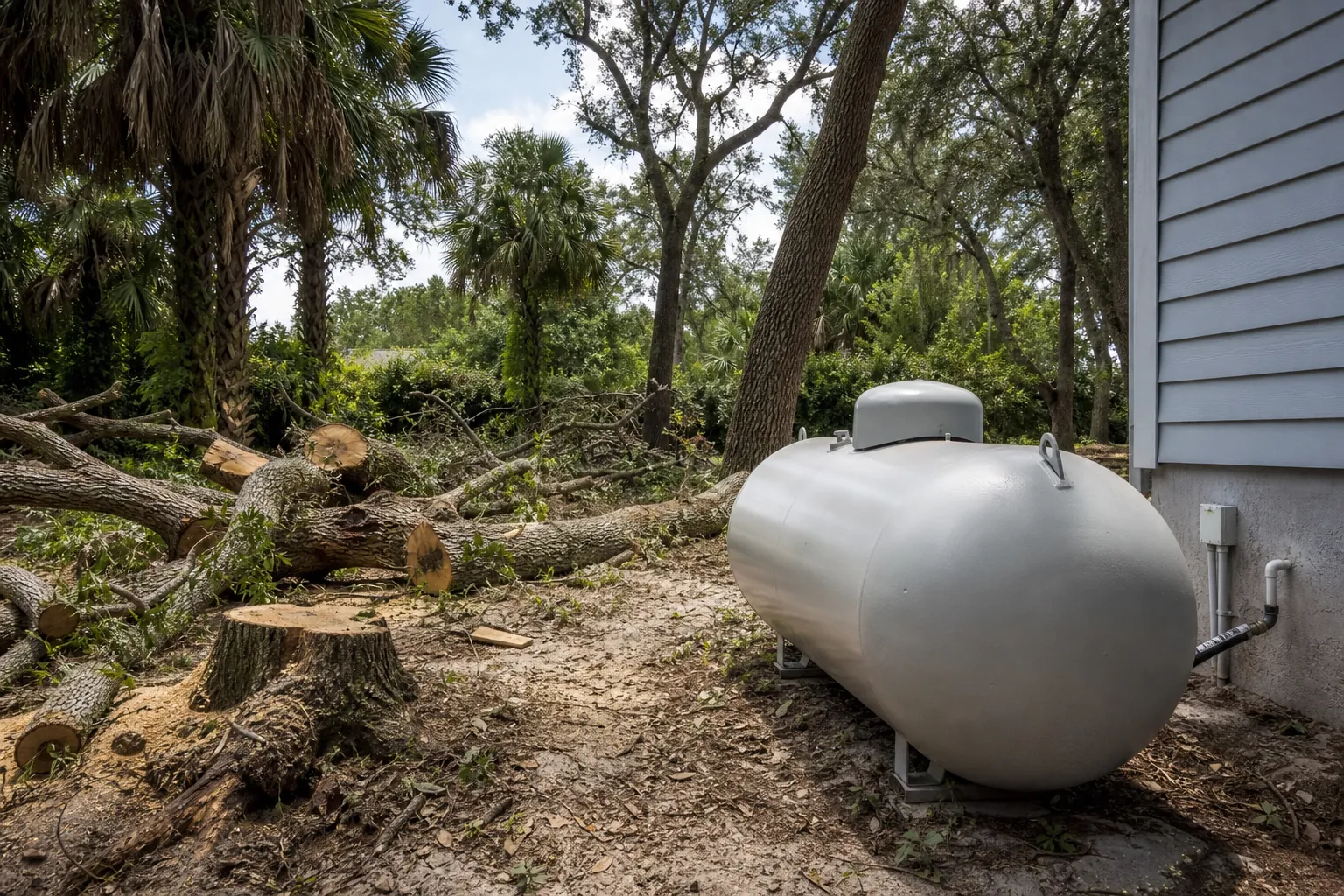
A tree growing close to a propane tank presents a more complicated removal project than an ordinary backyard tree. Heavy limbs, trunks, roots, equipment, and falling debris can all affect the tank, its regulator, connected lines, and surrounding access area. In Florida, wind exposure, saturated soil, and hurricane damage may add urgency to an already sensitive situation.
Tree removal near propane tank equipment should begin with a careful site assessment, not a chainsaw. A qualified tree service can evaluate the tree’s condition, determine how it can be dismantled, and coordinate practical safety steps with the property owner and propane provider.
Why Propane Tank Proximity Changes Tree Removal
Standard tree removal often relies on a clear drop zone or controlled lowering area. A propane tank limits those options. Even a seemingly small branch can damage exposed components if it falls in the wrong place. Underground service lines may also influence where crews can walk, stage equipment, or grind a stump.
The tree itself may create additional concerns. Roots can grow around buried lines, while leaning trunks can place weight toward the tank. Deadwood, weak unions, cavities, decay, or storm damage can make the tree less predictable during removal. Palm trees and broad-canopied hardwoods each require different handling based on their structure and location.
Because every site is different, the safest work plan depends on details such as tree size, species, condition, tank placement, slope, fence lines, buildings, and equipment access. A tree inspection can identify these constraints before work begins.
What A Professional Site Assessment Covers
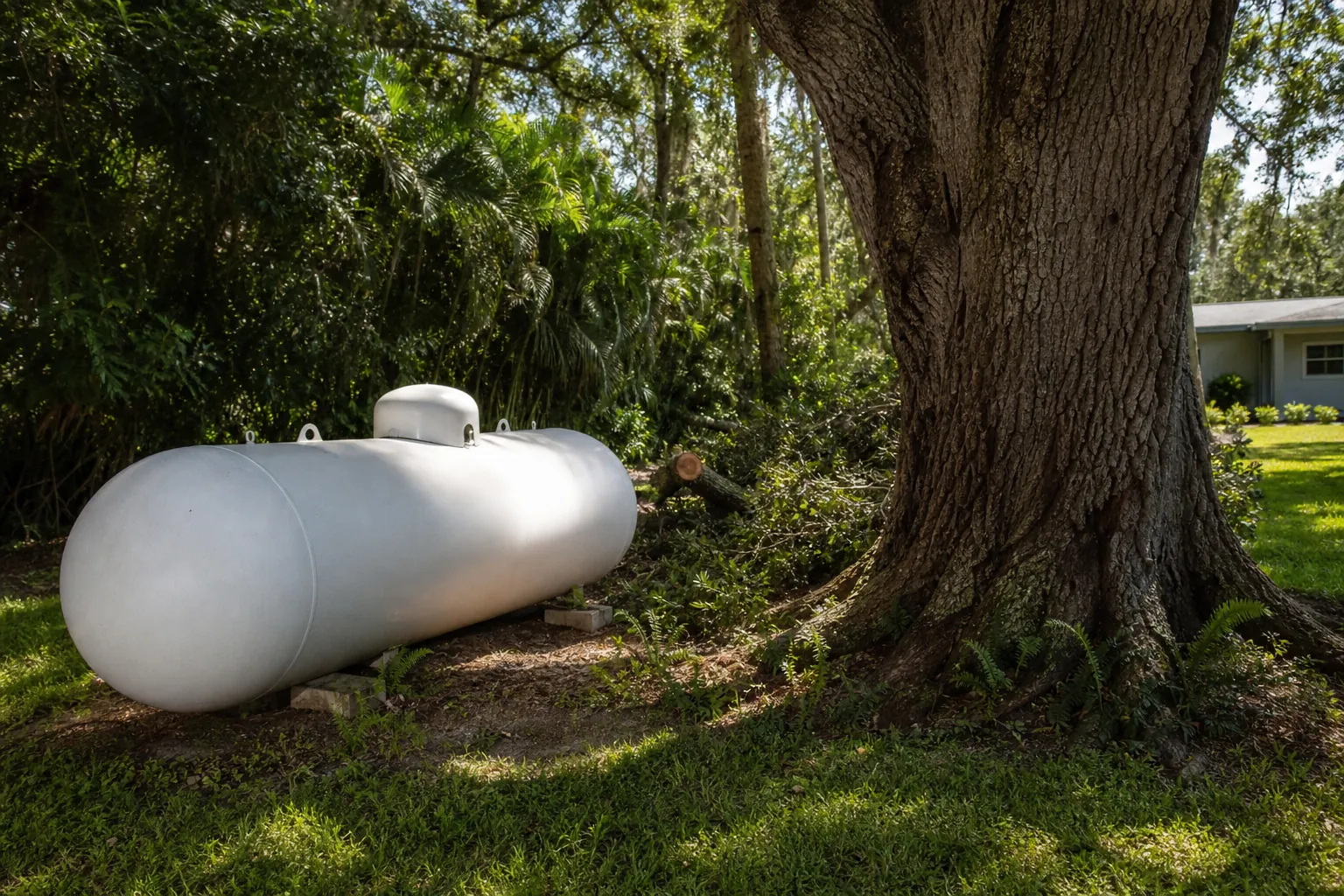
An arborist or experienced tree professional should inspect both the tree and the work area. The goal is to develop a removal sequence that keeps cut material controlled and avoids unnecessary contact with propane equipment.
A useful assessment typically considers:
- Tree condition: Visible decay, cracks, dead limbs, root problems, storm damage, and the direction of lean.
- Tank components: The tank body, regulator, valves, protective dome, piping, and any visible connection points.
- Utility locations: Known underground propane lines and other utilities that could affect access, digging, or stump grinding.
- Rigging options: Suitable anchor points and paths for lowering branches and trunk sections away from the tank.
- Equipment access: Space for personnel, loaders, cranes, or other equipment without crossing sensitive areas.
- Escape and exclusion zones: Clear areas for the crew and boundaries that keep residents, tenants, pets, and bystanders away.
- Nearby targets: Roofs, air-conditioning equipment, sheds, pools, fences, driveways, and neighboring property.
- Weather and soil: Wind, rain, lightning, saturated ground, and other conditions that may require rescheduling.
Property owners should tell the tree service about known lines or prior propane work. They should also contact their propane provider for instructions related to the tank and connected system. Tree crews should not disconnect, relocate, or modify propane equipment unless separately qualified and authorized to do so.
How Controlled Removal May Be Performed
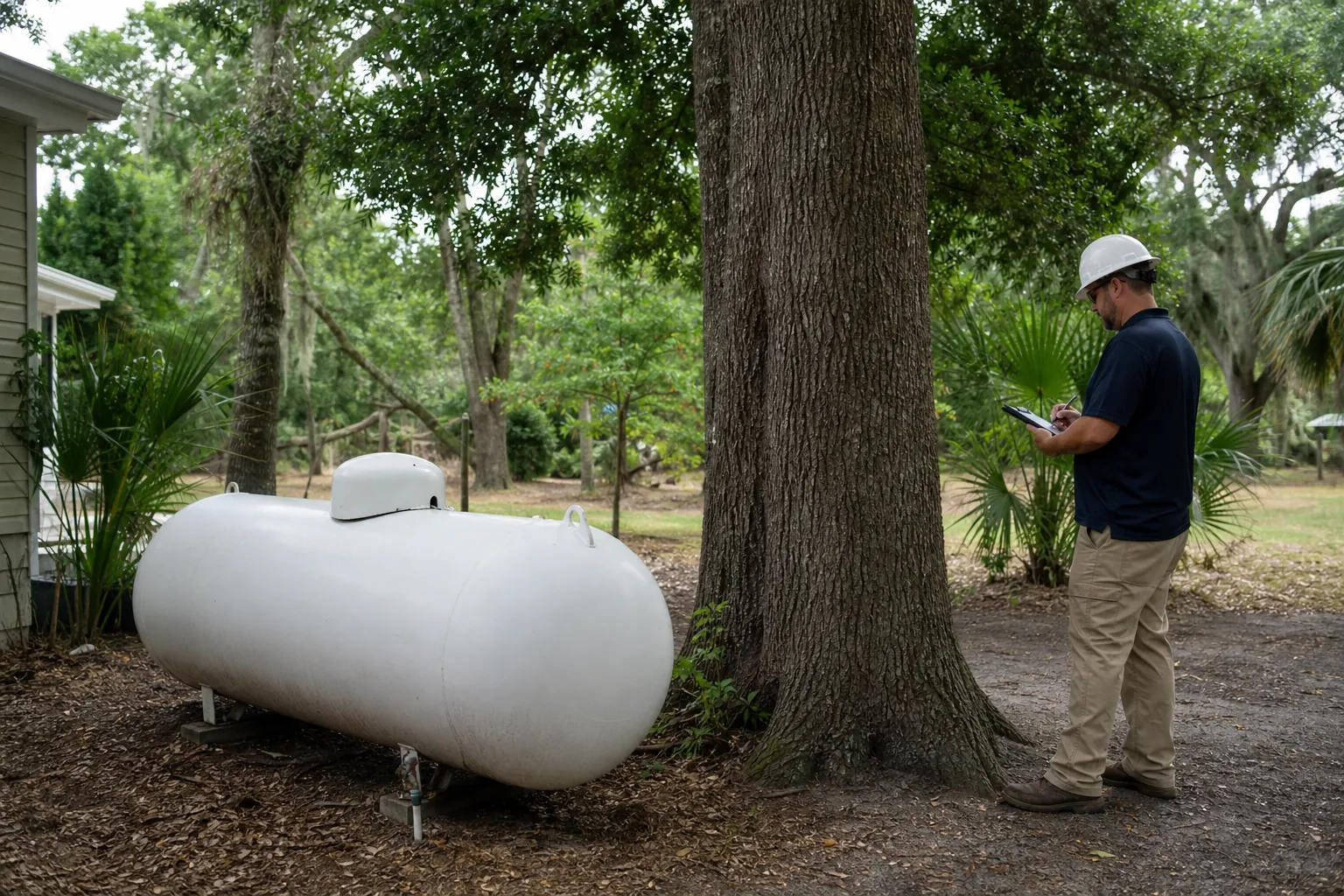
When there is no safe direction to fell the tree whole, crews generally dismantle it in sections. Climbers may remove smaller branches first, then lower larger limbs and trunk pieces with ropes and rigging. This method reduces the size and movement of each piece while keeping material away from the tank.
Crane tree removal may be appropriate when the tree is large, structurally compromised, storm damaged, or difficult to access with conventional rigging. A crane can lift selected sections to a designated landing area, but it still requires suitable setup space, ground conditions, and overhead clearance. The site assessment determines whether this approach is practical.
Protective barriers may help shield certain areas from small debris, but they are not a substitute for controlled cutting and lowering. Crews also need to prevent logs, branches, and machinery from rolling or shifting toward the tank. Work should pause if wind, lightning, equipment conditions, or unexpected tree movement makes the plan unsafe.
Preparing Your Property Before The Crew Arrives
Good preparation helps reduce delays and keeps the work zone organized. Move vehicles, outdoor furniture, grills, toys, and movable planters away from the access route. Unlock necessary gates and let the crew know about septic components, irrigation, soft ground, or hidden landscape features.
Confirm tank-related precautions directly with your propane provider before the scheduled tree work. Do not attempt to move the tank, close unfamiliar valves, disconnect lines, or improvise protection around the equipment. If you smell propane or suspect damage, leave the immediate area, avoid flames and electrical switches, and contact the propane provider or emergency services from a safe location.
Local requirements for tree removal vary across Florida. Some cities, counties, communities, and associations may require approval or documentation, particularly for protected trees or properties governed by an HOA or condo association. Confirm current requirements with your city, county, HOA, or condo management before authorizing work.
Stump And Root Considerations Near Propane Lines
Removing the trunk does not automatically make stump grinding appropriate. The grinder cuts below the surrounding surface, so underground propane lines and other utilities must be identified before work begins. Roots may cross or surround a service line, making aggressive grinding or excavation unsafe.
The stump may need a separate evaluation after the tree is removed. Depending on verified line locations and available clearance, stump grinding may be limited, postponed, or handled with a modified plan. Never assume a line follows a direct path simply because the tank and building are visible.
Tree trimming, canopy thinning, or crown reduction may sometimes address clearance concerns without removing a healthy tree. These options depend on species, structure, defects, and the amount of pruning required. Excessive pruning can weaken a tree and create future problems, so an inspection is important before selecting an alternative.
Planning For Storm-Damaged Trees
Florida hurricanes and severe thunderstorms can split limbs, uproot trees, or leave trunks suspended over propane equipment. Do not walk beneath hanging branches or approach a shifted tank to inspect damage. The tree may be under tension, and roots can continue moving after the storm passes.
Florida Foliage provides emergency and hurricane tree removal, tree removal, crane tree removal, tree trimming, arborist reports and tree inspections, and stump grinding where site conditions allow. For commercial properties, HOAs, and condos, clear communication with managers and residents can also help maintain a controlled work area.
If a tree is growing, leaning, or hanging near your propane tank, arrange an assessment before the situation worsens. Call Florida Foliage at (386) 481-7913 to discuss the tree, tank location, access, and appropriate next steps for your Florida property.
Call (386) 481-7913 to talk through next steps.