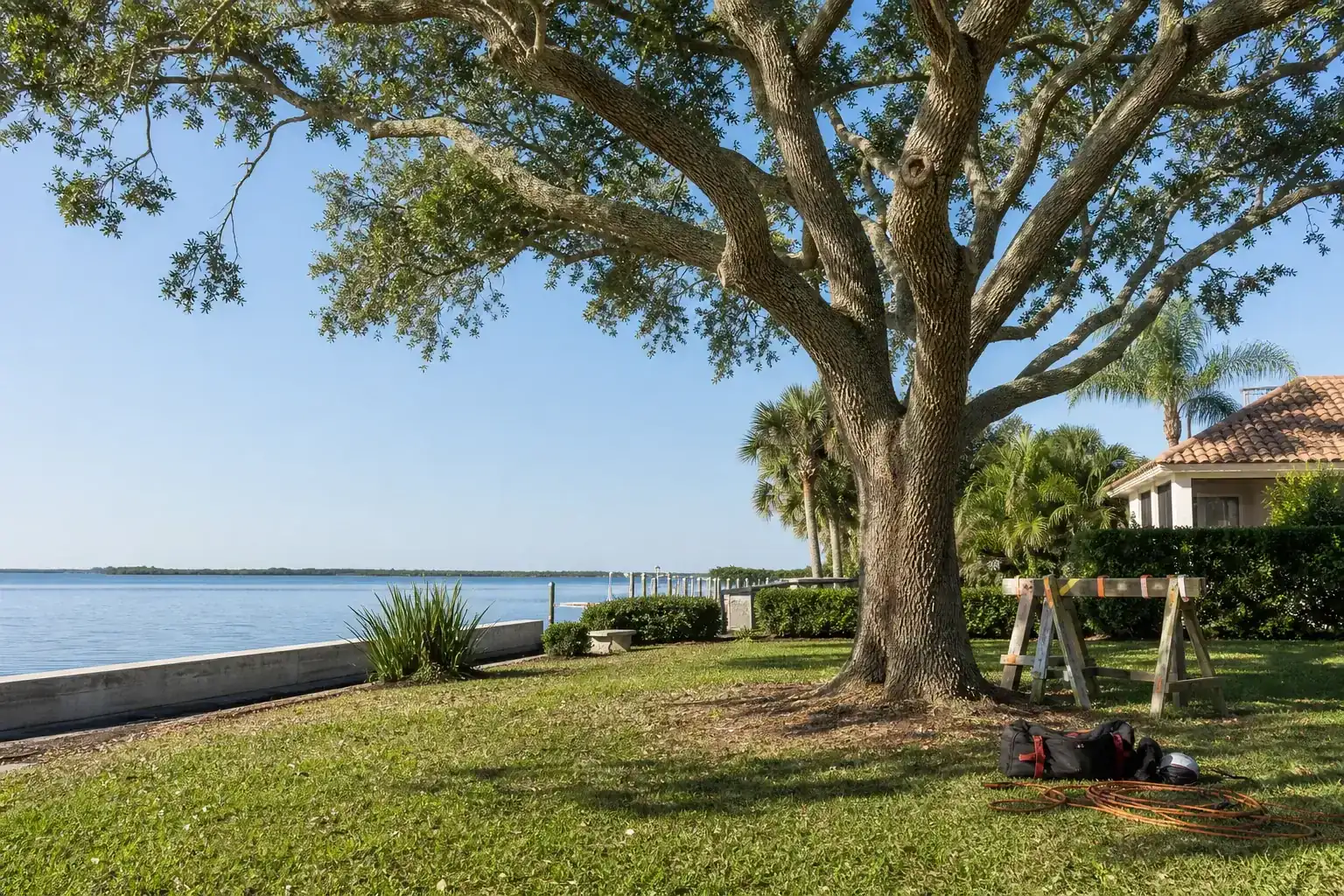
Trees growing beside a seawall can add shade and character to an Edgewater property, but removal becomes more complex when trunks, roots, structures, and water share a narrow work area. Standard felling methods may not be appropriate. Crews must consider limited access, fragile edges, nearby docks, landscaping, overhead obstacles, and the condition of the seawall itself.
For property owners researching tree removal near seawall Edgewater services, understanding the process can make conversations with a tree care provider more productive. A careful plan should address both the visible tree and the less obvious conditions around its root zone.
Why Seawall-Side Tree Removal Requires Extra Planning
A tree close to a seawall may lean toward the water, extend branches over a roof or dock, or have roots growing along the wall. Its weight can also be distributed unevenly because shoreline trees often grow toward open light. These factors affect how individual limbs and trunk sections should be handled.
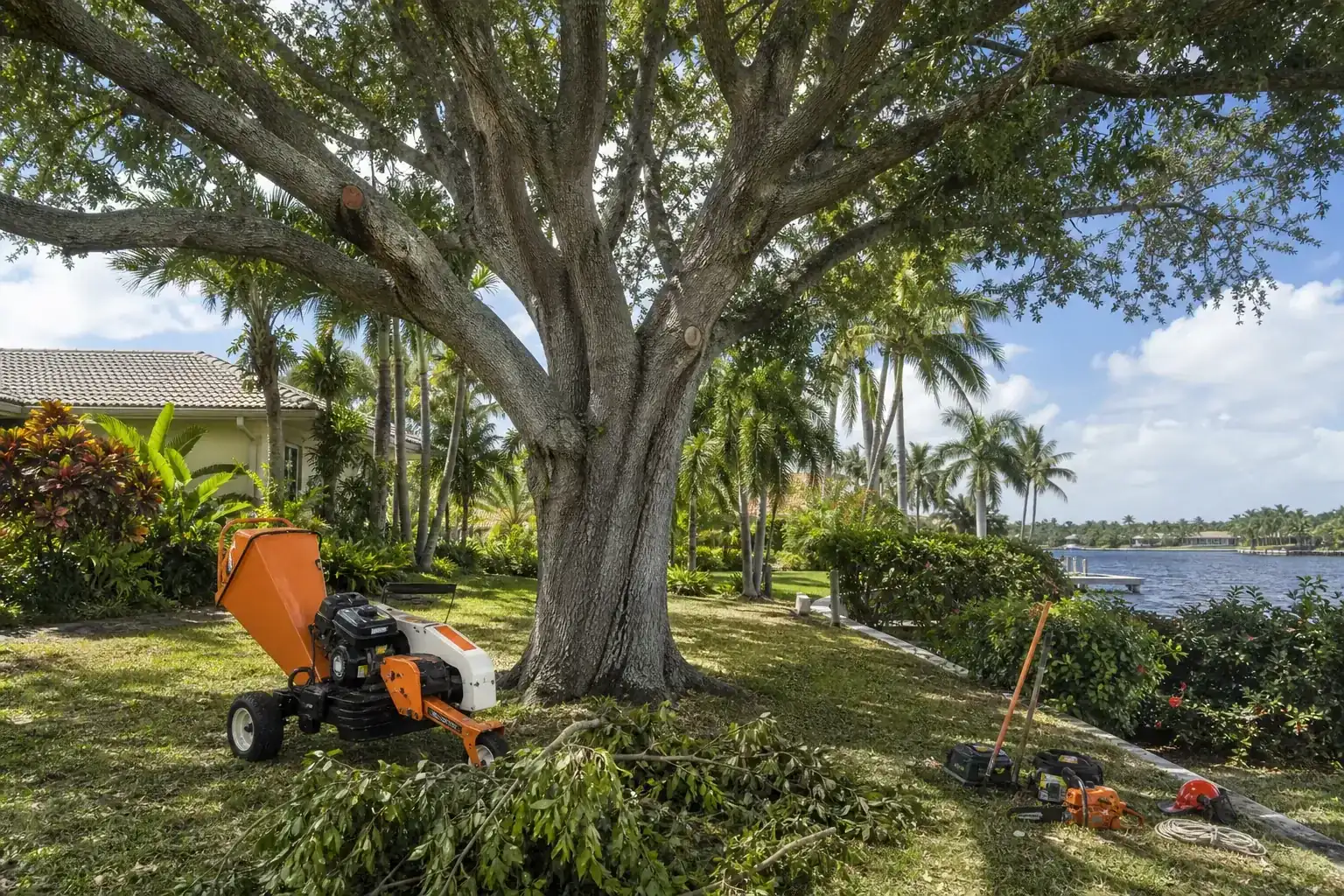
The seawall edge is another important consideration. Heavy equipment, falling wood, or concentrated loads may not belong near a wall with uncertain structural condition. Soft or saturated soil can further limit where workers and machinery can operate. A tree inspection helps identify defects in the trunk, major unions, and canopy before work begins, while the property owner may need an appropriate seawall professional to evaluate concerns involving the wall itself.
Tree removal does not repair or assess a seawall. Keeping those scopes separate helps ensure that each condition receives the right professional attention.
What A Site Assessment Should Cover
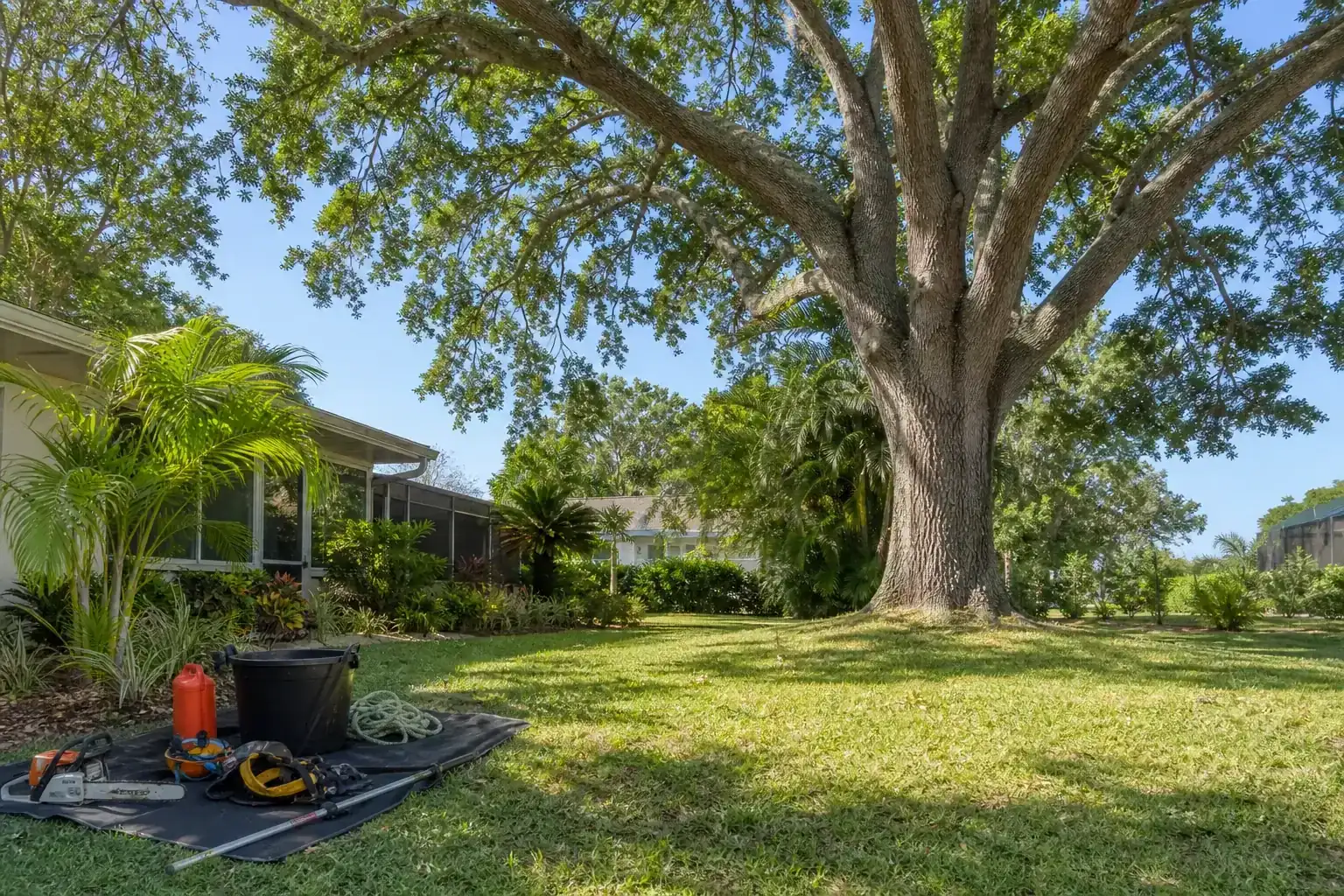
A useful assessment looks beyond the tree's diameter and height. The crew should review the route from the street to the work zone, nearby utilities, fences, pools, patios, docks, boats, and landscaping. They should also consider where cut material can be lowered and processed without creating avoidable impacts.
Important planning questions include:
- Tree condition: Are there dead limbs, cavities, cracks, decay indicators, weak unions, or a pronounced lean?
- Root location: Are major roots visible beside the seawall, beneath paving, or near other structures?
- Access: Can workers and suitable equipment reach the tree without crowding the shoreline edge?
- Drop zone: Is there enough open ground for controlled lowering, or must every section be rigged?
- Water-side exposure: Do branches extend over a canal, dock, boat lift, or neighboring property?
- Ground conditions: Is the soil firm, saturated, eroded, sloped, or restricted by narrow side yards?
- Debris route: How will limbs and trunk sections move from the cutting area to the processing area?
- Follow-up work: Is stump grinding practical given the root pattern, utilities, irrigation, and proximity to the wall?
Photos are helpful, but they may not show decay, access limitations, or grade changes clearly. An on-site tree inspection provides better context for selecting equipment and sequencing the work.
Controlled Removal Methods Near The Water
When there is no safe area to fell a tree whole, removal is typically completed in sections. Workers may use ropes and rigging to lower branches and trunk pieces into a designated zone. This approach provides more control around roofs, fences, seawalls, and waterfront features.
Crane tree removal may be considered when access, tree condition, size, or surrounding obstacles make other methods less suitable. A crane can lift sections away from a restricted work area, but its use depends on setup space, ground conditions, reach, overhead clearance, and the planned path of each load. It is not automatically the right choice for every shoreline property.
Emergency and hurricane tree removal requires the same disciplined approach, even when the situation feels urgent. Storm-damaged trees may contain suspended limbs, split trunks, shifted root plates, or wood held under tension. Property owners should keep people and pets away, avoid touching trees near utility lines, and leave unstable cutting to trained crews.
Roots, Stumps, And Seawall Concerns
Roots near a seawall deserve careful attention before and after removal. Large roots can be intertwined with soil, hardscape, irrigation, or structural elements. Their presence does not reveal the condition of the wall, and cutting or grinding them without understanding the surroundings may disturb adjacent areas.
Stump grinding can reduce the remaining stump below the surrounding grade, but feasibility varies by site. Equipment needs safe access and working clearance. The operator must also consider utilities, irrigation components, stones, metal, grade changes, and the seawall's proximity. Grinding may leave some lateral roots in place, particularly where pursuing them would conflict with structures or inaccessible areas.
A tree care provider can explain the practical limits of stump grinding. Questions about wall stability, engineering, drainage, or shoreline construction should be directed to qualified specialists in those fields.
Can Trimming Be An Alternative To Removal?
Removal is not always the only reasonable option. If a tree is structurally suitable and has adequate growing space, tree trimming may address dead, damaged, or poorly positioned branches. Canopy thinning can selectively reduce branch density while preserving the tree's natural form. Crown reduction may shorten specific limbs to reduce leverage or improve clearance without simply topping the tree.
These methods must fit the species, condition, and structure of the individual tree. Excessive pruning can create stress, weak regrowth, or an unbalanced canopy. Arborist reports and tree inspections can help owners, commercial managers, HOAs, and condo associations document observed conditions and consider appropriate next steps.
Routine observation is especially useful after strong winds or changes around the root zone. New cracks, hanging limbs, sudden leaning, lifted soil, or rapid canopy decline are reasons to restrict access and request an inspection.
Preparing Your Edgewater Property For Service
Before the scheduled work, move vehicles, outdoor furniture, grills, potted plants, and other portable items away from the access route. Secure pets indoors and let the provider know about irrigation, septic components, landscape lighting, gates, and any known buried utilities. Boats and movable waterfront equipment may also need to be relocated depending on the work zone.
Tree work near waterways, property boundaries, protected areas, or shared community spaces may involve local approvals or other requirements. Rules can depend on location and project details, so confirm current requirements with the City of Edgewater, Volusia County, or other relevant authorities before work begins. HOAs and condo associations may have separate review procedures as well.
Discuss The Site With Florida Foliage
Florida Foliage provides tree removal, tree trimming, stump grinding, emergency and hurricane tree removal, crane tree removal, canopy thinning, crown reduction, arborist reports and tree inspections, commercial tree services, and HOA and condo tree services. For broader property needs, the company also offers land and lot clearing and brush hogging.
If you are evaluating a tree beside a seawall in Edgewater, a site visit can clarify access, equipment needs, rigging options, and practical limits around roots and stumps. Call Florida Foliage at (386) 481-7913 to arrange a calm, site-specific discussion about the tree and surrounding work area.
Call (386) 481-7913 to talk through next steps.