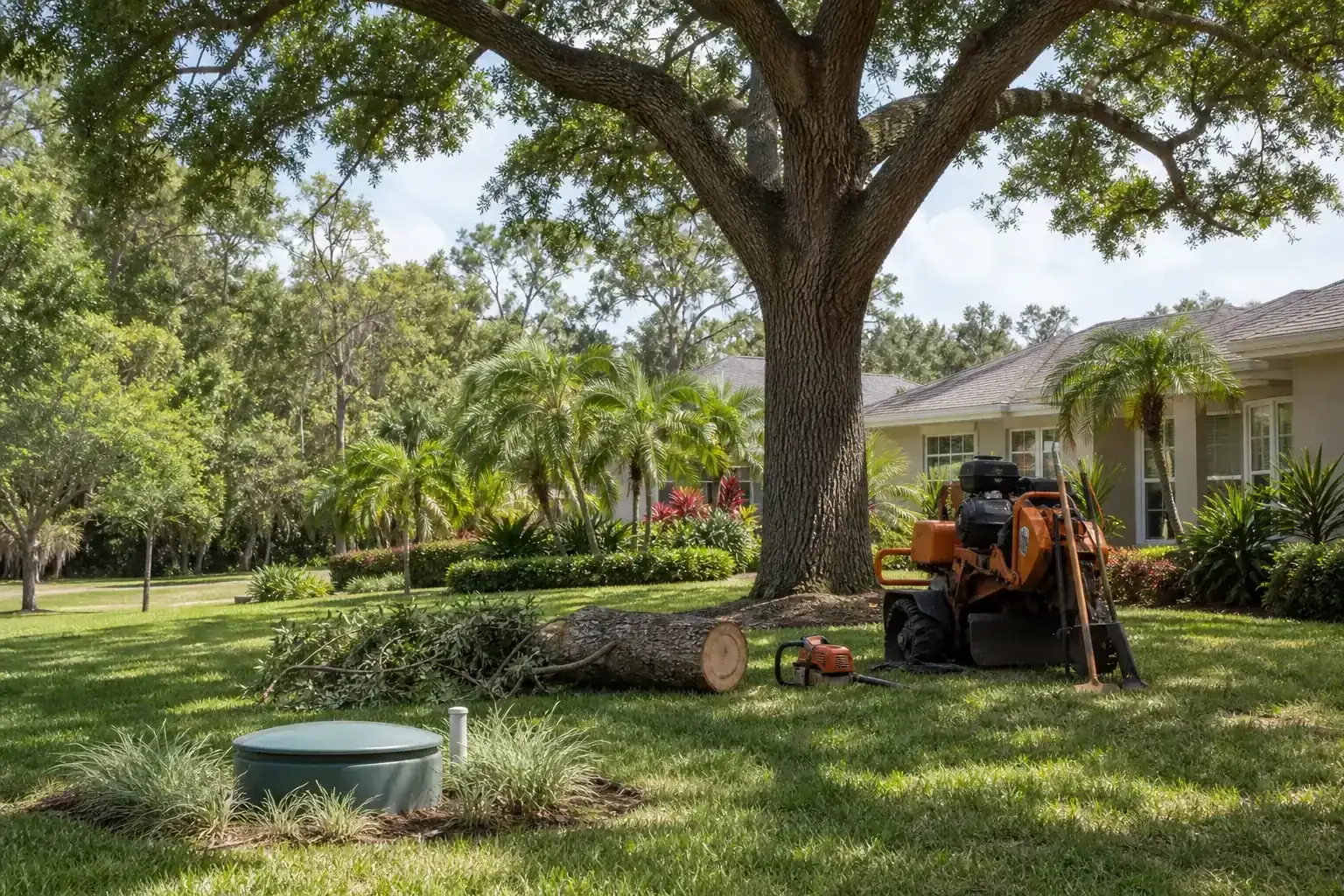
Removing a tree close to a septic system requires more planning than a typical backyard project. The tank, distribution components, drain field, and connecting pipes may be hidden below ground, while roots can extend well beyond the trunk. Heavy equipment, falling limbs, and stump work can also affect buried components if the site is not carefully evaluated.
For Florida property owners, sandy soils, saturated ground, storms, and fast-growing vegetation can add to the challenge. A professional tree inspection helps establish how the tree can be removed while reducing unnecessary disturbance around the septic area.
Why septic systems change the removal plan
A septic system depends on buried structures and soil that can accept and filter wastewater. Compacted or disturbed soil over a drain field may interfere with normal performance. Driving a truck, crane, chipper, or other heavy equipment across that area can create avoidable risk, even when the ground appears firm.
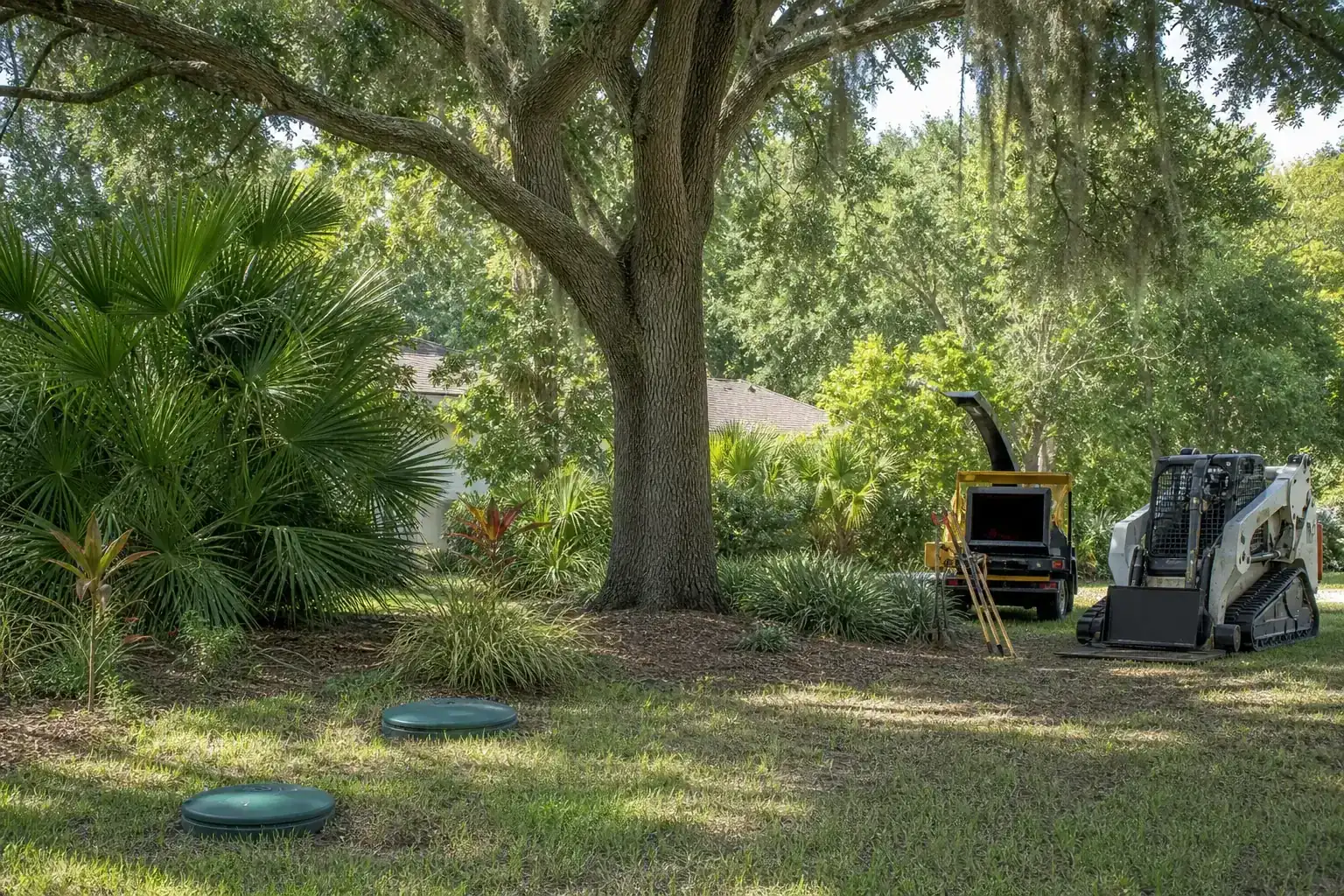
Tree roots are another concern. Some roots may grow near pipes or septic components in search of moisture. Pulling, digging, or grinding without understanding those relationships could disturb underground lines. The safest approach is to identify the septic layout before deciding where equipment, workers, and removed wood will travel.
The visible tank lid does not reveal the entire system. Property records, installation diagrams, maintenance documents, or guidance from a septic professional may help locate the tank and drain field. If the layout is uncertain, it should be clarified before tree work starts.
What an arborist evaluates before removal
An arborist report or tree inspection can document the tree’s condition and help determine whether removal is appropriate. The evaluation should consider the species, trunk diameter, lean, canopy weight, root plate, visible decay, broken branches, and nearby targets. It should also account for buildings, fences, utility lines, landscaping, and septic infrastructure.
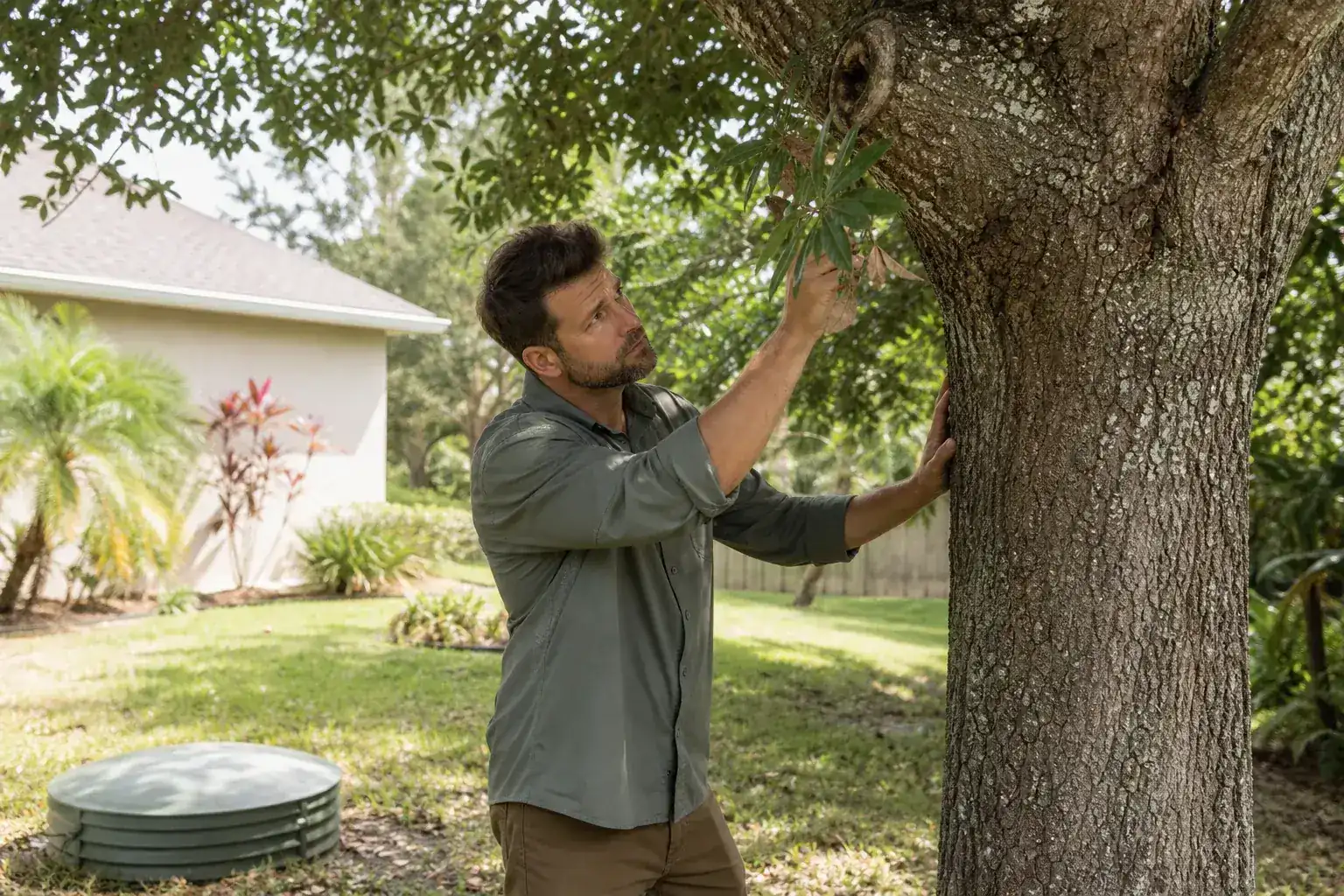
Important site-planning questions include:
- Where are the tank and drain field? Known septic components can be marked and treated as restricted areas.
- Is the tree structurally compromised? Decay, cavities, cracks, storm damage, or root failure may change the sequence of work.
- Can branches be lowered in sections? Controlled rigging may help keep heavy material from striking sensitive ground.
- Is crane tree removal suitable? A crane may lift sections away from the septic area when access, reach, and site conditions allow.
- Where can equipment travel and stand? Routes should avoid the septic system and other underground features.
- How will debris leave the property? The removal path matters because repeated traffic can compact soil.
- What should happen to the stump? Stump grinding depth and access must be considered in relation to buried components.
Not every property needs the same method. A smaller tree with open access may be handled using sectional removal, while a large tree over a drain field may require specialized rigging or crane tree removal. The plan should reflect actual conditions rather than a one-size-fits-all process.
How tree removal near a septic tank is performed
Before cutting begins, the work area should be clearly organized. Septic components and boundaries can be marked, drop zones established, and equipment positioned on appropriate ground. Workers may remove smaller branches first to reduce canopy weight and create space for controlled handling.
When pieces cannot safely fall, ropes and rigging can be used to lower them. A crane can sometimes lift trunk sections over buildings, fences, or septic areas without dragging them across the site. Crane tree removal still requires careful setup, and the crane’s placement must be evaluated so its weight does not affect buried infrastructure.
The trunk is generally removed in sections suited to the available landing or lifting area. Logs, branches, and chips should be moved along planned routes. This methodical process can limit unnecessary traffic and prevent debris from accumulating over tank lids or septic access points.
Emergency and hurricane tree removal may require additional caution. A storm-damaged tree can shift unexpectedly, and waterlogged Florida soil may provide less root support. If a tree has fallen near a septic system, avoid climbing on it, cutting tensioned limbs, or moving heavy sections without professional evaluation.
Stump grinding and roots near septic components
Stump grinding is a separate part of the project and is not automatically appropriate in every septic-adjacent location. A grinder must reach the stump, operate with sufficient clearance, and avoid underground pipes, electrical lines, or septic structures. Grinding depth should be selected only after nearby features are identified.
Removing every root is usually neither practical nor desirable. Widespread excavation can disturb soil and buried components. After a tree is cut, remaining roots generally decompose over time, but conditions vary by species and site. If roots are suspected of entering a septic line, consult a qualified septic professional before attempting excavation or repair.
Tree trimming may occasionally be considered when immediate removal is not necessary. Canopy thinning or crown reduction can address specific structural concerns when performed appropriately, but these services do not correct severe root failure, advanced decay, or every hazardous condition. An inspection can help distinguish between reasonable trimming and removal.
Preparing your Florida property for the work
Gather any septic plans, surveys, maintenance records, or photographs that show where the system was installed. Keep vehicles, furniture, and movable landscape items away from the work zone. Tell the tree service about recent septic work, soft ground, irrigation, wells, utilities, and access limitations.
Avoid scheduling heavy site activity when soil is saturated if the project can safely wait. Florida rainfall can quickly change ground conditions, so access and equipment placement may need to be reassessed on the service day.
Tree removal requirements vary across Florida. Confirm any applicable approvals, property restrictions, or documentation requirements with your city or county before work begins. HOA and condo properties may also have separate review procedures. Commercial tree services and HOA and condo tree services should be coordinated with property managers and other responsible parties.
Choose a plan built around the whole site
Safe tree removal near a septic tank depends on understanding both the tree and what lies below it. Locating septic components, evaluating tree stability, selecting controlled removal techniques, and limiting equipment traffic all contribute to a more thoughtful project.
Florida Foliage provides tree removal, crane tree removal, stump grinding, emergency and hurricane tree removal, and arborist reports and tree inspections. For calm, practical guidance about a tree near your septic system, call (386) 481-7913 to discuss the property and arrange an inspection.
Call (386) 481-7913 to talk through next steps.