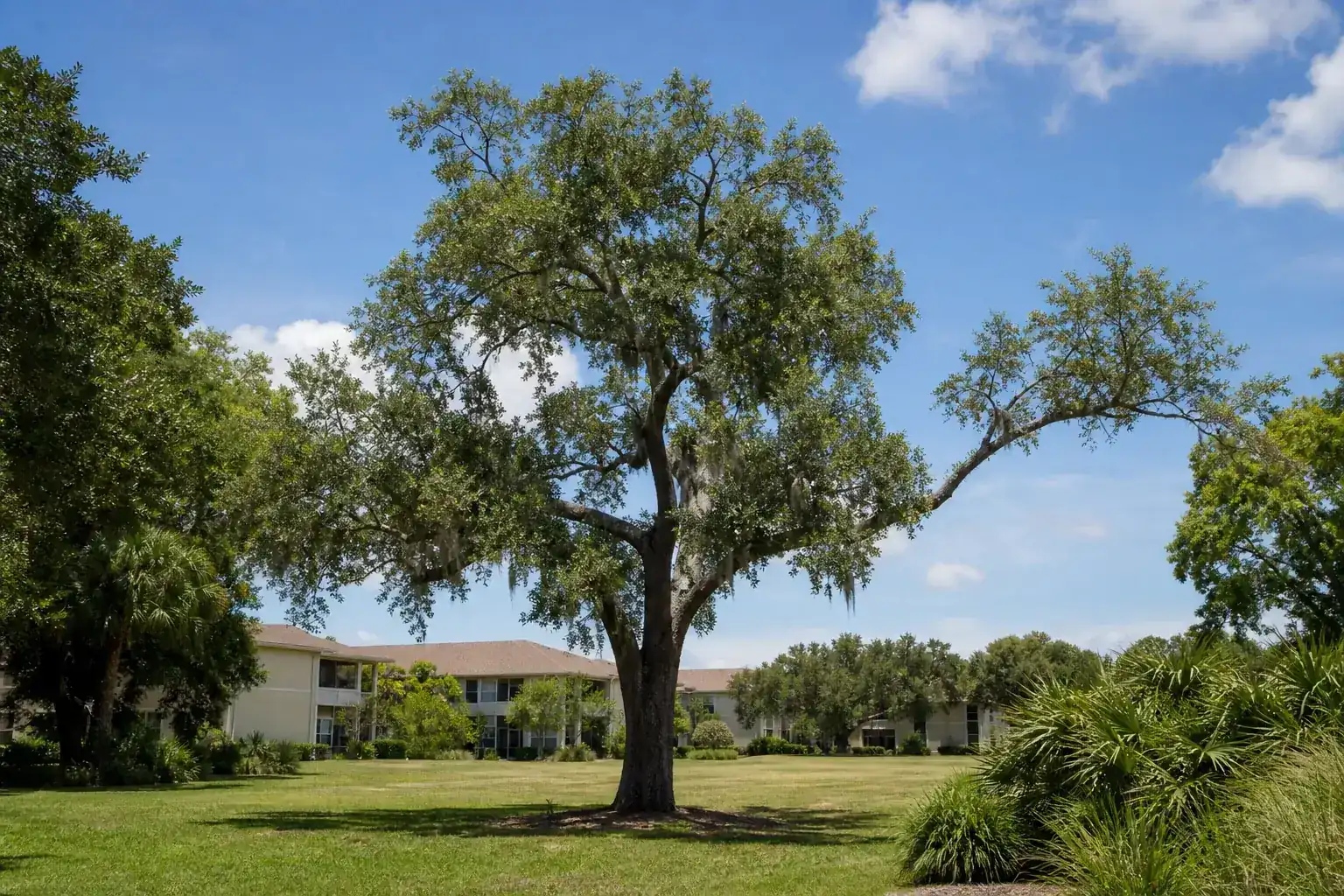
Managing trees at an apartment community requires more than reacting when a branch falls. Trees influence parking areas, sidewalks, buildings, outdoor amenities, drainage areas, and the overall appearance of the property. A thoughtful maintenance plan helps managers address concerns in an orderly way while supporting healthy growth.
For property teams researching tree trimming apartment complexes Deltona services, the goal should be appropriate care based on tree condition, location, and site use. Florida weather, seasonal storms, and year-round growth can create changing maintenance needs. Regular observation and professional tree inspections help managers decide what needs attention now and what can be monitored.
Why Apartment Tree Care Requires Careful Planning
Apartment properties present challenges that are different from those of a single residence. Crews may need to work near parked vehicles, occupied buildings, mail areas, pools, playgrounds, signs, lighting, and busy walkways. Access also matters because equipment must enter and leave without unnecessarily disrupting residents.
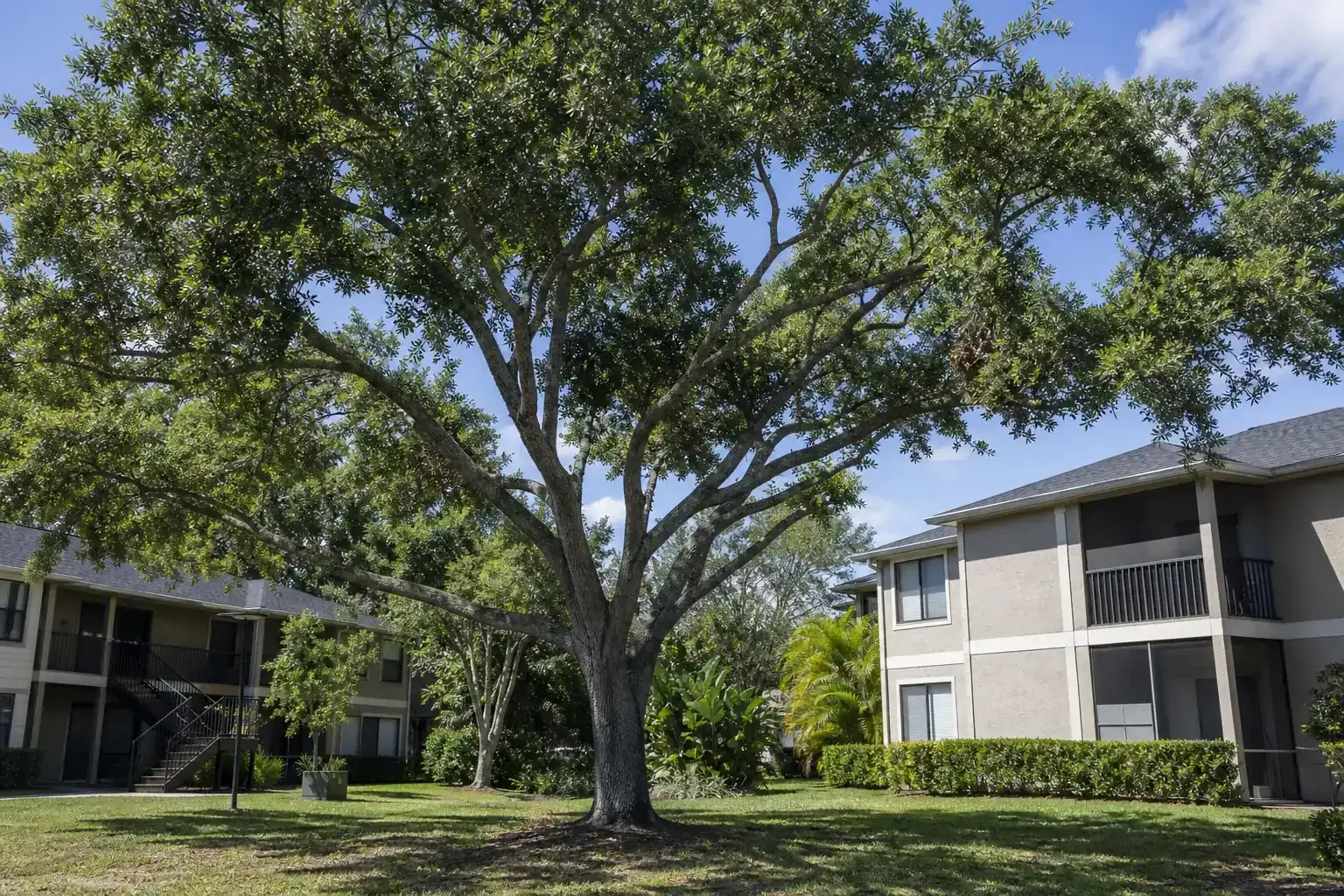
Planning should begin with a clear inventory of concerns. Property managers can document hanging limbs, branches touching structures, obstructed signs, low clearance, dense canopies, visible decay, and storm damage. These observations do not replace an arborist report or tree inspection, but they make communication more efficient.
Scheduling is equally important. Residents may need advance notice to move vehicles or avoid a work zone. Vendors should know which entrances must remain open, where pedestrians are commonly present, and whether service vehicles need designated access. A site-specific approach supports an organized project from evaluation through cleanup.
Signs That Trees May Need Professional Attention
Not every unusual-looking tree needs removal, and not every maintenance issue can be corrected through trimming. A qualified evaluation can distinguish routine growth from conditions that call for closer inspection or a different service.
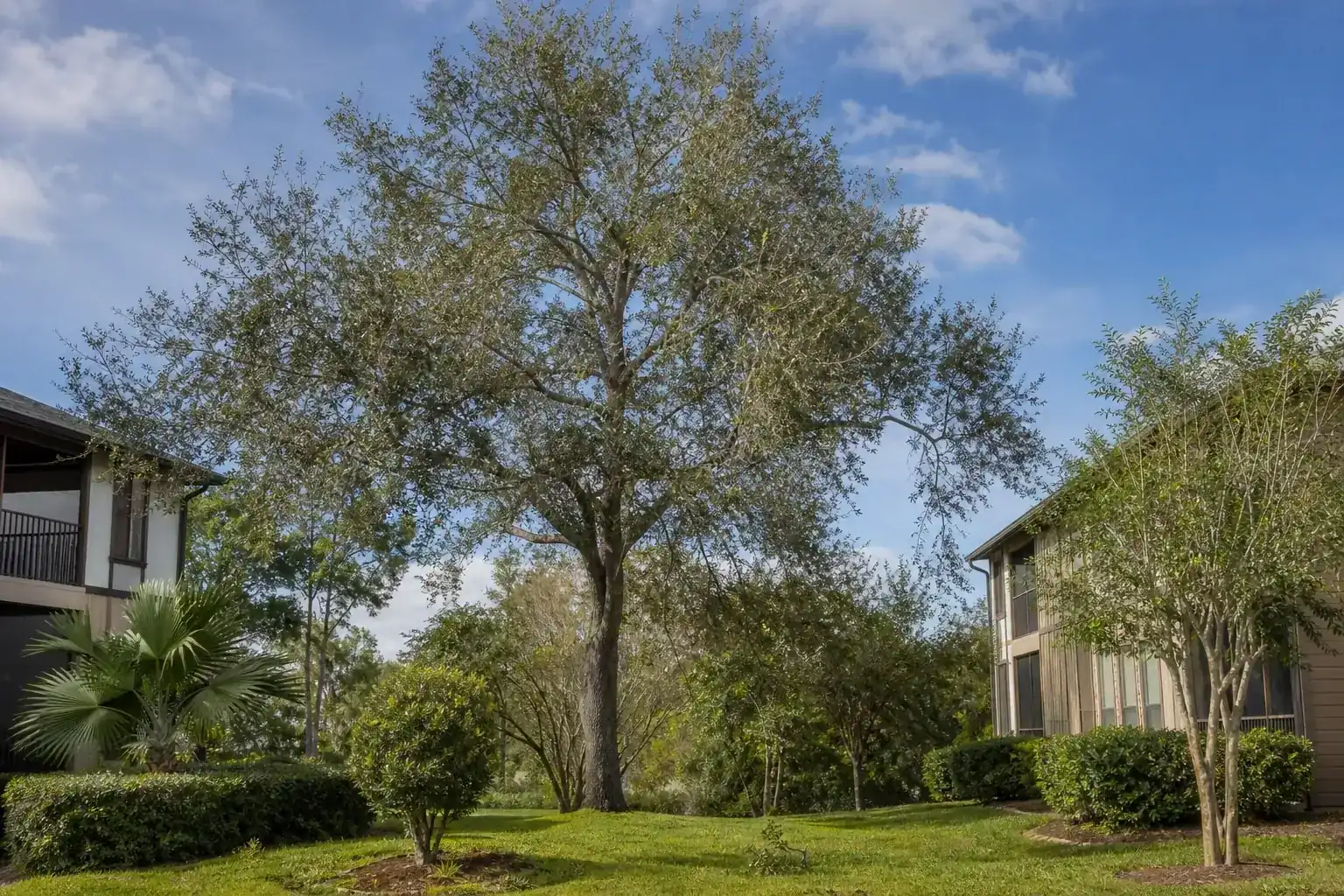
Property teams should routinely look for the following conditions:
- Broken or hanging branches: Limbs suspended in the canopy or resting on lower branches should be assessed, especially near occupied areas.
- Building contact: Branches rubbing roofs, siding, balconies, or windows may need selective trimming.
- Restricted clearance: Low limbs can interfere with sidewalks, internal roads, parking spaces, service access, and visibility.
- Dense canopy growth: Excessive interior growth may warrant canopy thinning when appropriate for the tree and site.
- Uneven or oversized crowns: Crown reduction may be considered when a trained professional determines it is suitable.
- Dead sections: Areas with missing foliage, brittle twigs, or peeling bark deserve professional review.
- Root-zone changes: Soil disturbance, vehicle damage, erosion, or recent construction near roots can affect tree condition.
- Storm impacts: Split limbs, shifted root plates, and newly leaning trees should be evaluated after severe weather.
- Obstructed property features: Growth that blocks signs, lighting, cameras, or sightlines can affect daily operations.
Photographs with a date and location can help managers track changes. If a condition appears urgent, keep residents and vehicles away from the area while arranging a professional assessment.
Choosing The Right Trimming Method
Tree trimming should have a defined purpose. Random limb removal can create an unbalanced canopy or remove more living material than necessary. The correct approach depends on species, maturity, health, structure, and proximity to property features.
Canopy thinning selectively removes branches to improve spacing and address excessive density. It should preserve the tree's natural form rather than leaving sparse outer foliage. Crown reduction decreases canopy size through carefully selected cuts. It is not appropriate for every tree, so an inspection should guide the decision.
Clearance trimming may be used around buildings, pedestrian routes, parking areas, and signs. The objective is not simply to cut branches back as far as possible. Proper pruning points and future growth should be considered so the work addresses the immediate issue without encouraging poor structure.
Some trees may be too damaged, declined, or poorly located for trimming to resolve the concern. Tree removal or crane tree removal may then be evaluated. Stump grinding can address remaining stumps where site conditions permit. These services should be considered separately from routine pruning rather than treated as interchangeable options.
Building A Practical Maintenance Schedule
An effective schedule combines routine observation with periodic professional input. Maintenance frequency varies by tree species, age, growth rate, prior pruning, storm exposure, and location. Trees beside a main entrance may require different attention from trees along a distant property boundary.
Divide the community into manageable zones, such as building clusters, parking areas, amenity spaces, and perimeter landscaping. Record tree concerns by zone and rank them according to occupancy, access, and visible condition. This creates a useful working document for commercial tree services and helps management avoid overlooking less visible areas.
Review the property before hurricane season and after significant storms. Emergency and hurricane tree removal may be necessary when damaged trees create immediate access or safety concerns. Routine planning cannot prevent every storm impact, but it can identify existing defects and clarify whom to contact when conditions change.
Apartment teams should also coordinate tree work with other property activities. Roof service, paving, painting, landscape changes, and construction can affect access or expose roots and branches to damage. Sharing schedules among vendors reduces conflicts and helps protect recently completed work.
Documentation And Local Requirements
Good records support consistent decisions, especially when staff members or management companies change. Keep inspection notes, marked site maps, dated photographs, arborist reports, and descriptions of completed work. Documentation can also help explain temporary parking restrictions or landscape changes to residents.
Tree work may be affected by local rules, protected-tree provisions, property boundaries, utility considerations, or approval requirements. Requirements can vary by location and project scope. Confirm current information directly with the City of Deltona, Volusia County, and any other relevant authority before authorizing work. If the property is governed by additional community documents, review those as well.
Arborist reports and tree inspections can provide a more structured evaluation when management needs documented findings. These services may be useful for recurring problems, construction planning, storm damage, or decisions involving mature trees.
Coordinating Service With Residents And Vendors
Clear communication can reduce inconvenience. Notices should identify affected buildings, parking spaces, walkways, and expected access limitations without overstating the outcome of the work. On service day, keep work zones clear and provide the crew with a property contact who can answer access questions.
Florida Foliage provides commercial tree services and HOA and condo tree services, including tree trimming, canopy thinning, crown reduction, tree removal, stump grinding, crane tree removal, and arborist reports and tree inspections. Land and lot clearing or brush hogging may also be relevant for undeveloped sections of larger properties.
If your Deltona apartment community needs an evaluation, contact Florida Foliage at (386) 481-7913. A calm, site-specific conversation can help your team identify priorities and plan appropriate tree care around residents, buildings, and daily property operations.
Call (386) 481-7913 to talk through next steps.