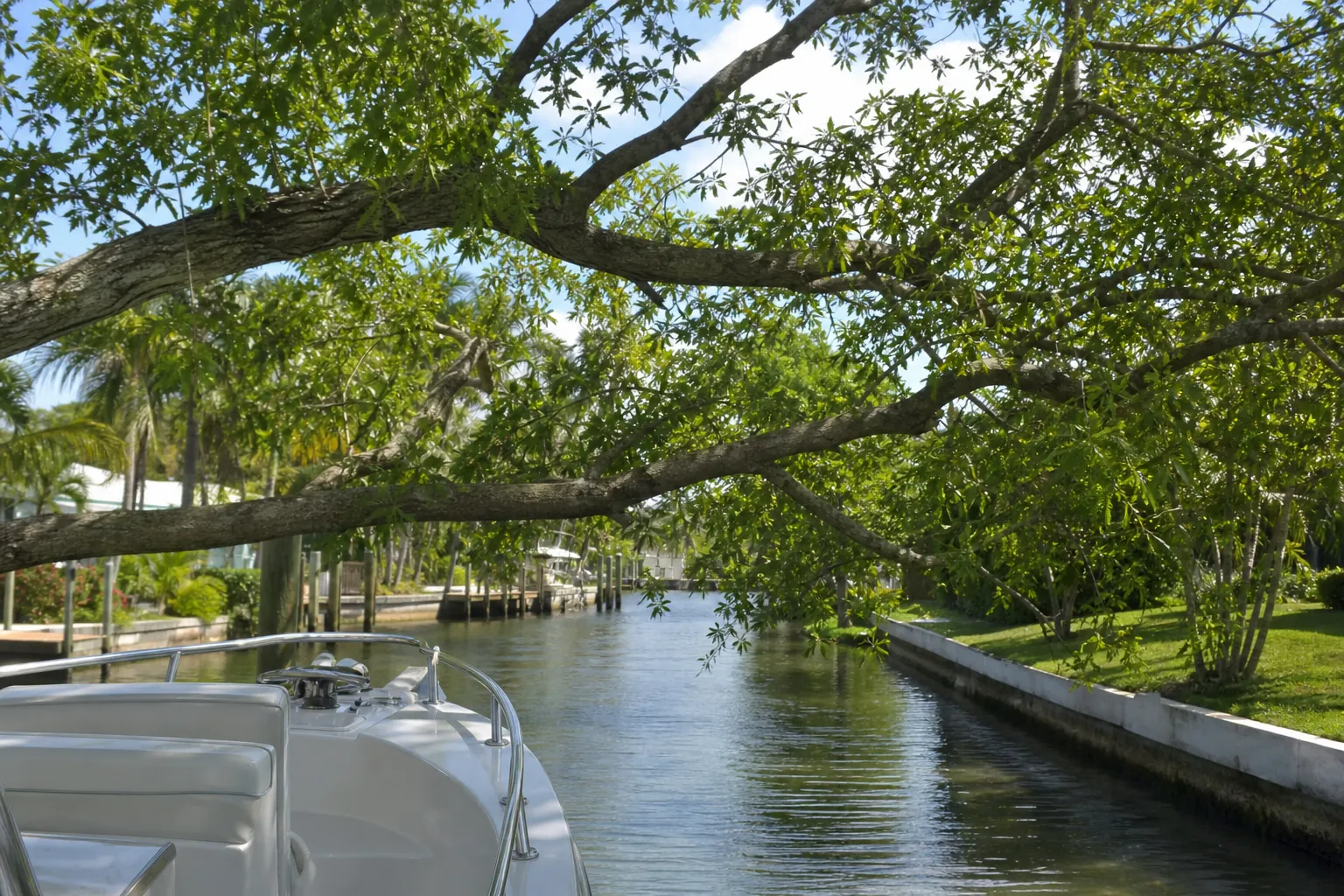
Waterfront trees add shade, privacy, and natural character to a Florida property. They can also create obstacles when limbs extend over a dock, canal, boat lift, ramp, or shoreline approach. Thoughtful tree trimming for boat access helps create usable clearance without removing more of the canopy than necessary.
This work requires more than cutting back any branch near the water. A qualified tree service considers vessel height, navigation angles, dock use, tree structure, and future growth. The goal is a practical route that supports boating activity while preserving healthy, stable trees whenever possible.
Where Tree Growth Can Interfere With Boat Access
Clearance problems often develop gradually. A limb that once sat well above a small boat may become an obstruction as it grows longer and heavier. Changes to a boat lift, canopy, dock, or vessel can also make existing branches a concern.
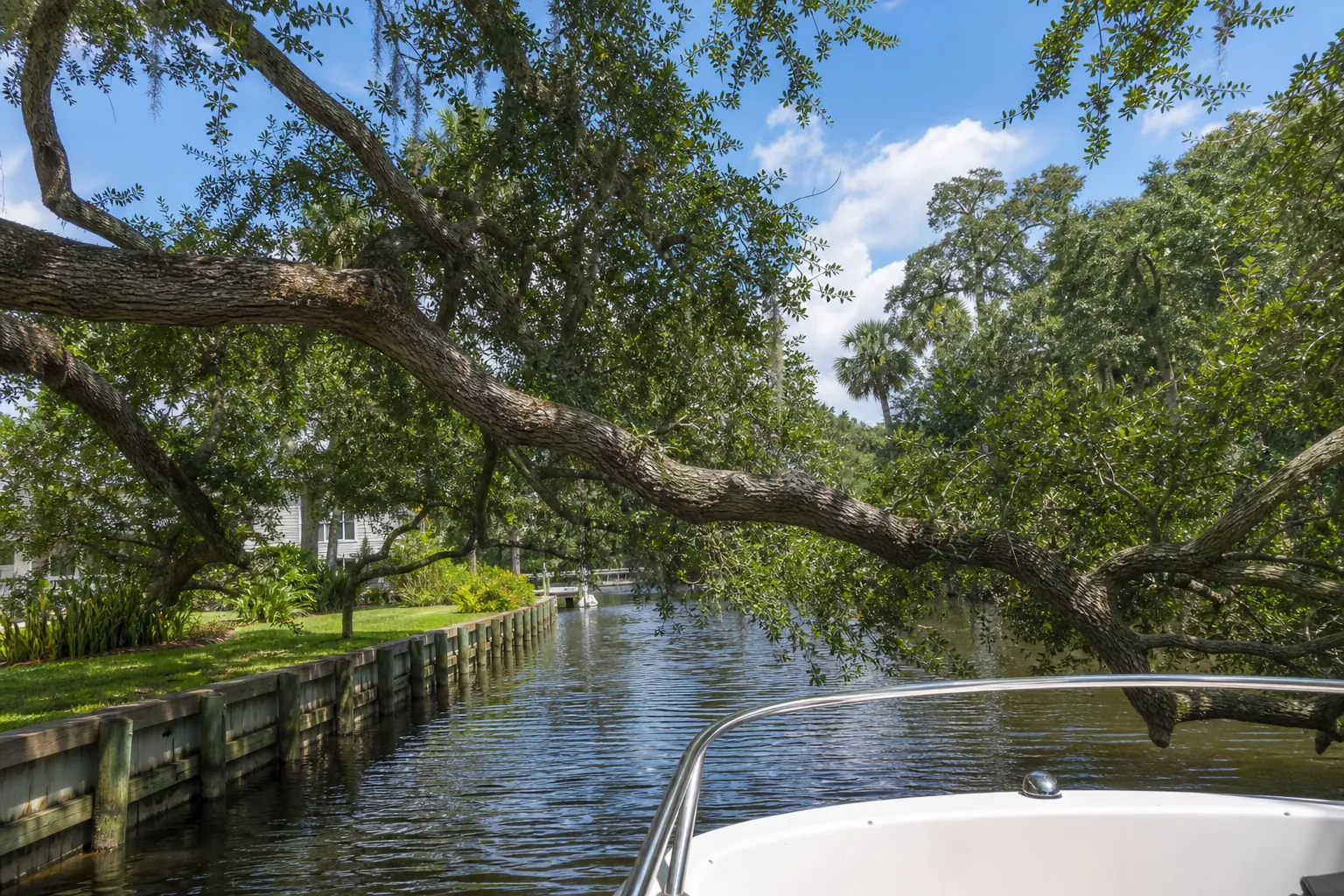
Common conflict areas include narrow canals, covered boat lifts, dock entrances, private ramps, and shoreline paths used to carry gear. Low branches may scrape a boat cover, block visibility, or force the operator to approach at an awkward angle. Hanging deadwood can also create a hazard above people, boats, and dock structures.
Property owners should evaluate the complete route from open water to the final storage or docking position. That includes overhead space, side clearance, turning room, and access for routine dock maintenance. Looking at the entire route helps prevent a trim that solves one obstruction but leaves another nearby.
How An Arborist Plans Appropriate Clearance
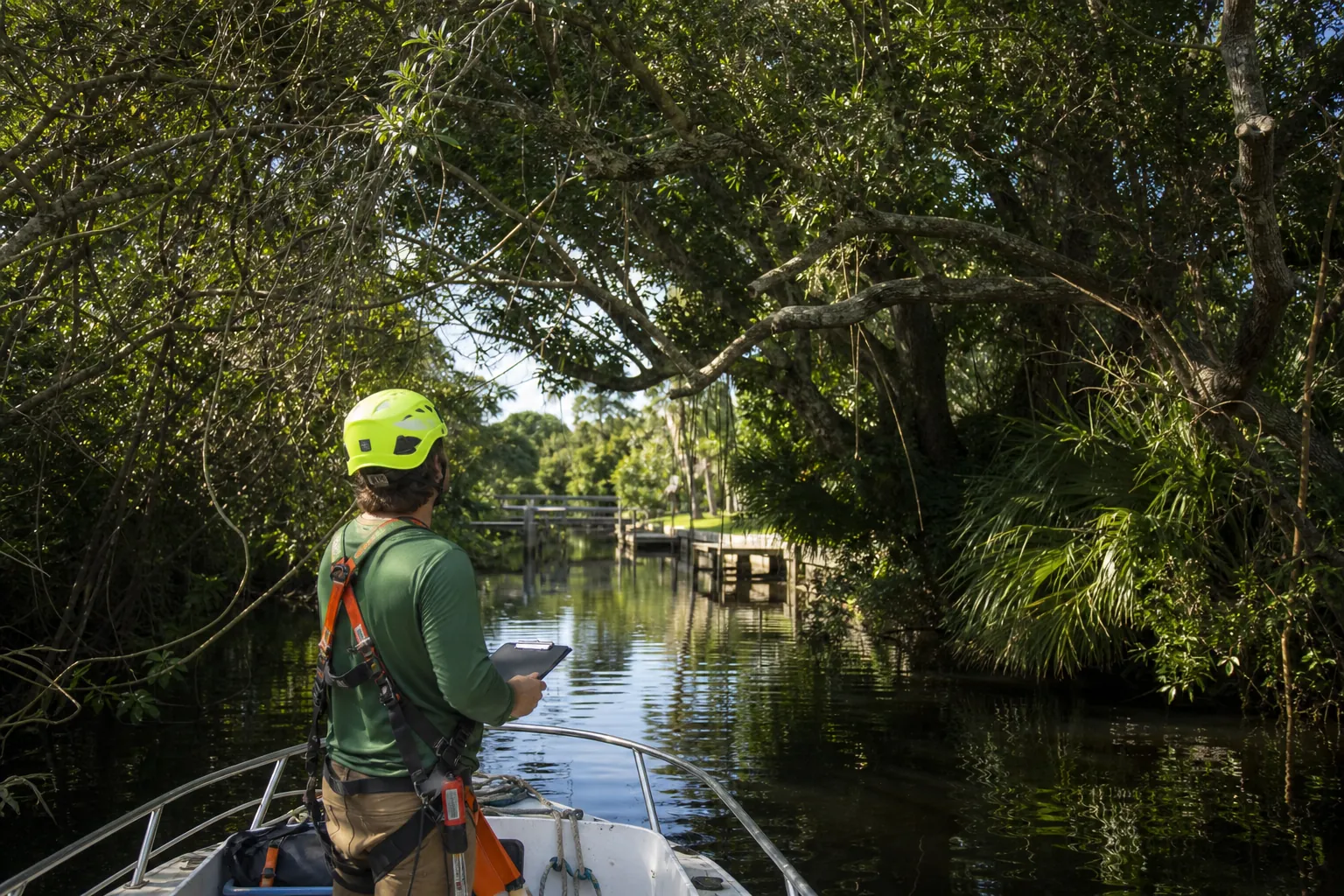
A site assessment should begin with the tree, not the chainsaw. The species, health, branch attachments, lean, canopy balance, and proximity to structures all influence the trimming plan. Arborist reports and tree inspections can provide useful guidance when a tree shows decline, has large defects, or is part of a shared waterfront landscape.
The desired clearance should also be defined before work begins. Boat owners can identify the tallest fixed point on the vessel, including antennas, consoles, towers, or folded covers. They should consider water-level changes and how the boat moves during wind or wake activity. Adequate space at rest may not be adequate while the vessel is moving.
A practical pre-service review may include:
- The boat's height and width in its normal operating configuration
- The approach angle needed to enter the dock or boat lift
- Branches affecting forward visibility or safe turning
- Dead, cracked, rubbing, or heavily weighted limbs over the route
- Nearby roofs, seawalls, fences, utilities, and dock structures
- The tree's likely response to pruning and its future growth direction
- Safe access for workers and appropriate control of falling debris
- Possible city, county, HOA, condo, or environmental requirements
Florida waterfront properties can be subject to local rules or community restrictions. Owners should confirm current requirements with their city or county and, when applicable, their HOA or condo association before authorizing work.
Trimming Methods That Support Tree Health
Selective tree trimming is usually preferable to broad, indiscriminate cutting. Individual branches may be shortened or removed to open a defined travel corridor. Proper cuts at suitable locations help the tree respond more effectively than leaving long stubs or tearing bark.
Crown reduction may be appropriate when specific limbs need to be shortened while retaining a natural branch structure. Canopy thinning can reduce density in selected areas, but it is not a substitute for establishing actual clearance. Excessive interior removal may leave foliage concentrated at branch ends and can create new structural concerns.
Removing too much canopy at once can stress a tree and alter how wind moves through it. This is especially important in Florida, where trees face intense sun, heavy rain, and tropical weather. Cutting only from the waterside can also create an unbalanced canopy. A professional plan considers the whole tree, even when boat access is the immediate priority.
Topping is not a sound solution for a tree that has become too large. It leaves major wounds, removes substantial foliage, and can encourage weakly attached new growth. If a tree cannot safely coexist with the required route, an inspection can help determine whether crown reduction, ongoing management, or tree removal is the more appropriate option.
Managing Difficult Waterfront Work Areas
Branches over water can be difficult to control because crews may have limited ground access. Docks and seawalls are not always suitable work platforms, and cut limbs should not be allowed to strike boats, lifts, roofs, or other property. Rigging may be used to lower sections in a controlled manner.
Crane tree removal may be considered when a hazardous or unsuitable tree cannot be dismantled safely with conventional access. Stump grinding can address the remaining stump after an approved removal when site conditions permit. These services are distinct from routine trimming and should be recommended based on the tree and work area.
Storm-damaged trees need particular caution. Split limbs may be under tension, and a leaning tree can shift unexpectedly. Emergency and hurricane tree removal is intended for urgent tree conditions, not ordinary clearance maintenance. Property owners should keep people away from damaged trees and avoid attempting complex cuts from a ladder, dock, or boat.
When To Schedule Waterfront Tree Care
It is helpful to address growing limbs before they touch a boat cover, roof, or lift. Early trimming often provides more options for directing growth while keeping useful canopy. Waiting until a large limb occupies the entire route may require a more significant cut and a more complex work plan.
Inspect the route periodically and after major weather events. Watch for newly hanging branches, cracks, changes in lean, exposed roots, or limbs resting on structures. A tree inspection can help distinguish a manageable pruning need from a structural issue requiring further action.
Shared waterfront properties may benefit from coordinated planning. HOA and condo tree services can evaluate common docks, canalside trees, parking access, and pedestrian areas as one project. Commercial tree services can likewise help marinas and waterfront businesses manage clearance around operational spaces without overlooking the broader landscape.
Prepare For A Productive Site Visit
Before the crew arrives, move the boat if requested and remove loose items from the dock. Explain how you enter and leave the berth, where visibility becomes limited, and which parts of the vessel need the most clearance. If possible, show the boat in its typical lift or docking position.
Florida Foliage provides tree trimming and related arborist care for Florida properties. For help evaluating branches around a dock, canal, ramp, or boat lift, call (386) 481-7913. A calm site review can clarify the work area, tree condition, and practical options for maintaining boat access.
Call (386) 481-7913 to talk through next steps.