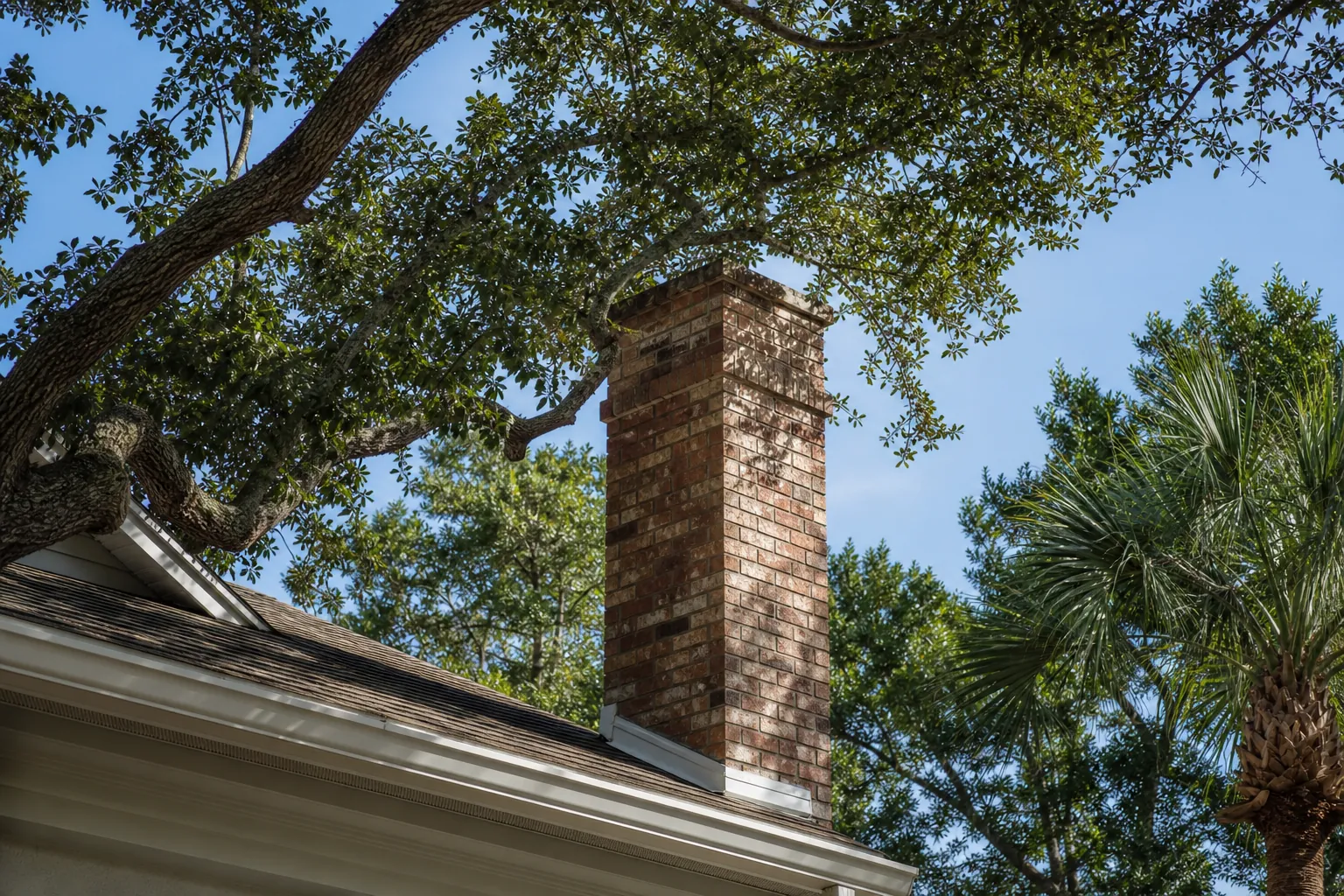
Trees add shade, privacy, and character to Florida properties, but branches growing near a chimney can create avoidable concerns. Leaves and twigs may collect on the roof, limbs can obstruct access, and overhanging growth may place combustible material close to heat and sparks.
Tree trimming for chimney clearance should balance property safety with the health and natural form of the tree. It is not simply a matter of cutting every branch near the roof. The best approach considers branch structure, species, wind exposure, roof conditions, and the location and type of chimney.
Florida Foliage provides professional tree trimming and related arborist care for property owners who need practical solutions around chimneys, roofs, and other structures.
Why Chimney Clearance Matters
A chimney must be able to vent properly, and the surrounding roof area should remain reasonably accessible for inspection, cleaning, and repair. Dense branches can make that work harder while increasing the amount of leaves, needles, seed pods, and small twigs that land near the chimney.
Branches do not need to touch the chimney to cause concern. Wind can move limbs much farther than they appear to travel on a calm day. A branch that seems safely separated may sweep across masonry, flashing, a chimney cap, or nearby roofing during a storm.
Clearance can also help reduce animal access. Overhanging limbs may provide a route for squirrels and other wildlife to reach the roof and chimney area. Trimming cannot prevent every issue, but thoughtful separation removes convenient pathways and makes the area easier to observe.
How Professionals Evaluate Nearby Trees
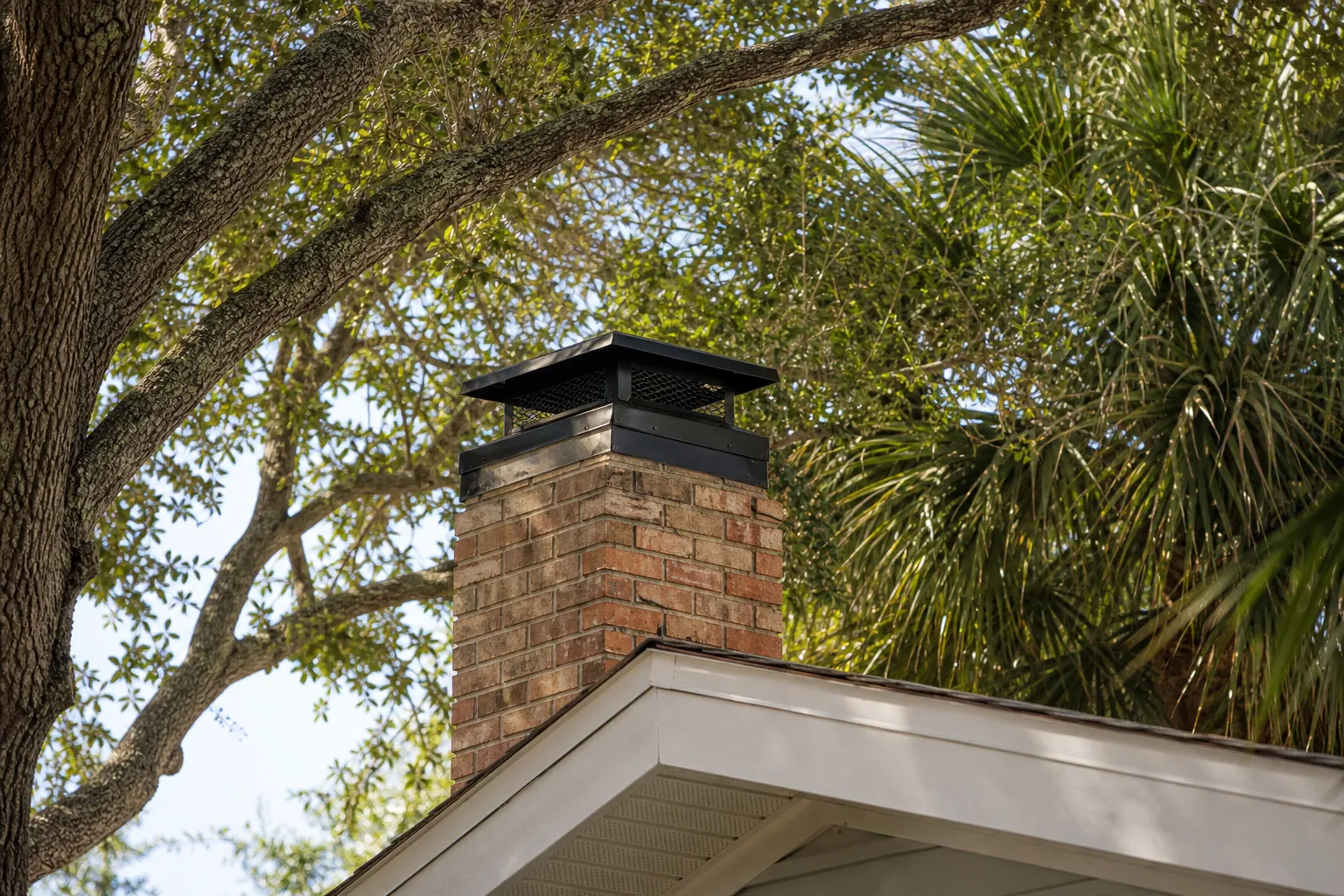
There is no single trimming distance that works for every property. Chimney design, tree species, branch diameter, growth rate, roof pitch, and exposure to prevailing winds all affect the plan. Recommendations from a chimney professional, roofing professional, insurer, or fire safety authority may also influence the required clearance.
A tree inspection begins with more than the limb closest to the chimney. The arborist or tree professional should assess the branch attachment, canopy balance, trunk condition, deadwood, and signs of decay or damage. The goal is to identify which cuts provide useful separation without creating new structural problems.
Common evaluation points include:
- Branch movement: Flexible limbs may sway toward the chimney or roof during wind and heavy rain.
- Future growth: Fast-growing shoots can quickly close a gap that looks adequate after trimming.
- Tree health: Excessive pruning can stress a tree and encourage weak sprouting.
- Cut location: Proper cuts should respect the branch collar rather than leaving long stubs or damaging the trunk.
- Canopy balance: Removing too much weight from one side may affect structure and appearance.
- Work access: Roof height, power lines, fences, pools, and limited equipment access can change how the job is performed.
- Debris control: Cut branches must be lowered or directed carefully to protect roofing, gutters, flashing, and the chimney cap.
Choosing the Right Pruning Method
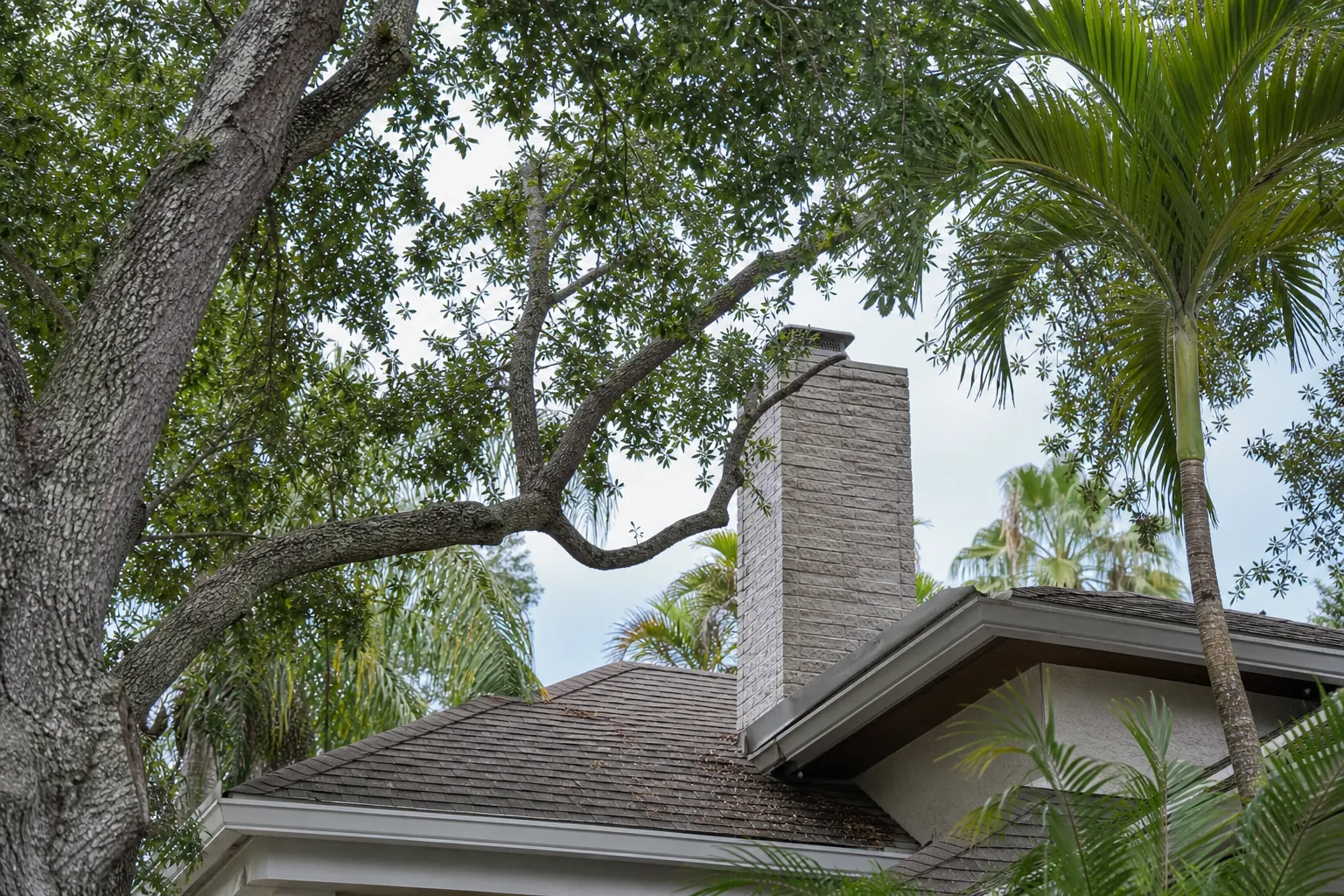
Selective tree trimming is often enough when only a few branches extend toward the chimney. Proper pruning removes or shortens specific limbs while retaining healthy growth elsewhere. This method can establish practical clearance and preserve the tree's natural shape.
Crown reduction may be appropriate when the ends of larger limbs need to be shortened back to suitable lateral branches. Unlike topping, responsible crown reduction works with the tree's existing structure. It requires careful cut selection to avoid leaving unstable stubs or triggering excessive sprout growth.
Canopy thinning may help when dense interior growth contributes to deadwood or limits visibility through the crown. However, thinning is not a substitute for targeted clearance. Removing interior foliage while leaving long limbs over the chimney may do little to address the actual concern.
Tree removal may be considered when a tree is severely compromised, structurally unsuitable for its location, or cannot be managed through reasonable pruning. When access is restricted or the tree is close to the house, crane tree removal may offer a controlled option. An arborist report or tree inspection can help document conditions before a major decision is made.
Florida Weather Changes the Planning Process
Florida trees face thunderstorms, heavy rain, high winds, intense sun, and hurricane conditions. These factors can accelerate growth, expose weak attachments, and move branches toward roof structures. Clearance work should account for storm movement rather than relying only on the tree's position during fair weather.
Timing also matters. Trimming immediately before severe weather is not always practical, especially when tree services are responding to urgent hazards. Routine inspections can identify encroaching limbs, dead branches, and structural defects before hurricane season creates additional pressure.
After a storm, avoid standing under broken or hanging limbs. Do not climb onto a wet or damaged roof to cut branches. Emergency and hurricane tree removal may be needed when limbs have failed onto a structure or a damaged tree presents an immediate concern.
What Property Owners Should Avoid
Working near a chimney often means working above a roof, where ladders, cutting tools, and falling branches create serious risks. DIY trimming becomes especially hazardous when limbs are large, under tension, close to utility lines, or positioned where they could strike the home.
Avoid topping the tree to create rapid clearance. Topping removes major portions of the crown indiscriminately and can lead to decay, sun exposure, and weakly attached sprouts. Also avoid flush cuts that wound the trunk and stub cuts that do not support proper closure.
Never assume a neighbor's tree can be cut without discussion, even if branches extend over a property line. Tree ownership and pruning responsibilities can be complicated. Confirm applicable requirements with your city or county, and seek appropriate guidance before work begins. Local rules may also affect protected trees, debris handling, or substantial pruning.
Maintaining Clearance Over Time
Chimney clearance is an ongoing maintenance issue, not a one-time correction. New shoots can develop rapidly, while storms may bend or break branches that were previously outside the work area. Periodic observation from the ground can reveal changes between professional inspections.
Keep trees, gutters, and chimney care on a coordinated schedule. A tree professional addresses branch structure, while qualified chimney and roofing professionals evaluate components within their respective fields. If tree debris repeatedly accumulates in one roof valley or against the chimney, that pattern can help guide future pruning.
Commercial properties, HOAs, and condos may benefit from documented tree inspections and planned maintenance across shared areas. Florida Foliage offers commercial tree services and HOA and condo tree services, along with tree trimming, crown reduction, canopy thinning, and arborist reports and tree inspections.
Plan Thoughtful Clearance With Florida Foliage
Effective tree trimming for chimney clearance should create useful separation without sacrificing more of the canopy than necessary. A careful evaluation can determine whether selective trimming, crown reduction, or another approved tree service fits the property's needs.
If branches are growing toward your chimney or interfering with safe roof access, contact Florida Foliage at (386) 481-7913. The team can assess the tree and discuss a calm, practical approach to clearance and ongoing care.
Call (386) 481-7913 to talk through next steps.