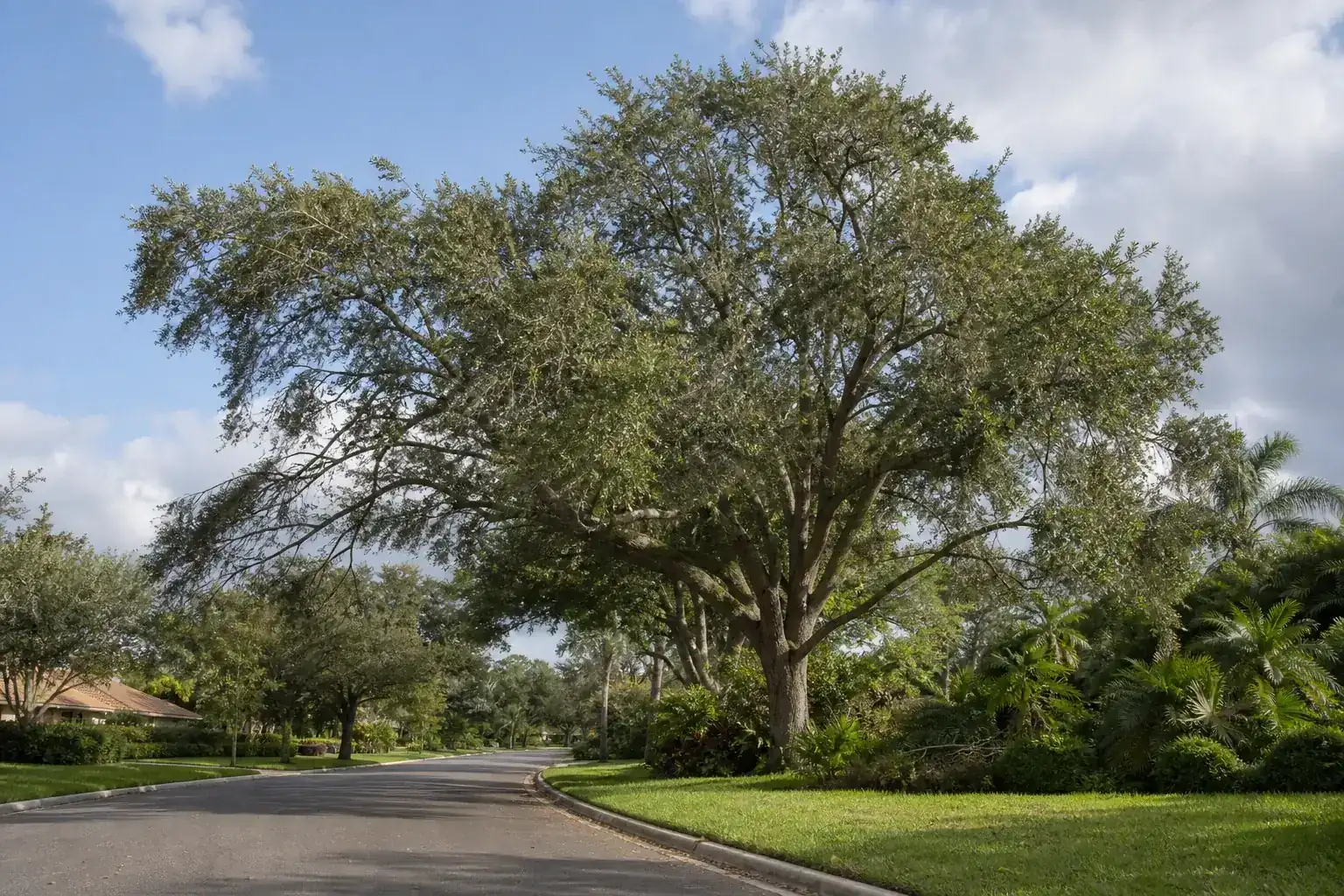
Trees along Florida streets provide shade, character, and welcome relief from the sun. As branches grow toward roads, sidewalks, signs, and driveways, however, they can interfere with visibility and everyday access. Thoughtful tree trimming for street clearance helps address these conflicts without removing more living canopy than necessary.
Street-side trimming requires more than cutting back whichever limb appears inconvenient. The location of each cut affects future growth, branch stability, and the tree’s overall shape. A measured approach can create useful clearance while preserving a balanced canopy and reducing avoidable stress.
Why street clearance matters
Low or wide-spreading branches may create blind spots near corners, obscure signs, brush against taller vehicles, or narrow the usable space over a sidewalk. Limbs can also block a driver’s view when leaving a driveway or parking area. On commercial, HOA, and condo properties, these issues may affect residents, visitors, vendors, and maintenance crews.
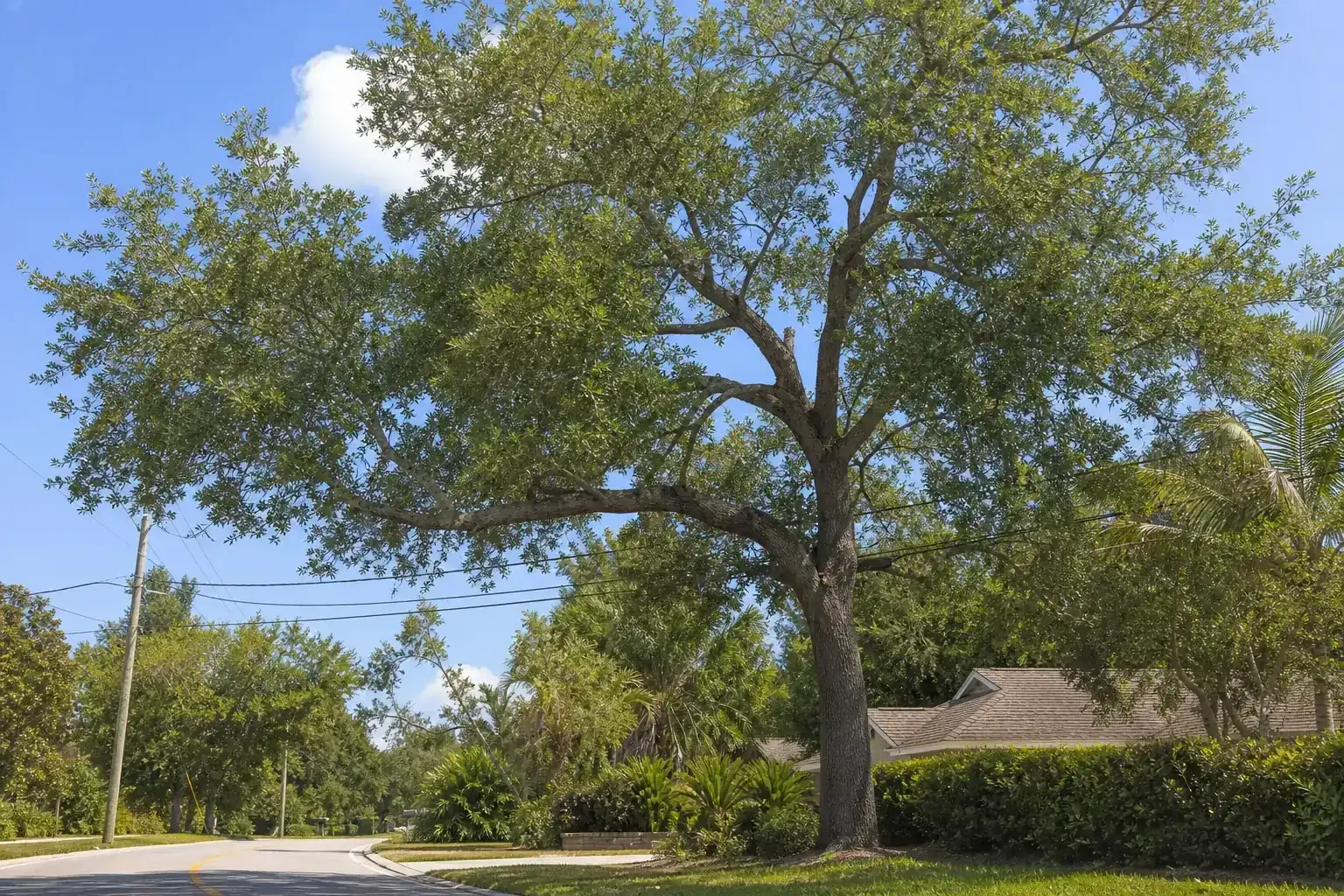
Florida’s storm conditions add another consideration. A branch that already hangs over a travel area may become more hazardous when wind or saturated soil causes movement or failure. Routine inspections and appropriate trimming can identify concerns before hurricane season, although no pruning method can eliminate every storm-related risk.
Property owners should also consider who controls the land around a road. Rights-of-way, easements, and publicly maintained trees may limit what an owner can trim. Requirements differ by location, so confirm applicable rules and any needed authorization with your city or county before work begins.
How arborists evaluate roadside trees
An arborist begins by looking beyond the lowest branch. Tree species, age, condition, trunk structure, branch attachments, surrounding targets, and previous pruning all influence the plan. The assessment should account for current clearance needs and how the tree is likely to respond afterward.
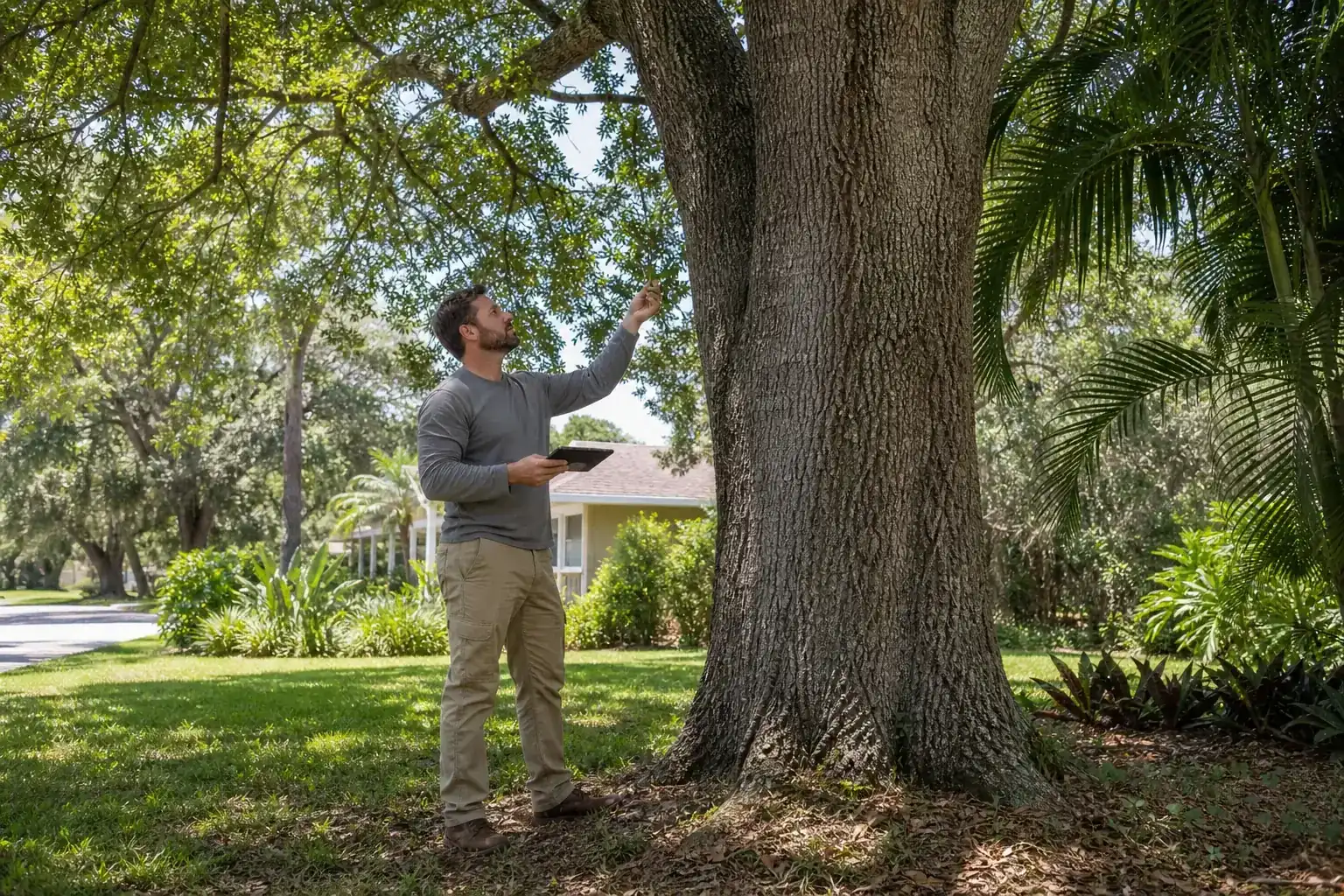
A young tree may benefit from gradual structural training, while a mature tree may need selective cuts distributed across the canopy. If large limbs extend toward traffic, removing them in one aggressive session could create substantial wounds or an unbalanced crown. In some cases, crown reduction can shorten specific branches while retaining suitable lateral growth. Canopy thinning may be useful when carefully applied to selected interior branches, but it should not be used simply to strip out the center of the tree.
Arborist reports and tree inspections can be especially helpful when several parties are involved, such as a property manager, association board, contractor, or local agency. Written observations can document tree condition and clarify why a particular trimming approach is recommended.
What responsible street-clearance trimming includes
Effective clearance work focuses on specific conflicts rather than applying the same shape to every tree. The goal is to provide functional space while respecting natural form and sound pruning practices.
- Reviewing sight lines: The crew should assess views near driveways, intersections, entrances, signs, and pedestrian crossings.
- Identifying the actual obstruction: A few carefully selected branches may be causing the entire conflict, making broad canopy removal unnecessary.
- Choosing appropriate cuts: Pruning back to a suitable branch union supports a more natural response than leaving long stubs.
- Protecting branch collars: Correct cut placement helps the tree compartmentalize the pruning wound.
- Maintaining canopy balance: Removing excessive growth from only the road-facing side can shift weight and distort the tree.
- Planning for future growth: Fast-growing shoots near a previous cut may quickly recreate the same clearance problem.
- Checking overhead conditions: Tall equipment, traffic, nearby structures, and utility lines can change how the work must be performed.
- Managing the work zone: Branch lowering, debris handling, and equipment placement should be planned to reduce disruption around vehicles and pedestrians.
Repeated topping is not a sound clearance strategy. Cutting major limbs to arbitrary points can trigger weakly attached sprouts, leave large wounds, and create a cycle of frequent corrective work. Directional pruning and selective crown reduction generally offer a more deliberate way to manage growth where space is limited.
Timing tree trimming in Florida
There is no single calendar date that is right for every Florida tree. Species, condition, flowering patterns, active pests, weather, and the urgency of the obstruction all matter. A branch blocking an important sight line may require prompt attention, while elective structural work might be scheduled for a more suitable period.
It is wise to inspect street-side trees before hurricane season, particularly where heavy limbs extend above roads, parking areas, or access lanes. Inspection does not mean every tree needs extensive pruning. It helps distinguish routine clearance needs from defects that deserve closer evaluation.
After a storm, avoid standing beneath hanging limbs or attempting to cut branches under tension. Emergency and hurricane tree removal may require specialized equipment and controlled rigging. Crane tree removal can be appropriate where damaged or difficult trees cannot be handled safely with conventional access.
When trimming may not solve the problem
Some conflicts cannot be managed indefinitely through pruning. A tree may be structurally compromised, severely declining, repeatedly damaged by vehicles, or planted in a space that cannot support its mature size. In those cases, tree removal may be considered after inspection and review of local requirements.
Stump grinding can address the remaining stump when removal is completed, subject to site conditions and underground considerations. For undeveloped or heavily overgrown roadside parcels, land and lot clearing or brush hogging may help restore access, but these services serve a different purpose from precision tree trimming.
Commercial tree services and HOA and condo tree services can also support broader maintenance planning. Grouping inspections by street, building, or common area helps property managers prioritize visibility concerns, dead branches, clearance needs, and storm preparation without treating every tree identically.
Preparing for professional tree service
Before requesting service, note where the conflict occurs and when it is most noticeable. A branch may block a sign only from one travel direction, or a delivery vehicle may encounter limbs that passenger cars clear easily. Photos and a simple description can help explain the concern.
Mark property boundaries if they are unclear, identify known access restrictions, and mention nearby irrigation, gates, parked vehicles, or sensitive landscaping. Do not assume that a tree beside the street belongs to the adjacent property. Confirm ownership and any right-of-way responsibilities with the appropriate city or county office.
Florida Foliage provides tree trimming, tree inspections, crown reduction, canopy thinning, and related tree care for street-side conditions. For a calm, site-specific discussion about tree trimming for street clearance, call (386) 481-7913.
Call (386) 481-7913 to talk through next steps.