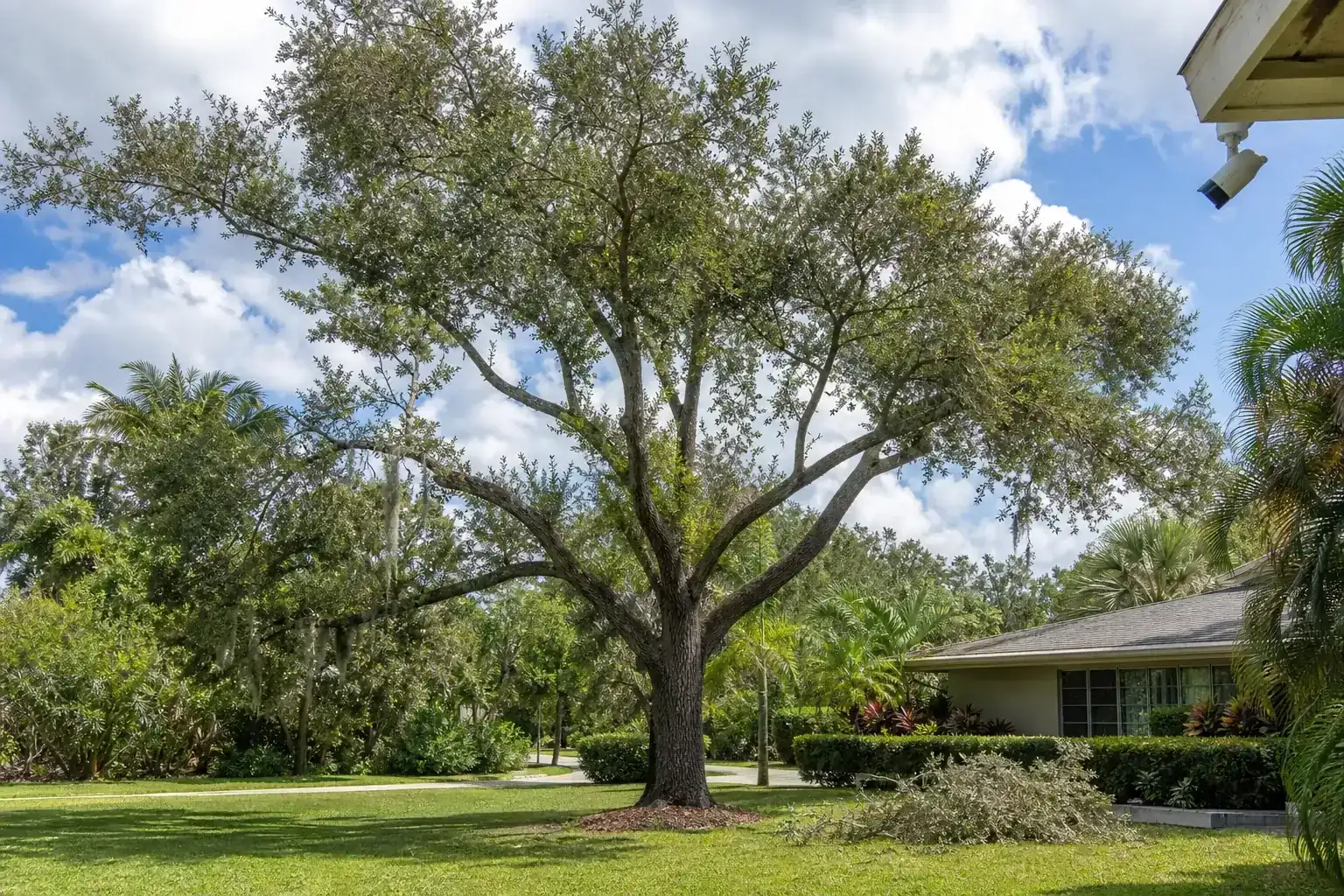
Security cameras help Florida property owners monitor entrances, driveways, parking areas, gates, and building perimeters. Yet even a well-positioned camera can become less useful when branches, palm fronds, vines, or dense foliage block its view. Moving vegetation can also create repeated motion alerts, cast confusing shadows, and make nighttime images harder to interpret.
Tree trimming near security cameras requires more than cutting whatever appears on screen. The work should improve visibility without damaging the tree, exposing it to unnecessary stress, or putting workers near electrical components and elevated equipment without a plan. Florida Foliage approaches this work as both a visibility issue and a tree-care task.
Why foliage interferes with security camera performance
A branch does not need to cover the entire lens to affect a camera. Leaves close to the device may dominate the image, reflect infrared illumination at night, or trigger motion detection whenever the wind blows. Seasonal growth can gradually narrow the field of view until important areas are hidden.
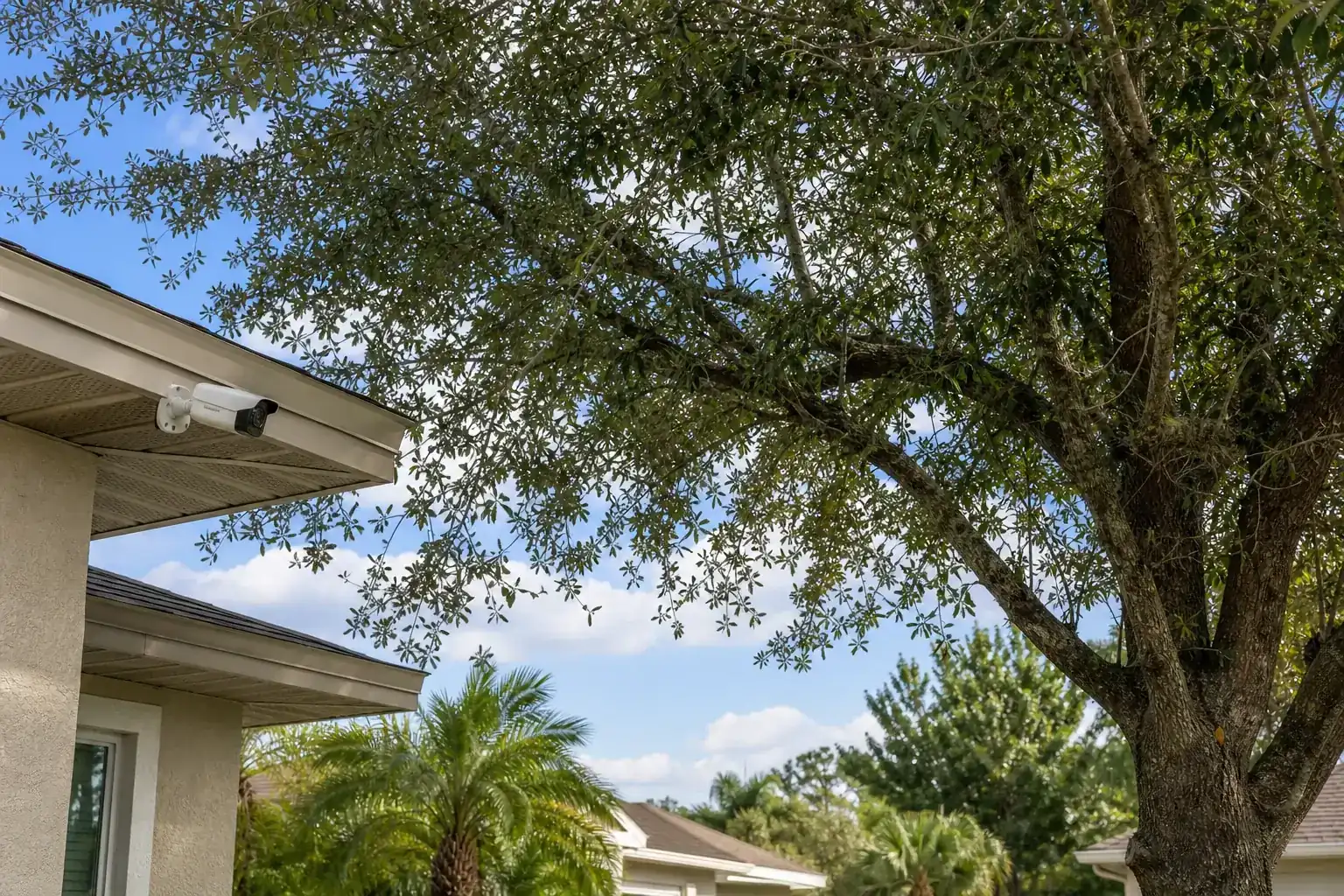
Florida's long growing season, frequent rain, storms, and vigorous plant growth can make these problems return quickly. Fast-growing shoots may cross a camera view soon after routine landscape maintenance. Mature trees can also develop heavy limbs that sag lower over time, especially after prolonged rain or storm damage.
Before trimming begins, review live and recorded footage during daylight and after dark. A branch that seems harmless at noon may create glare or deep shadows at night. Check each camera's full viewing angle rather than looking only at the center of the image.
What to evaluate before any branch is cut
Start by identifying what the camera needs to capture. An entrance camera may need a clear view of faces and the approach path, while a parking-area camera may require a wider view beneath a canopy. Defining the purpose helps avoid excessive pruning.
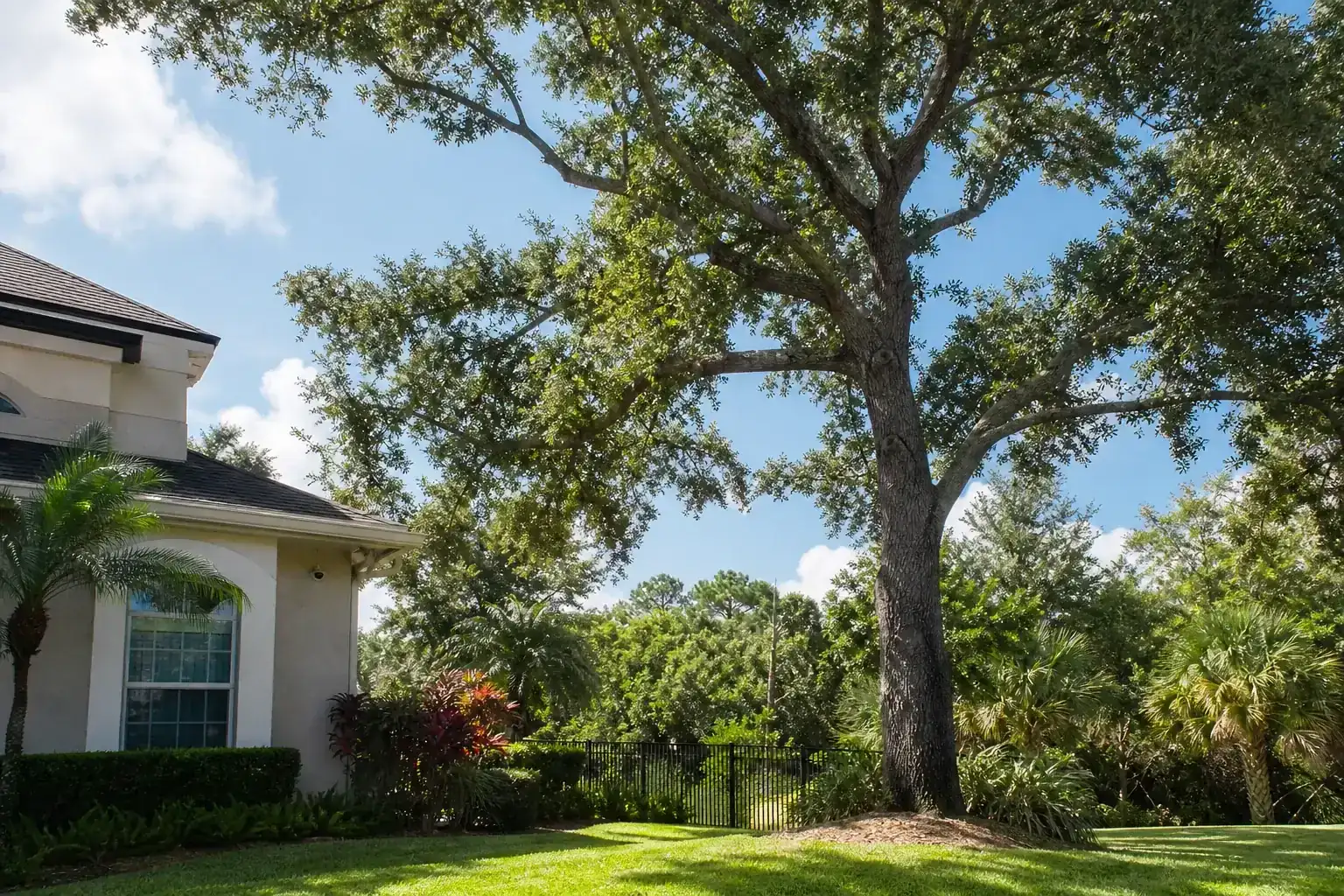
Inspect the tree from the ground for dead limbs, cracks, cavities, hanging branches, weak attachments, or storm damage. These conditions may change the scope from simple trimming to a tree inspection or another appropriate service. Also note where camera cables, low-voltage wires, building fixtures, fences, and roofs sit in relation to the branches.
A practical pre-trimming review should include:
- The required sightline: Mark the entrance, gate, walkway, parking space, or perimeter that must remain visible.
- Day and night performance: Look for infrared reflection, glare, shadows, and moving leaves that cause unnecessary alerts.
- Branch structure: Identify which limbs create the obstruction and where proper pruning cuts could be made.
- Camera hardware: Note housings, mounts, conduit, exposed cables, solar panels, and nearby lighting.
- Tree condition: Watch for decay, broken limbs, leaning trunks, root disturbance, or other concerns that warrant professional assessment.
- Access: Consider whether ladders, climbing, or specialized equipment can be used without striking the camera or damaging the property.
- Future growth: Account for the direction of new shoots so the cleared view lasts without removing unnecessary foliage.
Choosing the right pruning approach
The best solution is usually selective trimming, not creating a large opening in the canopy. Strategic cuts can clear the camera's viewing corridor while preserving healthy branches elsewhere. The goal is to balance visibility, branch structure, and the tree's natural form.
Canopy thinning may help where dense interior growth creates layers of leaves in front of a wide-angle camera. It removes selected branches to improve spacing and light movement without stripping the canopy. Crown reduction may be considered when the overall height or spread of a tree creates conflicts, but it should be performed with careful cuts that retain suitable lateral branches.
Avoid topping or randomly shortening branches. Poor cuts can encourage weak sprouts, leave large wounds, and create more maintenance near the camera. Removing too much foliage at once can also stress a tree and expose previously shaded limbs or property areas to intense sun.
Sometimes pruning is not enough. A severely damaged, declining, or poorly positioned tree may need an arborist report or tree inspection to determine an appropriate next step. If removal is recommended based on site conditions, Florida Foliage provides tree removal, crane tree removal, and stump grinding. Property owners should confirm any applicable tree-work requirements with their city or county before work begins.
Protecting cameras, wiring, and nearby property
Camera systems should be treated as sensitive equipment. Branches can spring, rotate, or drop differently than expected when cut. Work planning should establish a controlled area beneath the tree and prevent debris from contacting lenses, mounts, lights, roofs, vehicles, or fencing.
Do not use camera conduit, brackets, or nearby fixtures as handholds or equipment anchors. Cables may be concealed by foliage or attached along trunks and walls, so they should be located before cutting or moving branches. When possible, the camera operator or property manager should remain available to verify the image as work progresses.
After trimming, clean loose debris around the camera without changing its aim. Then review the live feed, motion zones, and nighttime image. Vegetation may have hidden an existing alignment issue, and the newly opened view could require camera settings to be adjusted by the system owner or security provider.
Planning for storms and recurring growth
Camera visibility should be part of routine property inspections, especially before Florida's storm season and after severe weather. A clear view today can change when wind bends limbs, rain weighs down foliage, or broken branches lodge in the canopy.
After a storm, avoid standing beneath hanging or unstable limbs. Emergency and hurricane tree removal may be appropriate when damaged trees threaten structures, access routes, or equipment. Crane tree removal can be used for certain complex locations where controlled handling is needed.
Commercial properties, HOAs, and condominiums often benefit from reviewing all cameras and trees as one coordinated system. Commercial tree services and HOA and condo tree services can address multiple sightlines, parking areas, sidewalks, gates, and shared spaces. For overgrown undeveloped sections that affect broader visibility, land and lot clearing or brush hogging may be relevant, depending on the vegetation and site goals.
When to request professional tree care
Professional assistance is especially useful when branches are large, elevated, storm-damaged, difficult to access, or close to buildings and camera equipment. It is also wise when the correct pruning point is unclear or when opening the sightline could significantly alter the canopy.
Florida Foliage can evaluate tree trimming near security cameras and recommend a measured approach based on the tree, camera view, and surrounding property. Available services include tree trimming, canopy thinning, crown reduction, arborist reports and tree inspections, along with the other tree-care options noted above.
For calm, practical help restoring camera visibility while considering tree health, call Florida Foliage at (386) 481-7913 to discuss the site and arrange an evaluation.
Call (386) 481-7913 to talk through next steps.