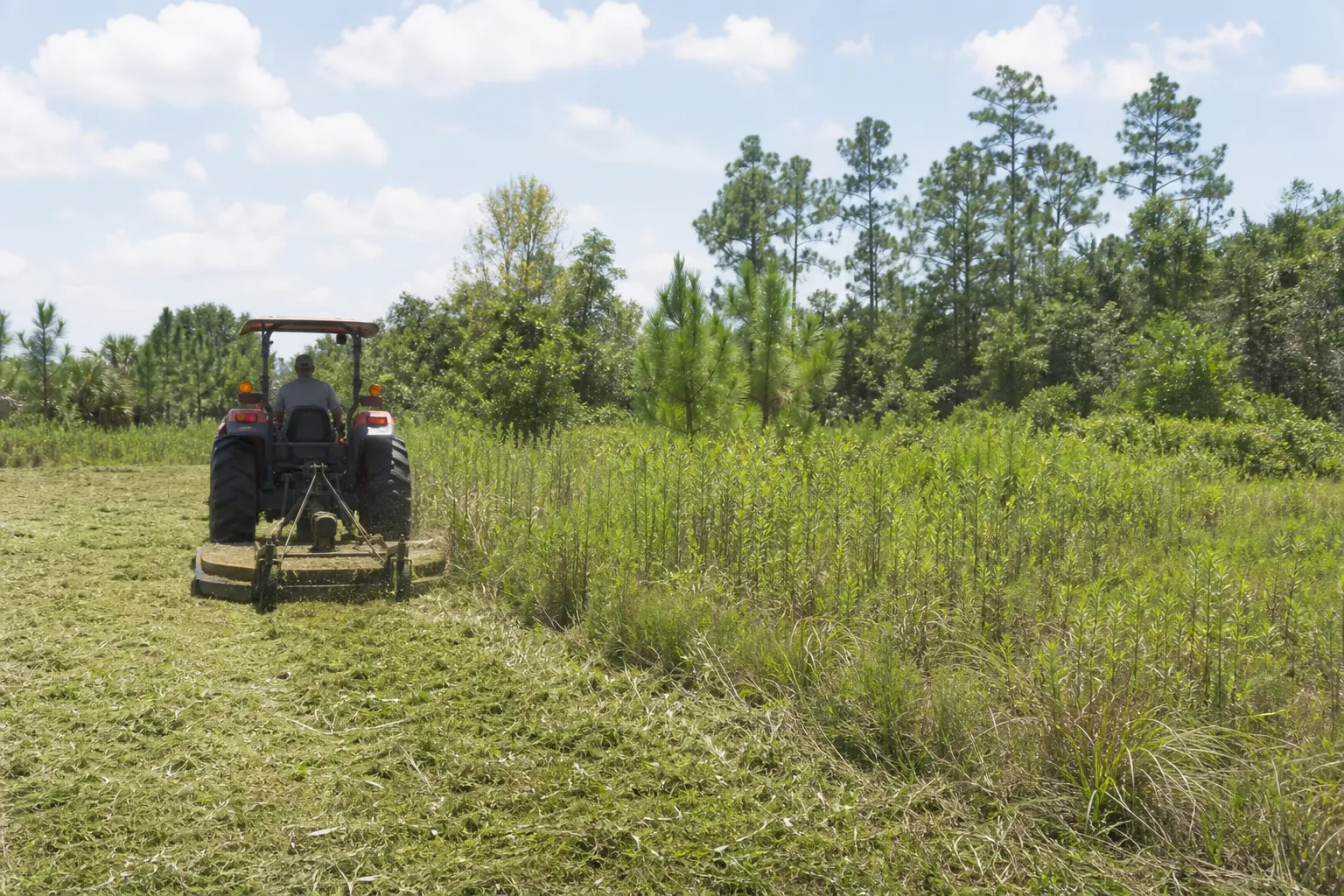
There is no single brush hogging schedule that fits every vacant property in Port Orange. The right frequency depends on vegetation growth, drainage, access, nearby structures, and what you plan to do with the land. A practical approach is to inspect the property regularly and schedule service before growth becomes dense enough to hide obstacles, restrict access, or complicate future clearing.
Start With the Current Condition of the Property
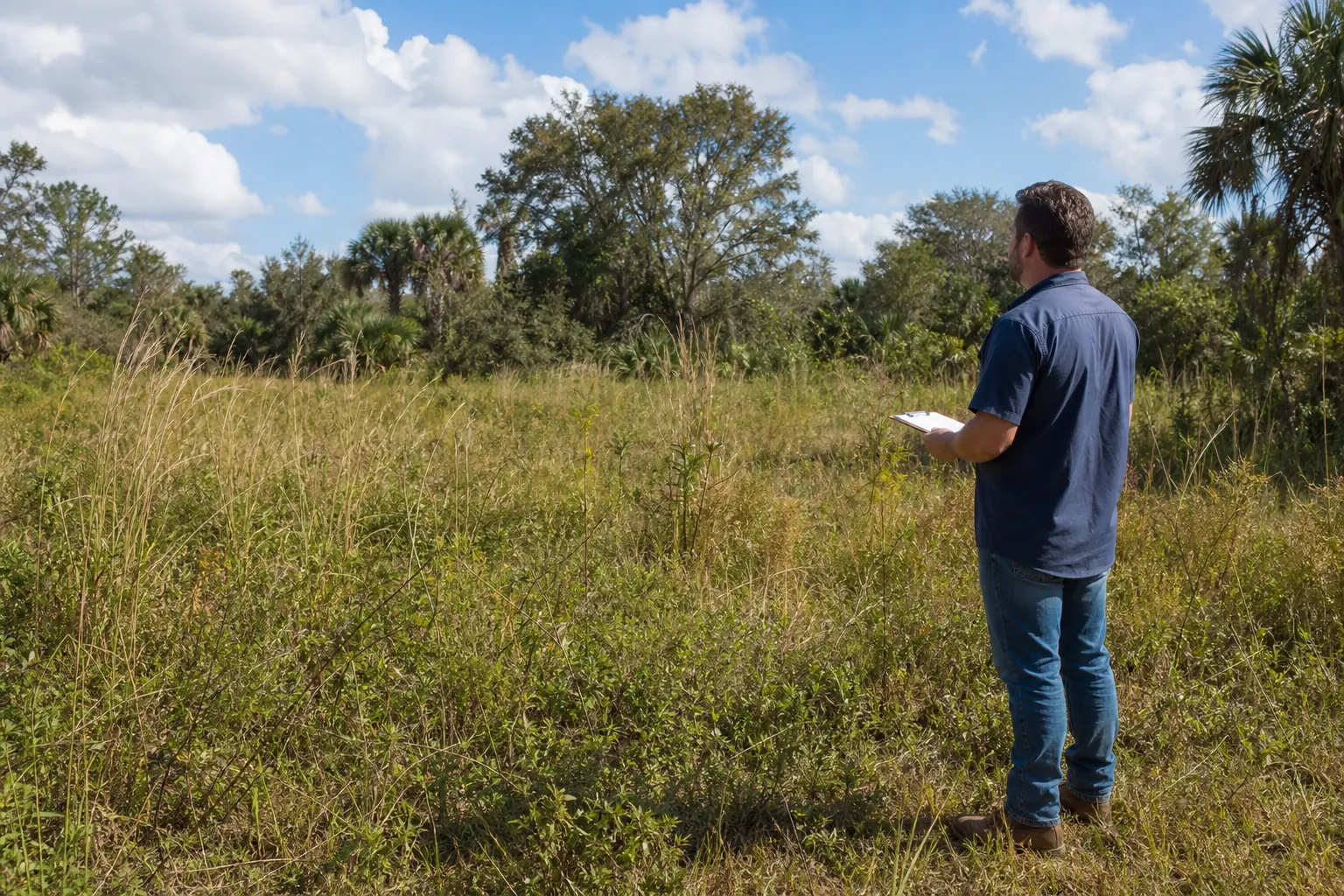
Before choosing a brush hogging frequency, walk the land from safe, accessible areas and document what is growing. A lot covered mainly with grasses and light brush may need a different schedule from one with saplings, vines, fallen limbs, or dense woody growth. Also note whether vegetation is uniform or concentrated along drainage areas, fence lines, and property edges.
Look for objects that could affect mowing, including stumps, rocks, wire, dumped materials, low branches, and uneven ground. Do not enter sections that appear unstable, flooded, or difficult to see through. A professional site review can help determine whether brush hogging is appropriate or whether land and lot clearing, tree trimming, stump grinding, or tree removal should come first.
Take dated photographs from the same locations during each inspection. Comparing those images makes it easier to see how quickly the vegetation returns and set a schedule based on the property rather than the calendar alone.
Base Frequency on Growth and Intended Use
Vacant land maintained for occasional access does not necessarily require the same brush hogging frequency as a property being prepared for surveys, construction planning, regular inspections, or eventual sale. Decide what level of access and visibility you need, then schedule work before growth interferes with that purpose.
During periods of faster growth, inspect more often and shorten the interval if brush begins closing established paths or obscuring important features. During slower growth, service may be needed less frequently. Weather, shade, soil moisture, and the types of plants present can all change the pace of regrowth, even across different parts of one lot.
A useful decision point is whether vegetation still allows safe, practical access and clear observation of the ground. If routine visits are becoming difficult, waiting longer may make the next service more involved. Consistent maintenance generally makes planning simpler because the crew can work from known access points and previously identified site conditions.
Use Regular Inspections to Adjust the Schedule
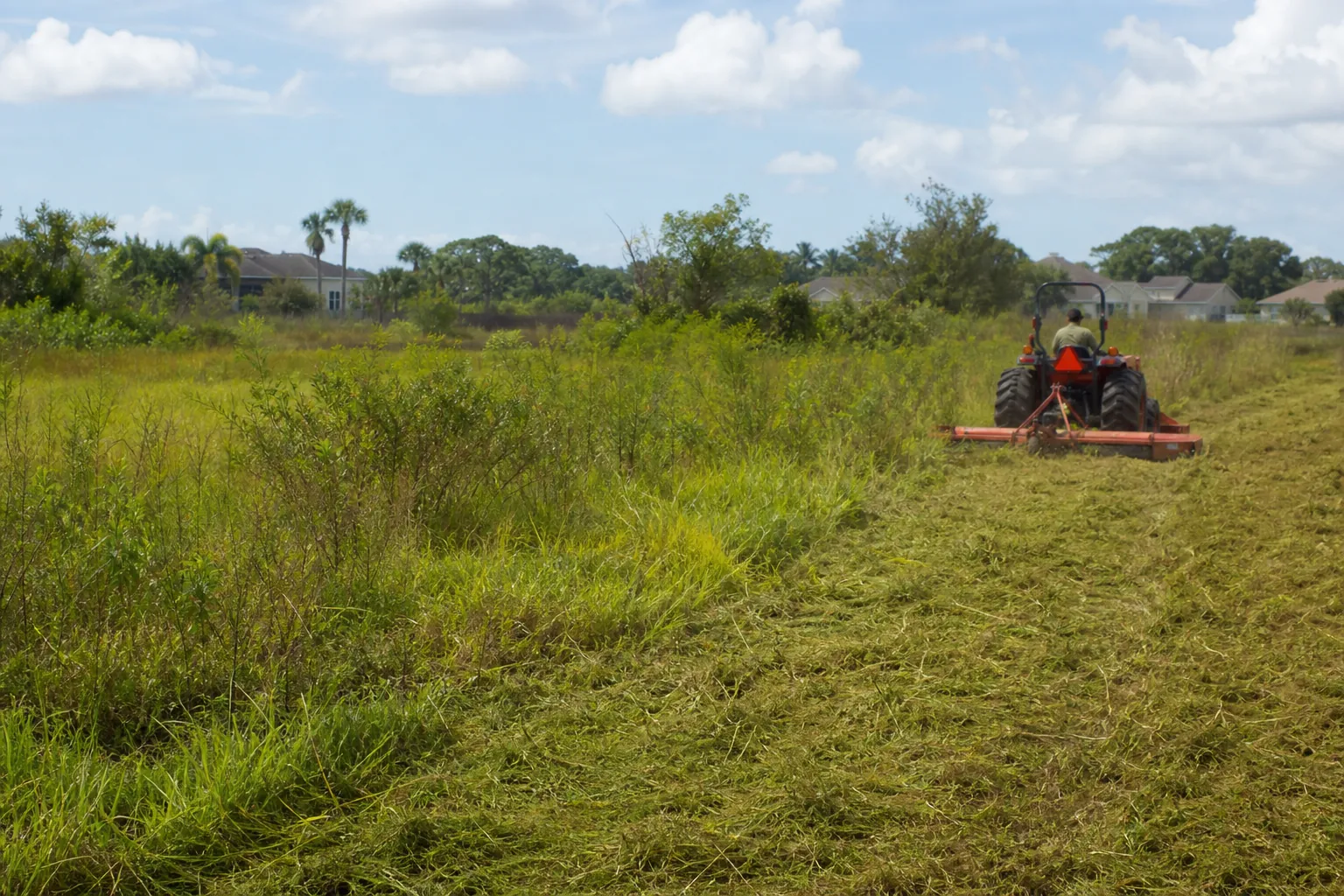
Instead of setting one permanent interval, create an inspection routine and adjust brush hogging when conditions change. Inspect after periods of strong growth, heavy weather, or extended time away from the property. Storms can leave fallen limbs, leaning trees, or debris that should be assessed before machinery enters the site.
During each review, check:
- Whether access roads, gates, paths, and property markers remain visible
- Whether tall grass or brush is concealing stumps, holes, debris, or drainage features
- Whether vines and woody growth are spreading into areas previously maintained
- Whether low limbs or fallen trees are blocking equipment access
- Whether wet or soft ground could make current conditions unsuitable for machinery
- Whether nearby occupied properties call for more frequent edge maintenance
Keep brief notes after every inspection. Record growth conditions, blocked areas, storm damage, and any work completed. Over time, this property-specific record will show whether the existing frequency is adequate or needs seasonal adjustment.
Separate Brush Hogging From Other Land Work
Brush hogging controls suitable grass and brush, but it is not a substitute for every type of property maintenance. Trees with structural concerns, large fallen material, substantial stumps, and dense woody vegetation may require different equipment or a separate scope of work. Identifying those conditions early helps you avoid treating the entire lot as a mowing project.
If trees limit access, tree trimming, canopy thinning, crown reduction, or tree removal may need to be evaluated. Stump grinding may be relevant where old stumps interfere with planned access or future use. Larger projects may call for land and lot clearing rather than recurring brush hogging alone. Tree inspections and arborist reports can also support decisions when tree condition is part of the concern.
Requirements can vary by city, county, property, and project. Before removing protected trees or making significant changes, confirm current requirements with the appropriate city or county. For related planning information, read this guide to protected tree removal permit requirements.
Build a Practical Plan for Your Port Orange Lot
Begin by defining the result you need. You may want to preserve basic access, keep boundaries visible, prepare for professional inspections, or maintain a more consistently open lot. Share that goal when discussing the property so the proposed work matches its intended use.
Next, mark known boundaries and identify access points without relying on vegetation lines as legal property markers. Point out drainage areas, buried utilities you know about, fences, wells, septic components, debris, and other site features. If the boundaries are uncertain, address that question before work begins. Confirm any applicable city, county, HOA, or other property requirements directly with the responsible organization.
After the initial service, schedule a review before vegetation returns to a condition that restricts access. Use photographs and notes to decide whether to maintain the interval or change it. A flexible plan based on observed regrowth is more useful than choosing a frequency without first considering the lot's condition, purpose, and seasonal changes.
Discuss Brush Hogging for Your Property
Florida Foliage provides brush hogging and land and lot clearing. For a calm, practical conversation about your vacant property in Port Orange, call (386) 481-7913.
Call (386) 481-7913 to talk through next steps.