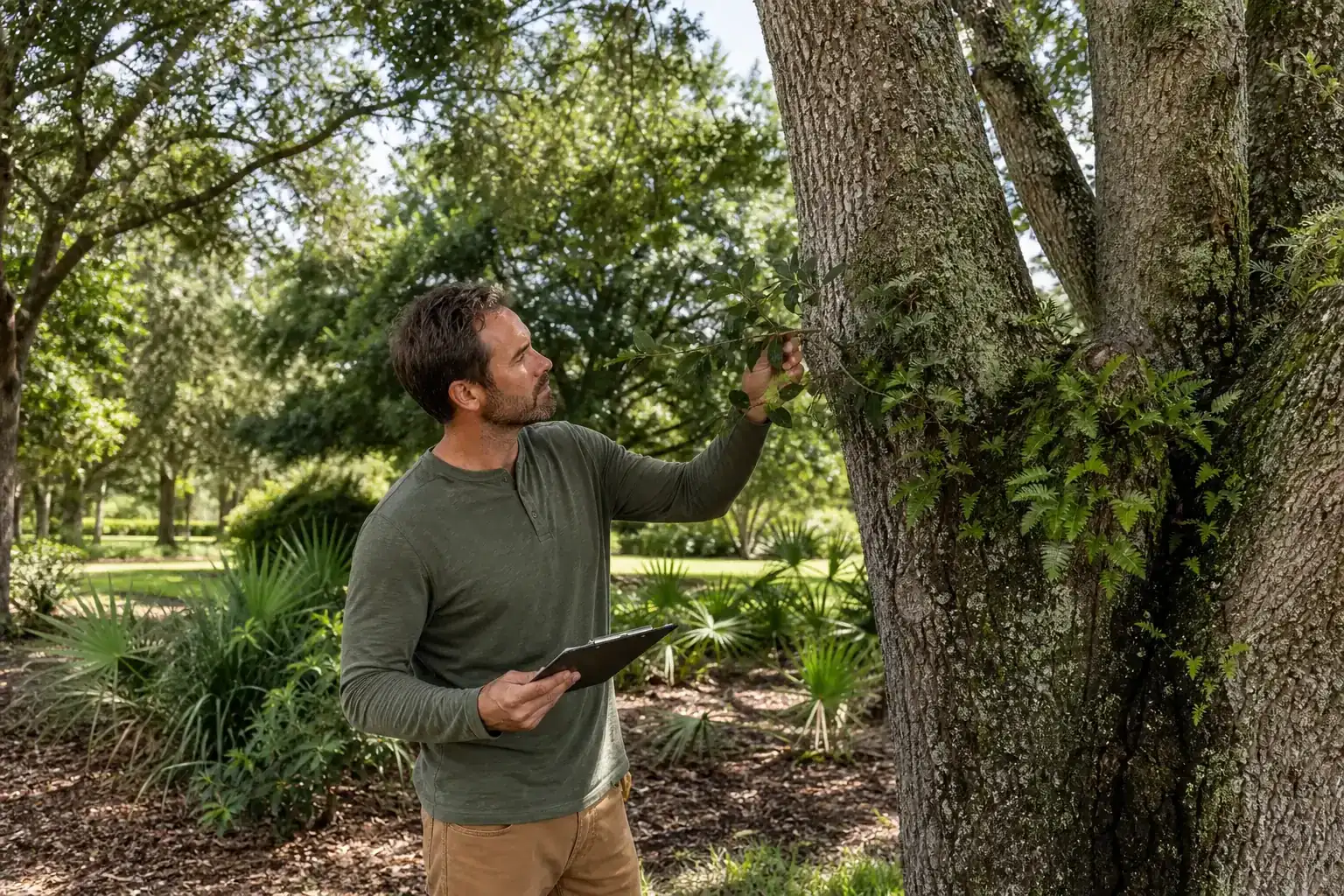
Before removing a tree in DeLand, determine whether local rules protect it and whether approval is required. Permit requirements can depend on the property's jurisdiction, the tree's characteristics, its condition, and the proposed work. Do not assume that ownership of the property automatically allows removal. A careful review before scheduling tree removal can help you avoid preventable delays and choose an appropriate next step.
Start by Confirming Which Local Authority Applies
A DeLand mailing address does not always tell you which government has authority over tree removal. The property may be within city limits or under county jurisdiction, and the applicable process can differ. Begin by confirming the property's jurisdiction through official city or county resources. Then contact the appropriate planning, development, permitting, or land management office and ask which current tree rules apply.
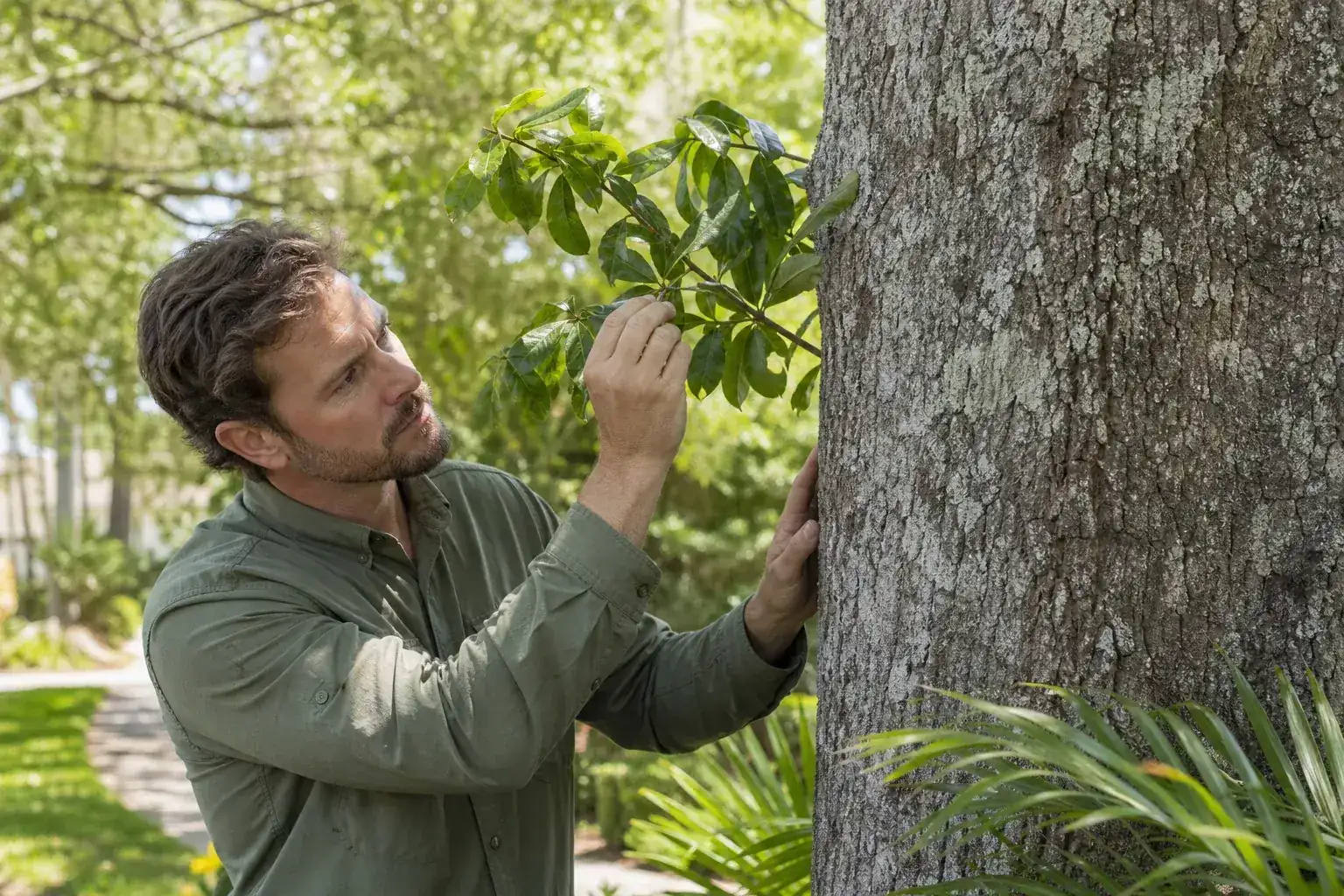
Explain the property type, tree location, proposed work, and reason for removal. Ask whether the tree could be protected based on species, size, condition, placement, or another local standard. If the property is part of an HOA or condominium community, review its governing documents as well. Community approval may be separate from government authorization. Commercial properties may also have approved landscape plans or site conditions that affect changes to existing trees.
Because requirements can change, confirm the current process directly with the city, county, and any governing association before work begins.
Understand What May Make a Tree Protected
The term “protected tree” generally refers to a tree covered by local preservation or land development requirements. Protection may depend on several factors rather than one simple label. A tree's species and trunk measurement may matter, but so can its location, health, relationship to construction, or presence within a designated area. Local rules may also distinguish between removal and pruning that substantially changes the canopy.
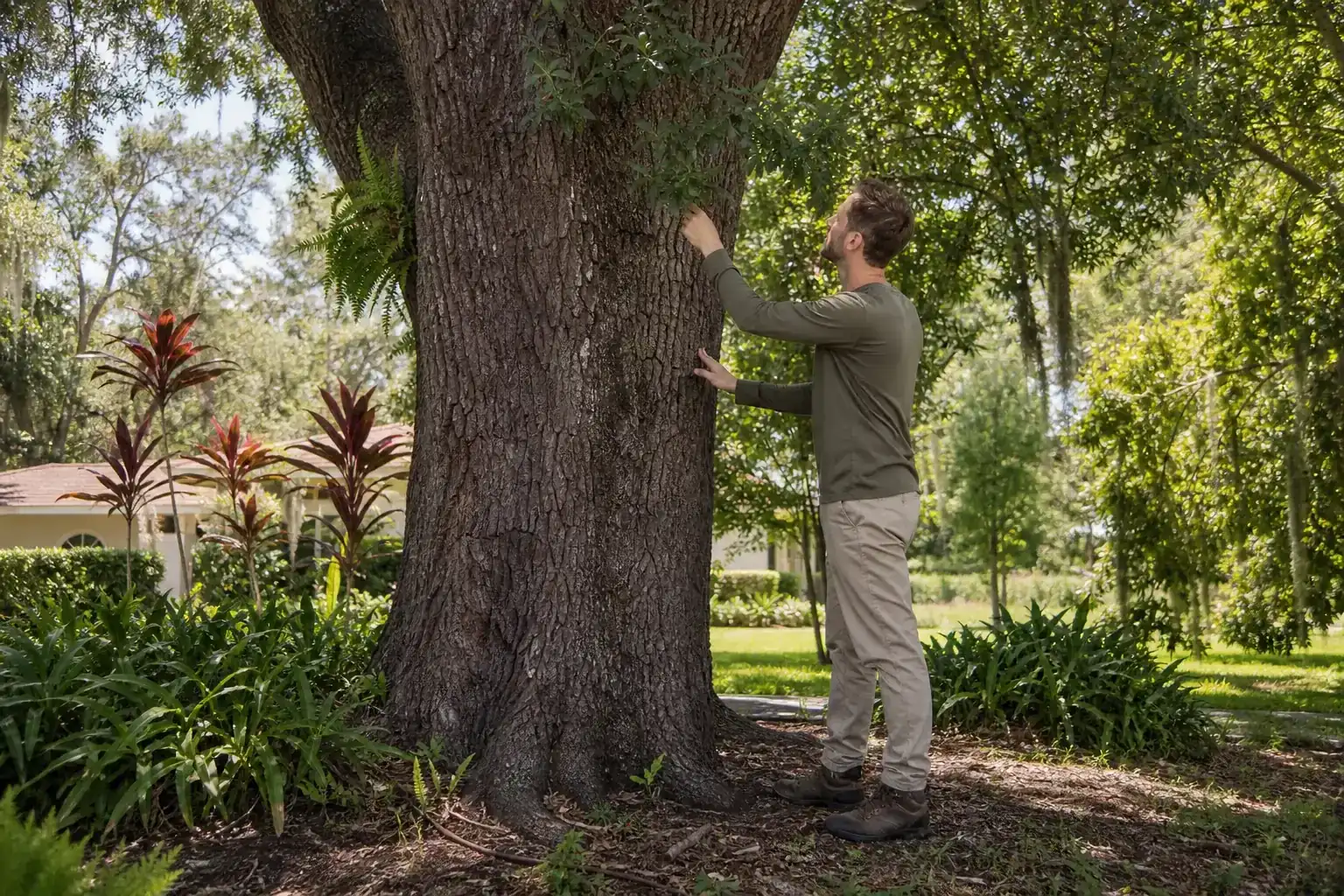
A visual guess is not enough to determine whether a tree is protected. Identify the tree as accurately as possible, note where it stands, and measure only according to the method required by the reviewing authority. If the species, condition, or structural stability is unclear, a tree inspection or arborist report may provide useful documentation for the decision-making process.
Keep in mind that a declining, damaged, or inconvenient tree is not automatically exempt from review. Ask the appropriate authority whether an exemption exists and what evidence is required before relying on it.
Gather Useful Information Before Applying
Prepare clear information before contacting the local authority or submitting any required application. Complete documentation can make it easier for reviewers to understand the request and may reduce follow-up questions. The exact materials vary, so use the current city or county instructions rather than relying on an old checklist or a neighbor's experience.
- Confirm the property address, parcel information, and governing jurisdiction.
- Photograph the entire tree, trunk, canopy, visible defects, and surrounding structures.
- Mark the tree's approximate location on a site plan, survey, or clear property sketch.
- Record the tree species if known and any measurements requested by the authority.
- Describe why removal is being considered and whether trimming was evaluated.
- Request a tree inspection or arborist report if professional documentation is needed.
- Check for separate HOA, condominium, commercial site, or development restrictions.
Keep copies of submitted documents, correspondence, decisions, and any conditions attached to an approval. Written records are more reliable than informal assumptions about what is allowed.
Evaluate Removal Against Other Tree Work
Permit review and tree-care planning are related, but they are not identical. Local authorization determines whether proposed work is allowed. A tree assessment helps determine what work is appropriate for the tree and site. Depending on the circumstances, tree trimming, canopy thinning, or crown reduction may address concerns without removing the entire tree. These options are not suitable for every tree, especially when severe damage, instability, or site conflicts are present.
When removal is necessary, access and nearby obstacles can affect the work plan. Some sites may call for crane tree removal, while others allow a different approach. Stump grinding is also a separate decision and may need to be considered in relation to future planting, landscaping, utilities, or construction.
Ask whether the local approval covers only removal or includes conditions for replacement, documentation, or site restoration. Do not treat a permit decision as a substitute for evaluating the safest practical method of completing the authorized work.
Plan Carefully for Storm Damage and Urgent Conditions
Storm damage can create an urgent need to address a broken, leaning, uprooted, or fallen tree. Even when immediate action appears necessary, document the condition before altering the site when it is safe to do so. Take photographs from several angles and record damage to the trunk, roots, canopy, buildings, vehicles, fences, or access areas. This information may be useful when explaining why emergency or hurricane tree removal was necessary.
Contact the appropriate city or county office to confirm whether emergency circumstances change the normal review process. Do not assume that every storm-damaged tree is automatically exempt. If power lines are involved, keep away and contact the responsible utility or emergency authority rather than approaching the tree.
After immediate hazards are addressed, confirm whether follow-up documentation, stump work, debris handling, or replacement requirements apply. For broader property cleanup, distinguish tree removal from land and lot clearing or brush hogging, since different activities may be reviewed differently.
Get Practical Help With Your Next Step
If you are evaluating a protected tree in DeLand, first confirm current requirements with the city, county, and any applicable association. Florida Foliage provides tree inspections, arborist reports, tree removal, tree trimming, stump grinding, emergency and hurricane tree removal, crane tree removal, canopy thinning, and crown reduction. For a calm discussion of the tree and proposed work, call (386) 481-7913.
Call (386) 481-7913 to talk through next steps.