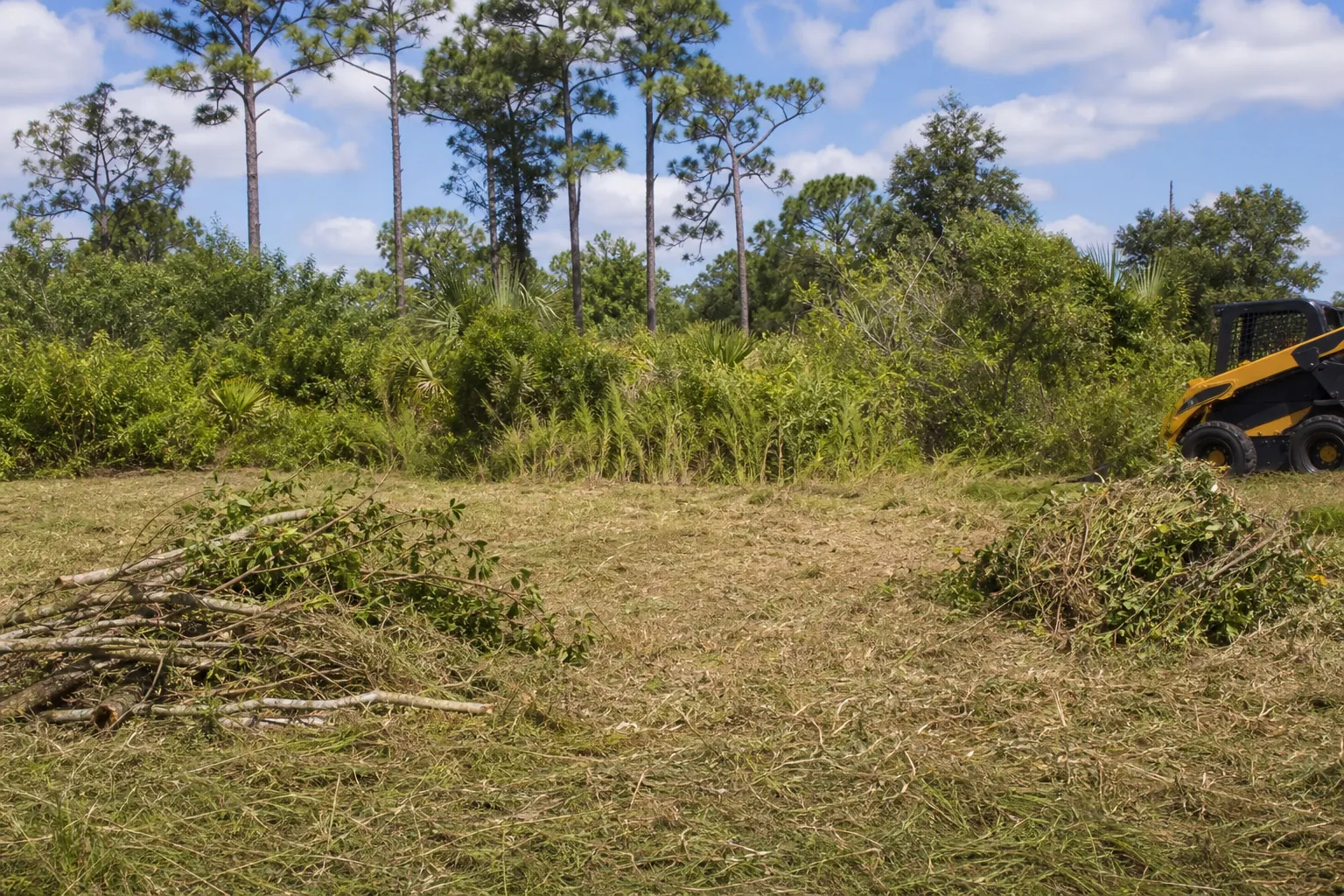
Preparing a vacant Port Orange lot for brush hogging starts before equipment reaches the property. A careful walk-through can reveal access problems, hidden debris, trees that need evaluation, and areas where brush hogging may not be appropriate. The goal is to define the work clearly, reduce avoidable obstacles, and help the crew understand what should stay and what should be cleared.
Start With a Complete Walk-Through of the Lot
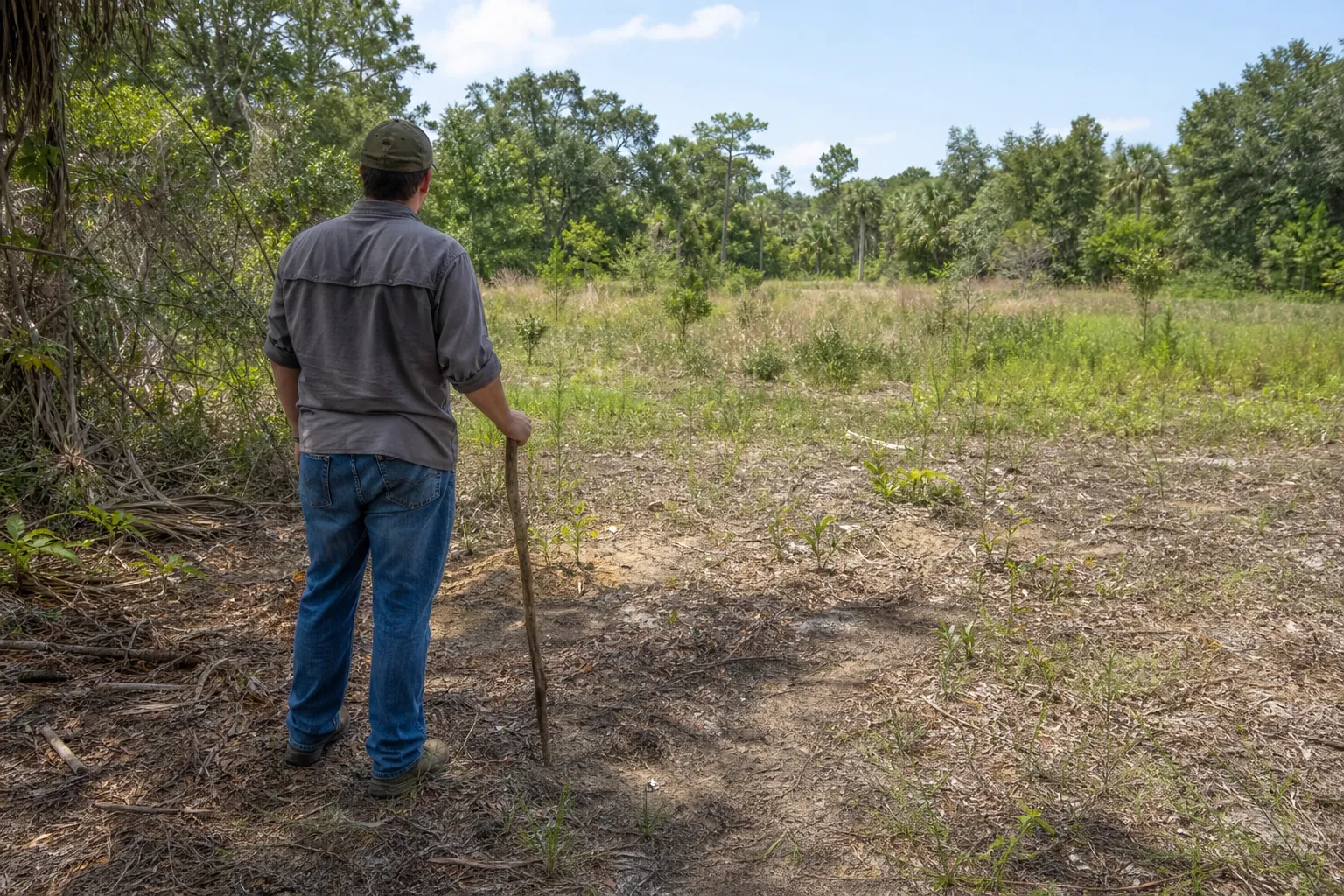
Walk the property in daylight when vegetation and ground conditions are easy to examine. Begin at the road or expected equipment entrance, then follow the perimeter before crossing the interior. Look for fences, gates, ditches, soft ground, steep changes in grade, low branches, and narrow passages. These features may influence how equipment enters and moves around the lot.
Do not rely only on what can be seen from the street. Tall grass and brush can conceal dumped material, old wire, concrete pieces, holes, landscape edging, and abandoned posts. If dense growth prevents a safe inspection, note the area rather than entering it without a clear path.
Confirm the property boundaries before marking vegetation for clearing. Existing fences, mowing lines, or neighboring landscaping may not match legal boundaries. If the limits are uncertain, resolve that issue before work begins. A clear site plan prevents confusion about which sections are included and which adjoining areas must remain untouched.
Identify and Mark Hazards Before Equipment Arrives
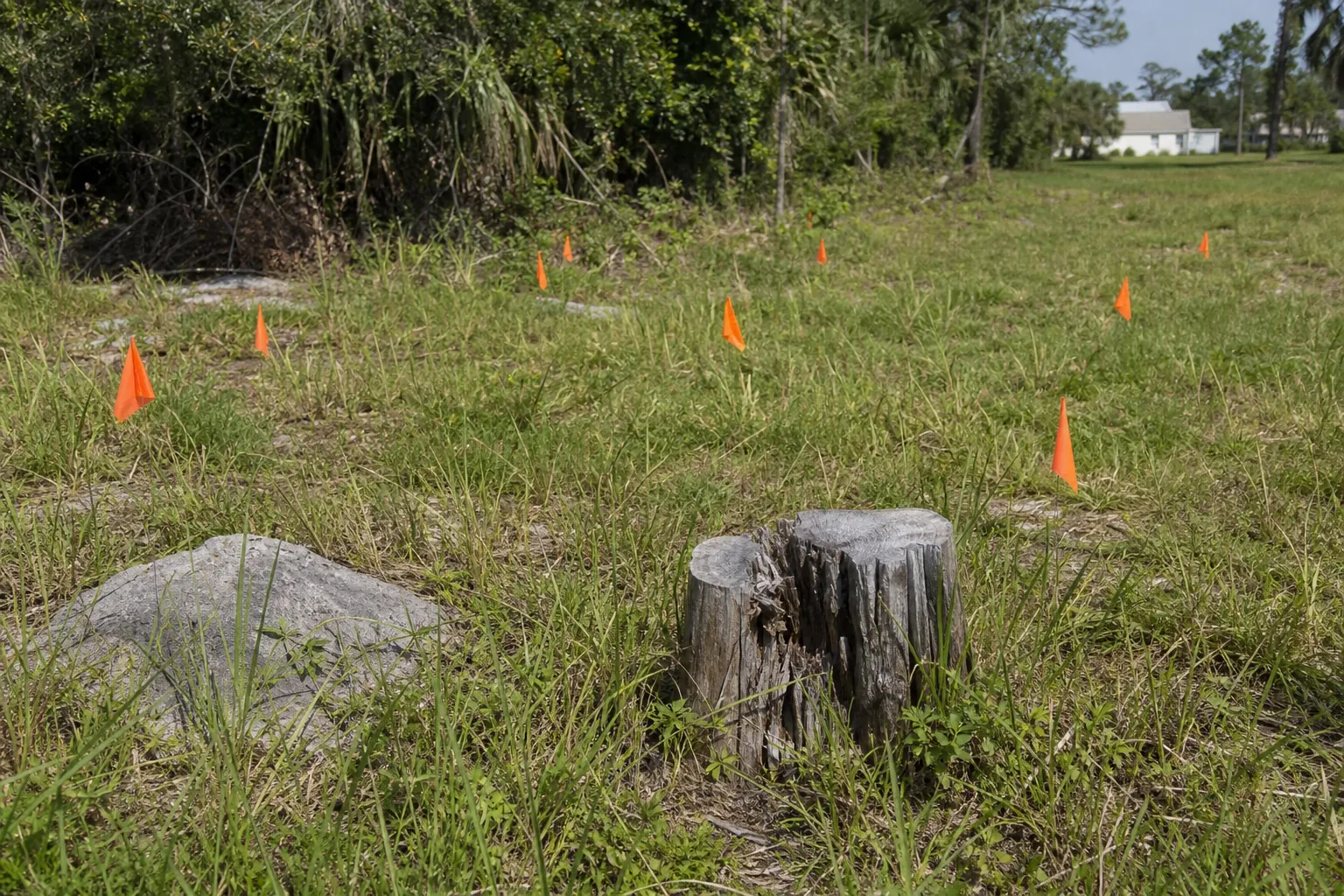
Brush hogging equipment is intended for vegetation, not concealed construction debris or utility components. Mark visible obstacles with bright flags or another easily recognized marker. Tell the crew about hazards that are difficult to see from the equipment seat, including depressions, loose wire, pipes, stumps, and objects hidden below the brush canopy.
Pay particular attention to potential utility features. Meter boxes, irrigation components, drain outlets, guy wires, and utility markers should remain visible and accessible. Contact the appropriate utility or local authority if you are unsure what a feature is or where underground lines may be located.
- Mark gates, property corners, and the intended equipment entrance.
- Identify wire, posts, rocks, concrete, holes, and existing stumps.
- Point out utility features, drainage areas, and soft ground.
- Remove portable personal items and loose debris when it is safe.
- Create a written list of anything the operator should avoid.
Do not move suspicious containers, unstable debris, or unknown materials. Arrange for appropriate handling instead of treating every object as ordinary lot debris.
Decide What Vegetation Should Stay or Go
Before requesting brush hogging, decide how the property will be used afterward. A lot being prepared for routine access may require a different approach than land being evaluated for future construction, landscaping, or continued natural growth. Mark trees, shrubs, screening vegetation, and habitat areas that should remain.
Brush hogging addresses brush and heavy vegetation, but it is not a substitute for every form of land and lot clearing. Larger trees, substantial limbs, and existing stumps may require tree removal, tree trimming, or stump grinding. Trees with defects, heavy vines, broken branches, or uncertain condition may warrant a tree inspection before nearby vegetation is cleared.
Also avoid assuming that any unwanted tree can be removed without review. Permit and protected-tree requirements vary by jurisdiction and property. Confirm current requirements with the City of Port Orange, Volusia County, or the authority responsible for the specific parcel. For related planning considerations, read this guide to protected tree removal and permit requirements, then verify which rules apply to your Port Orange lot.
Plan Access, Boundaries, and Debris Handling
A workable entrance is essential. Confirm that the gate or opening is wide enough for the planned equipment and that parked vehicles, trailers, branches, or stored materials will not block access. If the entrance crosses a ditch, culvert, shoulder, sidewalk, or neighboring property, discuss that condition before scheduling. Do not assume equipment can use an informal path safely or legally.
Clarify exactly where brush hogging should begin and end. Use visible markers to identify setback areas, retained vegetation, drainage features, and sections excluded from the work. If different areas require different treatment, label them on a simple sketch and review it on site.
Ask what will happen to the cut vegetation and any debris discovered during the work. Brush hogging commonly changes tall growth into shorter material, while other clearing goals may require separate handling. Discuss expectations before work starts rather than assuming the lot will have a particular finished appearance. If access depends on trimming low limbs, removing a tree, grinding a stump, or using crane tree removal, identify that need during the initial evaluation.
Confirm the Scope With a Site-Specific Review
Once the lot has been inspected and marked, review the proposed scope with the company performing the work. Explain the desired outcome in practical terms, such as opening access, reducing overgrown brush, or preparing specific portions for later use. Show the operator every known hazard and any vegetation that must remain.
Ask whether the lot conditions match brush hogging or whether land and lot clearing, tree trimming, tree removal, stump grinding, canopy thinning, or crown reduction should be considered for part of the property. A mixed site may need more than one service, especially where mature trees, storm-damaged material, heavy limbs, or large stumps limit equipment movement.
Before confirming the project, check who is responsible for boundary verification, utility coordination, permits, debris handling, and access preparation. Obtain any required authorization from the city, county, property owner, HOA, condo association, or other responsible party. Keep pets, vehicles, tenants, and visitors away from the work area. If weather or site conditions change before the scheduled date, update the crew so the property can be reviewed again.
Discuss Your Port Orange Lot
Florida Foliage provides brush hogging and land and lot clearing, along with related tree services. For a calm discussion about your vacant lot, access concerns, and clearing goals, call (386) 481-7913.
Call (386) 481-7913 to talk through next steps.