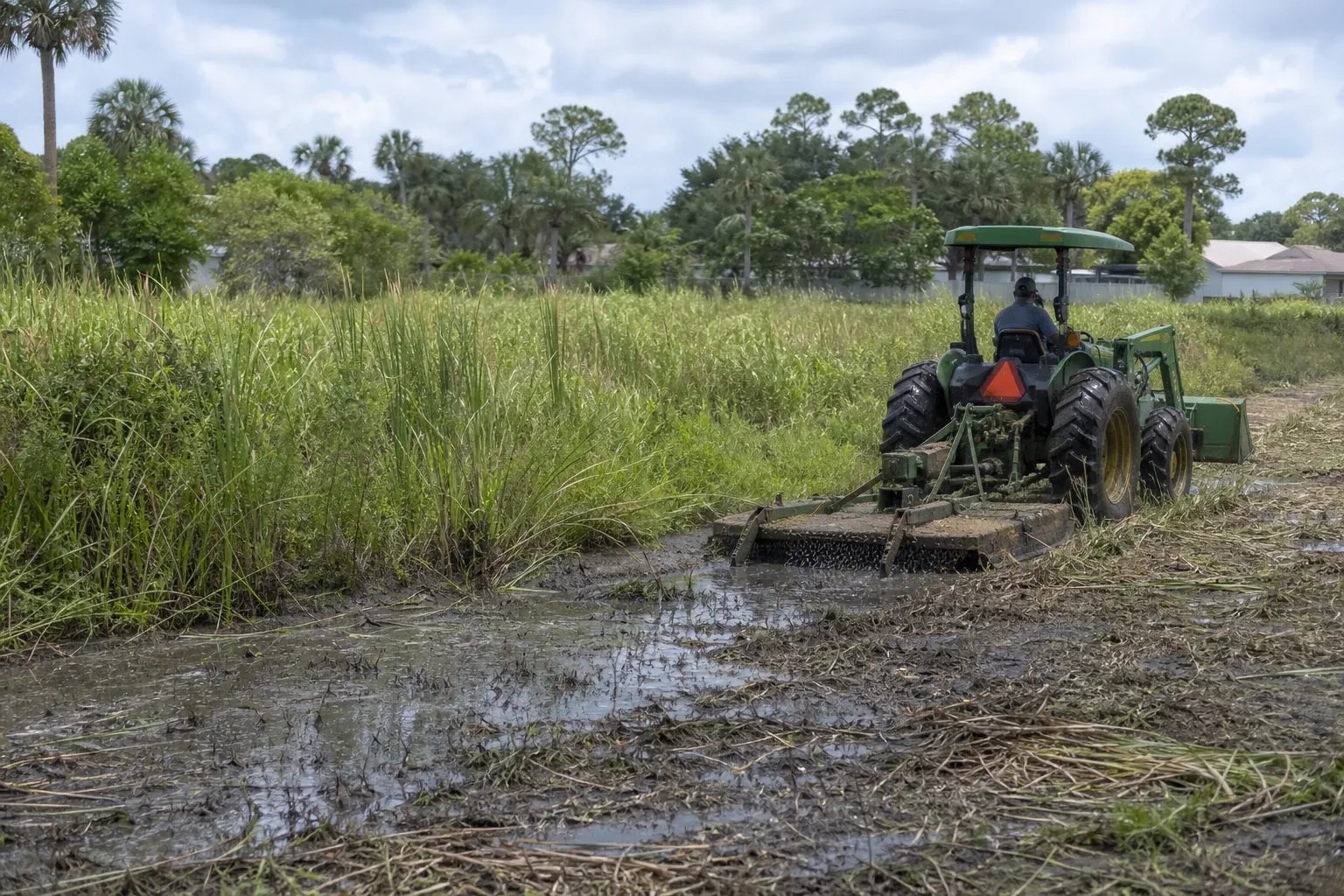
A wet vacant lot in Port Orange may be suitable for brush hogging, but the decision should follow a careful site review. Standing water, soft soil, hidden debris, dense woody growth, and limited equipment access can change the appropriate approach. Before scheduling work, determine what is growing on the property, how wet the ground is, and whether machinery can enter and leave without becoming stuck or disturbing areas that should remain untouched.
Start With Ground Conditions, Not Plant Height
Tall grass and brush may be the most visible concern, but soil conditions often determine whether brush hogging is practical. Walk the lot only where it is safe to do so and look for standing water, saturated depressions, deep footprints, tire ruts, and water moving across the property. These observations help distinguish a temporarily damp surface from ground that cannot currently support equipment.
Recent rain is only one factor. Shade, drainage patterns, low areas, and dense vegetation can keep portions of a lot wet after nearby ground has dried. Conditions may also vary within the same parcel. A firm entrance does not mean the center or rear is equally stable.
Do not assume wet vegetation is the main issue. The greater concern may be how equipment weight affects soft soil and whether there is enough traction to operate consistently. If the lot is saturated, postponing work or planning around specific wet areas may be more appropriate than treating the entire property the same way.
Identify What Is Hidden Beneath The Growth
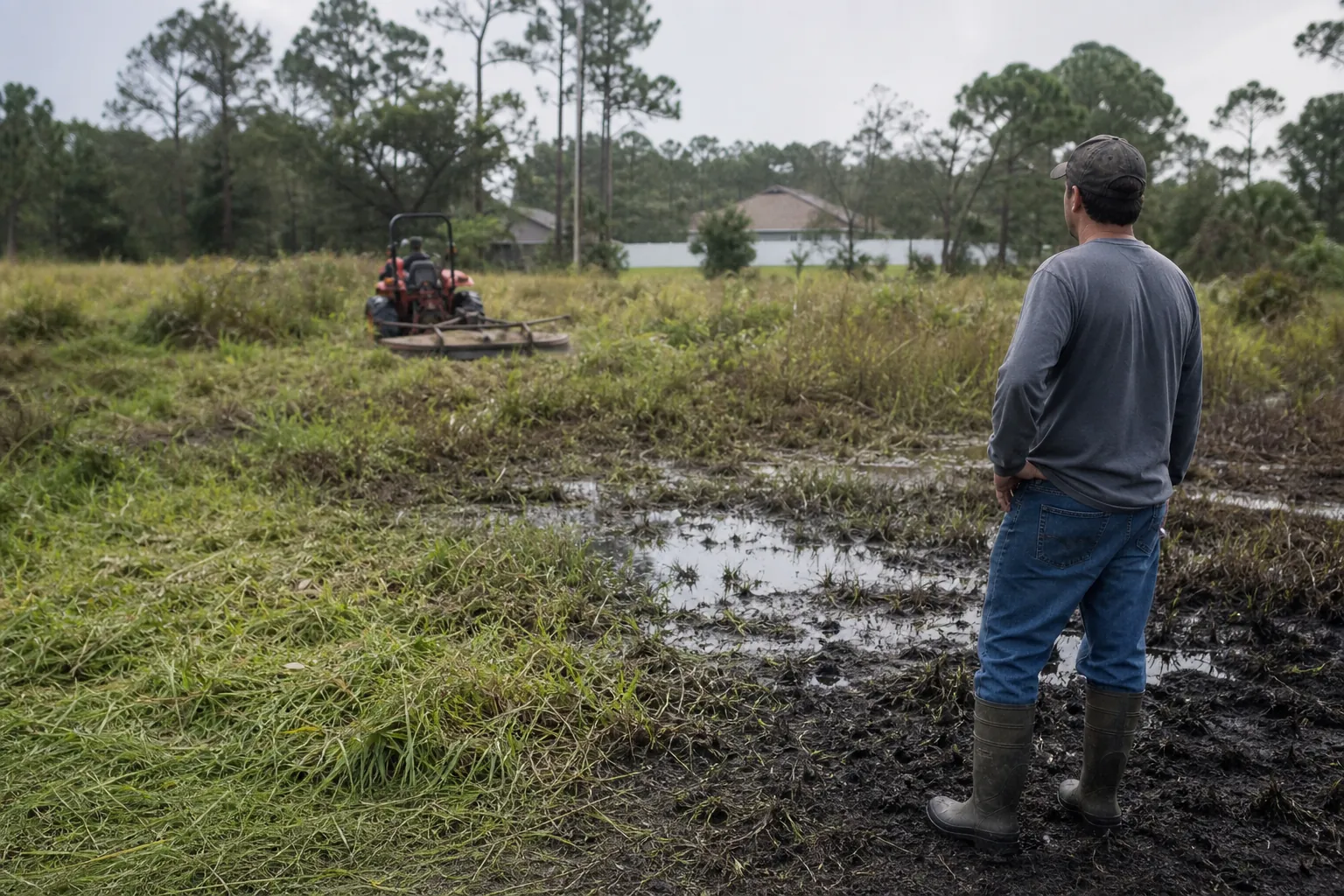
Vacant lots can conceal obstacles that are difficult to see from the road. Before brush hogging begins, identify visible hazards and mark areas that require closer inspection. Brush hogging is intended for manageable vegetation, not for blindly crossing unknown ground. A preliminary walkthrough can reveal whether another clearing method or additional preparation is needed.
- Locate ditches, swales, drop-offs, soft depressions, and standing water.
- Mark utility features, pipes, fencing, stakes, and property corners that are visible.
- Look for discarded metal, concrete, wire, bottles, tires, and construction debris.
- Identify stumps, large roots, fallen limbs, vines, saplings, and substantial woody growth.
- Note access width, overhead branches, neighboring improvements, and space for equipment movement.
Property owners should avoid entering areas with unstable footing, deep water, or vegetation that prevents safe visibility. Photos taken from accessible locations can help document conditions. A professional site review can then separate areas appropriate for brush hogging from sections that may call for tree removal, stump grinding, tree trimming, or broader land and lot clearing.
Decide Whether Brush Hogging Fits The Lot
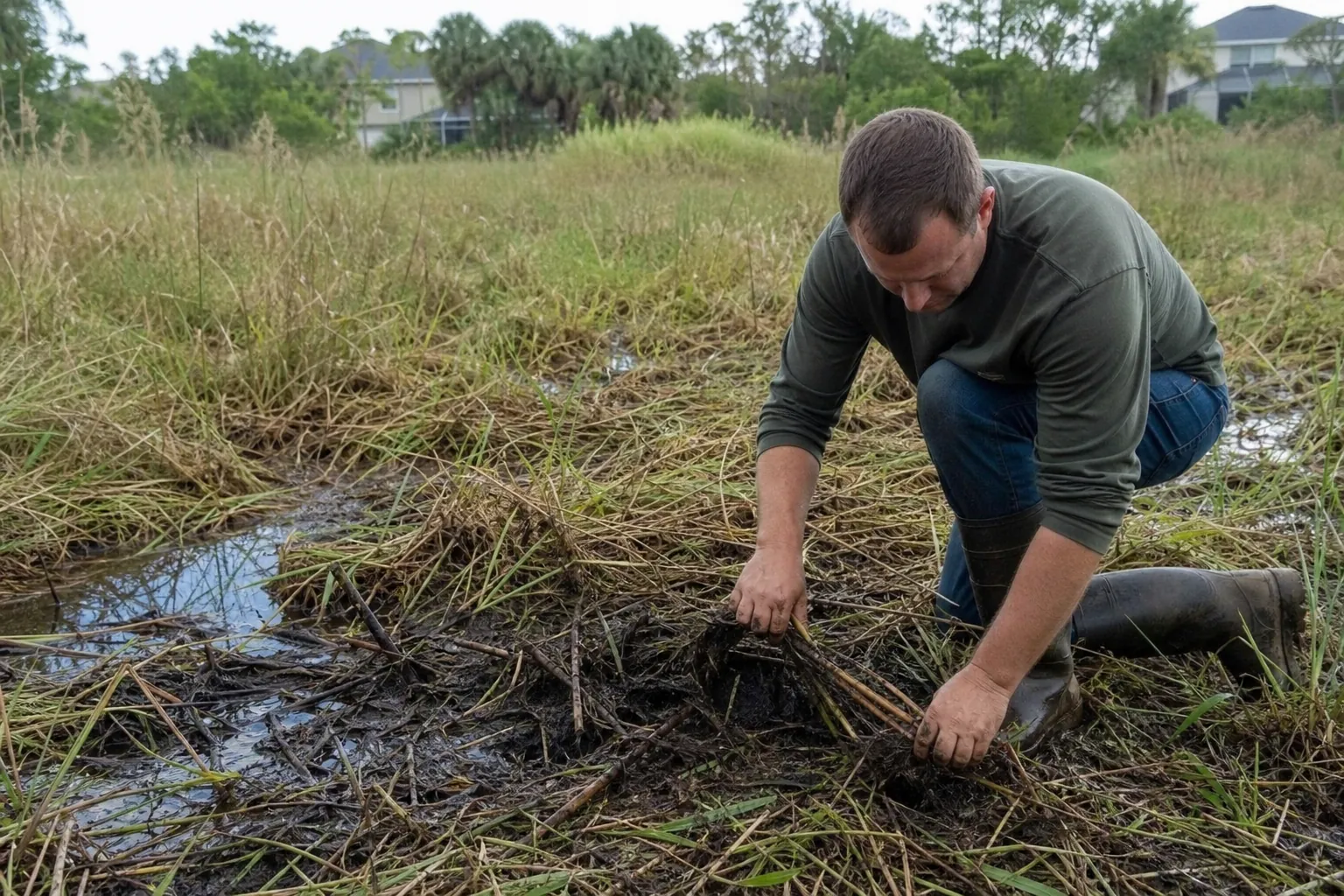
Brush hogging can help reduce tall grass, weeds, and suitable brush, but it is not interchangeable with every land-clearing service. The size and density of woody material matter. Larger trees, heavy limbs, substantial stumps, and tangled debris can require a different plan. The desired finished condition also matters because cutting vegetation does not automatically remove roots, buried debris, or every obstacle at ground level.
Tell the contractor how the property will be used after clearing. Preparing for an inspection, improving access, maintaining an open lot, and planning future site work may each lead to different priorities. Define whether the whole parcel needs attention or only selected sections, access paths, and boundaries.
On wet property, a phased approach may be useful. Firm portions might be evaluated separately from low or saturated areas. This avoids assuming one method suits the entire lot. Florida Foliage provides brush hogging and land and lot clearing, along with related tree services, so the site can be assessed according to its vegetation, access, and actual clearing needs.
Check Boundaries, Trees, And Local Requirements
Before authorizing work, confirm the property boundaries and identify vegetation that must remain. A vacant parcel may have unclear corners, neighboring fences that do not follow the legal boundary, or trees whose trunks and canopies affect more than one property. Clear instructions help prevent avoidable confusion once vegetation is being cut.
Local requirements may apply depending on the location, environmental conditions, protected features, tree status, and scope of work. Requirements can differ between city and county jurisdictions, so owners should confirm current rules directly with the appropriate city or county before clearing begins. Do not rely solely on assumptions based on work performed on another property.
If trees are part of the project, determine whether an inspection, arborist report, or other review is appropriate. Florida Foliage offers arborist reports and tree inspections in addition to tree removal, tree trimming, canopy thinning, and crown reduction. For a related overview of tree authorization considerations, read protected tree removal permit requirements in DeLand, then verify the requirements that apply specifically to your Port Orange property.
Prepare For An Efficient Site Assessment
A useful site assessment starts with accurate information. Gather the property address or parcel details, recent photos, known access points, and any survey or boundary markers available. Explain when the lot was last maintained and whether you know of buried debris, old structures, drainage features, or previous clearing activity. If water levels change noticeably after rain, mention that as well.
Set a clear objective. You may want overgrowth reduced, an access route reopened, selected areas cleared, or the property evaluated for a larger land-clearing plan. Identify trees and vegetation you want preserved. Also point out neighboring buildings, fences, roads, and other areas where controlled equipment movement is important.
Ask how wet areas, obstacles, woody growth, and debris affect the proposed scope. Discuss whether conditions should be checked again before work starts and whether separate services may be needed for trees or stumps. This practical preparation makes it easier to determine whether brush hogging fits the current conditions instead of choosing a method based only on how overgrown the lot appears.
Discuss Your Port Orange Vacant Lot
If you are deciding whether a wet vacant lot is ready for brush hogging, contact Florida Foliage at (386) 481-7913. A calm discussion about access, vegetation, wet areas, and your clearing goals can help define the next practical step.
Call (386) 481-7913 to talk through next steps.