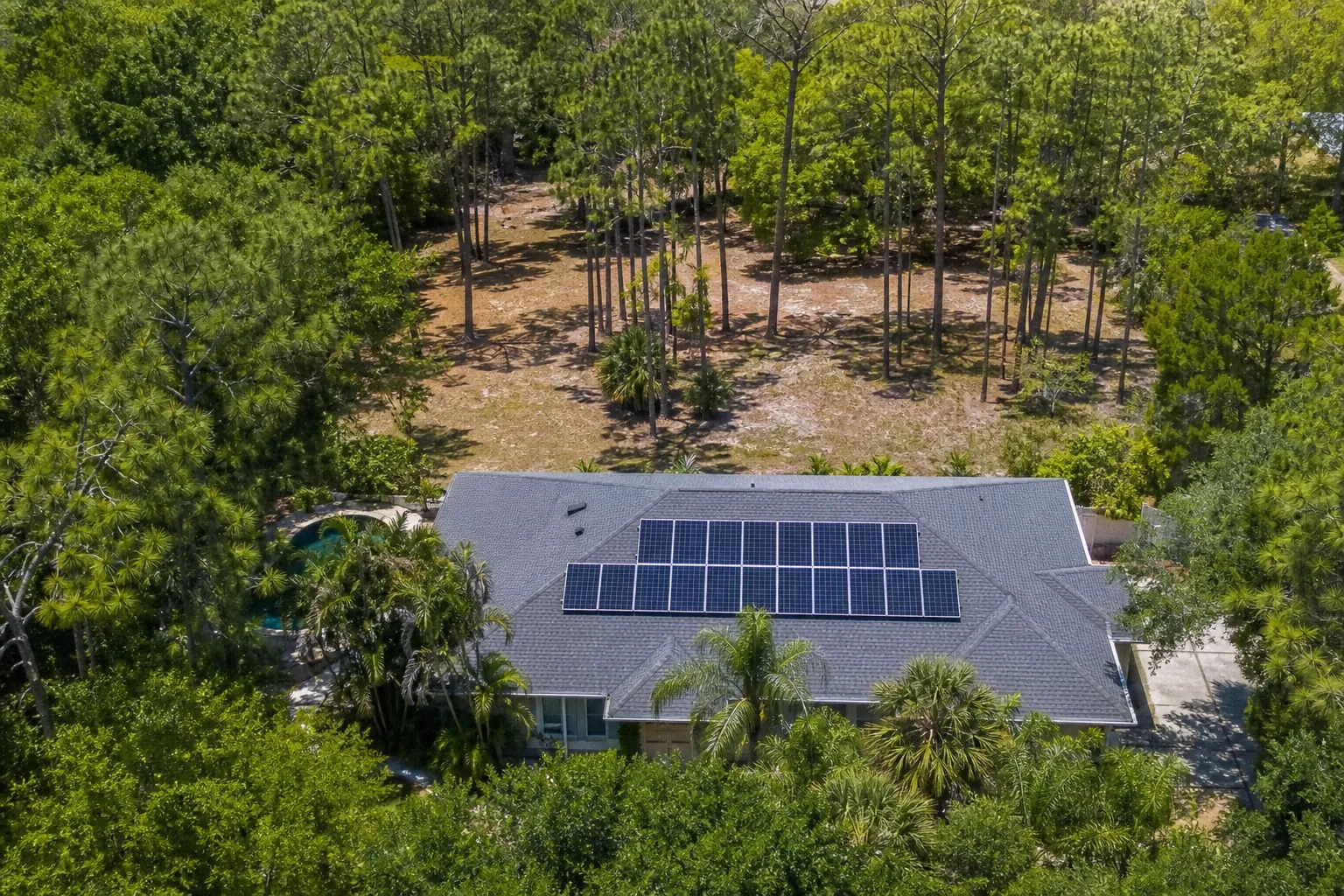
Tree growth near rooftop solar panels can create a difficult decision. You may want better sun exposure without removing a healthy tree or cutting more than necessary. Canopy thinning can sometimes help by selectively removing branches within a tree’s crown, but it is not the right answer for every property. The practical starting point is to identify where shade originates, how the tree is structured, and whether trimming can create a useful opening without compromising the canopy.
Start by Identifying the Actual Source of Shade
Before scheduling canopy thinning, determine which branches cast shade on the panels and when the shading occurs. A tree may block direct sunlight only during a short part of the day, or its shadow may cross the roof for several hours as the sun moves. Seasonal growth and changes in the sun’s position can also affect what you observe.
Look at the panels during the morning, around midday, and later in the afternoon. Take photos from a safe ground-level location and note the time. Repeat the observation on more than one clear day if possible. These details help distinguish a concentrated problem, such as one limb crossing the solar exposure path, from broader shade created by the entire crown.
Also check whether another tree, a neighboring canopy, or part of the building contributes to the shade. Accurate identification matters because general thinning may not address a specific obstruction. A tree inspection can help connect the visible shading pattern with the branches that could be considered for trimming.
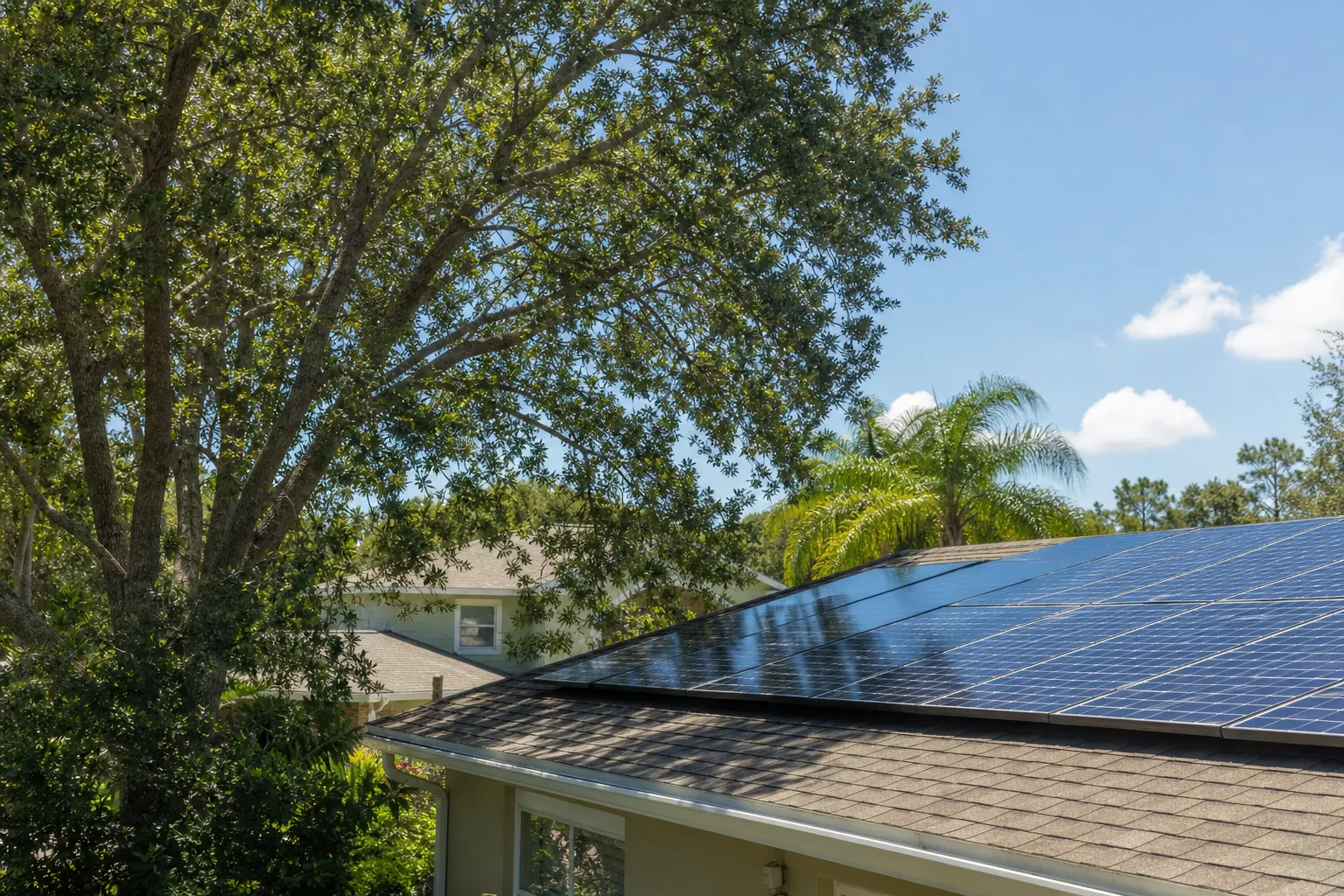
Understand What Canopy Thinning Can and Cannot Do
Canopy thinning involves selective branch removal within the crown. Around solar panels, its purpose may be to reduce foliage density or open limited pathways for sunlight while retaining the tree’s overall form. This approach is different from stripping out interior growth or removing large portions of the canopy.
Thinning can be worth considering when smaller, well-placed cuts could reduce shade. It may be less suitable when the trunk, major scaffold limbs, or most of the crown sits directly between the sun and the roof. In those cases, removing scattered interior branches may make little practical difference to panel exposure.
More cutting is not automatically more effective. Excessive removal can leave an unbalanced crown and may trigger unwanted growth. The appropriate amount and location of trimming depend on tree species, condition, branch structure, proximity to the building, and the direction of the solar array. The decision should therefore begin with the tree and shading pattern rather than a predetermined percentage of foliage to remove.
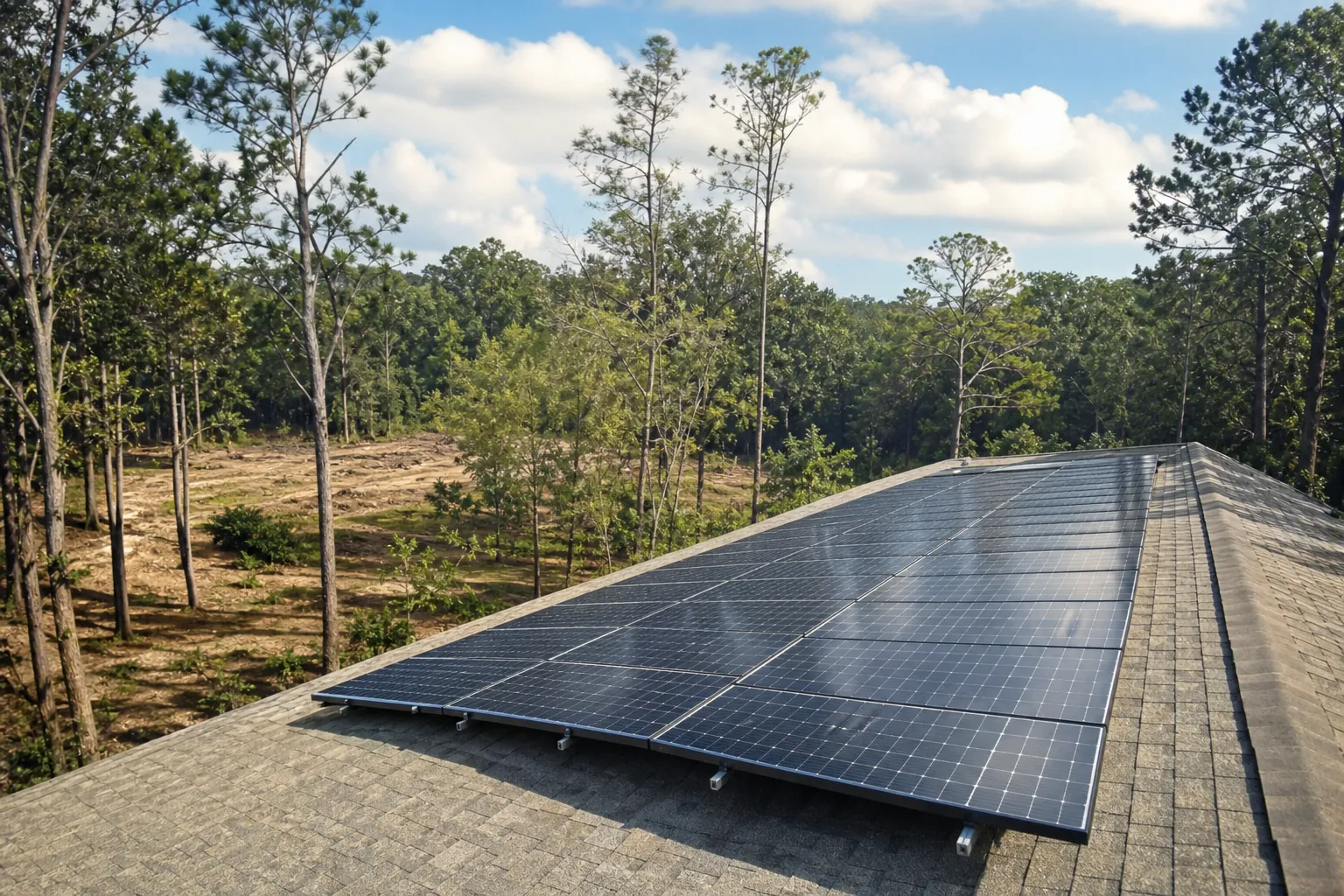
Compare Thinning With Crown Reduction and Removal
Canopy thinning is only one option. Crown reduction may be considered when the outer height or spread of a tree is the main issue. Reduction uses selected cuts to shorten portions of the crown while accounting for structure. It is not the same as indiscriminately cutting the top from a tree. In other situations, targeted tree trimming may address one or two branches without requiring broader canopy work.
Tree removal may enter the discussion when trimming cannot reasonably resolve the conflict, or when tree condition and location create separate concerns. Removal should not be treated as the default response to solar shading. The choice should reflect the property’s goals, the tree’s condition, and the practical limits of pruning.
- Document when and where shade crosses the panels.
- Identify the tree and branches responsible.
- Request an inspection of tree condition and structure.
- Compare targeted trimming, canopy thinning, and crown reduction.
- Confirm whether local approval or documentation is required.
- Plan how branches can be handled safely near the roof.
Account for Roof Access, Branch Size, and Permits
Work near solar panels requires careful planning. Branches cannot simply be allowed to fall toward the roof, panels, gutters, or nearby property. The tree’s distance from the building, limb weight, available access, and surrounding obstacles affect how trimming can be approached. Larger or more complex tree work may require different equipment and handling methods than routine trimming from an open yard.
Keep workers off the solar array and avoid using panels as access points or staging surfaces. Property owners should also identify nearby utility lines, fences, vehicles, landscaping, and limited work areas before service begins. If a branch has already broken or shifted after severe weather, avoid standing beneath it and seek an assessment rather than attempting overhead cutting.
Permit and protected-tree requirements can vary, so confirm current rules with the appropriate city or county before authorizing major work. For a related overview, read protected tree removal permit requirements in DeLand. That resource concerns DeLand, so Ormond Beach property owners should still verify the requirements that apply to their own address.
Use an Inspection to Define a Practical Scope
A useful inspection should answer specific questions before cutting begins. Which branches create meaningful shade? Can those branches be removed or shortened while maintaining a balanced crown? Is canopy thinning likely to help, or would targeted trimming or crown reduction better match the problem? Are there visible structural concerns that change the decision?
Prepare for the visit by sharing ground-level photos, the times when shade is most noticeable, and any available information about the solar layout. Point out roof features, property boundaries, access limitations, and areas that need protection. If the tree is near another property, clarify ownership and obtain any necessary permission before work is planned.
Ask for a clearly defined scope that identifies the parts of the canopy under consideration. This helps prevent a vague request for “more sun” from turning into unnecessary cutting. Florida Foliage provides tree inspections, arborist reports, canopy thinning, crown reduction, tree trimming, and tree removal. The appropriate service depends on what the inspection shows and what can be done responsibly at the site.
Discuss the Tree and Solar Panel Conflict
If tree shade is affecting solar exposure at your Ormond Beach property, Florida Foliage can help assess the canopy and discuss practical trimming options. Call (386) 481-7913 to arrange a calm, site-specific conversation.
Call (386) 481-7913 to talk through next steps.