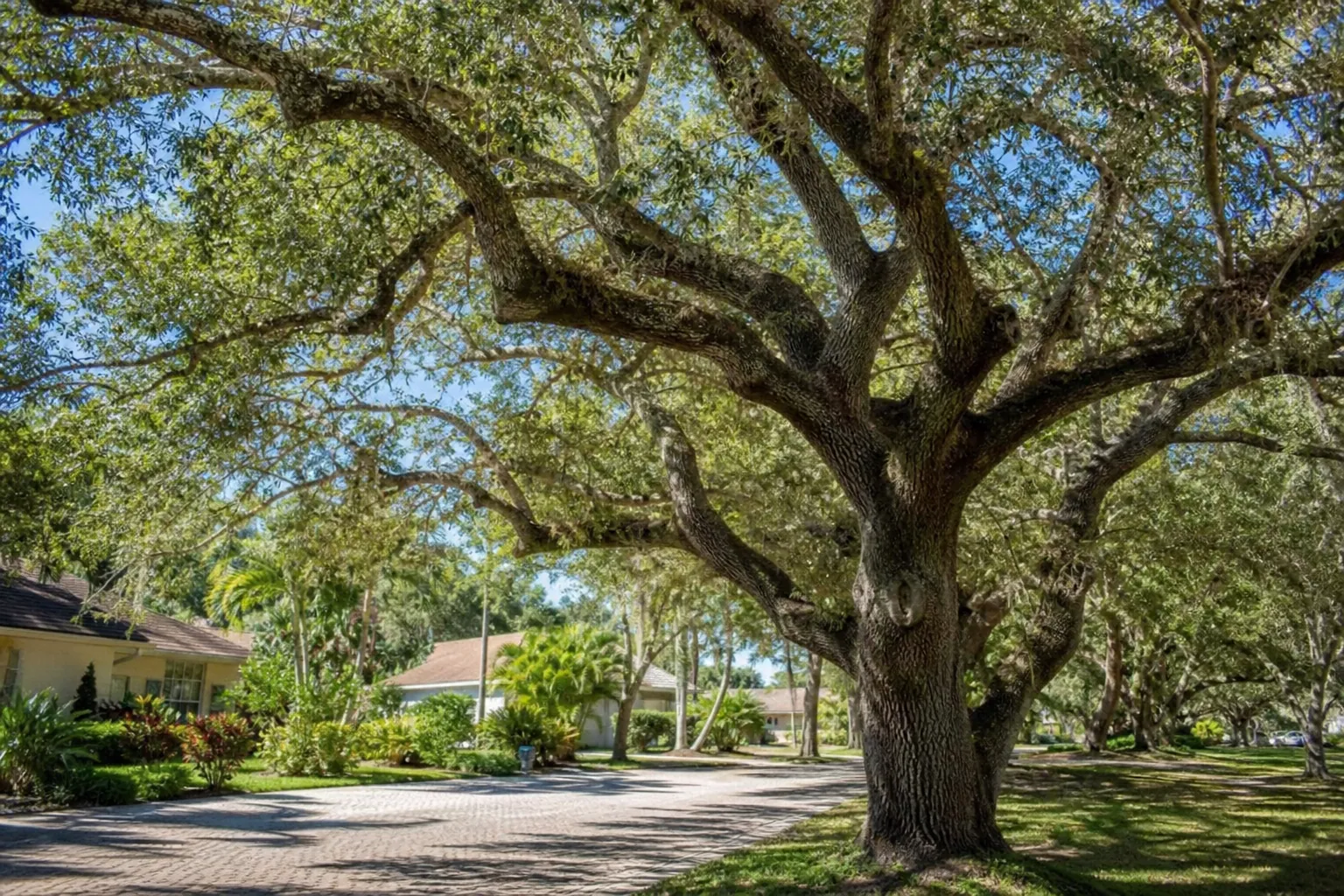
Thinning a mature oak is not a matter of removing as many branches as possible. The practical limit depends on the tree’s condition, structure, surroundings, and the reason for trimming. A careful plan removes selected growth while preserving the canopy needed to support the tree. Before deciding how much to cut, identify the problem you want to solve and have the entire tree assessed. This is especially important when an oak has large limbs, visible defects, previous storm damage, or a history of heavy pruning.
Start With the Reason for Canopy Thinning
A clear objective helps prevent unnecessary cutting. A homeowner may want to address dead or damaged branches, reduce conflicts around a structure, improve clearance, or manage densely spaced growth. These goals do not all call for the same pruning approach. For example, removing a damaged limb is different from thinning live growth throughout the crown.
Walk around the oak and note where the concern occurs. Look at the canopy from more than one angle, including from beneath the tree. Identify branches near roofs, driveways, fences, utility areas, and places where people regularly gather. Also note whether the issue involves one branch or the overall shape of the crown.
A mature oak should not automatically receive uniform thinning across every section. Selective work may be more appropriate than broad removal. The first question is therefore not, “How much can be removed?” It is, “Which specific branches need attention, and why?” That distinction gives the inspection and trimming plan a practical focus.
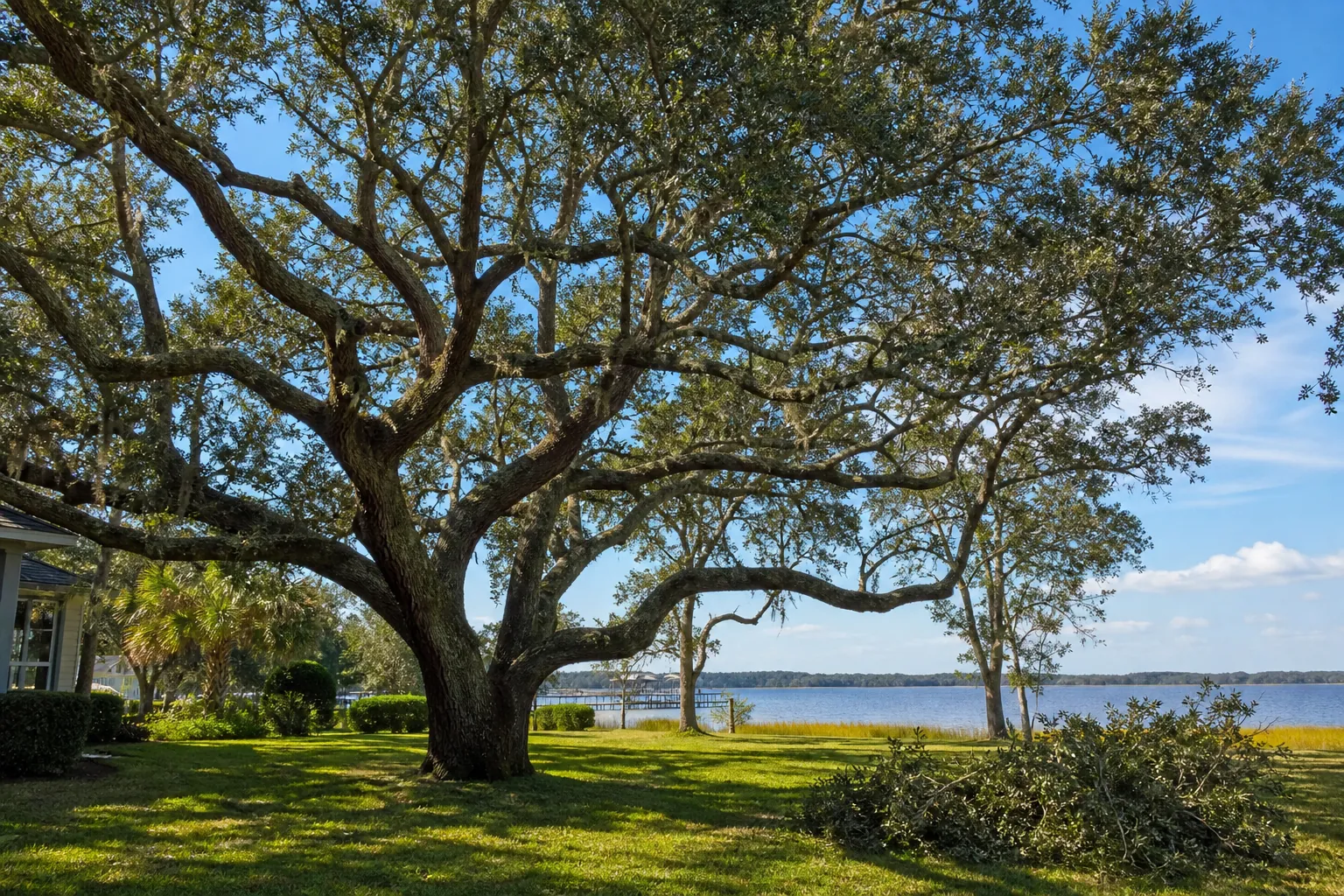
Understand What Sets the Practical Limit
There is no single removal amount that applies to every mature oak. A tree’s tolerable scope of work depends on factors that must be considered together. These include overall vitality, canopy density, branch size, structural defects, root-zone disturbance, past pruning, and the location of the proposed cuts. An oak under stress may need a more conservative approach than a vigorous tree with a stable structure.
The distribution of cuts matters as much as their total volume. Removing too much from one side can leave an unbalanced crown. Taking many interior branches may create long limbs with most foliage concentrated at their ends. Large cuts also create larger wounds than small, carefully selected cuts.
Canopy thinning should preserve a functional arrangement of live branches and foliage. It should not leave the crown sparse, hollow, or stripped along major limbs. If the desired clearance would require extensive live-branch removal, crown reduction or another targeted strategy may deserve consideration. The appropriate choice begins with a tree inspection rather than a preset percentage.
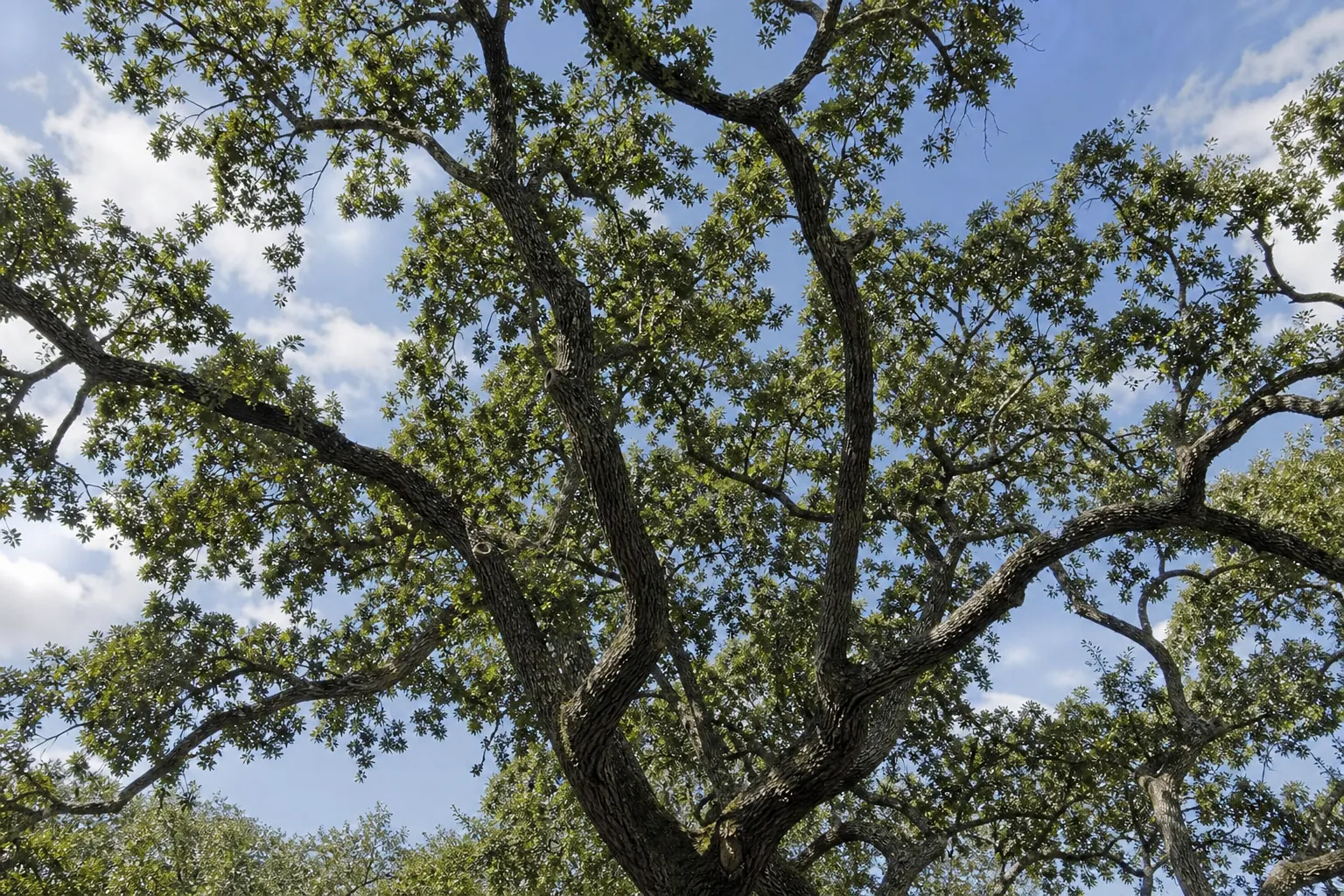
Recognize Signs That a Plan Is Too Aggressive
A proposed trimming plan deserves another look if it would dramatically change the oak’s appearance or concentrate nearly all the work in one area. Mature trees may respond poorly when too much functioning canopy is removed at once. An aggressive plan can also create future maintenance concerns if it encourages poorly placed new growth or leaves remaining branches exposed.
Use these questions when discussing the scope of work:
- Does each proposed cut have a specific purpose?
- Will enough live foliage remain throughout the crown?
- Are major limbs being retained unless there is a clear reason to remove or reduce them?
- Will the work preserve a balanced canopy rather than opening one side heavily?
- Has previous pruning, storm damage, or root disturbance been considered?
- Could the objective be met with fewer cuts or a smaller crown reduction?
Be cautious if the plan is described mainly in terms of making the canopy much lighter without identifying branches and objectives. A useful proposal should connect the intended cuts to observable conditions and explain why canopy thinning, crown reduction, or another form of tree trimming fits the situation.
Inspect the Oak Before Choosing a Scope
Begin at ground level. Check the trunk base and visible root area for soil changes, damage, cavities, mushrooms, loose bark, or construction disturbance. Then examine the trunk for cracks, openings, unusual swelling, and old wounds. In the canopy, look for dead branches, broken limbs, weak branch attachments, hanging material, and sections with noticeably sparse foliage.
Record what you see with photos taken from several positions. Include wide views that show the whole crown and closer images of specific concerns. Photos help explain the objective, but they do not replace an in-person tree inspection when the canopy is difficult to see or structural conditions are uncertain.
Also consider access. Mature oak work may involve obstacles, confined areas, or large branches over improvements. Those conditions can affect how the work is approached. Florida Foliage offers tree inspections, arborist reports, tree trimming, canopy thinning, crown reduction, crane tree removal, and emergency and hurricane tree removal. The inspection should guide which service, if any, matches the tree’s condition.
Confirm Local Requirements and Make a Clear Decision
Before authorizing work, confirm whether city or county requirements apply to the tree or proposed scope. Rules can depend on jurisdiction, property conditions, tree status, and the type of work. Ask the appropriate local office whether documentation, review, or approval is needed. Do not assume routine maintenance and major canopy alteration are treated the same way.
For a broader example of questions to investigate when regulated trees may be involved, read this guide to protected tree removal permit requirements. Because that article concerns DeLand, Ormond Beach readers should still verify current requirements directly with their own city or county.
Once regulatory questions are settled, compare the recommended scope with your original objective. Ask which branches are targeted, whether the plan is canopy thinning or crown reduction, and how the work preserves the oak’s overall structure. If extensive removal appears necessary, discuss whether the work should be limited or reconsidered after inspection. A clear, branch-specific plan is more useful than a general request to “thin the tree.”
Discuss Your Mature Oak
If you are deciding how to approach a mature oak canopy in Ormond Beach, call Florida Foliage at (386) 481-7913. Describe the tree, your concern, and any visible damage so the next step can be considered calmly.
Call (386) 481-7913 to talk through next steps.