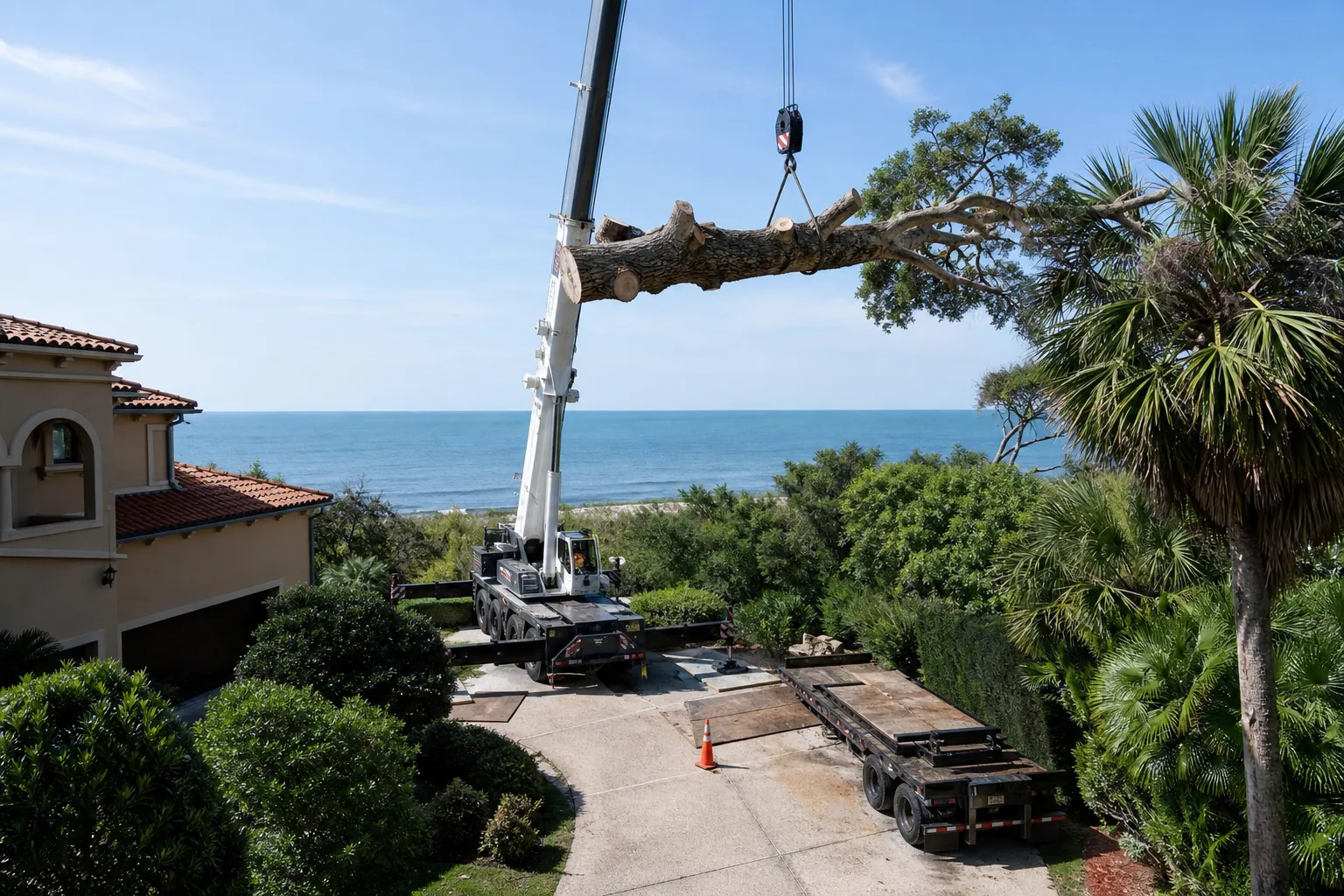
Commercial crane tree removal begins with an access plan, not with the first cut. Property managers, business owners, HOA boards, and condo associations in Flagler County should review how equipment, crews, and removed material will move through the property. A clear plan can reveal conflicts involving gates, pavement, utilities, tenants, landscaping, and public areas before work starts. The following steps will help you assess a site and prepare useful questions for a tree service.
Start With the Crane’s Route Into the Property
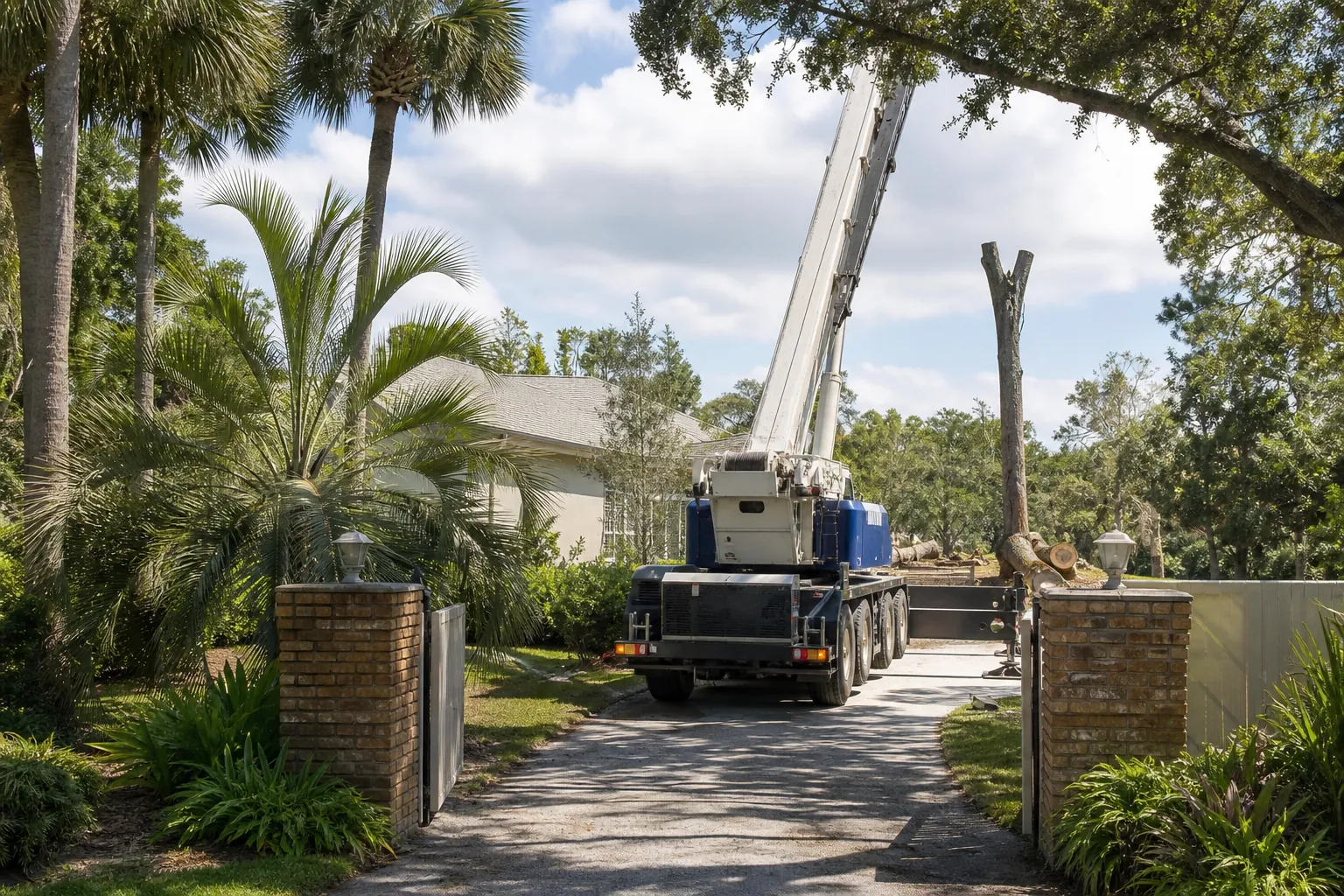
Walk the likely equipment route from the public entrance to the proposed crane setup area. Note gate widths, tight turns, medians, curbs, low branches, signs, bollards, parking islands, and changes in elevation. A route that works for ordinary vehicles may not provide adequate clearance or turning space for larger equipment.
Confirm which entrances can be used and whether access depends on moving parked vehicles, opening secured gates, or coordinating with neighboring occupants. If the route passes through a loading area or fire lane, identify how the space is normally used and who controls it. Avoid assuming that an open area will remain available on the work date.
Share accurate site information when requesting commercial crane tree removal. Current photos can be useful, but they should not replace an on-site review. The tree service needs to evaluate the actual route, work area, tree position, and surrounding conditions when developing the plan. If access crosses property not controlled by the client, clarify authorization before scheduling.
Evaluate the Crane Setup Area and Ground Conditions
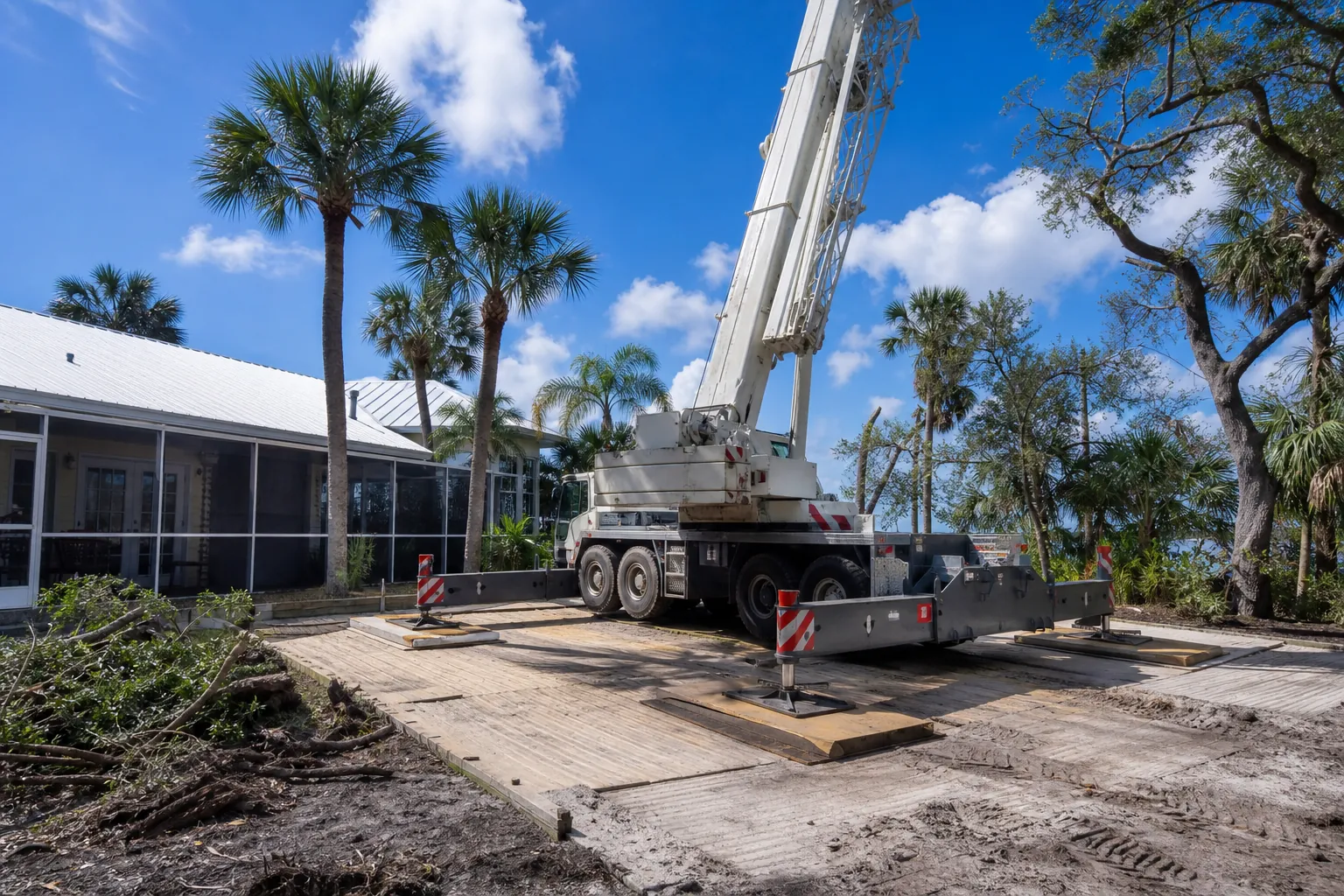
The crane needs an appropriate setup area within reach of the tree. Look for a reasonably clear space and identify surface types such as asphalt, concrete, pavers, landscaped beds, or unpaved ground. Mark visible drainage structures, utility covers, irrigation components, curbs, retaining edges, and other features that could affect positioning.
Ground appearance alone does not establish whether an area is suitable. Recent rain, soft shoulders, buried infrastructure, slopes, and transitions between paved and unpaved surfaces may influence the access decision. Provide any available property plans or records that show underground features, but do not assume those materials identify every condition.
The setup review should also consider how the crane position affects building access, loading operations, parking, and pedestrian circulation. Ask whether temporary space restrictions will be needed around the equipment and tree. If the preferred location conflicts with daily operations, discuss alternatives early. Moving the setup point can change reach, rigging, debris handling, and the overall work sequence, so the final position should be determined as part of the site-specific removal plan.
Identify Overhead, Side, and Drop-Zone Conflicts
Crane tree removal requires more than a clear path at ground level. Review the space above and around the tree for utility lines, light poles, rooflines, awnings, signs, adjacent trees, communication equipment, and building projections. Also note windows, fences, mechanical equipment, parked vehicles, outdoor seating, and landscaped features near the expected work area.
Create a simple site inventory before the assessment:
- Photograph the tree from several accessible angles.
- Mark entrances, gates, and possible equipment routes.
- Identify overhead lines and nearby structures.
- Note underground utilities, drains, and irrigation when known.
- List parking, delivery, tenant, and pedestrian conflicts.
- Choose possible staging locations for wood and debris.
- Identify the person authorized to approve site changes.
The area beneath and around the work also needs controlled access. Determine who can close parking spaces, redirect pedestrians, notify occupants, and keep unauthorized people away. Do not move, disconnect, or work near utilities without appropriate coordination. The tree service can explain what site controls are needed for its work, while property representatives should supply accurate information about normal operations and known hazards.
Plan Traffic, Occupant, and Debris Movement
A commercial property may remain active during tree removal, which makes movement planning essential. Map how customers, residents, employees, vendors, waste vehicles, and emergency access typically use the site. Then compare those patterns with the proposed crane location, work zone, and debris route.
Decide which parking spaces or lanes may need to remain clear and how affected occupants will receive notice. For HOA and condo properties, coordination may involve boards, managers, residents, and vendors. For retail, office, or industrial sites, it may involve tenants, deliveries, and loading schedules. The goal is to avoid last-minute conflicts without making unsupported assumptions about how the work will proceed.
Ask where cut material will be staged and how it will leave the property. A suitable crane position does not automatically provide a clear route for logs, branches, and cleanup activity. Consider narrow drives, decorative entrances, parked vehicles, and shared access points. If stump grinding is being considered after removal, discuss its equipment access separately. That route and work area may differ from those required for the crane.
Confirm Approvals and Final Details Before Scheduling
Before selecting a work date, determine whether the property is subject to municipal, county, association, lease, or internal approval requirements. Tree removal rules and protected-tree considerations can vary, so confirm current requirements directly with the applicable city or county. Do not rely solely on past projects or assumptions based on nearby properties.
If documentation is needed, ask early what must be submitted and who is responsible for obtaining approval. Florida Foliage offers arborist reports and tree inspections among its confirmed services, but the appropriate next step depends on the property and the reviewing authority. Readers comparing general documentation issues can also review this guide to protected tree removal permit requirements, then verify what applies locally in Flagler County.
Complete the access plan by confirming the site contact, gate access, parking restrictions, occupant notices, known utilities, staging areas, and authorization to proceed. Ask how weather or changed site conditions could affect the plan. A final walk-through can ensure that the conditions evaluated earlier still match the property before equipment arrives.
Discuss Your Commercial Tree Removal Site
If you are evaluating crane access for a commercial, HOA, or condo property in Flagler County, contact Florida Foliage for a site-specific discussion. Call (386) 481-7913 and be ready to describe the tree, entrances, nearby structures, utilities, parking needs, and possible setup areas.
Call (386) 481-7913 to talk through next steps.