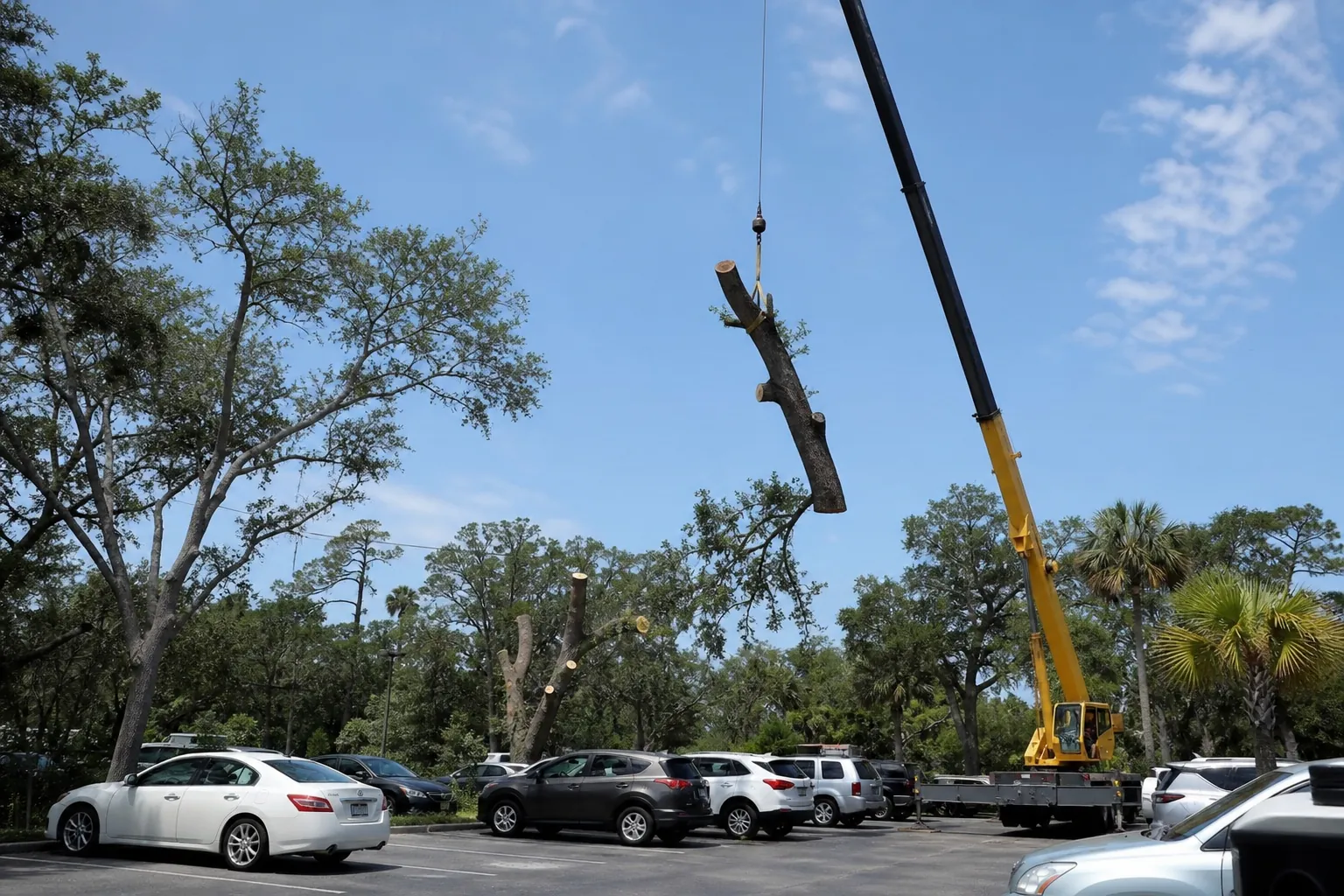
Crane tree removal around an active parking lot requires more than choosing a place for the crane. The plan must account for customers, residents, employees, vehicles, buildings, overhead obstacles, and the movement of cut tree sections. For a commercial property, HOA, condo community, or other managed site in Flagler County, the safest practical approach begins with a detailed tree inspection and a clear conversation about how the property is used. The following steps can help decision-makers understand what should be addressed before scheduling crane tree removal.
Start With the Tree and the Surrounding Site
Planning begins by examining both the tree and the work area. The tree's location, size, lean, branch structure, visible defects, and proximity to buildings influence how removal may be approached. The inspection should also identify nearby signs, lighting, fences, landscaping, sidewalks, parked vehicles, utility features, and other obstacles that could limit access or movement.
The parking lot surface and layout matter as well. A crane, tree-removal crew, and debris-handling equipment need suitable working space. Entrances, drive aisles, fire lanes, loading areas, and pedestrian routes can affect where equipment and work zones may be placed. If the parking lot has islands, curbs, narrow turns, or limited access points, those details should be reviewed before equipment arrives.
Property representatives can help by explaining busy periods, delivery schedules, resident needs, and any access restrictions. This information allows the removal plan to address actual site activity rather than relying on assumptions.
Define the Work Zone and Access Plan
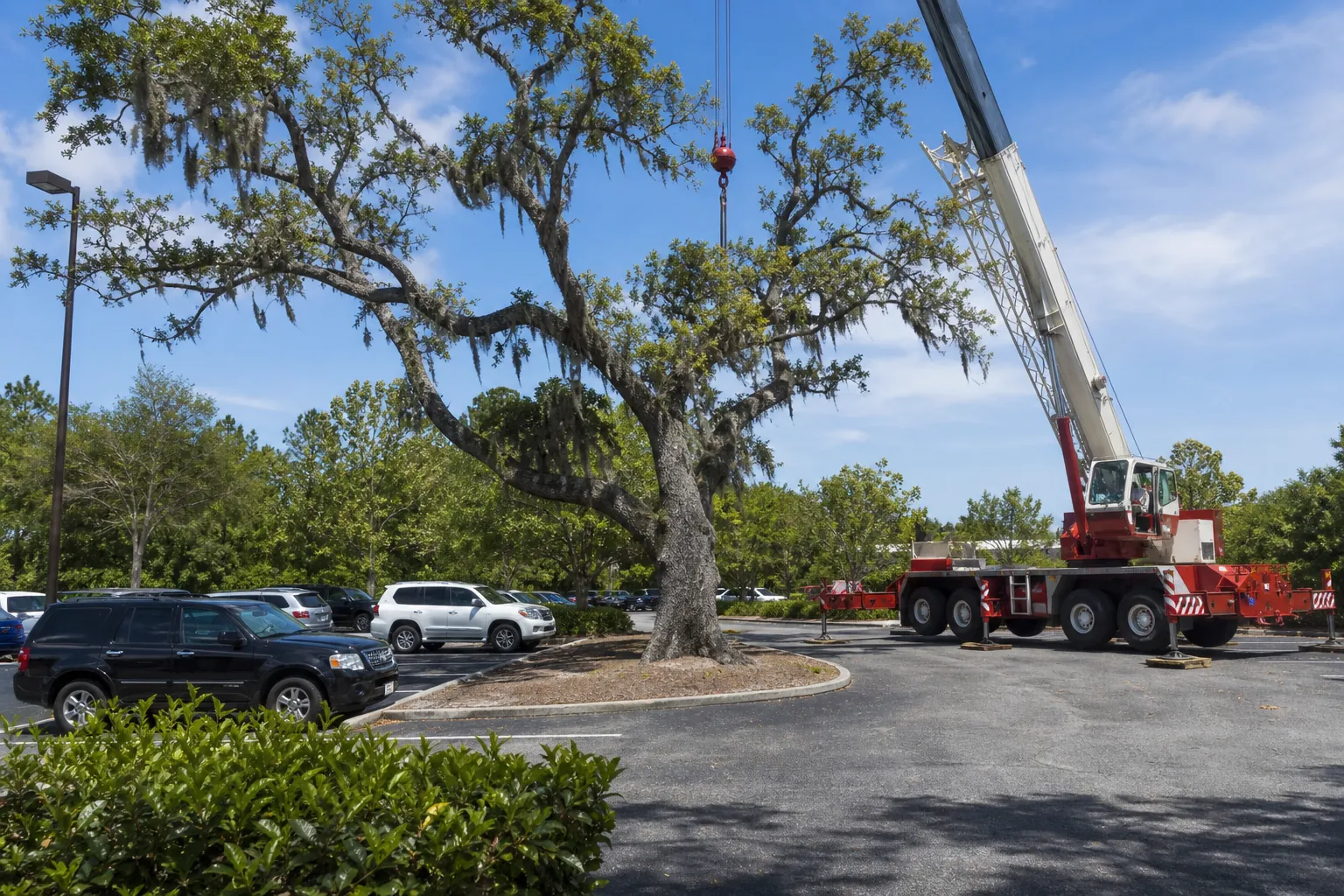
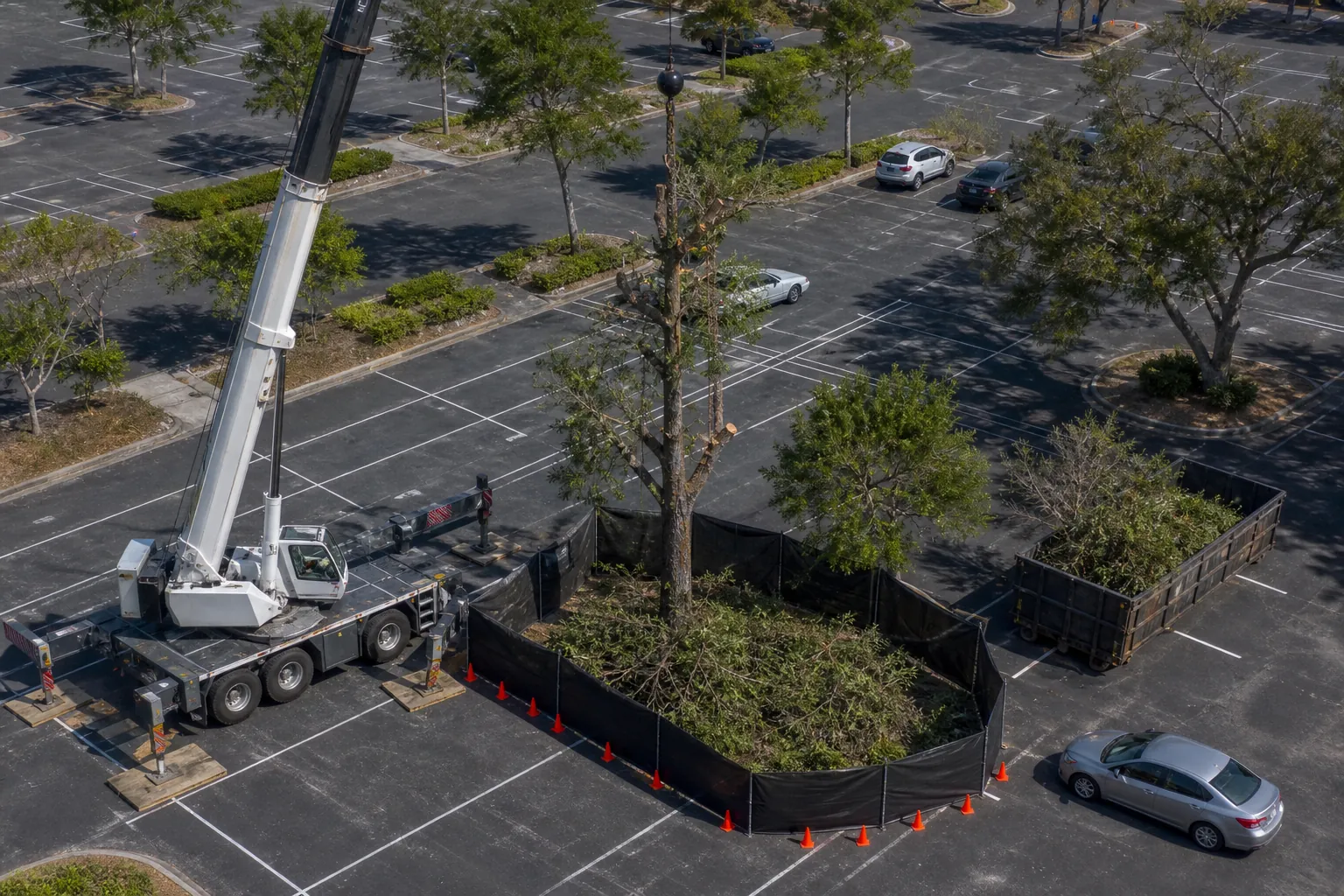
An active parking lot needs a clearly defined work zone. The crane setup area, tree location, landing area for removed sections, equipment route, and debris staging space all need to work together. A plan should also consider how the crew will prevent vehicles or pedestrians from entering areas affected by lifting and cutting operations.
Before the scheduled date, the property manager may need to identify spaces that must remain empty and communicate temporary changes to tenants, employees, residents, vendors, or visitors. The scope and timing of those changes depend on the site and removal plan.
- Identify parking spaces and drive aisles needed for equipment.
- Choose an alternate route for vehicles and pedestrians.
- Confirm access for deliveries, waste collection, and essential services.
- Remove movable items from the planned work and staging areas.
- Assign a property contact who can answer access questions.
A useful plan is specific enough that stakeholders know where to park, which entrance to use, and whom to contact if conditions change.
Coordinate Crane Placement and Controlled Lifts
Crane tree removal allows cut sections to be lifted and moved rather than dropped directly beneath the tree. This can be useful where buildings, pavement, landscaping, or other site features leave limited room. However, every site is different, and using a crane does not eliminate the need for controlled access and a carefully arranged work area.
The crew must plan how the crane will reach the tree, where removed sections can be landed, and how those sections will be processed and moved. The lifting route should account for fixed obstacles and areas where people or vehicles could appear. Communication among the crane operator and tree-removal crew is an important part of coordinating each lift.
Weather and changing site conditions may affect the work plan. Property representatives should keep the agreed work area clear and avoid making last-minute parking or access changes without discussing them. If site conditions differ from what was expected, the plan may need to be reassessed before removal proceeds.
Check Permissions and Communicate Early
Before tree removal, confirm whether the tree or property is subject to approval requirements. Rules may vary by city, county, development, HOA, condo association, or property agreement. Readers should verify current requirements directly with the appropriate city or county and review any applicable community documents. An arborist report or tree inspection may be relevant when documentation is requested, but requirements should be confirmed rather than assumed.
For broader background on this topic, review protected tree removal and permit requirements. Because that resource focuses on DeLand, Flagler County property owners should still confirm the rules that apply to their specific address.
Communication should begin before notices are posted. Decide who authorizes the work, who contacts occupants, and who can approve adjustments on the scheduled day. Notices should state which areas are affected and what people need to do. Avoid promising an exact reopening time unless it has been confirmed through the work plan.
Plan Debris Handling and Parking Lot Reopening
The removal is not complete when the tree is down. Cut sections, branches, sawdust, and equipment still need to move through the site. Debris handling should be incorporated into the original layout so it does not unexpectedly block a drive aisle, entrance, or required access point. The plan should identify where material will be landed, processed, and loaded.
Ask what the agreed scope includes. Tree removal and stump grinding are separate services, so confirm whether the stump will remain or be addressed. If stump grinding is included, access, underground features, nearby pavement, and the intended condition of the area should be discussed before work begins.
Before reopening the affected parking spaces, the site should be checked for remaining debris, temporary barriers, and equipment. Property representatives can also inspect curbs, signs, landscaping, and pavement in the immediate work area. A deliberate reopening process helps prevent vehicles from returning while cleanup or equipment movement is still underway.
Discuss Your Flagler County Parking Lot
Florida Foliage provides crane tree removal, tree removal, commercial tree services, and HOA and condo tree services. To discuss site access, parking activity, and the tree involved, call (386) 481-7913. A calm, site-specific conversation can help clarify the next practical steps.
Call (386) 481-7913 to talk through next steps.