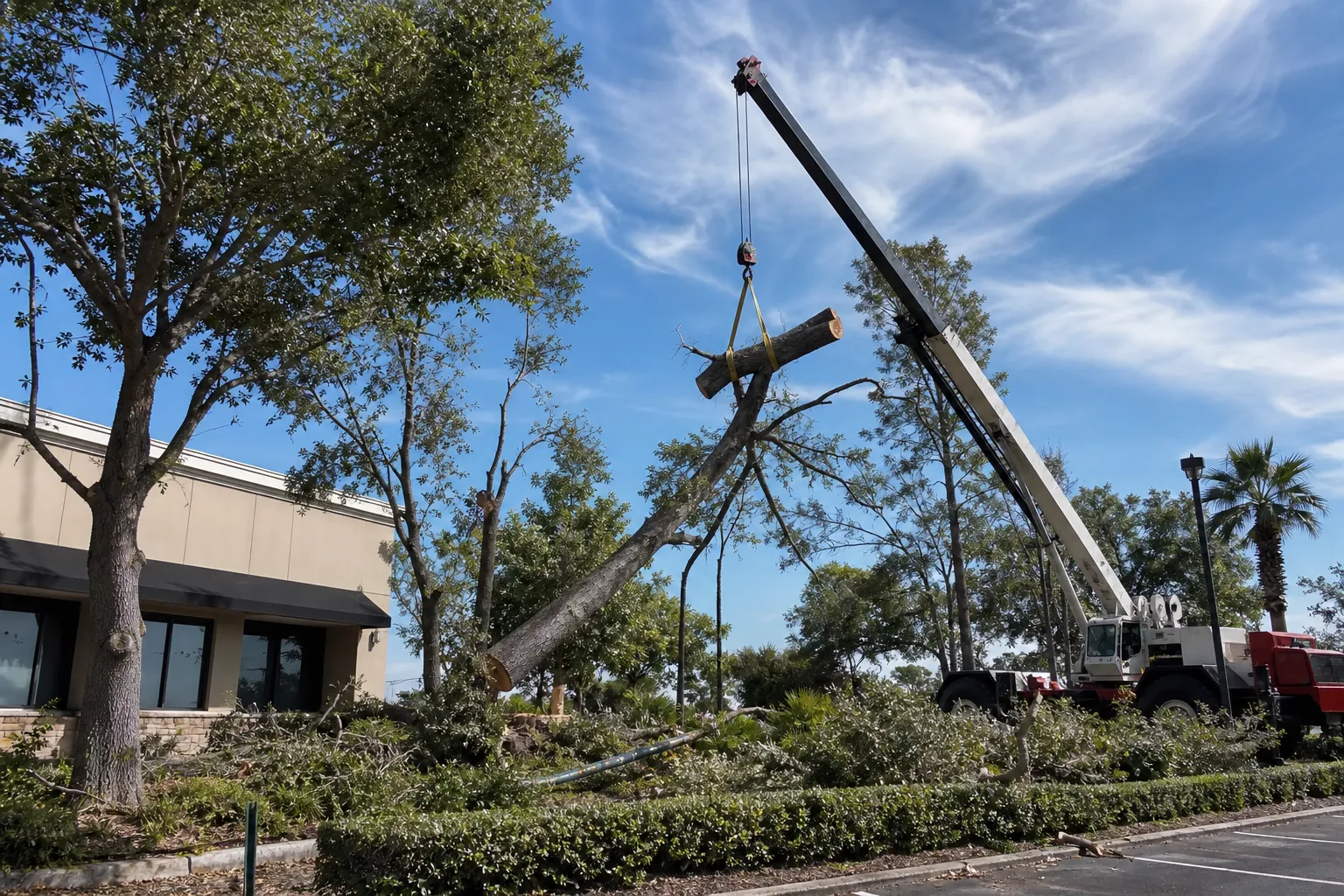
Tree removal at a retail center requires more planning than simply cutting a tree at ground level. Customers, employees, storefronts, signs, lighting, parked vehicles, and delivery areas may all be close to the work zone. Crane tree removal can be considered when a tree cannot be lowered safely in conventional sections or when controlled lifting may reduce contact with surrounding property. The right approach depends on the tree, its condition, its location, and the space available for equipment and debris handling.
Recognize When a Crane May Be Appropriate
A crane is not necessary for every commercial tree removal. It becomes a practical option when the tree's location or structure makes standard rigging difficult. A large tree may stand between buildings, lean over a roof, or extend above an area where branches cannot be dropped. Limited room around the trunk can also affect how workers dismantle and move the tree.
Condition matters as much as location. Cracked limbs, a compromised trunk, visible decay, or storm damage can make sections less predictable when cut. A tree inspection can help document observable conditions and support the planning process. Crane access, soil conditions, overhead obstructions, and the path for removing material must also be reviewed before selecting equipment.
The decision should be based on the entire work area rather than tree height alone. A smaller tree beside a storefront may require tighter controls than a taller tree in an open section of the property.
Evaluate Risks Around Daily Retail Operations
Retail properties contain changing traffic patterns throughout the day. A parking row that is empty during an inspection may be full when work begins. Delivery vehicles may need loading access, and customers may use several entrances. Before scheduling removal, identify every activity that could enter or cross the planned work zone.
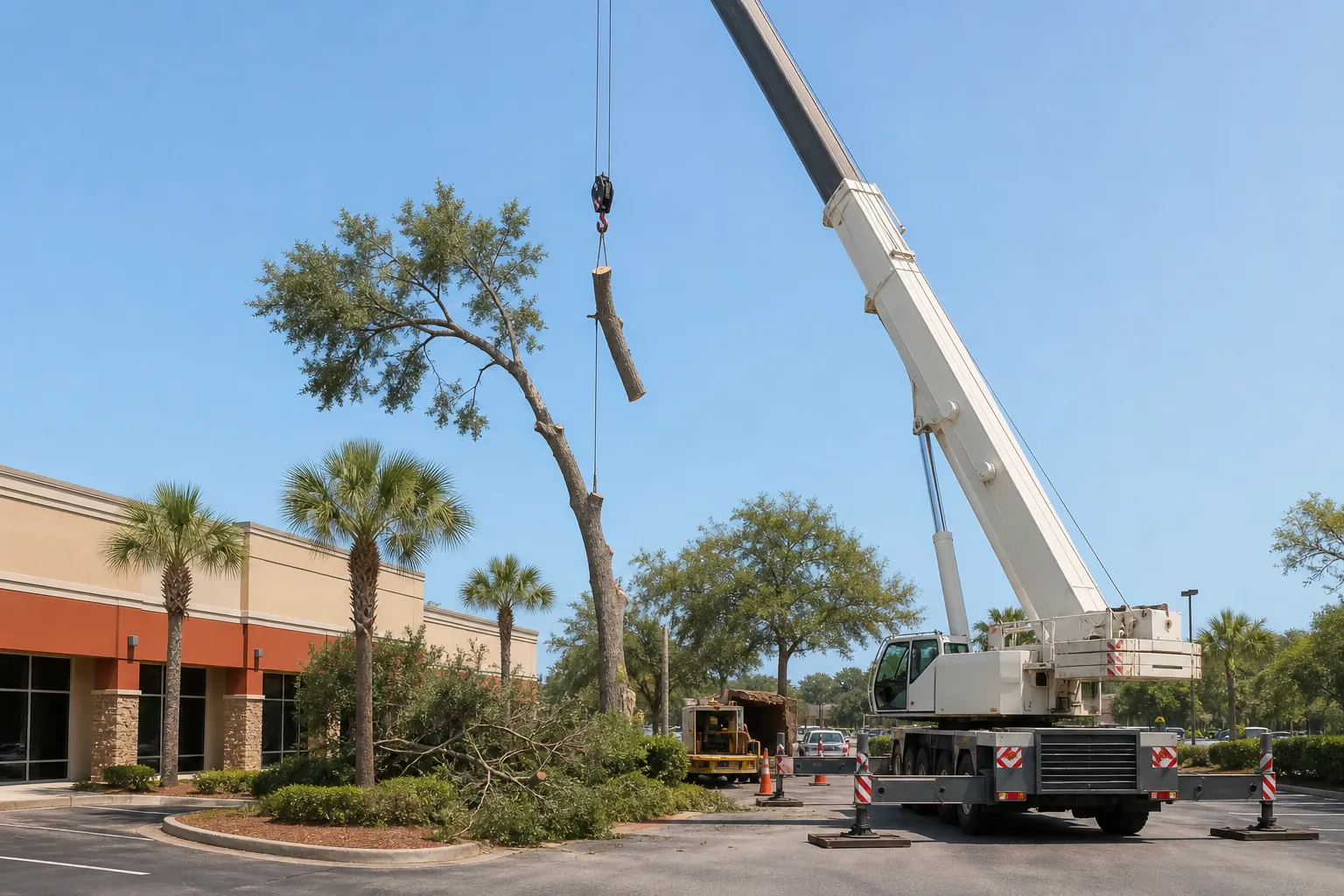
Property managers should examine the tree's relationship to roofs, awnings, monument signs, light poles, sidewalks, drive aisles, utilities, drainage features, and neighboring parcels. They should also note emergency access routes and any areas that must remain available. These details influence equipment placement and the boundaries needed around the work.
Crane-assisted removal generally involves cutting the tree into planned sections, supporting those sections, and moving them to a designated handling area. That process requires coordinated space on the ground. A clear plan for temporary closures and internal communication helps the retail center avoid last-minute conflicts without assuming that every part of the property must close.
Gather Information Before Requesting a Plan
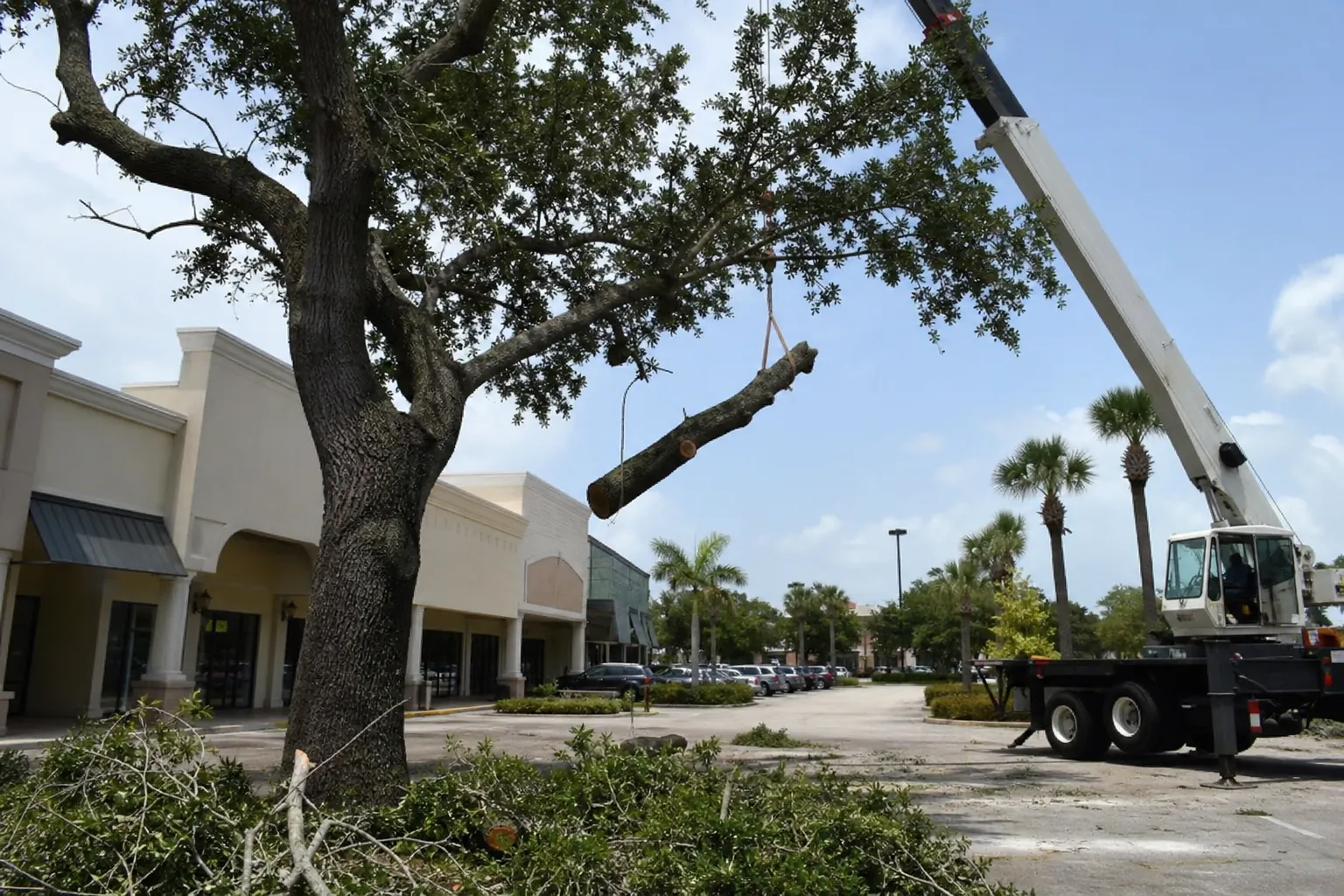
A useful site review starts with accurate property information. The person responsible for the retail center should know who can authorize work, where the property boundaries are, and whether tenants have delivery or access requirements. Recent photos can provide context, but they do not replace an on-site evaluation of the tree and surrounding area.
Prepare the following information before discussing crane tree removal:
- The tree's location relative to buildings, parking spaces, sidewalks, signs, and property lines
- Visible concerns such as broken limbs, trunk cracks, leaning, decay, or recent storm damage
- Known underground features, overhead lines, gates, curbs, and restricted access points
- Delivery schedules, busy customer periods, tenant needs, and required access routes
- A proposed area for equipment setup and temporary handling of tree sections
- Any property documents, prior tree inspections, or arborist reports that may be relevant
This preparation supports a more focused conversation about tree removal, stump grinding, related tree trimming, and cleanup access.
Confirm Permissions and Property Responsibilities
Tree removal requirements can vary by city, county, property designation, tree type, and project circumstances. Before authorizing work, confirm current requirements directly with the appropriate city or Flagler County department. Do not assume that a tree's condition, commercial setting, or storm history automatically removes review requirements.
Retail centers may also have private responsibilities beyond government review. Ownership documents, leases, association rules, lender requirements, or management agreements may determine who can approve the work. If the tree is near a boundary, confirm ownership and discuss access before equipment is scheduled. Utility coordination may also be relevant when lines or utility-controlled areas are nearby.
For a general explanation of how protected-tree questions can affect planning, read this guide to protected tree removal permit requirements. Because that resource concerns DeLand, it should not be treated as a statement of Flagler County rules. Always verify the current requirements that apply to the retail center's exact location.
Compare the Proposed Method and Site Plan
When reviewing a proposed removal plan, ask why crane assistance is recommended and how the site's constraints shaped that recommendation. The explanation should address where the crane may be positioned, how tree sections may be controlled, where material may be placed, and which areas need temporary restriction. It should also distinguish the removal itself from optional or related work such as stump grinding, canopy thinning, crown reduction, or trimming of nearby trees.
Consider the condition of the property after the trunk is removed. Ask what access is needed for stump grinding and whether curbs, planters, irrigation features, or narrow islands limit that work. Determine how the plan affects customer routes, tenant entrances, deliveries, and parked vehicles. If multiple trees are involved, clarify whether each tree requires the same method.
A practical decision comes from matching the removal method to documented site conditions. It should not be based solely on convenience or a general preference for larger equipment.
Discuss the Retail Center's Tree
If a tree at a Flagler County retail center is difficult to access, damaged, or close to occupied areas, Florida Foliage can discuss crane tree removal and commercial tree services. Call (386) 481-7913 calmly and with the property's key details ready.
Call (386) 481-7913 to talk through next steps.